
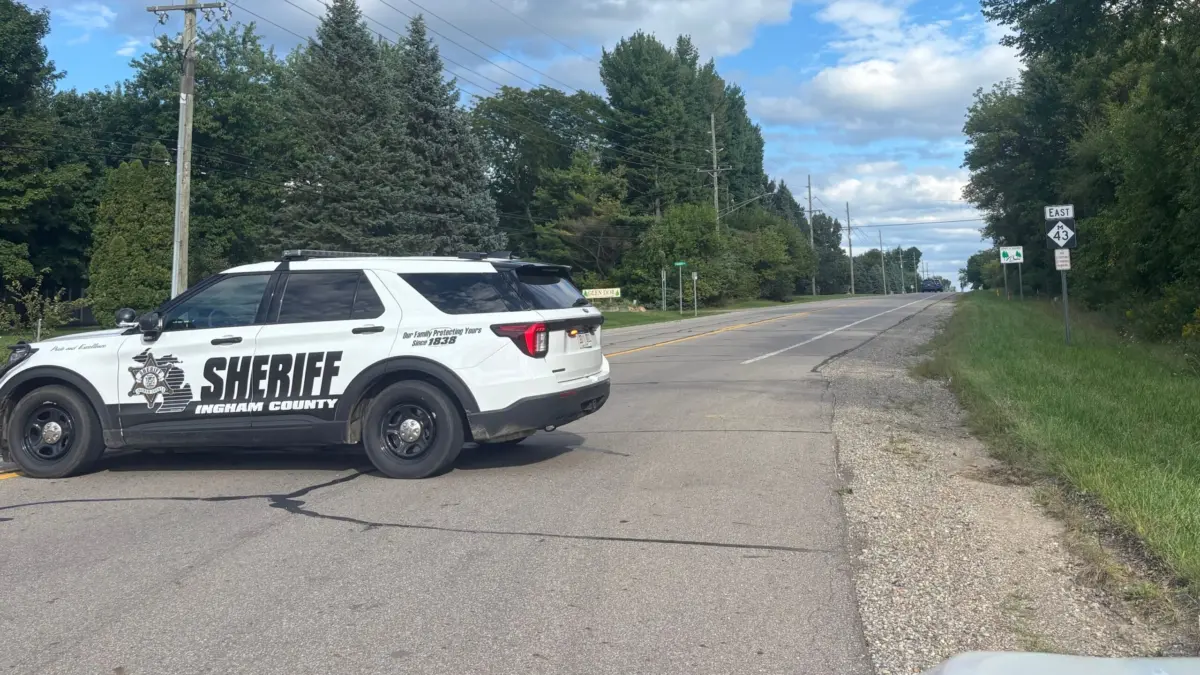

LEROY TOWNSHIP, Mich. — A tranquil late-summer morning along Grand River Avenue in Ingham County transformed into an unimaginable nightmare on Saturday, September 5, 2026. What was intended to be a routine bike ride for two young siblings culminated in a devastating collision that has left a community in deep mourning and a family shattered.
According to the Michigan State Police (MSP), a westbound Ford Explorer veered onto the shoulder of the roadway, striking two young bicyclists. The catastrophic impact claimed the life of a 12-year-old boy at the scene, while his 13-year-old sister sustained severe, life-threatening injuries. She was rushed to a nearby medical facility, where she remains in critical condition, fighting for her life.
The incident has sent shockwaves through the local community and renewed urgent conversations regarding vulnerable road users, driver vigilance, and the critical need for adherence to non-motorized traffic safety laws across the state of Michigan.
Executive Overview
The fatal crash occurred at approximately 11:35 a.m. on Saturday within the territorial boundaries of Leroy Township, an otherwise quiet municipality known for its rural expanses and stretches of open highway. Investigators have confirmed that both children were abiding by safety precautions, wearing helmets at the moment of impact. Despite these protective measures, the sheer kinetic force of the collision with the full-sized SUV proved unsurvivable for the younger sibling.
The driver of the Ford Explorer, a 64-year-old woman whose identity has been withheld pending ongoing legal and investigative proceedings, escaped the physical collision without injury. Preliminary findings released by the Michigan State Police Lansing Post indicate that neither alcohol nor illicit substances appear to have played a role in the crash. However, the precise sequence of events leading up to the vehicle’s departure from the main travel lane onto the shoulder remains the focal point of an active, multi-agency reconstruction effort.
In the wake of the tragedy, law enforcement officials have issued solemn reminders to the motoring public regarding the legal and moral imperatives of sharing the road. The incident underscores a sobering national trend: the increasing vulnerability of non-motorized commuters, pedestrians, and cyclists sharing asphalt corridors with increasingly heavy and fast-moving vehicular traffic.
Detailed Chronology of the Incident
To piece together the timeline of the catastrophe, investigators from the Michigan State Police Lansing Post have retraced the final hours and moments leading up to the dispatch call at 11:35 a.m. on Saturday.
The Morning Journey
The brother and sister, aged 12 and 13 respectively, had set out on their bicycles earlier Saturday morning. Family and neighborhood accounts suggest the siblings were familiar with the local roadways, frequently utilizing the shoulders of regional arteries for recreational exercise. Both children were properly outfitted with safety gear, including fitted bicycle helmets—a detail explicitly confirmed by investigating troopers, which highlights that even fully compliant riders remain exposed to catastrophic risk when heavy motor vehicles leave the designated travel lanes.
The Collision at 11:35 a.m.
At precisely 11:35 a.m., the siblings were traveling along Grand River Avenue. Concurrently, a 64-year-old female driver was operating a Ford Explorer in a westbound direction along the same corridor. For reasons still under intensive investigation, the SUV drifted or traveled out of the active westbound lane and onto the paved shoulder where the two cyclists were positioned.
The impact was sudden and severe. The 12-year-old boy absorbed the brunt of the kinetic trauma, suffering fatal injuries. First responders arriving at the scene pronounced him dead. His 13-year-old sister was struck with devastating force as well, sustaining critical injuries that required immediate, advanced life support interventions at the scene before she was rapidly transported by emergency medical services to a regional trauma center.
Immediate Emergency Response and Investigation
Emergency dispatchers flooded the Leroy Township corridor with resources, including Michigan State Police troopers, local fire departments, and emergency medical technicians. Grand River Avenue experienced significant traffic disruptions and temporary closures as crash reconstruction specialists from the MSP Fifth District deployed laser mapping equipment, measured skid marks, documented debris fields, and analyzed the point of impact on the Ford Explorer.
The driver of the SUV was questioned extensively at the scene. Authorities confirmed she sustained no physical injuries from the crash. While standard post-accident protocols were initiated—including checks for driver impairment—troopers quickly ruled out alcohol and drugs as contributing factors. As part of standard operating procedures, investigators are still verifying whether the driver was properly restrained with a seat belt at the time of the collision, a detail that forms part of the comprehensive crash report.
Supporting Context & Metrics: The Perils of the Open Road
The tragedy in Leroy Township is not an isolated anomaly, but rather part of a broader, deeply concerning statistical reality concerning traffic safety for vulnerable road users (VRUs) across the United States and within the state of Michigan.
Vulnerable Road Users Under Siege
According to data compiled by the National Highway Traffic Safety Administration (NHTSA) and the Governors Highway Safety Association (GHSA), pedestrian and bicyclist fatalities have trended upward over the past decade. Factors contributing to this grim trajectory include:
- The Rise of Larger Vehicles: The widespread consumer shift toward heavier, higher-profile vehicles—such as SUVs and light trucks—means that collisions with non-motorized individuals carry exponentially higher kinetic energy, dramatically increasing the lethality of impacts.
- Distracted Driving: Smartphone usage, in-dash infotainment interfaces, and cognitive distractions continue to plague modern roadways, leading to momentary lapses in driver attention that can prove fatal on rural and semi-rural stretches where speeds are higher.
- Infrastructure Deficits: Many rural and suburban corridors feature narrow shoulders, limited lighting, and a lack of physical separation barriers between high-speed vehicular traffic and non-motorized pathways.
Michigan’s Legal Framework: The 3-Foot Rule
Michigan vehicle code strictly mandates how motorists must interact with bicyclists on public roadways. Under state law, drivers are legally required to maintain a minimum clearance of three feet when passing a bicycle traveling in the same direction. Furthermore, if road conditions—such as oncoming traffic, narrow lanes, or weather obstacles—prevent a driver from safely leaving three feet of clearance, the motorist is required to slow down and wait for a safe opportunity to pass.
Despite these clear statutory requirements, enforcement and compliance remain persistent challenges. Public safety campaigns often struggle to reach every driver, leading to dangerous passing maneuvers, close calls, and, in tragic instances like the one in Leroy Township, fatal incursions onto road shoulders.
Official Statements and Community Reaction
The emotional weight of the Leroy Township tragedy has prompted strong, reflective statements from public safety officials who are grappling with the preventable nature of the loss.
Lt. DuWayne Robinson, public information officer for the Michigan State Police Fifth District, addressed the media and the public with a solemn appeal for heightened driver accountability:
"Michigan law requires motorists to give bicyclists at least 3 feet of space when passing them. More importantly, drivers have a responsibility to remain alert, slow down when necessary and safely share the road with bicyclists and other vulnerable roadway users," Robinson stated.
Expanding on the broader implications of driver responsibility, Robinson emphasized that operating a motor vehicle is a high-stakes daily responsibility that demands absolute focus:
"A tragedy like this is a heartbreaking reminder that we all have a responsibility when we get behind the wheel. Following traffic laws designed to protect everyone using our roadways can help prevent crashes and save lives."
Local community leaders, school administrators in the Ingham County area, and regional safety advocacy groups have also expressed profound grief. While formal statements from the family have remained private as they navigate their unimaginable loss, neighborhood vigils and informal memorials have begun to take shape, reflecting a community united in sorrow and searching for ways to honor the young boy’s memory while praying for his sister’s recovery.
Future Outlook and Ongoing Investigation
As September unfolds, the investigation into the Leroy Township crash remains active and multifaceted. The Michigan State Police Lansing Post, in coordination with accident reconstruction units and the Ingham County Prosecutor’s Office, continues to methodically analyze all gathered evidence.
What Lies Ahead in the Legal and Investigative Process
- Complete Reconstruction Analysis: Experts will finalize their forensic mapping of Grand River Avenue, factoring in vehicle telemetry, visibility conditions at 11:35 a.m., and the exact physics of the Ford Explorer’s movement onto the shoulder.
- Medical Updates: The condition of the 13-year-old sister remains monitored closely by medical professionals and investigators alike. Her eventual recovery and potential testimony—along with statements from any additional eyewitnesses—will be integral to the final investigative file.
- Prosecutorial Review: Once the Michigan State Police compile the comprehensive crash report, it will be forwarded to the Ingham County Prosecutor’s Office. Prosecutors will determine whether traffic citations, misdemeanor charges, or felony charges are warranted based on the driver’s actions leading up to the vehicle’s departure from the travel lane.
- Infrastructure and Advocacy Action: Local municipalities and county road commissions often re-evaluate road safety, signage, and shoulder maintenance in the wake of high-profile fatalities. Advocacy groups are expected to leverage this tragedy to push for enhanced driver education regarding the 3-foot rule and increased investments in protected bicycle infrastructure across Michigan.
For now, a family grieves the loss of a 12-year-old son, a community holds its breath for the survival of his older sister, and the broader motoring public is left with a stark, sobering mandate: the lives of children, cyclists, and all vulnerable road users depend entirely on the vigilance, patience, and absolute care of those behind the wheel.

0 Comments