

Executive Overview
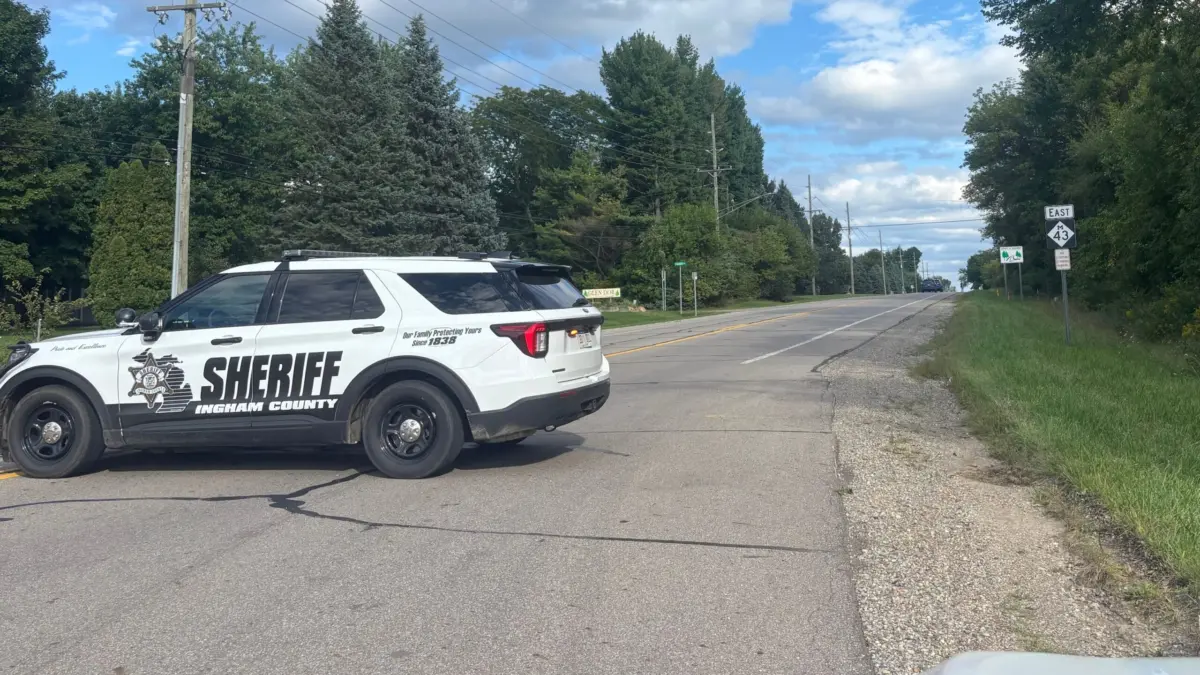
LEROY TOWNSHIP, Mich. — A devastating collision on a late-summer Saturday morning has left an Ingham County community in profound mourning and reignited urgent discussions regarding roadway safety across Michigan. At approximately 11:35 a.m. on Saturday, September 5, 2026, a tranquil stretch of Grand River Avenue in Leroy Township transformed into a scene of unspeakable tragedy. A 12-year-old boy lost his life, and his 13-year-old sister was left fighting for her life after they were struck by a sport utility vehicle while riding their bicycles along the designated roadway shoulder.
According to preliminary reports from the Michigan State Police (MSP) Lansing Post, the young siblings were legally and safely operating their bicycles on the shoulder of the road when a westbound Ford Explorer veered out of the main travel lane. Despite both children wearing certified safety helmets—a precaution that underscores their adherence to safety standards—the impact proved catastrophic. The 12-year-old boy succumbed to his injuries at the scene, while his older sister was rushed to a regional trauma center with critical, life-threatening injuries.
The driver of the Ford Explorer, identified by authorities as a 64-year-old woman, emerged physically uninjured from the crash. Investigators from the Michigan State Police have confirmed that neither alcohol nor illicit substances appear to be contributing factors in the collision. However, the precise sequence of events leading up to the vehicle’s departure from the travel lane remains the focal point of an active, multi-disciplinary reconstruction effort.
This catastrophic event has reverberated far beyond the immediate boundaries of Ingham County, drawing sharp focus from state law enforcement officials, traffic safety advocates, and local policymakers. As investigators meticulously reconstruct the physical evidence, the incident has catalyzed renewed public scrutiny regarding the persistent dangers vulnerable road users face, the critical importance of maintaining situational awareness behind the wheel, and the enforcement of statutory sharing-the-road provisions designed to protect non-motorized travelers across Michigan’s sprawling highway and rural road network.
Detailed Chronology of Events
The Morning of September 5, 2026
The morning of Saturday, September 5, began like countless others in rural Ingham County. Weather conditions were clear and dry, offering optimal visibility for motorists, pedestrians, and cyclists alike. Grand River Avenue (M-43), a major corridor traversing the region, typically experiences moderate weekend traffic, balancing local residential travel with cross-county transit.
At approximately 11:35 a.m., the two siblings—a 12-year-old boy and his 13-year-old sister—were navigating a westbound section of Grand River Avenue in Leroy Township. Investigators have established that the children were utilizing the paved shoulder of the roadway, positioning themselves entirely outside the active westbound vehicle travel lane. Both victims were fully compliant with youth bicycle safety standards, wearing properly secured helmets designed to mitigate head trauma in the event of a fall or collision.
The Impact and Immediate Aftermath
Simultaneously, a 64-year-old female motorist was operating a westbound Ford Explorer along the same stretch of Grand River Avenue. For reasons still under active investigation by state troopers, the SUV drifted or traveled out of the designated motor vehicle lane and onto the shoulder, striking both cyclists from behind or at an angle that bypassed their defensive positioning.
The kinetic energy transferred during the impact was immense. The 12-year-old boy sustained catastrophic internal and traumatic injuries. First responders from local fire, emergency medical services (EMS), and the Michigan State Police arrived at the scene within minutes of the 911 dispatch. Despite immediate life-saving interventions administered by paramedics, the young boy’s injuries were unsurvivable, and he was pronounced dead at the scene.
His 13-year-old sister, who sustained severe, multi-system trauma, was stabilized by EMS personnel at the roadside before being transported under emergency lights and sirens to a nearby regional hospital. As of the latest updates provided by authorities, she remains in critical condition, supported by a multidisciplinary team of trauma surgeons and pediatric critical care specialists.
Emergency Response and On-Scene Investigation
The Michigan State Police Lansing Post immediately secured the corridor, closing sections of Grand River Avenue for several hours to accommodate the specialized reconstruction units. Traffic was diverted onto alternate local routes as investigators mapped skid marks, measured sightlines, examined the damage sustained by the Ford Explorer, and gathered physical evidence from the bicycles and the shoulder.
The driver of the Ford Explorer remained at the scene and cooperated fully with law enforcement personnel. Preliminary field evaluations and subsequent assessments confirmed that driver impairment—whether through alcohol or controlled substances—was not suspected. Troopers also initiated inquiries into whether the driver was properly restrained by a seat belt at the time of the collision, a standard protocol in comprehensive vehicular homicide and crash investigations.
Supporting Context & Metrics
The Vulnerable Road User Crisis in Michigan and Nationwide
The tragedy on Grand River Avenue is not an isolated incident; rather, it highlights a broader, deeply concerning national and statewide crisis regarding the safety of vulnerable road users (VRUs)—a classification that encompasses bicyclists, pedestrians, and operators of non-motorized personal mobility devices.
According to data compiled by the National Highway Traffic Safety Administration (NHTSA) and the Governors Highway Safety Association (GHSA), fatalities involving bicyclists and pedestrians have steadily climbed over the past decade. Factors contributing to this alarming upward trend include:
- Distracted Driving: The proliferation of smartphones, in-dash infotainment systems, and other digital distractions has drastically increased the duration of cognitive and visual glances away from the primary driving task.
- Vehicle Fleet Evolution: The American automotive market has experienced a profound structural shift toward larger, heavier vehicles, notably SUVs and light-duty pickup trucks. The elevated ride height and increased mass of these vehicles fundamentally alter the physics of collisions, drastically increasing the likelihood of fatal or severe injuries when pedestrians or cyclists are struck.
- Infrastructure Deficits: Many rural and suburban corridors throughout Michigan feature narrow shoulders, limited lighting, and high speed limits, creating high-risk environments for non-motorized travel.
Michigan’s Legal Framework: The Three-Foot Law
Michigan vehicle code explicitly outlines the legal responsibilities of motorists when encountering bicyclists on public roadways. Under state statute, motorists are legally mandated to maintain a safe distance when passing vulnerable road users.
Most prominently, Michigan law requires drivers to provide at least three feet of clearance when passing a bicyclist traveling in the same direction. If roadway configurations, traffic volume, or environmental conditions prevent a driver from maintaining this three-foot buffer safely, the motorist is required to slow down, wait until oncoming traffic clears, and pass only when it is entirely safe to do so.
Furthermore, state statutes emphasize that bicyclists possess the legal right to utilize roadways and shoulders, and motorists carry the absolute burden of remaining alert, anticipating non-motorized traffic, and adapting their speed and positioning to account for more vulnerable travelers.
Official Statements and Law Enforcement Perspective
The gravity of the Leroy Township incident prompted senior officials within the Michigan State Police to issue strong, unambiguous reminders regarding driver accountability and the shared nature of public roadways.
Lt. DuWayne Robinson, public information officer for the MSP Fifth District, articulated the department’s official stance in a comprehensive public statement following the crash:
"Michigan law requires motorists to give bicyclists at least 3 feet of space when passing them. More importantly, drivers have a responsibility to remain alert, slow down when necessary and safely share the road with bicyclists and other vulnerable roadway users."
Lt. Robinson further emphasized the profound moral and civic duty inherent in operating a motor vehicle, framing traffic safety as an collective obligation that dictates life-or-death outcomes on local roads:
"A tragedy like this is a heartbreaking reminder that we all have a responsibility when we get behind the wheel. Following traffic laws designed to protect everyone using our roadways can help prevent crashes and save lives."
Local community leaders, school administrators in the Ingham County district, and regional safety advocates have echoed Lt. Robinson’s sentiments, calling for heightened vigilance among drivers, especially during daytime hours when children, teenagers, and families are active outdoors.
Future Outlook: Investigation and Prevention
The Ongoing Investigation
As September progresses, the Michigan State Police Lansing Post continues its comprehensive, multi-faceted investigation into the Leroy Township crash. Investigators are analyzing several key elements to compile a definitive crash reconstruction report:
- Vehicle Telemetry and Event Data Recorders (EDR): Technicians are extracting data from the Ford Explorer’s onboard computer systems to determine the vehicle’s exact speed, braking inputs, and throttle position in the moments immediately preceding the impact.
- Digital Forensics: Investigators are examining whether driver distraction—specifically related to mobile device usage—played a role in the vehicle’s departure from the travel lane. While privacy laws govern access to personal electronics, search warrants and specialized forensic tools are routinely utilized in fatal traffic inquiries.
- Environmental and Human Factors: Analysts are evaluating sightlines, sun glare, and potential medical emergencies or sudden fatigue experienced by the driver that could explain why the vehicle drifted onto the shoulder.
Once the investigation is finalized, the completed case file will be submitted to the Ingham County Prosecutor’s Office for formal review. Prosecutors will evaluate the findings to determine whether criminal charges—ranging from moving violations and careless driving to reckless driving or negligent homicide—are warranted against the 64-year-old driver.
Community Healing and Roadway Safety Advocacy
In the wake of this profound loss, the Leroy Township community has rallied around the grieving family. Local support networks, counseling services provided through the local school district, and community vigils have been mobilized to offer solace to family members, classmates, and friends coping with the sudden absence of a young life and the critical hospitalization of his sister.
Beyond immediate grief support, local advocacy groups are utilizing this tragedy to push for tangible infrastructure improvements along Grand River Avenue and comparable regional thoroughfares. Proposed safety enhancements include:
- Widened and Paved Shoulders: Upgrading rural road shoulders to provide a more forgiving and clearly delineated space for non-motorized traffic.
- Enhanced Signage and Pavement Markings: Installing high-visibility "Share the Road" signage and rumble strips to alert distracted motorists if they begin to drift toward the shoulder.
- Public Education Campaigns: Partnering with schools and driver education providers to reinforce the legal requirements of the three-foot passing law and the heightened vulnerability of young cyclists.
Ultimately, the tragedy on Grand River Avenue stands as a stark, sorrowful reminder of the fragility of life and the immense responsibility borne by every individual who turns an ignition key. As the investigation presses forward and a community heals, the legacy of the young lives altered on that September morning must serve as a catalyst for enduring vigilance, compassion, and safety on Michigan’s roadways.

0 Comments