

Executive Overview
NORTH BEND, Ohio — What began as a mild Friday evening hobby turned into an unmitigated tragedy along the banks of the Ohio River in North Bend, Ohio. Matthew McBride, a 35-year-old resident, lost his life in a drowning incident while attempting to retrieve a stalled remote-controlled boat from the powerful and deceptive currents of the waterway. The incident, which prompted a multi-agency emergency response, has left a local community in mourning and renewed urgent conversations regarding safety hazards associated with recreational activities near major river systems.
According to the Hamilton County Sheriff’s Office, emergency services were dispatched to the 300 block of Harbor Drive late Friday evening following frantic calls reporting a person in distress in the water. Despite a rapid deployment of local fire rescue units, swift-water personnel, and specialized recovery dive teams, the rescue effort ultimately shifted into a recovery mission. McBride’s body was recovered from the river several hours later in the dead of night.
Local authorities have confirmed that the investigation into the incident points entirely to an accidental drowning, with investigators stating explicitly that no foul play is suspected. Nevertheless, the sudden and preventable nature of the loss has deeply shaken the North Bend community. This detailed report examines the chronology of the tragic event, the inherent dangers of the Ohio River, the specifics of the emergency response, and the broader implications for water safety enforcement and hobbyist regulations along navigable American waterways.
Detailed Chronology of Events
The sequence of events unfolded rapidly on Friday night, transforming a routine weekend recreational outing into an intensive emergency operation. While the exact timeline continues to be meticulously documented by the Hamilton County Sheriff’s Office, initial incident reports provide a clear picture of the harrowing hours that transpired along the Ohio River shoreline.
The Stalled Vessel and the Decision to Enter the Water
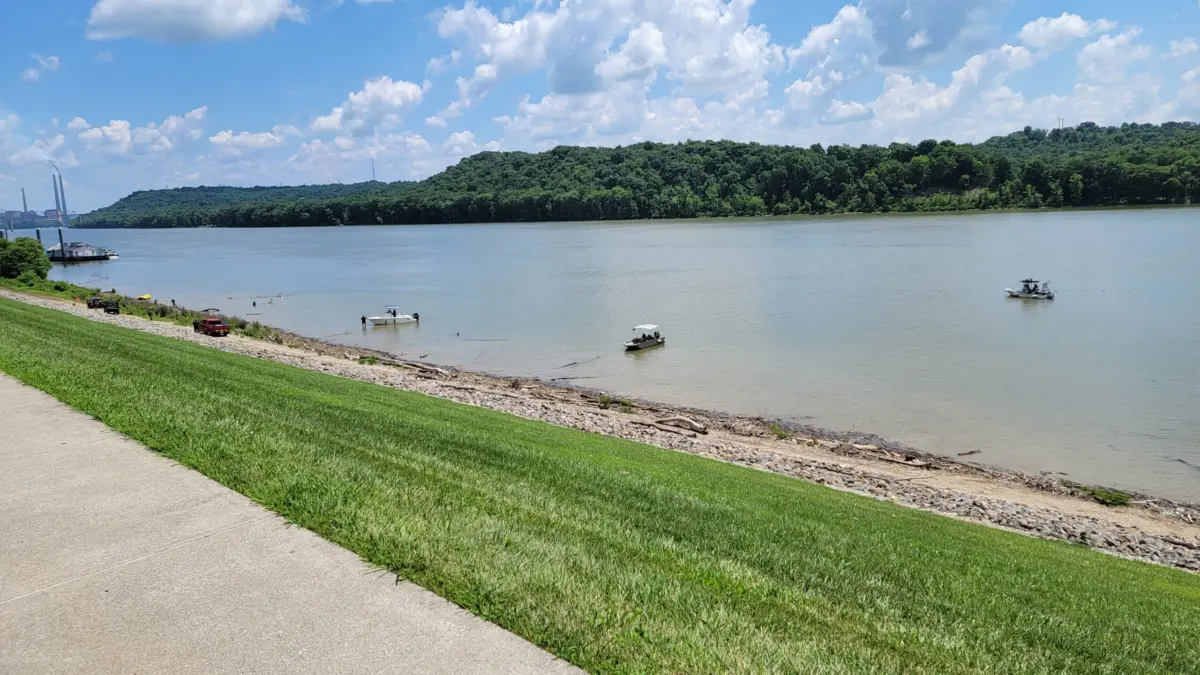
At approximately 9:30 p.m. on Friday, August 28, Matthew McBride was operating a remote-controlled boat near the shoreline on Harbor Drive in North Bend, a picturesque village nestled in Hamilton County along the northern banks of the Ohio River. For hobbyists, operating scale model boats is a popular pastime, offering relaxation and precision entertainment. However, rivers present entirely different variables compared to controlled residential ponds or lakes.
At some point during the operation, the remote-controlled boat stalled or drifted far enough from the shore to become trapped in the river’s current. Driven by a desire to recover the property, McBride made the fatal decision to enter the water. While the exact water temperature and immediate visibility conditions near the shoreline are still being reviewed, the Ohio River is notorious for hidden undercurrents, rapid drops in depth, and deceptive surface behaviors that can quickly overwhelm even capable swimmers. Witnesses or bystanders quickly realized the peril as McBride struggled against the river’s pull, prompting immediate emergency calls to local dispatchers.
The Emergency Response and Swift-Water Deployment
The Miami Township Fire Department received the initial distress call regarding a water rescue at approximately 9:30 p.m. Friday. Recognizing the severe danger of nighttime river operations, dispatchers quickly escalated the response, mobilizing multiple units, including specialized water rescue personnel, marine patrol boats, and mutual aid from surrounding jurisdictions.
Upon arrival at Harbor Drive, emergency responders faced immediate challenges. Nighttime conditions drastically reduced visibility along the water, and the vast expanse of the Ohio River complicated search efforts. First responders immediately initiated surface-scanning protocols, deploying spotlights and launching rescue watercraft to sweep the area where McBride was last seen slipping beneath the surface.
As the minutes ticked by, the nature of the operation transitioned. Surface sweeps failed to locate the victim, prompting the activation of the Hamilton County Sheriff’s Office dive team. Operating in pitch-black water with zero visibility, divers confronted swift-water hazards, submerged debris, and cold temperatures as they meticulously grid-searched the murky depths near the retrieval site.
The Recovery Operation
The grueling search continued into the early hours of Saturday morning. Specialized dive units braved difficult conditions, relying on sonar equipment and tethered tactile searches to scour the riverbed.
At approximately 1:30 a.m. Saturday—roughly four hours after the initial emergency call was placed—divers successfully located and recovered McBride’s body from the river. Pronounced dead at the scene, his remains were subsequently transferred to the Hamilton County Coroner’s Office for formal identification and examination.
Subsequent investigations led by the Hamilton County Sheriff’s Office definitively ruled out any criminal element. Investigators confirmed that McBride entered the water entirely of his own volition solely to recover the drifting remote-controlled model boat. The coroner’s preliminary findings are consistent with accidental drowning, closing the investigative loop on criminal suspicion while leaving behind a grieving family and community.
Supporting Context & Metrics: The Hidden Perils of the Ohio River
To fully understand the tragedy that befell Matthew McBride, one must examine the environment in which it occurred. The Ohio River is not merely a scenic backdrop for the Midwestern landscape; it is a massive, highly industrialized, and dynamically complex commercial waterway that claims lives with alarming frequency.
Geographical and Hydrological Hazards
Stretching 981 miles from Pittsburgh, Pennsylvania, to Cairo, Illinois, the Ohio River serves as a vital shipping lane and natural border for several states, including Ohio, Kentucky, West Virginia, Indiana, and Illinois. In the region surrounding North Bend and greater Cincinnati, the river features complex hydrological characteristics:
- Current Speeds: Even on days when the surface appears calm, the Ohio River maintains robust underlying currents, often flowing at several knots. These currents can easily exhaust an adult swimmer within minutes.
- Water Temperature: Even during late summer months, deep channels within the river maintain significantly colder temperatures than the ambient air, increasing the risk of cold-water shock and rapid muscle fatigue.
- Submerged Obstacles: The riverbed is littered with historical debris, fallen trees, concrete pilings, and industrial remnants from decades of commercial navigation. These hazards pose severe entrapment risks to anyone entering the water unexpectedly.
- Visibility: Due to heavy barge traffic, agricultural runoff, and silt distribution, underwater visibility in the Ohio River is frequently near zero. Divers must operate entirely by touch, increasing both the danger to rescuers and the time required to locate a submerged individual.
Statistical Context of Drownings in Recreational Waterways
National water safety organizations, including the American Red Cross and the Centers for Disease Control and Prevention (CDC), consistently rank accidental drownings as a leading cause of unintentional injury death in the United States. While public attention is frequently directed toward ocean beaches and backyard swimming pools, open-water environments—such as rivers, lakes, and reservoirs—account for a disproportionate number of adult fatalities.
According to safety data compiled by the U.S. Army Corps of Engineers, which manages the lock and dam systems along the Ohio River, the majority of river drowning victims fall into a few specific behavioral categories:
- Unintentional Submersions: Individuals who slip from docks, riverbanks, or watercraft unexpectedly.
- Property Recovery Incidents: Individuals who enter the water to retrieve floating items, toys, pets, or equipment (such as remote-controlled boats, fishing gear, or watercraft accessories) without evaluating the strength of the current.
- Overestimation of Swimming Ability: Swimmers who underestimate the physical toll of open-water endurance against river currents.
Experts note that hobbyists operating remote-controlled watercraft near natural bodies of water rarely wear personal flotation devices (PFDs), viewing the activity as land-based recreation rather than water sports. Consequently, when an emergency occurs and they enter the water, they are entirely unequipped to manage the sudden transition into a high-risk aquatic environment.
Official Statements and Community Impact
The loss of 35-year-old Matthew McBride has sent shockwaves through North Bend, Miami Township, and the broader emergency response community in Hamilton County. While official administrative statements have maintained a professional, investigative focus, local leaders and safety advocates have emphasized the broader lessons to be drawn from the tragedy.
Law Enforcement and Fire Service Statements
Representatives from the Hamilton County Sheriff’s Office and the Miami Township Fire Department released coordinated details regarding the response, praising the professionalism of the multi-agency task force.
"Any time we receive a call regarding a person entering a major waterway like the Ohio River, time is our absolute enemy," noted a spokesperson for the local emergency management network. "Our swift-water rescue personnel and dive teams responded with the utmost urgency. Unfortunately, despite our best efforts and a thorough, coordinated search under difficult nighttime conditions, we were unable to achieve a positive rescue outcome."
The Sheriff’s Office reiterated that the case remains closed from a criminal standpoint, emphasizing that family notifications were completed swiftly following the positive identification by the Hamilton County Coroner’s Office.
Local Reaction and Memorialization
In North Bend—a historic village rich in scenic river views and tight-knit neighborhoods—residents have expressed profound sorrow over the incident. Local community groups and online neighborhood forums have filled with tributes to McBride, remembering him as a vibrant member of the community whose life was cut tragically short over a minor piece of hobby equipment.
Local spiritual and community leaders have used the occasion to reach out to McBride’s family, offering support networks and resources to help navigate the sudden grief. As is often the case with open-water tragedies, the incident has also sparked local discussions regarding signage, safety warnings, and public awareness campaigns along popular riverbank access points.
Future Outlook: Water Safety, Prevention, and Policy Implications
As the immediate shock of Matthew McBride’s death begins to settle, civic leaders, safety advocates, and regional planners are left confronting a pressing question: How can communities prevent similar tragedies from occurring along the region’s vast river systems?
The Need for Enhanced Public Education
Water safety experts argue that public education campaigns must expand beyond traditional swimming pool safety to specifically address the unique hazards of open-water systems like the Ohio River. Key focal points for future educational initiatives include:
- The "Property Over Life" Fallacy: Educating the public that no material possession—whether a mobile phone, a fishing rod, a drone, or a remote-controlled boat—is worth risking one’s life to retrieve in a swift-moving river.
- Immediate Emergency Protocols: Emphasizing that bystanders or hobbyists should never enter the water after someone in distress. Instead, witnesses should immediately call 911, keep visual contact with the victim, and utilize throwable flotation devices if available.
- Recognition of River Mechanics: Promoting awareness of how easily currents can overpower a strong swimmer, particularly in unmonitored, non-swimming areas of major rivers.
Municipal and Recreational Infrastructure Considerations
Urban planners and parks departments across Hamilton County are evaluating whether additional safety infrastructure is needed at popular river access points, parks, and boat ramps. While fencing off miles of natural riverbank is impractical, municipalities are exploring targeted interventions:
- Warning Signage: Installing high-visibility, bilingual warning signs at known recreation and hobby sites along the Ohio River, detailing the dangers of underwater currents and swift-water conditions.
- Throw-Bag Stations: Deploying emergency rescue throw-bags at high-traffic riverfront parks, allowing bystanders to safely assist individuals in distress from the safety of the shore without entering the water themselves.
- Hobbyist Guidelines: Engaging with local hobby clubs—including remote-controlled boating and aviation organizations—to establish safety protocols that discourage retrieving stalled equipment from hazardous natural waters without professional assistance or appropriate flotation gear.
Conclusion
The death of Matthew McBride is a somber reminder of the unforgiving nature of open-water systems. While he set out that Friday evening simply to enjoy a harmless pastime with a remote-controlled boat, the unpredictable currents of the Ohio River claimed his life in a matter of moments.
As the Hamilton County Coroner’s Office finalizes its administrative reports and the community continues to heal, the legacy of this tragedy must be a renewed commitment to water safety vigilance. By honoring McBride’s memory through increased awareness, proactive education, and a healthy respect for the immense power of our natural waterways, communities along the Ohio River can strive to ensure that future recreational outings do not end in preventable sorrow.

0 Comments