

Executive Overview
AUGUSTA, Ga. — A routine Saturday afternoon landscaping shift ended in unspeakable tragedy in Augusta, Georgia, when a 67-year-old lawn maintenance worker lost his life after his commercial riding lawn mower overturned into a deep waterway. The incident, which occurred near a historic local canal system, has sent shockwaves through the local community and renewed critical conversations regarding commercial landscaping safety, terrain hazards near open bodies of water, and the occupational risks faced by aging laborers in the green industry.
The Richmond County Sheriff’s Office formally identified the victim as Robert Duncan, a 67-year-old resident employed by a privately-owned local lawn maintenance contractor. According to preliminary incident reports released by emergency management and law enforcement agencies, Duncan was actively performing routine grounds maintenance along the sloping embankments of the waterway when the heavy machinery he was operating lost traction, flipped, and plunged into the canal. The equipment pinned Duncan beneath the surface, preventing immediate escape and leading to fatal consequences despite the rapid deployment of local first responder units.
This comprehensive investigative report examines the unfolding events of that Saturday afternoon, details the emergency response efforts, explores the broader landscape of occupational safety regulations governing commercial landscaping near water hazards, and evaluates the preventative measures necessary to protect workers from similar catastrophes. Through a synthesis of official statements, industry metrics, and contextual safety analysis, this article provides an authoritative account of an incident that underscores the inherent dangers of maintaining public and private infrastructure adjacent to aquatic environments.
Detailed Chronology of Events
The Saturday Shift and Terrain Conditions
The sequence of events that culminated in the tragedy began on the morning of Saturday, September 12, 2026. Robert Duncan reported for duty with his employer, a private regional lawn maintenance contractor responsible for managing commercial and industrial properties throughout the Augusta metropolitan area. Weather conditions at the time were reported as typical for early autumn in the region: clear skies, mild temperatures, and dry ground conditions, though moisture levels near the canal embankments remained a persistent environmental factor.
Duncan, described by associates as an experienced worker, was assigned to a crew tasked with mowing and clearing vegetation along the designated commercial properties abutting the greater Augusta canal infrastructure. These waterways, historically significant and vital to the local geography, are characterized by steep, sloping banks, uneven terrain, and abrupt drop-offs directly into the water channel.
As midday approached, Duncan was operating a commercial-grade riding lawn mower—a heavy piece of machinery specifically engineered for large turf areas but presenting distinct operational challenges when utilized on inclines, slopes, and embankments.
The Overturn and Submersion
At approximately 2:30 p.m., the routine landscaping operation turned catastrophic. According to preliminary findings by the Richmond County Sheriff’s Office, Duncan was navigating the mower near the edge of the canal bank when the vehicle experienced a catastrophic loss of stability. Whether due to a sudden shift in soil integrity, mechanical slippage, or an uncalculated approach to the embankment’s incline, the heavy mower overturned, tumbling down the slope and directly into the canal waters.
The physics of commercial riding mowers—which frequently weigh anywhere from 800 to over 1,500 pounds depending on whether they are zero-turn or traditional tractor-style units—make rollovers exceptionally dangerous. When such a vehicle overturns on an incline, the operator is frequently thrown into the path of the machine or trapped beneath its considerable weight. In Duncan’s case, the mower landed upside down in the water, pinning him completely submerged beneath the surface.
Because the accident occurred along a commercial stretch of the waterway where visibility can be obstructed by tall grasses and terrain contours, immediate intervention by coworkers was delayed by precious seconds—a critical window in any drowning or entrapment scenario.
Emergency Response and Recovery Operations
The Richmond County 911 dispatch center received an urgent call reporting the rollover and subsequent submersion at approximately 2:45 p.m. Multiple units from the Richmond County Sheriff’s Office, Augusta Fire Department, and local emergency medical services (EMS) were immediately dispatched to the scene, operating under a high-priority water rescue and trauma response protocol.
First responders arrived at the location near the Augusta canal within minutes of the initial alert. Upon arrival, emergency personnel confirmed that a commercial lawn mower was submerged in the water and that an adult male operator remained trapped underneath. Swift-water rescue protocols and heavy extraction equipment were deployed by specialized rescue personnel to secure the machinery and pull the victim from the water.
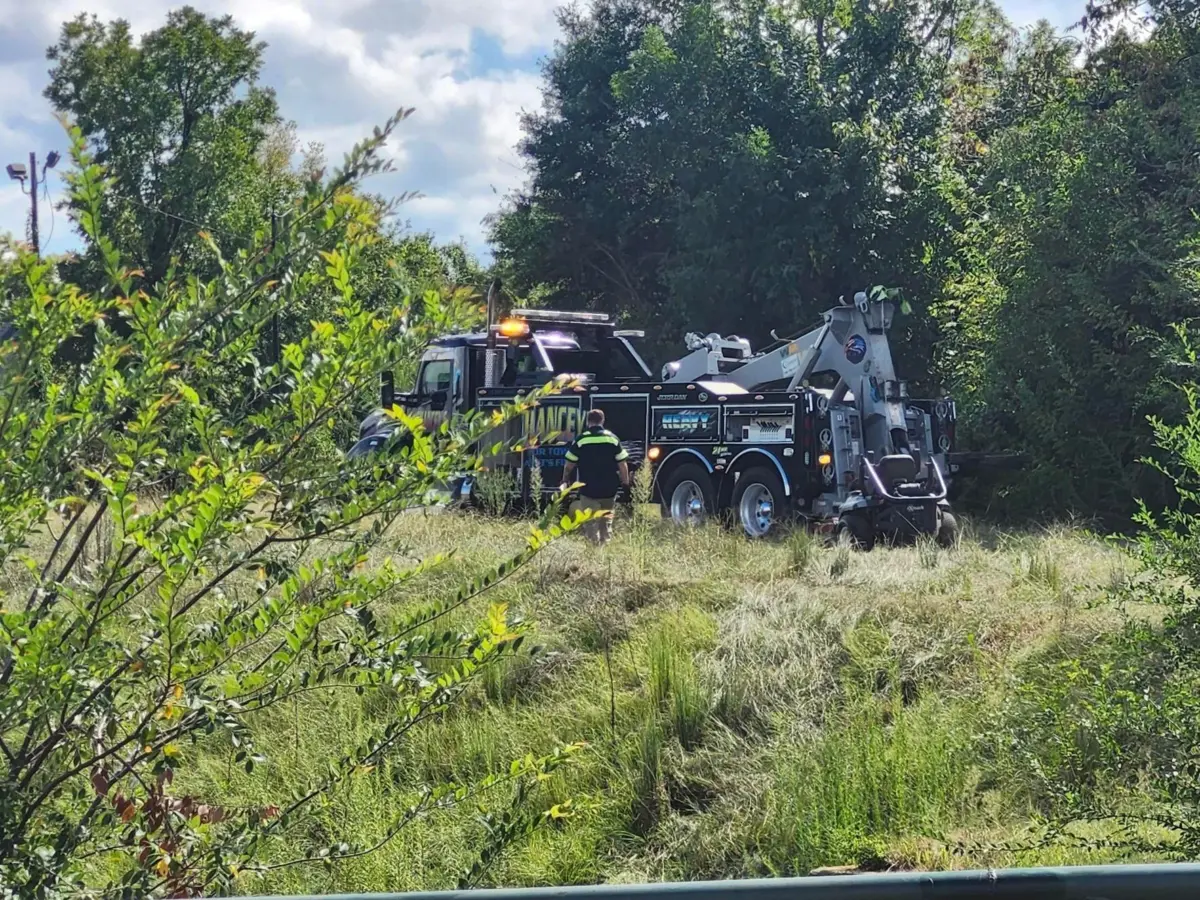
Despite the rapid mobilization and aggressive life-saving measures initiated by paramedics at the scene, Robert Duncan could not be resuscitated. He was formally pronounced dead at the scene by emergency medical personnel. Following the conclusion of the immediate rescue operations, recovery crews utilized mechanical winches to safely hoist and remove the heavy lawn mower from the canal, clearing the waterway for subsequent forensic examination.
Ongoing Investigations
In the wake of the incident, the Richmond County Sheriff’s Office, in coordination with local municipal authorities, launched a multi-agency investigation to determine the exact sequence and contributing factors of the fatal accident. Investigators are examining several key areas, including:
- Equipment Mechanics: Assessing the operational integrity of the lawn mower, including its braking systems, rollover protection structures (ROPS), and tire traction.
- Site Safety Protocols: Reviewing the employer’s risk assessment procedures for working adjacent to open water hazards and steep embankments.
- Compliance and Training: Verifying whether adequate safety training regarding slope operation and machine stability was provided to field personnel.
- Occupational Safety Agencies: Determining whether state or federal workplace safety regulators, such as the Occupational Safety and Health Administration (OSHA), will formally intervene to conduct an independent workplace safety inspection.
As of press time, the investigation remains active and ongoing, with authorities withholding final determinations pending comprehensive forensic reports and witness interviews.
Supporting Context & Metrics
Occupational Hazards in the Commercial Landscaping Sector
The landscaping and groundskeeping industry frequently ranks among the most hazardous occupational sectors in the United States. While public perception often views lawn maintenance as a routine or benign profession, industry workers face a complex matrix of environmental, mechanical, and physical dangers on a daily basis. According to data compiled by the Bureau of Labor Statistics (BLS) and the Centers for Disease Control and Prevention (CDC), landscape worker fatalities consistently exceed the national average for all private industries.
The primary drivers of occupational fatalities in the landscaping sector include:
- Transportation and Equipment Incidents: Overturning vehicles, being struck by moving machinery, and falling from equipment account for the highest percentage of fatal injuries.
- Environmental Exposures: Extreme heat, severe weather, and working near dangerous natural or artificial bodies of water introduce severe drowning and medical emergency risks.
- Slips, Trips, and Falls: Navigating uneven terrain, wet grass, and steep inclines significantly increases the probability of physical injury.
The Physics and Danger of Mower Rollovers
Commercial riding lawn mowers are powerful industrial tools designed to maximize productivity across expansive turf surfaces. However, their high center of gravity—especially when combined with the weight of operators, fuel, and heavy mowing decks—makes them notoriously volatile when operated on slopes exceeding manufacturer-recommended angles.
Safety engineers emphasize that when a riding mower approaches an incline exceeding 15 degrees (or lower, depending on wetness and ground composition), the risk of lateral or longitudinal rollover increases exponentially. If the vehicle lacks a deployed Rollover Protection Structure (ROPS) and a functioning seatbelt, or if the operator is unable to clear the machine during a tip, the consequences are frequently catastrophic. When rollovers occur near aquatic environments such as irrigation ditches, retention ponds, and canals, the hazard transforms immediately from a crush injury risk into a critical drowning entrapment scenario.
Local Infrastructure: The Augusta Canal
The geographic setting of the tragedy—the historic Augusta canal system—represents both a vital infrastructural landmark and a complex management environment. Originally constructed in the 19th century as a source of water, power, and transportation, the multi-tiered canal network stretches through Richmond County, flanked by extensive public and private grounds that require ongoing vegetation management.
Maintaining these banks requires specialized equipment and rigorous adherence to safety protocols. The proximity of steep stone or earthen embankments dropping directly into deep, flowing water creates a perpetual operational hazard for groundskeeping crews. Local municipal and private contractors operating within this corridor face heightened scrutiny regarding how they balance efficiency with the absolute protection of field personnel working near water edges.
Official Statements
Local authorities and emergency management representatives have released preliminary statements regarding the incident, emphasizing the gravity of the investigation and expressing condolences to the grieving family of Robert Duncan.
In an official briefing, a spokesperson for the Richmond County Sheriff’s Office detailed the immediate response:
"Deputies and rescue personnel responded rapidly to the scene near the Augusta canal following reports of a commercial lawn mower overturning into the water. Regrettably, despite the immediate extraction and life-saving efforts of first responders, the victim—identified as 67-year-old Robert Duncan—was pronounced dead at the scene. Our hearts go out to Mr. Duncan’s family, friends, and coworkers during this unimaginably difficult time. The investigation into the exact circumstances surrounding this tragic accident is active and ongoing."
Representatives from the privately-owned lawn maintenance company have not yet issued a formal public statement, though local industry sources indicate that corporate management is cooperating fully with local law enforcement and investigating agencies. Legal and safety analysts note that employers in such situations are typically subjected to rigorous internal and external reviews to evaluate compliance with standard operating procedures, equipment maintenance logs, and worker safety mandates.
Future Outlook & Industry Implications
Policy Reforms and Preventative Measures
The tragic loss of Robert Duncan is expected to ignite broader discussions within the Georgia landscaping community regarding regulatory oversight and mandatory safety enhancements for operators working near water hazards. Industry advocates and workplace safety experts are calling for a renewed focus on several critical preventative measures:
- Mandatory Rollover Protection Systems (ROPS): Ensuring that all commercial riding mowers utilized on commercial and municipal contracts are retrofitted with certified ROPS and that operators are strictly mandated to utilize seatbelts at all times.
- Slope Restrictions and Hazard Mapping: Establishing clear, non-negotiable boundaries and maximum grade limitations for mechanized mowing near canals, retention ponds, and steep embankments. Where mechanical mowers cannot safely operate, employers must transition to alternative methods, such as handheld string trimmers or remote-controlled slope mowers.
- Water Safety and Extraction Training: Providing comprehensive emergency preparedness training for landscaping crews, including hazard recognition, water rescue protocols, and immediate communication strategies when working in isolated or high-risk environments.
- Enhanced Regulatory Oversight: Potential calls for state-level labor inspections to review how private contractors assess terrain risks, particularly in geographic corridors dominated by historic waterways like the Augusta canal.
Community Impact and Conclusion
For the city of Augusta and the broader Richmond County community, Saturday’s accident serves as a poignant reminder of the hidden risks assumed by frontline workers who maintain the aesthetic and functional integrity of local infrastructure. As investigations proceed, the primary focus remains on honoring the memory of Robert Duncan, supporting his family through an unmitigated tragedy, and ensuring that systemic lessons are learned to prevent future occupational fatalities in the green industry.
The ongoing inquiry by the Richmond County Sheriff’s Office will ultimately determine whether further legal or regulatory actions are warranted. In the interim, the landscaping community faces a solemn reckoning regarding the paramount importance of safety, vigilance, and the absolute prioritization of human life over operational expediency.

0 Comments