

Executive Overview
AUGUSTA, Ga. — A routine Saturday afternoon landscaping job turned into an unimaginable catastrophe along the historic Augusta canal system, leaving the local community and the commercial lawn care sector in profound mourning. Robert Duncan, a 67-year-old employee of a privately owned lawn maintenance company, lost his life in a workplace accident when the commercial-grade riding lawn mower he was operating overturned down a steep embankment and plunged into the water, trapping him underneath.
The incident, which occurred on a Saturday afternoon in mid-September 2026, has prompted a multi-agency inquiry into the safety protocols of commercial groundskeeping, the structural integrity of canal-adjacent terrain, and the operational hazards associated with heavy machinery near waterways. According to the Richmond County Sheriff’s Office, emergency services were dispatched to the scene following frantic calls from bystanders and coworkers. Despite the rapid response of local law enforcement, fire rescue personnel, and emergency medical services, efforts to resuscitate Duncan were unsuccessful. He was pronounced dead at the scene.
This comprehensive investigative report examines the chronology of the incident, the contextual safety metrics surrounding commercial landscaping equipment near water hazards, official statements from local authorities, and the broader implications for workplace safety regulations across the state of Georgia. Through an analytical breakdown of the events, this article aims to provide an authoritative account of a tragedy that highlights the hidden risks faced by thousands of outdoor maintenance workers every day.
Detailed Chronology of Events
Pre-Incident Setup and Operations
The day began as a typical late-summer Saturday for the maintenance crew deployed by an undisclosed private lawn care contractor. Meteorological conditions in Augusta at the time were characteristic of the region’s transitional weather—warm, humid, and clear, providing ideal conditions for commercial turf management.
Robert Duncan, a seasoned worker known among acquaintances for his dedication to his trade, was assigned to a groundskeeping detail near the commercial corridors adjacent to the Augusta canal. The work zone required the crew to maintain the expansive grass verges, embankments, and easements that line the water infrastructure. These areas, while visually appealing and ecologically critical, present unique operational challenges due to their topography. The transition from flat ground to the sloping canal banks often features steep inclines, uneven terrain, and slippery surfaces compounded by routine irrigation and residual moisture from the canal.
The Inversion and Submersion
At approximately mid-afternoon, Duncan was operating a heavy-duty, commercial-grade zero-turn or riding lawn mower close to the water’s edge. While the exact mechanical and physical triggers leading up to the accident remain under active investigation by the Richmond County Sheriff’s Office and federal workplace safety regulators, preliminary findings indicate that the mower lost traction or stability while navigating the incline.
The heavy machinery tipped over, rolling down the embankment and plunging upside down into the canal. Due to the substantial weight of commercial mowers—which frequently range from 800 to well over 1,500 pounds depending on whether they are equipped with heavy steel decks, roll-over protection structures (ROPS), and fuel loads—the machine immediately pinned Duncan beneath the surface. The combination of the mower’s dead weight, the entrapment underwater, and the swift or deep nature of the canal water created an instantly fatal hazard.
Emergency Response and Recovery Operations
Coworkers and nearby witnesses who realized the gravity of the situation immediately contacted 911. The Richmond County Dispatch Center routed units from the Richmond County Sheriff’s Office, Augusta Fire Department, and emergency medical services to the precise coordinates along the canal.
First responders arrived on the scene within minutes, encountering a grim scenario. Rescue personnel entered the water to locate and extract Duncan from beneath the submerged equipment. Utilizing specialized equipment and physical mobilization, emergency teams successfully freed Duncan from the wreckage and pulled him to the bank.
Paramedics immediately initiated advanced life support measures, including cardiopulmonary resuscitation (CPR) and other emergency interventions. Despite aggressive efforts to restore vital signs, Duncan succumbed to his injuries. Medical personnel pronounced him dead at the scene.
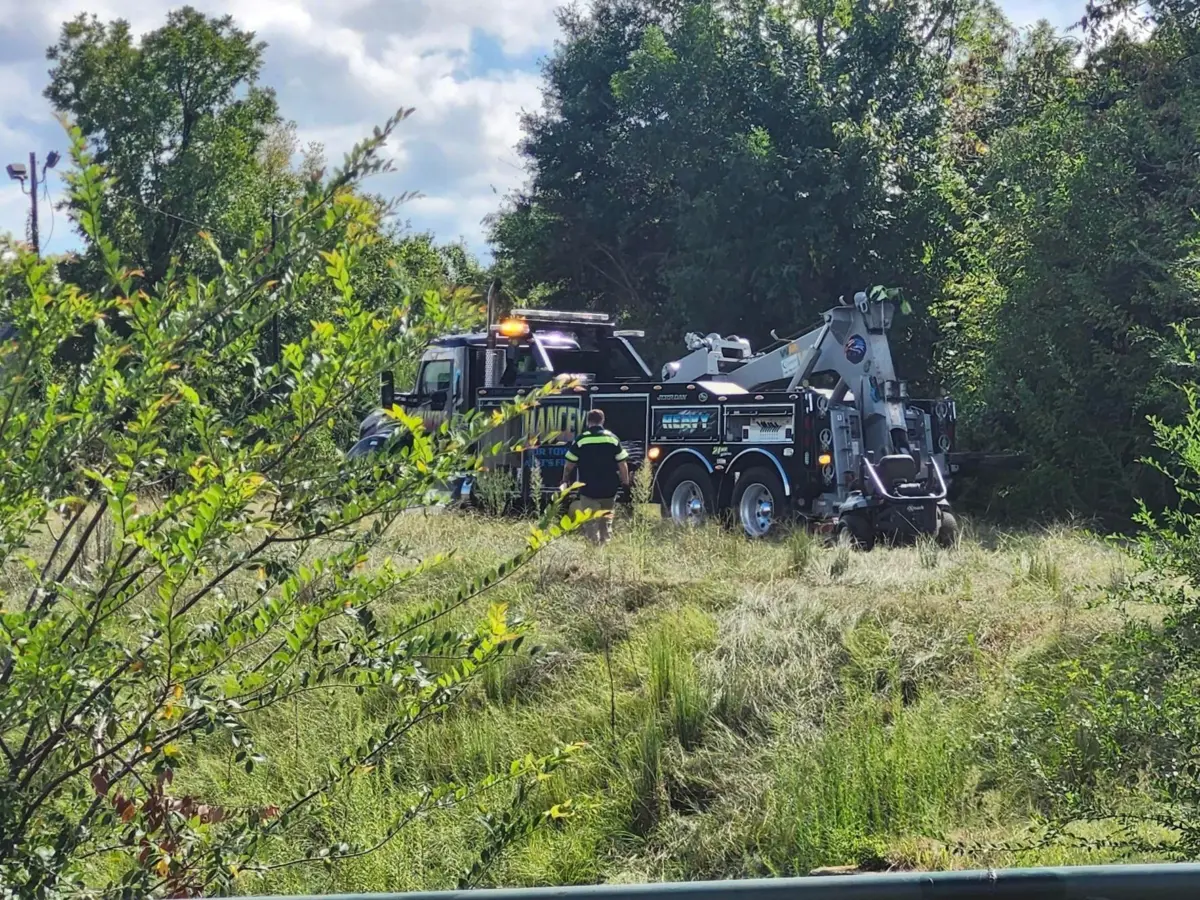
Following the medical assessment, specialized recovery units utilized winches and heavy rigging to haul the overturned commercial lawn mower out of the canal, clearing the waterway and securing the primary piece of physical evidence for the ongoing forensic and mechanical investigation.
Supporting Context & Metrics: Hazards in Commercial Landscaping
To fully understand the tragedy that unfolded in Augusta, it is essential to examine the broader safety landscape of the landscaping and groundskeeping industry. Working with heavy machinery near bodies of water, steep slopes, and uneven terrain is an inherently hazardous occupation that frequently ranks among the most dangerous civilian professions in the United States.
Occupational Hazards in Groundskeeping
According to data compiled by the U.S. Bureau of Labor Statistics (BLS) and the Occupational Safety and Health Administration (OSHA), the landscaping and groundskeeping services sector records hundreds of severe injuries and dozens of fatalities annually. While traditional workplace hazards often involve slips, trips, falls, and musculoskeletal strains, machinery-related incidents—specifically vehicle and equipment rollovers—account for a disproportionate percentage of workplace deaths.
Commercial riding mowers and zero-turn radius (ZTR) mowers are powerful tools designed for maximum efficiency. However, their high center of gravity, rapid maneuverability, and substantial weight make them uniquely vulnerable to lateral rollovers when operated on slopes exceeding manufacturer-recommended thresholds. When these machines tip over on flat ground, operators can often jump clear; however, when operated near ditches, retention ponds, rivers, or canals, a rollover frequently results in the operator and the machine falling into a body of water, leading to mechanical entrapment, crush injuries, and drowning.
The Physics of Mower Rollovers on Slopes
Safety engineers emphasize that the risk of a mower rollover increases exponentially with the steepness of the incline and the presence of wet or loose soil conditions.
- Slope Angles: Most commercial mower manuals dictate that machines should not be operated on slopes exceeding 15 degrees without specialized attachments, dual wheels, or slope-mowing stabilization units. Many canal banks feature grades exceeding 25 to 35 degrees.
- Traction Loss: Grass blades act like miniature rollers, especially when damp from morning dew, irrigation systems, or proximity to water. When a mower’s drive wheels lose traction, steering control is compromised, and momentum can carry the multi-hundred-pound vehicle down the slope regardless of braking input.
- Roll-Over Protection Structures (ROPS): While modern commercial mowers are increasingly equipped with ROPS and seatbelts designed to prevent an operator from being crushed underneath an overturning machine, older models or specific configurations may lack these safeguards, or operators may fail to utilize seatbelts, believing they restrict movement during frequent mounting and dismounting.
Regional and National Safety Metrics
In the state of Georgia, commercial landscaping is a booming industry driven by year-round vegetation growth, residential expansion, and municipal beautification projects. However, the rapid pace of commercial operations can sometimes create systemic pressures that challenge safety compliance.
Nationwide statistics indicate that:
- Rollovers and Tip-overs: Account for nearly 40% of all riding mower-related fatalities.
- Water Submersion: While less common than crush injuries from dry-land rollovers, water-adjacent incidents carry an exceptionally high mortality rate due to the dual threat of severe blunt-force trauma sustained during the fall and immediate asphyxiation via drowning.
- Age Demographics: Workers over the age of 55 represent a growing segment of the manual labor and landscaping workforce. Older workers may face distinct vulnerabilities regarding physical endurance, reaction times, and recovery capabilities in emergency scenarios involving heavy physical entrapment.
Official Statements and Ongoing Investigations
In the wake of the incident, local authorities and municipal agencies have moved swiftly to gather facts, secure the site, and initiate comprehensive investigations into the operational circumstances surrounding Robert Duncan’s death.
The Richmond County Sheriff’s Office Response
The Richmond County Sheriff’s Office took immediate control of the primary investigation, treating the site as an unattended industrial death pending forensic evaluations. In preliminary public statements, sheriff’s deputies confirmed the timeline of the events and identified the victim as 67-year-old Robert Duncan.
"Our thoughts and deepest condolences go out to the family, friends, and coworkers of Mr. Duncan during this unimaginably difficult time," a spokesperson for the Richmond County Sheriff’s Office stated. "This was a tragic workplace accident, and our investigators are working diligently to piece together every detail of how this mower overturned into the canal."
Detectives have conducted interviews with surviving crew members, the site supervisor, and representatives of the private lawn maintenance company that employed Duncan. Investigators are examining whether company safety protocols were strictly adhered to, whether adequate training regarding slope safety near water hazards was provided, and if the machinery involved was subjected to routine maintenance inspections.
Workplace Safety and Regulatory Inquiries
In addition to the local law enforcement investigation, industrial accidents of this nature typically attract the attention of federal and state regulatory bodies, most notably the Occupational Safety and Health Administration (OSHA).
OSHA mandates strict safety guidelines for employers operating in the landscaping sector, including:
- Conducting thorough hazard assessments of worksites prior to deploying heavy equipment.
- Ensuring that employees are properly trained in safe operating procedures for riding mowers, particularly on inclines, near drop-offs, and around open water bodies.
- Enforcing the mandatory use of seatbelts on machines equipped with Roll-Over Protection Structures (ROPS).
- Providing personal protective equipment and establishing clear emergency communication protocols among crew members.
If OSHA inspectors find that the private lawn maintenance company violated federal safety standards—such as failing to assess canal-edge hazards or allowing the operation of equipment on unsafe grades—the firm could face substantial financial penalties, mandatory safety overhauls, and potential civil liabilities.
The Employer’s Perspective and Industry Reaction
As of the publishing of this report, the privately owned lawn maintenance company employing Duncan has released limited public statements, citing the ongoing nature of the police and regulatory investigations. Representatives have indicated full cooperation with local authorities and expressed sorrow over the loss of their employee.
Industry associations across Georgia have used this tragedy to renew calls for heightened vigilance across the commercial landscaping sector. Trade groups are emphasizing that productivity pressures must never supersede fundamental safety measures, particularly when crews operate heavy machinery in high-risk environments such as retention basins, drainage ditches, and canal networks.
Future Outlook: Industry Reforms and Community Impact
The tragic death of Robert Duncan along the Augusta canal has left an indelible mark on his family, his coworkers, and the broader Augusta community. Beyond the immediate grief, the incident serves as a stark catalyst for examining how commercial landscaping operations are managed, regulated, and executed across the region.
Preventative Measures and Technological Innovations
Experts in agricultural and industrial machinery safety suggest that several key reforms could significantly reduce the likelihood of similar accidents in the future:
- Advanced Slope-Mowing Technology: The increased adoption of remote-controlled, tracked slope mowers allows operators to manage steep inclines and dangerous canal banks from a safe distance, removing the human operator from the physical seating position of the machine entirely.
- Mandatory Geofencing and Hazard Mapping: Companies are increasingly utilizing digital mapping tools to identify high-risk zones—such as water bodies and steep embankments—prior to sending crews into the field, establishing strict "no-ride" zones where walk-behind mowers or string trimmers must be used instead of heavy riding equipment.
- Enhanced Operator Training Programs: Standardized certification programs focusing specifically on stability physics, center-of-gravity shifts, and emergency ejection protocols can empower workers to recognize unstable conditions before a rollover occurs.
Legal and Civil Implications
As the official investigations conducted by the Richmond County Sheriff’s Office and regulatory agencies near completion, legal experts anticipate heightened scrutiny regarding civil liability. The family of Robert Duncan retains the right to pursue wrongful death litigation against the employer or equipment manufacturers if investigations reveal negligence, equipment malfunction, or a systemic failure to provide a safe working environment.
A Community in Mourning
In Augusta, a city deeply connected to its historic waterways and green spaces, the loss of a hardworking citizen during the execution of his daily duties is a poignant reminder of the unseen risks embedded in municipal and commercial infrastructure maintenance. As friends, family, and colleagues prepare to honor Robert Duncan’s memory, the community is left reflecting on the paramount importance of workplace safety, ensuring that every worker returns home safely at the end of the shift.
The investigation into the incident remains active and ongoing. Further updates regarding findings from the Richmond County Sheriff’s Office and potential actions by safety regulators are expected in the coming weeks.
Copyright 2026 WRDW via Gray Local Media, Inc. All rights reserved.

0 Comments