

EXECUTIVE OVERVIEW
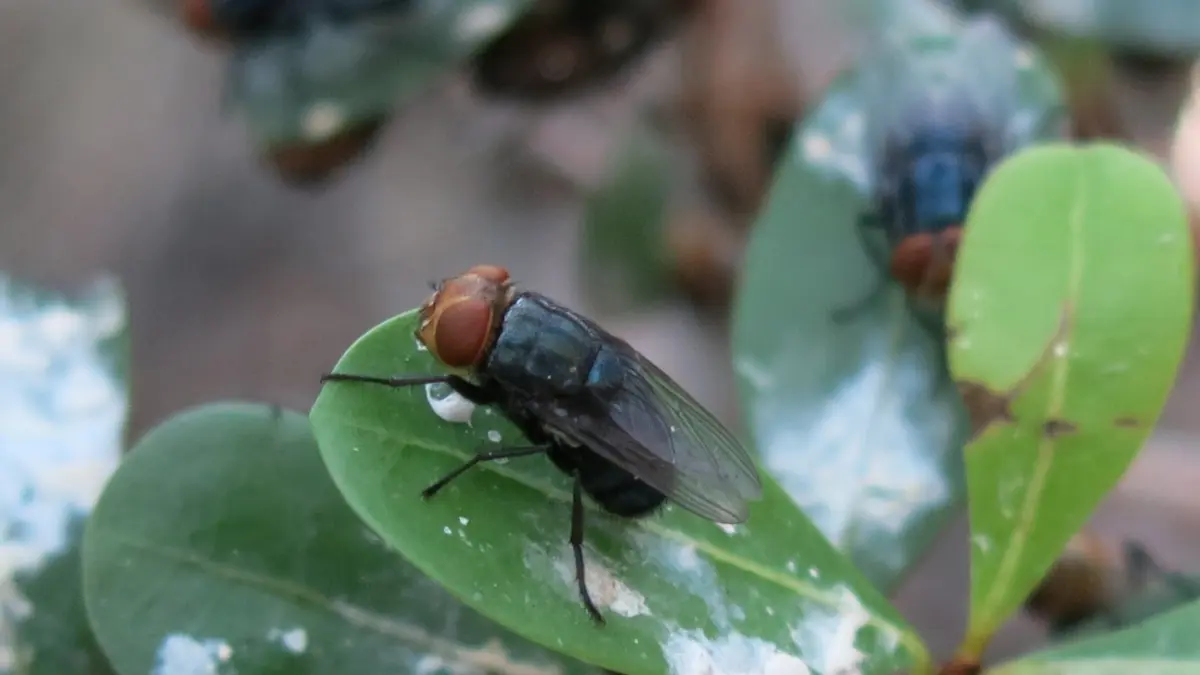
In a critical development for American agriculture and livestock biosecurity, the United States Department of Agriculture (USDA) has officially confirmed the first capture of a wild New World Screwworm (Cochliomyia hominivorax) fly in the United States. Trapped in Brewster County, Texas, the specimen marks an alarming milestone in ongoing regional biosecurity efforts.
The New World Screwworm is widely recognized as one of the most destructive biological threats to livestock, wildlife, and domestic animals in the Western Hemisphere. Unlike common flies, NWS female flies lay their eggs in the open wounds or mucous membranes of warm-blooded animals. Upon hatching, the parasitic larvae—commonly referred to as maggots—burrow deep into living flesh. This feeding behavior causes extensive, agonizing, and frequently fatal tissue damage if left untreated. While livestock producers bear the brunt of the economic and operational threat, the parasite also poses risks to pets, wildlife, native bird species, and, on rare occasions, humans.
The confirmation in Brewster County has prompted federal and state agricultural agencies to elevate their alert statuses. It has also validated the sophisticated multi-layered surveillance grid deployed by the USDA’s Animal and Plant Health Inspection Service (APHIS) and its New World Screwworm Rapid Response network. As agricultural authorities ramp up boots-on-the-ground monitoring, drone deployment, and strategic trap placement, the livestock industry faces renewed anxiety over the potential re-establishment of a pest that historical eradication programs spent decades clearing from the United States.
DETAILED CHRONOLOGY OF EVENTS AND SURVEILLANCE EFFORTS
The detection of the wild NWS fly in far West Texas is the culmination of months of heightened vigilance, cross-border intelligence sharing, and proactive biosecurity deployment.
The Brewster County Detection
The milestone specimen was recovered from a specialized trap situated in Brewster County, a vast and rugged terrain sharing a lengthy international border with Mexico. The region’s geography, characterized by sprawling ranches and difficult-to-monitor terrain, has long been identified by epidemiologists as a vulnerable entry corridor for migrating or wind-borne agricultural pests originating from Central and South America.
According to official disclosures shared via the New World Screwworm Rapid Response account on the social media platform X, the trap that captured the wild fly was strategically positioned just outside of known infested zones. This deliberate placement methodology is critical to the USDA’s surveillance architecture. By situating traps on the periphery rather than directly within sterile-fly release zones, federal entomologists can effectively differentiate between released sterile insects—used globally in Sterile Insect Technique (SIT) programs—and invasive wild populations attempting to establish a foothold.
Mobilization of the Rapid Response Network
Following the genetic and morphological confirmation of the wild specimen, APHIS immediately activated enhanced response protocols. Field epidemiologists, veterinary medical officers, and state animal health officials converged on the region to conduct a comprehensive sweep.
The response protocol extends far beyond simple trapping. Teams have initiated rigorous animal health checks across regional herds, inspecting livestock for any signs of cutaneous myiasis (flystrike). Furthermore, federal authorities have integrated advanced technological tools into their tracking repertoire, deploying unmanned aerial systems (drones) and infrared trail cameras to monitor wildlife corridors and remote ranching operations where livestock are less frequently handled.
SUPPORTING CONTEXT & METRICS: THE BIOLOGY AND THREAT OF COCHLIOMYIA HOMINIVORAX
To understand the gravity of the USDA’s recent confirmation, one must examine the biological mechanics of the New World Screwworm and the economic devastation it historically inflicted upon the global agricultural sector.
Biological Profile and Pathogenesis
Cochliomyia hominivorax translates roughly to "man-eater," a stark reflection of its predatory larval stage. The life cycle begins when a mated female fly is attracted to the smallest of wounds—ranging from routine castration, branding, and dehorning sites to tick bites, scratches, or even the navel of a newborn calf.
A single female can deposit hundreds of eggs at the edge of a wound. Within 12 to 24 hours, the larvae hatch and immediately begin feeding voraciously on living host tissue. Unlike secondary screwworms or common blowflies, which typically consume necrotic (dead) tissue, NWS larvae actively tunnel into healthy flesh, enlarging the wound and creating expanding pockets beneath the skin.
- Clinical Symptoms in Livestock: Animals infested with NWS exhibit behavioral changes including isolation from the herd, restlessness, and persistent licking or biting at the wound site. As the larvae feed, a characteristic foul-smelling, blood-tinged discharge emanates from the wound.
- Secondary Complications: If left unmanaged, secondary bacterial infections, systemic shock, and heavy blood loss rapidly lead to mortality. In untreated severe cases, livestock mortality rates approach 100%.
Economic Impact and Historical Eradication
Prior to the mid-20th century, the New World Screwworm cost American livestock producers hundreds of millions of dollars annually in dead weight, reduced milk production, leather damage, and labor-intensive veterinary treatments.
The turning point came with the development of the Sterile Insect Technique (SIT) by USDA entomologists Edward F. Knipling and Raymond C. Bushland. By mass-rearing millions of male screwworm flies, sterilizing them using ionizing radiation, and releasing them into the wild, scientists disrupted the reproductive cycle. Because female screwworms mate only once in their lifetimes, mating with a sterile male results in unfertilized eggs, causing the wild population to collapse.
Through a massive, multi-decade international campaign—spanning the United States, Mexico, and Central America—the USDA successfully pushed the screwworm barrier south, eventually establishing a permanent biological barrier in Panama. The confirmation of a wild fly in Texas serves as a sobering reminder of the constant pressure this barrier faces from shifting climate patterns, global trade, and wildlife migration.
OFFICIAL STATEMENTS AND INTERAGENCY STRATEGY
The confirmation has triggered a coordinated wave of communication from federal agricultural leadership, emphasizing transparency, technological integration, and producer cooperation.
In statements distributed through federal response channels, the USDA underscored the efficacy of its early-warning systems. "Our surveillance system is working," the agency reported via social media channels. Highlighting the multifaceted approach required to manage the threat, officials elaborated on the deployment of tactical resources:
"Using targeted fly traps, animal checks, drones, trail cams, boots-on-the-ground monitoring, and a network of partners tracking this pest. We strategically place traps just outside of infested areas to avoid capturing sterile flies and better pinpoint where wild flies may be moving."
Veterinary and agricultural economists emphasize that the success of this containment phase relies heavily on the "eyes and ears" of the American rancher. State veterinarians across the Southwest have issued urgent advisories urging producers to inspect their herds daily. Any suspicious wounds or cases of suspected myiasis must be reported immediately to state or federal animal health authorities. Prompt reporting allows diagnostic laboratories to examine larval samples rapidly, ensuring that potential localized outbreaks are aggressively stamped out before they can cascade into regional epizootics.
FUTURE OUTLOOK: SAFEGUARDING THE U.S. LIVESTOCK INDUSTRY
As the USDA and its state-level partners process the data streaming in from the Brewster County containment zone, the immediate future of American livestock biosecurity hinges on vigilance, adaptation, and sustained funding.
Technological Advancements in Surveillance
The modern fight against the New World Screwworm benefits immensely from technological leaps unavailable during the historical eradication campaigns of the 1960s. The deployment of drones equipped with high-resolution multispectral cameras allows agricultural monitors to survey inaccessible canyonlands and dense brush country in Brewster County and surrounding border sectors. Furthermore, advancements in molecular entomology—including rapid DNA barcoding and genetic tracking—enable researchers to determine the precise geographic lineage of captured wild flies, tracing whether a specimen originated from local overwintering populations or recent cross-border migration.
Producer Preparedness and Biosecurity Best Practices
For cattlemen, sheep producers, and horse owners, the detection in Texas serves as a clarion call to review standard herd management practices:
- Minimizing Surgical Procedures: Producers are advised to schedule routine husbandry procedures—such as branding, dehorning, and castration—during cooler winter months when blowfly and screwworm activity is naturally suppressed.
- Immediate Wound Treatment: Any accidental cuts, scrapes, or surgical sites must be treated immediately with EPA-approved larvicides or wound dressings to render them unattractive to ovipositing females.
- Quarantine Protocols: Newly purchased livestock entering a herd from southern regions should be thoroughly inspected for ectoparasites and wounds before integration.
Conclusion
The capture of the first wild New World Screwworm fly in Brewster County, Texas, is a watershed moment that tests the resilience of modern U.S. agricultural biosecurity. While the detection demonstrates that the USDA’s surveillance network functions precisely as designed—catching incursions at the earliest possible stage—it simultaneously underscores the perpetual vulnerability of America’s borders to invasive agricultural pests. Through unwavering cooperation between federal agencies, state veterinarians, and local livestock producers, the agricultural community remains steadfast in its mission to protect national herds and prevent the resurgence of one of nature’s most formidable parasites.

0 Comments