

Executive Overview
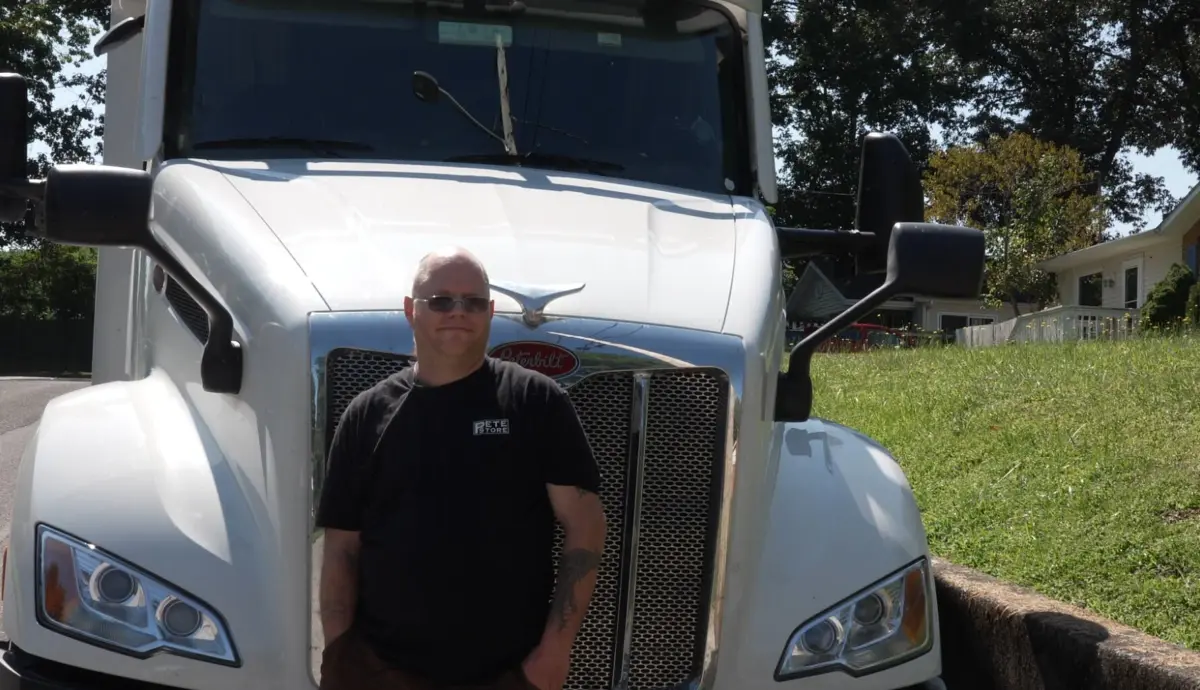
In the vast, sprawling ecosystem of American freight transport, the men and women behind the wheel of 40-ton commercial semi-trucks are often the unrecognized sentinels of the nation’s highways. Operating across lonely stretches of interstate, through midnight downpours and blinding snowstorms, they bear witness to the unpredictable realities of life on the American road. For Keith Rahn, a professional commercial motor vehicle operator hailing from Radford, Virginia, this quiet vigilance recently culminated in a rare and prestigious milestone: the receipt of his third official "Highway Angel" award.
Bestowed by the Truckload Carriers Association (TCA) and recognized broadly across the transportation sector, the Highway Angel program was established to honor professional truck drivers who go above and beyond the call of duty to perform acts of remarkable kindness, civic courage, and life-saving intervention. While many recipients earn the accolade for a single extraordinary act—such as pulling an injured motorist from a burning wreckage or administering emergency roadside medical aid—earning the distinction three separate times places Rahn in an elite echelon of safety ambassadors and community guardians.
Rahn’s most recent recognition stems from an encounter in August outside Salt Lake City, Utah, where a routine stop to walk his dog transformed into a high-stakes intervention. Witnessing a violent domestic altercation unfold in the parking lot of a busy travel plaza, Rahn chose not to look away. His swift, decisive action separated the aggressor from the victim, secured immediate safety for the endangered woman, and ultimately prompted the trucking industry to formally recognize his courage once again.
Yet, to hear Rahn tell it, the accolades miss the point entirely. Approaching his profession not merely as a way to earn a living, but as a profound personal calling rooted in universal human dignity, Rahn views his interventions as fundamental civic duties rather than acts of heroism. This comprehensive report examines the chronology of the August incident, explores the broader cultural and safety ethos defining modern American trucking, reviews the structural significance of the Highway Angel program, and investigates how one driver’s steadfast commitment to human life continues to redefine the responsibilities of the modern trucker.
Detailed Chronology: The Salt Lake City Incident
The events that led to Rahn’s historic third Highway Angel award unfolded on a seemingly ordinary day in August near Salt Lake City, Utah. For Rahn, who has spent the last nine years navigating the demanding schedules, grueling hours, and endless horizons of long-haul trucking, the stop at a local travel plaza was meant to be a mundane pause in a long shift.
Rahn had pulled his rig into the bustling truck stop primarily to stretch his legs and walk his canine traveling companion. The facility was typical of major freight corridors across the West: crowded with idling engines, the low hum of refrigeration units, and commercial drivers rushing to log their mandated rest breaks under federal hours-of-service regulations.
As Rahn tended to his dog, the ambient noise of the truck stop was pierced by the sharp, elevated tones of a heated verbal dispute. Initially, Rahn attempted to maintain professional detachment. Amid the stress and exhaustion common to life on the road, disputes between travelers are not entirely uncommon at major transit hubs.
"I just saw it as a verbal argument, which, I mean, you can hear him yelling. It’s not my business. I was going to stay out of it," Rahn recalled.
However, the situation rapidly escalated from verbal hostility into physical violence. In a split-second transition that transformed a passive observation into a critical emergency, Rahn witnessed a man rear back and strike a woman. The sound of the blow and the immediate vulnerability of the victim obliterated any hesitation.
"When I saw him reach back and swing, I knew I had to do something," Rahn stated.
Moving with decisive speed, Rahn intervened. Rather than escalating the confrontation with unnecessary aggression, his commanding physical presence and calm, authoritative intervention disrupted the assault. Rahn stepped directly between the assailant and the victim, effectively shielding her from further harm. Through clear, unyielding de-escalation tactics and physical positioning, Rahn compelled the male aggressor to retreat from the immediate area.
Once the attacker had departed, Rahn shifted his focus entirely to the safety and psychological well-being of the survivor. He secured her in a safe environment, assessed her immediate need for medical or law enforcement assistance, and remained with her until the volatile situation was fully stabilized and professional responders could be engaged.
Reflecting on the incident in the weeks that followed, Rahn maintained a remarkably humble perspective on his actions, describing the encounter through the lens of pure serendipity. "It was just being in the right place at the right time," he remarked.
Supporting Context & Metrics: The Evolution of a Trucking Philosophy
To understand Keith Rahn’s actions in Salt Lake City is to understand the personal philosophy of a man who found his life’s work unexpectedly. With nine years of commercial driving experience under his belt, Rahn’s entry into the industry was evolutionary rather than planned.
"I just saw it as a job and it turned into a passion," Rahn reflected.
That passion is anchored by a profound, sobering awareness of the physical reality of his occupation. Operating a commercial tractor-trailer combination means commanding a machine weighing up to 80,000 pounds when fully loaded. For Rahn, this immense mass translates directly into a heavy moral and operational responsibility.
"I’m driving 40 tons of steel going down the highway," Rahn explained, emphasizing the lethal potential of distracted, impaired, or reckless driving. "If somebody messes up and they’re drunk, or they do something irrational on the highway, I can kill somebody with this truck. And I don’t want that."
This acute awareness of highway safety extends far beyond defensive driving techniques or compliance with the Federal Motor Carrier Safety Administration (FMCSA) regulations. For Rahn, the responsibility of operating a massive commercial vehicle is intrinsically linked to how human beings treat one another in every sphere of life—whether on the asphalt ribbon of an interstate highway or in the concrete expanse of a Utah parking lot.
In an era often defined by intense social division, Rahn articulates a refreshing, radical egalitarianism forged on the open road. Operating across state lines and through diverse communities has given him a unique vantage point on American society, stripping away superficial differences in favor of fundamental human solidarity.
"I don’t care where you’re from. What you look like. What your political beliefs are. I don’t care about your skin color. Any of that. You’re a person. And a person deserves respect," Rahn asserted.
This core value system explains why Rahn could not ignore a woman being assaulted in a truck stop parking lot. To him, ignoring human suffering is incompatible with the ethical obligations of a professional driver. When a fellow human being is in distress, cultural, political, or geographical boundaries dissolve, leaving only the immediate duty to protect and serve.
Official Statements & Industry Recognition: The Highway Angel Legacy
The formal recognition of Rahn’s actions comes via the Truckload Carriers Association’s celebrated Highway Angel program. Established decades ago, the program seeks to shine a light on the untold thousands of acts of heroism performed quietly by truck drivers across North America each year. While the public often reads headlines about highway accidents and supply chain logistics, the human side of the industry—drivers rescuing crash victims, tracking missing children, putting out vehicle fires, and intervening in criminal assaults—frequently goes unnoticed.
The Highway Angel program provides a vital counter-narrative, elevating professional drivers from stereotypes to their rightful place as frontline community protectors. Earning a single Highway Angel award is a career-defining achievement for most operators. To earn three distinct awards places Rahn in a rare tier of drivers whose careers are repeatedly punctuated by extraordinary acts of public service.
Despite the corporate plaques, press releases, and industry accolades, Rahn consistently deflects personal glory. When asked about receiving his third award for stopping the domestic assault in Utah, he rejected the label of hero entirely.
"I don’t classify it as being heroic," Rahn insisted. "It’s things that we as people need to do to look out for each other."
This humility resonates deeply within the trucking community, where camaraderie and mutual aid are foundational cultural tenets. Truck drivers have long relied on each other across CB radios, remote rest areas, and lonely stretches of desert highway. Rahn’s philosophy simply extends that traditional highway brotherhood to the broader fabric of society. He views looking out for the vulnerable not as an extraordinary exhibition of exceptional courage, but as the baseline expectation for ethical human behavior.
Industry advocates point to drivers like Rahn as vital ambassadors for the transportation sector. At a time when the trucking industry faces persistent driver retention challenges, public image reconstruction, and immense pressure to maintain supply chain fluidity, operators who embody integrity, compassion, and civic responsibility serve as powerful role models for the next generation of commercial drivers.
Future Outlook: The Role of the Modern Trucker in Community Safety
As Keith Rahn logs more miles across the American highway system from his base in Radford, Virginia, his story prompts a broader examination of the evolving role of the commercial truck driver in the 21st century.
Traditionally viewed purely as economic units responsible for moving freight from point A to point B, commercial drivers are increasingly recognized as mobile civic sentinels. Because they occupy an elevated vantage point in their cabs and spend thousands of hours each year traversing the nation’s infrastructure, truck drivers are frequently the first to encounter highway emergencies, natural disasters, and public safety threats.
Programs like the Highway Angel initiative, alongside specialized training programs such as Truckers Against Trafficking (TAT)—which trains commercial drivers to identify and report human trafficking—demonstrate a structural shift within the transportation industry. Companies and trade associations are actively equipping drivers with the knowledge and confidence to safely intervene when they encounter danger on America’s roadways and at travel plazas.
Rahn’s experiences underscore the reality that safety and security in transit are not the exclusive domain of sworn law enforcement officers. While professional responders remain essential, the initial intervention by an alert, courageous citizen often prevents tragedy before emergency services can arrive. By stepping between an abuser and a victim in Salt Lake City, Rahn demonstrated that situational awareness paired with moral courage can alter the trajectory of a violent crime in seconds.
Looking forward, the trucking industry hopes that highlighting stories like Rahn’s will inspire both fellow drivers and the general motoring public to adopt a heightened sense of shared responsibility. In a fragmented world where bystanders often record incidents on smartphones rather than offering assistance, Rahn’s willingness to physically intercede stands as a powerful reminder of the enduring strength of human empathy.
For Keith Rahn, however, the future holds no grand ambitions of resting on his laurels or basking in the glow of his historic third Highway Angel award. His focus remains fixed on the road ahead, the reliable delivery of his freight, the safety of his canine companion, and the quiet, steady fulfillment of his personal code: respecting every individual he encounters and looking out for his fellow human beings, no matter where the highway takes him.

0 Comments