
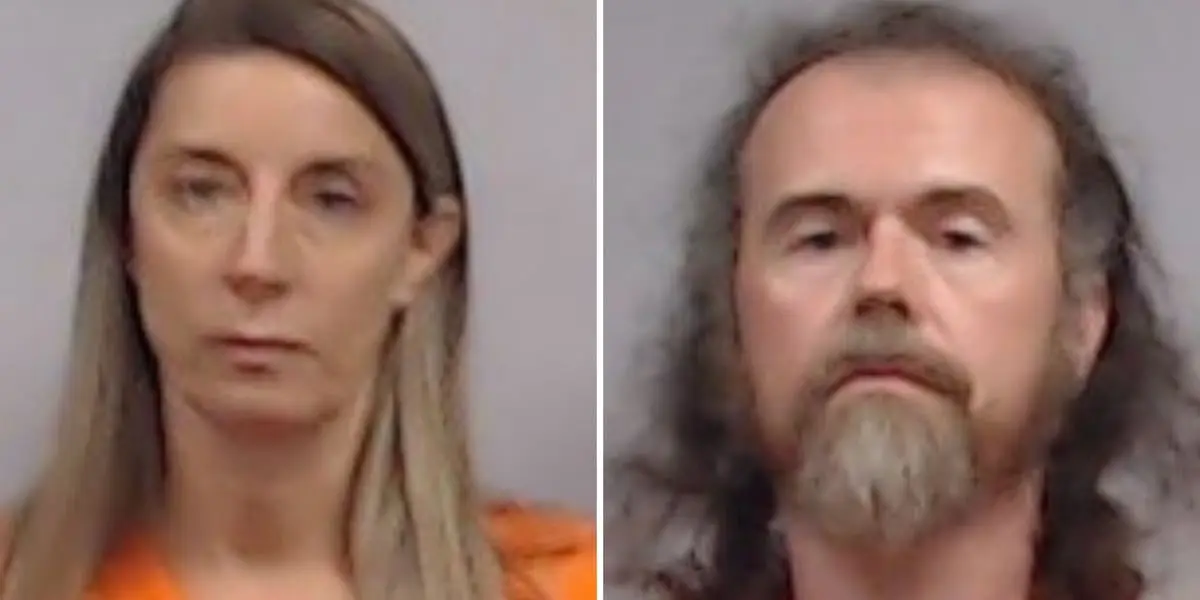

CLARKSBURG, W.Va. — In a case that has sent shockwaves through the local community and law enforcement circles alike, a West Virginia man and woman are behind bars facing grave felony charges. Authorities allege the pair subjected an 11-year-old boy to prolonged physical abuse and inhumane confinement, locking the child inside a makeshift wooden enclosure for hours at a time and administering brutal corporal punishment.
The investigation, spearheaded by the Harrison County Sheriff’s Office in collaboration with Child Protective Services (CPS), has exposed a disturbing environment of systemic abuse within a Clarksburg residence. The suspects, identified as 44-year-old Michael Gibson and 48-year-old Angela Gibson, are currently being held without bond at the North Central Regional Jail as the legal process unfolds.
This comprehensive report examines the executive overview of the arrests, the detailed chronology of the investigation, the supporting context and statistical data surrounding child endangerment in the region, statements from official entities, and the future outlook for the ongoing judicial proceedings.
Executive Overview
The gravity of the allegations against Michael and Angela Gibson cannot be overstated. According to court documents filed in Harrison County, the dynamic of the household came to light after the 11-year-old victim disclosed horrific details of his daily existence to authorities. The child reported being routinely locked away in a restrictive, modified structure disguised as a bed—described by investigators as a cage featuring four solid walls and a roof—for hours on end.
Compounding the psychological and physical toll of confinement, the boy alleged that Michael Gibson subjected him to severe physical beatings using a paddle. The strikes were reportedly delivered with such force that the resulting physical pain lingered for days. Subsequent medical and investigative reviews corroborated these claims, with deputies examining photographic evidence provided by CPS that revealed extensive, severe bruising in various stages of healing across the child’s body.
As a direct result of these findings, law enforcement secured and executed a search warrant at the Gibson residence. Inside the child’s bedroom, deputies discovered physical evidence matching the victim’s harrowing description: a locking cage used to restrict his freedom of movement.
- Michael Gibson has been formally charged with:
- Child neglect creating a substantial risk of death or serious bodily injury.
- Child abuse resulting in injury.
- Angela Gibson has been formally charged with:
- Child neglect creating a substantial risk of death or serious bodily injury.
Both individuals were taken into custody without incident and transported to the North Central Regional Jail. Judicial authorities have denied them bond, reflecting the severe nature of the allegations and the perceived flight risk and danger to the community. While the exact familial or legal relationship between the suspects and the victim has not been explicitly detailed in preliminary court filings, the case has prompted intense scrutiny from child welfare advocates across the state of West Virginia.
Detailed Chronology of the Investigation
The uncovering of the alleged abuse in Clarksburg followed a methodical sequence of investigative steps taken by local child welfare workers and law enforcement officers. While the exact date that initiated the confidential report remains shielded to protect the victim’s privacy, the public record outlines a swift escalation from initial disclosure to the execution of arrest warrants.
The Initial Disclosure
The investigation began when the 11-year-old victim disclosed details of his treatment to authorities. Speaking in a controlled and supportive environment, the child articulated a daily routine characterized by fear, isolation, and physical punishment. He detailed how he was placed inside a homemade wooden structure located within his bedroom. This enclosure—built with four solid walls and a solid roof—was equipped with a locking mechanism designed to strip the child of his autonomy and keep him confined for extended periods.
Furthermore, the boy explained the compounding nature of the abuse. Because he was locked inside the enclosure for hours at a time, he inevitably struggled with basic bodily functions, occasionally soiling himself. Rather than prompting care or accommodation, these occurrences were treated by the adults as behavioral infractions, resulting in additional discipline.
Corroboration and Photographic Evidence
Following the child’s initial statements, Child Protective Services intervened to ensure the immediate physical safety of the minor and documented his physical condition. Investigators reviewed photographic evidence depicting severe bruising across the victim’s body. Forensic analysis of the bruises indicated that the injuries were sustained over multiple incidents, evidenced by various stages of healing.
The victim specifically named Michael Gibson as the individual who struck him with a paddle. The boy reported that the physical agony from these beatings was persistent, lasting for days after the blows were delivered.
Execution of the Search Warrant and Arrests
Armed with the victim’s testimony and the photographic documentation from CPS, detectives from the Harrison County Sheriff’s Office petitioned for and received a search warrant for the Gibson residence.
Upon entering the home, deputies conducted a systematic search of the premises and located the physical apparatus described by the victim: a locking cage situated directly inside the child’s bedroom. The physical presence of the custom-built enclosure served as critical corroborative evidence, aligning precisely with the timeline and methodology outlined by the young boy.
With the physical evidence secured and statutory thresholds for felony charges met, law enforcement took both Michael and Angela Gibson into custody. The suspects were processed at the Harrison County Sheriff’s Office before being transferred to the North Central Regional Jail, where they await their initial court appearances under a no-bond status.
Supporting Context and Metrics: Child Welfare in West Virginia
The arrest of Michael and Angela Gibson highlights broader systemic challenges regarding child abuse, neglect, and family preservation within the state of West Virginia. To understand the gravity of this case, it is essential to examine the socio-legal landscape of child welfare in the region.
The Prevalence of Child Neglect and Abuse in Appalachia
West Virginia has historically struggled with high rates of child abuse and neglect referrals, frequently exacerbated by socioeconomic pressures, substance abuse epidemics, and strained social service networks. According to data compiled by the West Virginia Department of Human Services (DoHS), thousands of children enter the foster care system annually due to substantiated instances of abuse or severe neglect.
Cases involving prolonged physical confinement, such as the one uncovered in Clarksburg, represent an extreme subset of child abuse cases. Criminologists and child psychologists note that severe confinement cases often feature elements of:
- Systemic Isolation: Restricting a child’s interaction with the outside world, extended family, and educational or community peers to prevent disclosure.
- Coercive Control: Utilizing psychological intimidation alongside physical barriers to enforce compliance.
- Escalating Punitive Measures: A cyclical pattern where natural human limitations (such as physiological needs resulting from prolonged confinement) are punished as intentional disobedience.
The Role of Child Protective Services and Law Enforcement Partnerships
The successful intervention in the Gibson case underscores the critical importance of inter-agency cooperation. Child Protective Services acts as the frontline diagnostic entity, receiving tips from mandatory reporters—such as educators, healthcare workers, and social counselors—who are legally obligated to report suspected abuse.
Once a threshold of credible risk is established, law enforcement agencies like the Harrison County Sheriff’s Office possess the statutory authority to execute search warrants, secure forensic evidence, and take suspects into custody. In cases featuring physical confinement and documented injuries, this partnership is vital for transitioning a welfare check into a criminal prosecution.
Official Statements and Legal Framework
As the legal proceedings advance, the terminology utilized within the charging documents provides a clear indication of how the prosecution intends to frame the case.
Understanding the Charges
Under West Virginia law, the charges filed against Michael and Angela Gibson carry significant statutory weight:
- Child Neglect Creating Substantial Risk of Death or Serious Bodily Injury:
This charge addresses the environment of extreme hazard created by the caregivers. Even in the absence of an immediate, fatal medical emergency at the moment of intervention, the act of locking an 11-year-old child in a confined wooden structure for hours—resulting in involuntary soiling and subsequent punishment—meets the legal definition of creating a substantial risk to the child’s physical and psychological well-being. - Child Abuse Resulting in Injury (Specific to Michael Gibson):
This charge focuses on the direct application of physical force. Supported by photographic evidence of multi-stage bruising and the victim’s statements regarding the use of a paddle, prosecutors will seek to demonstrate that Michael Gibson inflicted purposeful bodily harm exceeding permissible bounds of parental corporal punishment.
The Standard for No-Bond Status
The decision by the judiciary to hold both suspects without bond at the North Central Regional Jail is indicative of the perceived threat the accused pose to the community and the integrity of the judicial process. In West Virginia, courts may deny bail when the proof is evident or the presumption is great that the defendant committed a violent felony offense, particularly one involving a dependent minor residing within the same household.
Official comment from the Harrison County Sheriff’s Office emphasizes that the investigation remains active. Detectives are continuing to review household records, interview potential witnesses, and assess whether any other individuals had knowledge of or participation in the conditions within the Clarksburg home.
Future Outlook and Judicial Next Steps
The road ahead for the judicial system, the community, and most importantly, the young victim, involves a complex series of legal and rehabilitative milestones.
Upcoming Legal Proceedings
- Preliminary Hearings: Both Michael and Angela Gibson are scheduled to face preliminary hearings in the Harrison County magistrate court system. During these hearings, the state will present foundational evidence—including testimony from investigating deputies and CPS workers—to establish probable cause for the cases to be bound over to a grand jury.
- Grand Jury Indictments: Given the severity of the charges, the cases are expected to be presented to an upcoming Harrison County Grand Jury for formal indictments, which will transition the proceedings to the circuit court level for trial preparation.
- Defense Strategies: Defense counsel appointed or retained for the Gibsons will likely scrutinize the execution of the search warrants, examine the forensic integrity of the photographic evidence, and challenge the specific timelines of confinement alleged by the state.
The Victim’s Recovery and Long-Term Outlook
While the legal system works to determine accountability, the primary focus among child welfare advocates remains the long-term recovery of the 11-year-old victim. Survivors of severe confinement and prolonged physical abuse frequently require intensive trauma-informed psychological therapy, specialized educational support, and a stable, nurturing foster or kinship placement.
Child advocates emphasize that community awareness remains a vital defense against hidden abuse. The Clarksburg case serves as a grim reminder that severe endangerment can occur behind closed doors, making vigilance from neighbors, mandatory reporters, and local authorities an essential lifeline for vulnerable children.
Further updates on this developing story will be provided as court dockets are updated and official statements are released by the Harrison County prosecuting attorney’s office.

0 Comments