

Executive Overview
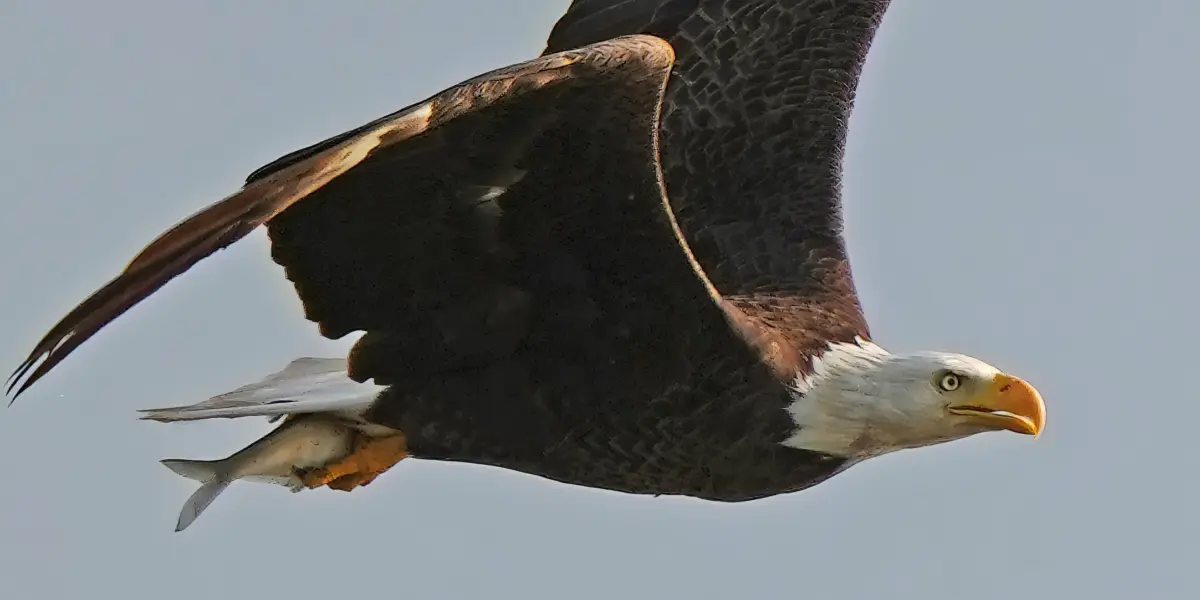
MORGAN CITY, La. — Perched majestically atop a weathered Louisiana cypress tree in Lake Palourde near Morgan City, a bald eagle scans the murky waters below—a pristine scene of wildlife recovery that would have been entirely inconceivable just a few short decades ago. Today, this breathtaking tableau is not a rare stroke of luck, but a daily occurrence for local tour operators and nature enthusiasts who navigate the sprawling, moss-draped waterways of south Louisiana.
“We can see up to 60 eagles in a tour,” says Billy Gaston, a local boat captain who makes his living guiding eco-tourists through the rich aquatic ecosystems of the region. Gaston’s enterprise, aptly named “A Cajun Man’s Swamp Tour,” has become a magnet for tourists, dedicated conservationists, and a passionate following of wildlife photographers who brave the elements to capture the nation’s symbol in its natural habitat.
Among those regulars is Greg Robichaux, a devoted photographer who rarely misses an excursion. “I look forward to every one of them I can come to,” Robichaux says. He remembers a time, not all that long ago, when encountering a bald eagle in the wild was a monumental, once-in-a-lifetime event. “I got to see one flying over our heads, and everyone stopped what they were doing just to go see one. That’s how rare they were.”
That collective national gasp of awe has transformed into a familiar, if still deeply stirring, daily sight. Once brought to the very precipide of extinction by human intervention and widespread chemical contamination, the American bald eagle population has executed one of the most astonishing comebacks in the history of modern conservation.
Yet, as environmental scientists and local conservationists are quick to point out, this hard-won victory is not the end of the story. While federal protections and targeted bans successfully rescued the species from the brink of oblivion, contemporary eagles face an evolving gauntlet of environmental pressures. Rapid coastal erosion, habitat loss, and climate vulnerabilities threaten the delicate ecosystems that these apex predators—and the fisheries they depend upon—require for survival.
Detailed Chronology: From the Brink of Oblivion to the Recovery Era
To truly appreciate the current abundance of bald eagles across the bayous and lakes of Louisiana, one must look back at the harrowing trajectory of the species during the mid-20th century. The timeline of the bald eagle’s decline and subsequent resurgence serves as a classic textbook study in anthropogenic ecological damage and subsequent environmental remediation.
The Mid-Century Nadir (1960s)
By the 1960s, the American bald eagle was in a state of freefall across the contiguous United States. Historical records indicate that roughly 400 breeding pairs were known to nest in the lower 48 states—a devastatingly low number for a apex predator whose historical populations had numbered in the hundreds of thousands before European settlement.
In Louisiana, the picture was even gloomier. State wildlife biologists estimated that there were as few as five breeding pairs left within the entire state boundaries. The majestic bird was effectively vanishing from the southern landscape, its iconic silhouettes disappearing from the cypress canopy.
The DDT Crisis and Silent Nests
Scientists investigating the population crash soon laid the blame squarely on a synthetic pesticide: Dichlorodiphenyltrichloroethane, universally known as DDT. Widely deployed across American agriculture and municipal mosquito-control programs in the post-World War II era, DDT proved to be a chemical time bomb for raptors at the top of the food chain.
As insects and smaller fish ingested the persistent chemical, it accumulated in their tissues, a process known as biomagnification. When bald eagles consumed contaminated fish and waterfowl, the toxin concentrated in their bodies.
“It had the impact of making the shells in their eggs couldn’t get hard, and so, when they were sitting, they would break their eggs,” explains Seth Blitch, Director of Conservation for The Nature Conservancy in Louisiana. “Not on purpose, of course. But that’s one of the impacts of DDT.”
Instead of incubating healthy chicks, adult eagles unwittingly crushed their own clutches under their own body weight during incubation. Reproductive rates plummeted to near zero, aging out the adult population with virtually no generation behind them to replace them.
Legislative Intervention and the Recovery Act
The turning point arrived when public outcry, catalyzed by Rachel Carson’s landmark 1962 book Silent Spring, forced the federal government to reckon with the ecological fallout of synthetic pesticides. In 1972, the Environmental Protection Agency (EPA) issued a cancellation order for DDT, effectively banning its use in the United States.
Simultaneously, the legislative framework of the United States shifted profoundly. The passage of the Endangered Species Act (ESA) in 1973 provided unprecedented legal protections for the bald eagle and its critical nesting habitats. Under the umbrella of the ESA, federal and state agencies, alongside private conservation groups, implemented rigorous monitoring, habitat preservation, and captive breeding or reintroduction programs.
Delisting and Modern Abundance (2007–Present)
The regulatory and conservation blitz worked beyond expectations. Slowly, generation by generation, the eggshells thickened, nesting success rates rebounded, and the population curves bent upward.
By 2007, the recovery was so robust that the U.S. Fish and Wildlife Service officially removed the bald eagle from the federal list of endangered and threatened species. It was, and remains, widely celebrated as one of the greatest triumphs in the annals of global conservation.
By 2020, nationwide estimates by federal wildlife biologists placed the U.S. bald eagle population at an astounding 300,000 birds—roughly four times higher than estimates recorded just a decade prior. In Louisiana, state surveys now record several hundred active eagle nests, turning what was once a miraculous sighting into a regular, reliable feature of the local wilderness.
Supporting Context & Metrics: The Ecology of the Southern Eagle
Understanding the current status of Louisiana’s bald eagles requires examining their unique life history, seasonal behaviors, and ecological dependencies.
Unlike many migratory bird species that merely pass through the Mississippi Flyway on their way north or south, Louisiana serves as a permanent or seasonal home for a robust breeding population. While northern eagles migrate south to escape punishing winter freezes, Louisiana’s resident and wintering eagles operate on a distinct schedule dictated by the subtropical climate.
Breeding and Nesting Dynamics
- Winter and Spring Nesting: While northern raptors nest during the late spring and summer, Louisiana eagles initiate their breeding cycle during the winter and early spring months.
- Hatching Milestones: Eaglets typically break through their shells by January or February.
- Fledging Timeline: By 10 weeks of age, the young birds are generally large enough to ward off most natural predators, marking a critical milestone where biologists consider the nest a success. By 12 weeks, the juvenile eagles take their maiden flights, testing their massive wingspans over the swamp waters.
- Resiliency and Urban Adaptation: Proving their remarkable adaptability, some bald eagle pairs have bypassed remote wilderness areas entirely, establishing massive stick nests high above the ground in suburban neighborhoods and urbanized outskirts.
Quantitative Overview of Recovery Metrics
| Metric Category | Historical Low (1960s) | Modern Status (2020–Present) |
|---|---|---|
| Lower 48 Nesting Pairs | ~400 pairs | 300,000+ total individuals (USFWS) |
| Louisiana Breeding Pairs | As few as 5 pairs | Several hundred active nests |
| Primary Threat Factor | DDT bioaccumulation & eggshell thinning | Coastal erosion & habitat fragmentation |
| Conservation Status | Listed as Endangered (1973) | Delisted / Recovered (2007) |
Official Statements and Expert Insights
The dramatic turnaround of the American bald eagle is a testament to what coordinated environmental policy can achieve, but experts urge vigilance. The voices of those who study and live alongside these birds offer a sobering counterweight to the celebratory tone of the population numbers.
Reflecting on the rarity of past encounters, Greg Robichaux recalls the days when a single sighting brought communities to a standstill. Today, that novelty has worn off, replaced by a quiet appreciation for the birds’ steadfast presence.
Billy Gaston, whose livelihood depends on the health of the Lake Palourde ecosystem, expresses a sense of enduring wonder. “Every time I see one, it just never gets old,” Gaston remarks. “I just love watching the bald eagles, all the other birds.”
However, Seth Blitch of The Nature Conservancy strikes a more cautionary note regarding the long-term security of the species. When evaluating the simplicity of past conservation wins—such as the banning of DDT—Blitch points out that chemical bans, while monumental, addressed a specific, acute poison. Today’s threats are far more systemic.
“I don’t think anything’s home free because of how fast habitats are still being converted,” Blitch warns. “Eagles need large trees. They need a large food supply. They’re really larger birds when they have a brood of chicks, they’re really hungry chicks. They need a lot of food.”
Blitch emphasizes that the conservation equation for raptors is inextricably linked to the broader health of south Louisiana’s landscape. “Eagles are like pelicans in many ways because there was a concentrated effort to help bring those populations back, it was successful,” Blitch notes. Yet, the ongoing degradation of the coastal zone presents a new, insidious hurdle.
Future Outlook: The Next Frontier for Louisiana’s Eagles
As the bald eagle population enters its second decade off the federal endangered species list, the conservation community is shifting its focus from numerical recovery to habitat resilience. For Louisiana, this means confronting an existential crisis along the coast.
The Threat of Coastal Land Loss
South Louisiana is experiencing some of the most severe coastal erosion rates on the planet, driven by a combination of sea-level rise, subsidence, canal dredging, and the disconnection of the Mississippi River from its historic deltaic floodplains. This crisis does not merely threaten human infrastructure and salt marshes; it poses a direct existential challenge to the forest canopy that raptors depend upon.
“In Louisiana, the challenges include the simple loss of real estate,” Blitch explains. “The birds rely on healthy fisheries, and south Louisiana’s coastal land loss threatens to deprive them of more habitat.”
Eagles require robust, mature trees—such as the massive ancient cypress and bottomland hardwoods found near Lake Palourde—to support their multi-hundred-pound nests, which are added to and reused year after year. As saltwater intrusion kills off these freshwater and intermediate forests, and as storms like hurricanes topple aging giants, the physical footprint available for nesting shrinks.
“That includes coastal forests, not just salt marsh,” Blitch adds. “But everything that’s in that zone, and there’s still a lot of big trees; as you lose that, there’s just less space for eagles to be.”
The Annual Migration Cycle
Compounding these stationary habitat pressures is the natural seasonal rhythm of the birds themselves. While Louisiana boasts a thriving resident population, many of the eagles that spend the winter months hunting over the state’s bountiful lakes and marshes embark on an annual northward migration as the weather warms.
Beginning in late spring, some of these majestic raptors depart Louisiana to spend the summer months in northern climes. They will begin their return journey southward around September or October, arriving just in time to stake out territories and prepare for the next breeding season.
Conclusion: A Fragile Triumph
The sight of a bald eagle dominating the skyline above Lake Palourde remains one of American conservation’s greatest trophies. It proves that science-based policy, public engagement, and legal frameworks like the Endangered Species Act can step in and pull a biological icon back from the brink of oblivion.
Yet, as Billy Gaston guides another boatload of awestruck tourists past the cypress knees of Morgan City, and as conservationists like Seth Blitch monitor the creeping tides of the Gulf of Mexico, the underlying message is clear. The recovery of the bald eagle is not a finished monument set in stone; it is an ongoing, dynamic stewardship. Ensuring that future generations can witness sixty eagles in a single afternoon will require nothing less than the active defense of the wild, watery landscapes they call home.

0 Comments