

Executive Overview
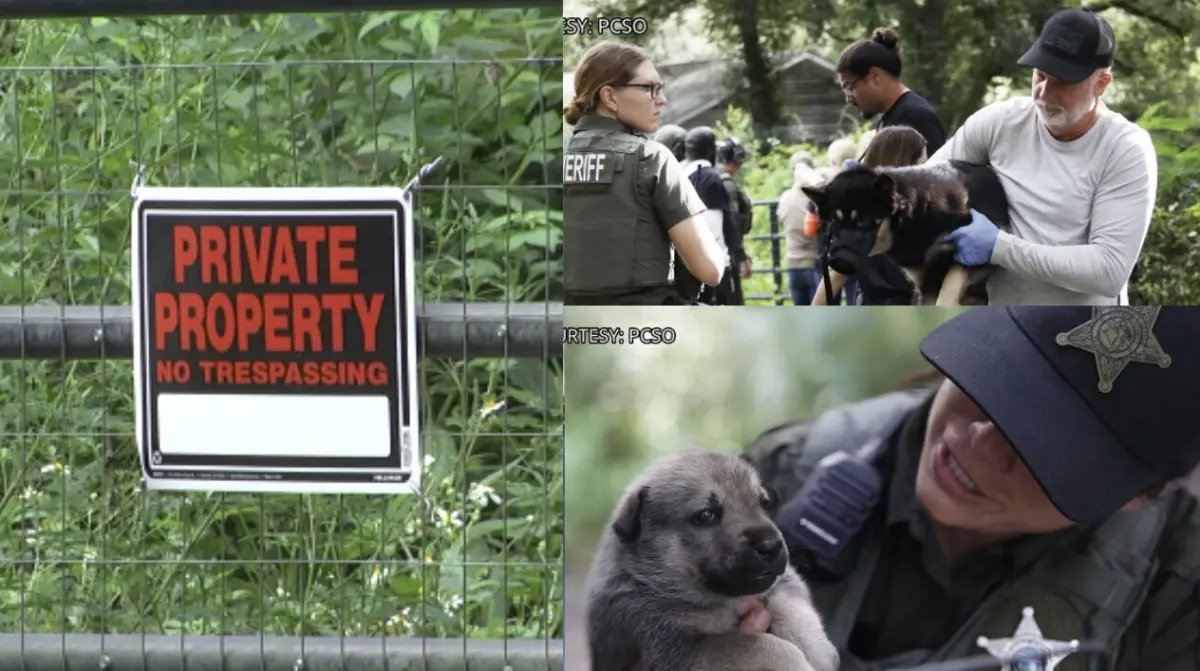
MELROSE, Fla. — A protracted neighborhood crisis in Putnam County reached a dramatic conclusion when local law enforcement and animal control personnel descended upon a residential property, executing a high-stakes search warrant that resulted in the seizure of 36 husky-mix dogs and puppies. The raid, which finally silenced years of ceaseless barking and brought an end to an environment of palpable fear, led to the immediate arrest of the property’s owner, 67-year-old Mark Plosila.
Plosila now faces severe legal repercussions, including one felony count and one misdemeanor count of animal cruelty, with investigators signaling that additional charges remain pending as forensic reviews and neighborhood interviews continue.
The operation, jointly conducted by deputies with the Putnam County Sheriff’s Office (PCSO) and Putnam County Animal Services, marks the culmination of a multi-year ordeal that tested the limits of local municipal codes and pitted residents against a rapidly deteriorating domestic environment. Of the 36 animals removed from the premises—a total that included 11 vulnerable puppies—authorities made the difficult determination to humanely euthanize 15 of the adult dogs. According to public safety officials, these specific animals exhibited extreme, unmanageable aggression that posed an immediate and catastrophic threat to public safety and precluded safe rehabilitation or adoption.
While the decision to euthanize nearly half of the seized animals has sparked localized debate and online scrutiny, those living directly adjacent to the property view the intervention as a long-overdue triumph for community safety. For years, residents endured what they described as a relentless auditory assault and a growing physical hazard, characterized by pack-mentality violence, inter-dog maulings, direct threats from the owner, and terrifying close calls with elderly community members.
The successful raid was not merely a product of traditional law enforcement initiative; it serves as a watershed moment highlighting the intersection of civil litigation and criminal intervention. Frustrated by the sluggish pace of traditional municipal code enforcement, neighbors took the unprecedented step of organizing a civil lawsuit against Plosila. Spearheaded locally by resident and attorney Linda Wagner, this civil action successfully secured a court order compelling Plosila to surrender the vast majority of his canine population—a mandate that ultimately set the stage for the definitive criminal seizure executed by the Sheriff’s Office.
Detailed Chronology of Events
To fully understand how a quiet residential neighborhood in Melrose transformed into the epicenter of a county-wide public safety emergency, one must trace the timeline of events that spans more than three tumultuous years. What began as an annoyance of noise slowly metastasized into a volatile, dangerous environment defined by neglect, aggression, and systemic institutional frustration.
Phase 1: The Onset of Noise and Neglect (2023–2024)
For Linda Wagner and her fellow residents living across the street from Mark Plosila’s property, the daily reality was dictated by sound.
"It’s actually startling to us," Wagner recounted, reflecting on the eerie silence that followed the raid. "We don’t know what to do with it being quiet because we’re just used to barking all the time. I can tell you every morning when I would wake up, it’s the first sound we heard, every day, for three years."
During this initial phase, the primary complaint centered on noise pollution and the sheer volume of animals accumulating on the residential lot. However, as months bled into years, the internal dynamics within Plosila’s property shifted dramatically. Without adequate socialization, space, or containment, the husky-mixes began to form a destructive pack hierarchy. Neighbors noted an alarming escalation in behavior, transitioning from routine canine vocalization to vicious, territorial aggression.
Phase 2: Escalation to Pack Violence and Direct Threats (Late 2024–Early 2025)
As the pack grew in size and hostility, the property transformed from a nuisance into an active hazard zone. Residents reported witnessing frequent, brutal fights among the dogs directly on the property. These incidents were not isolated; neighbors painstakingly documented at least four separate, severe canine-on-canine attacks on video, providing indisputable evidence of the animals’ deteriorating welfare and aggressive tendencies.
The danger soon spilled past the property lines. Several elderly residents living in the immediate vicinity experienced frightening confrontations with dogs that managed to breach inadequate fencing or escape during feeding times. Wagner herself noted that she was nearly attacked on multiple occasions. When residents attempted to engage Plosila directly, seeking a neighborly resolution to the mounting hazards, their concerns were met with hostility rather than cooperation. In one documented instance, a neighbor testified that Plosila actively threatened to direct a dog to attack them simply for raising safety concerns regarding the pack.
Phase 3: The Civil Lawsuit and Legal Breakthrough (Mid-2025–August 2026)
Realizing that standard municipal code enforcement lacked the teeth to swiftly mitigate the escalating danger, the neighborhood adopted a proactive legal strategy. Linda Wagner, leveraging her background as an attorney, joined forces with fellow residents to spearhead a civil lawsuit against Plosila.
The civil litigation proved to be the turning point in the prolonged saga. After reviewing the extensive documentation—including video evidence of dog fights, police reports, and witness testimonies—a presiding judge issued a civil court order. The mandate was clear and uncompromising: Plosila was legally required to surrender the overwhelming majority of his dogs, retaining a maximum of only five animals.
Phase 4: Resistance, Standoffs, and the Final Raid (Late August–September 2026)
The enforcement of the civil order proved far more complicated than anticipated. On August 25, 2026, Putnam County deputies and Animal Services personnel arrived at Plosila’s Melrose property to execute the court-mandated surrender.
However, the sheer hostility and chaotic state of the animals thwarted the initial attempt. According to Putnam County Sheriff Gator DeLoach, the environment on the property was violently chaotic.
"The dogs were attacking each other, they were attacking individuals in the neighborhood and showing multiple signs of aggression," Sheriff DeLoach stated.
Faced with a volatile situation that compromised the safety of officers and the public alike, authorities regrouped and secured a formal criminal search warrant. One week later, armed with the expanded legal authority of a criminal warrant and backed by specialized animal control units, deputies returned to the property.
On September 8, 2026, the raid was executed. Authorities successfully removed 36 husky-mix dogs, including 11 puppies, effectively bringing an end to the multi-year neighborhood nightmare. Shortly thereafter, following exhaustive behavioral assessments by veterinary professionals, 15 of the adult dogs were humanely euthanized due to extreme, uncorrectable aggression. Plosila was arrested on the spot, booked into the Putnam County jail, and charged with animal cruelty offenses.
Supporting Context & Metrics
The Melrose animal seizure is not an isolated local curiosity; it stands as a stark case study in the complex realities of animal hoarding, pack psychology, municipal governance limitations, and public safety management. Analyzing the core data points and structural dynamics surrounding the case illuminates the broader systemic issues at play.
The Numerical Breakdown of the Seizure
- Total Dogs Removed: 36 husky-mix canines.
- Puppies Included: 11 vulnerable puppies requiring specialized foster and veterinary care.
- Adult Dogs Euthanized: 15 animals (representing approximately 41.6% of the total seized population).
- Animals Retained/Surrendered for Evaluation: 21 dogs (including the puppies and non-aggressive adults undergoing behavioral rehabilitation).
- Duration of Neighborhood Disruption: Over 3 years of continuous disturbance and escalating hazard.
- Criminal Charges Filed: 1 felony count of animal cruelty, 1 misdemeanor count of animal cruelty, with additional charges pending.
The Psychology of Pack Behavior in Domestic Settings
Animal behaviorists note that keeping a large concentration of high-drive working breeds—such as Siberian Huskies or husky-mixes—in a confined residential environment without proper mental stimulation, structural separation, and socialization almost invariably leads to behavioral degradation. Huskies possess high prey drives, intense energy levels, and strong pack instincts.
When confined in large numbers, competition for resources (food, space, and attention) triggers resource guarding and hierarchical fighting. Over time, these dogs develop entrenched pack mentalities where aggressive behaviors are reinforced rather than corrected. This explains the extreme ferocity observed by Putnam County deputies during their initial August 25 attempt to enter the property. The animals were no longer simply neglected pets; they functioned as an aggressive, feral-like pack operating under survivalist dynamics within a suburban neighborhood.
The Legislative and Code Enforcement Gap
A critical subtext of the Melrose case is the systemic frustration experienced by residents attempting to utilize local government channels. Traditional municipal codes are often structured around noise ordinances, leash laws, and basic licensing requirements. They are rarely equipped to handle complex, large-scale animal welfare crises before they reach a critical mass.
Because local authorities were initially bound by bureaucratic thresholds and limited enforcement tools, residents were forced to spend years living in fear before civil litigation could compel action. This structural delay highlights a pervasive vulnerability in suburban and rural county governance across Florida: the lag time between identifying a chronic nuisance and possessing the legal mechanisms to intervene preemptively to protect public safety and animal welfare.
Official Statements and Public Discourse
The high-profile raid and subsequent euthanasia of 15 dogs have generated intense public commentary, drawing sharp reactions from local law enforcement leaders, affected neighbors, and online observers.
Law Enforcement Perspective
Putnam County Sheriff Gator DeLoach emphasized the immediate physical dangers that necessitated the decisive intervention by his department. Speaking on the condition of the animals and the hostility encountered during the initial enforcement attempts, Sheriff DeLoach underscored that the safety of the community and the responding deputies remained paramount.
"The dogs were attacking each other, they were attacking individuals in the neighborhood and showing multiple signs of aggression," Sheriff DeLoach explained.
The transition from a civil code enforcement issue to a full-scale criminal investigation reflects the Sheriff’s Office’s zero-tolerance stance on animal cruelty and conditions that pose a direct, physical menace to neighborhood safety. Investigators have noted that because the living conditions and sustained neglect directly induced the aggressive pack behavior, criminal animal cruelty charges were not only justified but legally imperative.
Neighborhood Relief vs. Ethical Debate over Euthanasia
For the residents living immediately adjacent to the Plosila property, the emotional toll of the past three years cannot be overstated. The sudden silence reigning over the neighborhood is viewed as a profound relief, yet it is tempered by the gravity of the outcome—specifically, the euthanasia of 15 dogs.
Linda Wagner addressed the ethical nuance of this decision, clarifying the community’s original intentions versus the harsh reality of the animals’ behavioral state:
"I didn’t want any of them put down. That’s not what we were asking for, but I think it was necessary with the aggressive nature of some of them."
While online commentators and animal welfare advocates unfamiliar with the specific case dynamics have subjected the county’s decision to euthanize the dogs to intense scrutiny, local residents maintain that critics lack an appreciation for the sheer level of danger the animals presented. The dogs’ deeply ingrained aggression made safe adoption or shelter housing impossible without risking human life.
Future Outlook & Policy Implications
As the legal proceedings against Mark Plosila advance through the Putnam County court system, the ripple effects of this case are already prompting serious discussions among local officials, legal scholars, and community advocates regarding the future of animal control policy in Florida.
Anticipated Legal Proceedings
Mark Plosila faces a rigorous legal battle. The combination of felony and misdemeanor animal cruelty charges reflects both the systemic neglect of the animals’ physical wellbeing and the environmental hazards created by housing an unmanageable, aggressive pack in a residential zone. Legal analysts predict that prosecutors will introduce the extensive video documentation compiled by neighbors, veterinary autopsy reports of the euthanized animals, and testimony from deputies regarding the chaotic state of the property during the raid. Additional charges related to reckless endangerment or threats made against neighbors remain under active consideration by the Putnam County State Attorney’s Office.
Policy Reform and Preventive Legislation
Beyond the courtroom, the most enduring legacy of the Melrose incident may lie in legislative reform. Linda Wagner and her fellow neighborhood advocates have made it clear that their efforts will not stop with Plosila’s arrest. They are actively lobbying local municipal leaders to review, update, and strengthen county animal control ordinances.
Key areas targeted for reform include:
- Lowering the Threshold for Preemptive Seizure: Establishing legal frameworks that allow animal services to intervene and seize animals before they inflict severe injury or form dangerous packs, based on sustained behavioral and environmental indicators.
- Stricter Permitting for Multiple Pets: Implementing robust, enforceable caps on the number of large-breed or working-dog mixes permitted on residential parcels without specialized kennel licenses and inspections.
- Streamlining Inter-Agency Coordination: Creating a fast-track legal mechanism that bridges the gap between code enforcement, civil court orders, and criminal search warrants, drastically reducing the multi-year timeline residents currently must endure to resolve severe neighborhood nuisances.
Ultimately, the Melrose case stands as a cautionary tale of institutional inertia colliding with civic resilience. While the resolution involved tragic outcomes for several of the animals, it has permanently altered the landscape of Putnam County animal control enforcement—ensuring that neighborhoods like the one on Melrose will have stronger legal tools to protect their peace, property, and personal safety in the years to come.

0 Comments