Life, in its most unvarnished reality, is a continuous accumulation of transitions punctuated by loss. From the bittersweet close of a childhood summer to the profound heartbreak of losing aging parents, human existence is fundamentally defined by letting go. Yet, modern society—obsessed with an unreachable, commercialized standard of perpetual happiness—frequently encourages individuals to suppress grief, fast-track mourning, and mask vulnerability with toxic positivity.
This cultural avoidance of pain is being challenged in unexpected places. A24’s critically acclaimed 2026 film The Invite, written by Will McCormack and Rashida Jones, brings these exact existential themes to the silver screen. Set entirely over the course of a single, tension-filled dinner party between two middle-aged married couples sharing a San Francisco brownstone, the film forces audiences to look squarely at the realities of middle age, relationship evolution, and mortality.
In promotional interviews for the film, McCormack and Jones articulated a raw truth that resonates far beyond cinema: heartbreak is the universal glue that connects humanity. Whether it is the waning of physical vitality, the end of a long-standing career, or the quiet acknowledgment that you are now the oldest person in the room, loss is the great equalizer.
This comprehensive report explores the intersection of aging, grief, and resilience. By examining cultural artifacts like The Invite, insights from psychological literature, and the surprising role of gallows humor in coping with mortality, we examine how reframing our relationship with loss can transform the second half of life from a period of decline into an era of profound authenticity.
Detailed Chronology: From Screenplay to Cultural Conversation
The journey of The Invite from a writer’s room concept to a national conversation about aging and grief highlights a growing appetite for authentic storytelling surrounding mid-life transitions.
Late 2024 to 2025: Screenwriters Will McCormack and Rashida Jones begin developing the script for The Invite, drawing heavily on their own observations of middle age, parenting, and the inevitable realities of getting older. Their goal is to anchor a dramatic narrative in the mundane yet high-stakes environment of a neighborhood dinner party.
October 8, 2025: Leadership and transition expert Dr. Jann Freed publishes foundational work on the paradox of aging, detailing the "top 10 losses welcomed after retirement," sparking early conversations about how loss can simultaneously clear space for personal freedom.
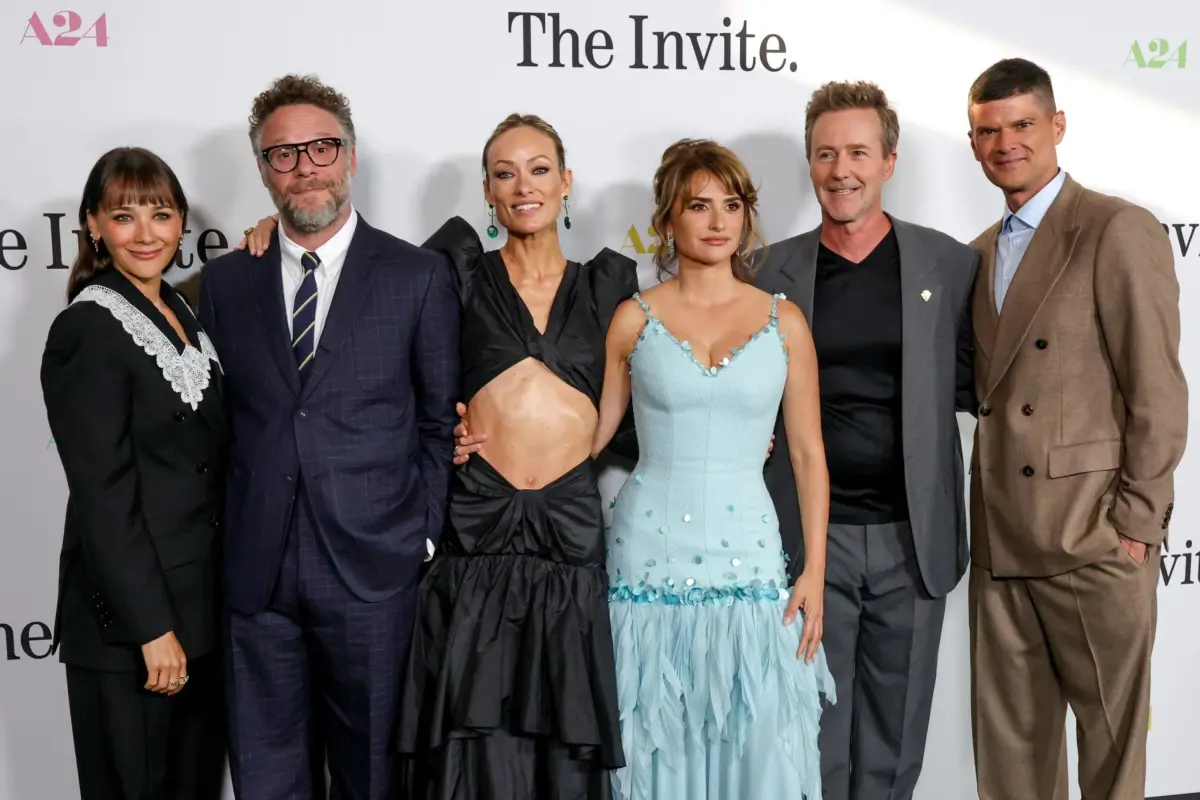
June 24, 2026: The star-studded Los Angeles premiere of A24’s The Invite takes place at the DGA Theatre, drawing heavy critical interest for its unflinching look at contemporary adult relationships, featuring a cast that includes Seth Rogen, Olivia Wilde, Penélope Cruz, and Edward Norton.
June 26, 2026: McCormack and Jones appear on NPR to discuss the thematic underpinnings of the film. Jones notes, "Selfishly, it’s great that we can channel the thing we’re most interested in, which is relationships, living with other people, being parents, losing parents… looking straight down the barrel of the back half of life."
July 13, 2026: A subsequent interview feature with McCormack deepens the public discourse. He famously characterizes life as "a series of losses… one loss and one heartbreak after another," while emphasizing that these raw moments are precisely what bind humanity together in shared empathy. Simultaneously, complementary articles addressing linguistic self-sabotage and ageist vernacular spark a broader debate regarding how society talks about aging.
Supporting Context & Metrics: The Science of Loss and Aging
To truly understand why cultural milestones like The Invite resonate so deeply, we must examine the physiological, psychological, and sociological frameworks governing how humans process loss across the lifespan.
The Lifespan Continuum of Grief
Psychologists have long established that grief is not an isolated event triggered exclusively by the death of a loved one; it is a cumulative process.
Childhood and Adolescence: Early losses are often understated—the end of a school year, the relocation of a best friend, or the death of a childhood pet. When children are not taught to process these micro-losses with emotional validation, they grow into adults ill-equipped to handle major life transitions.
Mid-Life Realignment: As individuals enter their forties and fifties, the horizon of life shifts from "time lived" to "time left." This period often brings the simultaneous pressures of raising children who will soon leave the nest and caring for aging parents who require escalating support—a demographic phenomenon widely known as the "Sandwich Generation."
Later Life Transitions: Retirement, shifts in physical and cognitive capacity, and the loss of peers redefine identity. However, research indicates that these losses are not mutually exclusive with well-being; older adults frequently report higher emotional regulation and life satisfaction compared to younger cohorts, a psychological trend known in gerontology as the "paradox of aging."
The Cultural Obsession with "Personal Happiness"
As psychotherapist and author Rachael Freed outlines in Life and Loss: Legacy Writing in the Age of COVID-19, modern Western culture is fundamentally hostile to public grief. Driven by relentless marketing and an ideology of compulsory optimism, society views sadness as a systemic failure rather than a natural restorative state.
When grief is forced underground, communities become emotionally "frozen." Individuals lack the shared communal rituals necessary to mourn small and large losses alike, resulting in chronic anxiety, alienation, and a pervasive fear of growing old.
Official Perspectives: Creators, Experts, and Authors Speak
The conversation surrounding The Invite and the psychology of aging features compelling insights from creative visionaries and academic experts alike.
"Life is really just a series of losses. It’s one loss and one heartbreak after another. When you’re little, summer ends and you don’t want it to end, and then you get your heart broken, and then you have kids, and they’re going to break your heart, and then your parents die and then you start to lose bone density… Those moments can actually be the funniest because they’re so raw. And it’s when we feel connected. Heartbreak is the thing that binds us."
— Will McCormack, Screenwriter of The Invite, via NPR
"Selfishly, it’s great that we can channel the thing we’re most interested in, which is relationships, living with other people, being parents, losing parents, being alive, getting older, being middle-aged, looking straight down the barrel of the back half of life. All these things we got to bring to this script."
— Rashida Jones, Co-Writer of The Invite
"In a rush to move on with life, we have become a frozen people unable to grieve. If life is a series of losses—big and small—then it makes sense to learn to be resilient from a young age. Children need to have permission to feel sad. They need to learn how to cope with grief because life is not always ‘happily ever after.’"
— Rachael Freed, Author of Life and Loss: Legacy Writing in the Age of COVID-19
The Intersection of Pain, Humor, and Resilience
One of the most remarkable aspects of navigating loss is the human capacity to weaponize humor as a shield and a bridge. Far from being a sign of disrespect or denial, gallows humor and pragmatic wit serve as frontline psychological defenses against existential dread.
Consider everyday conversations among adults approaching or navigating older age:
A friend purchasing a new vehicle and remarking offhandedly, "This may be the last car I buy."
An older adult choosing to adopt a senior rescue dog specifically out of an ethical concern that a younger pet might outlive them, leaving the animal without a caregiver.
Couples shopping for long-lasting luggage and acknowledging that a high-end 20-year set will likely be the last piece of travel gear they ever acquire.
Friends meticulously mapping out their remaining family vacations with urgent, Type-A precision, finding dark comedy in their own mortality-driven scheduling.
These moments of gallows humor are not morbid; they are profoundly life-affirming. They demonstrate psychological flexibility—the ability to look mortality in the eye, acknowledge its certainty, and choose to laugh rather than cower.
Breaking the Habit of Ageist Self-Sabotage
While humor builds resilience, not all self-referential jokes are healthy. Language dictates reality. Far too often, individuals internalize societal ageism through casual vernacular that acts as a self-fulfilling prophecy.
Statements such as "I’m too old to learn this new technology,""My memory is just shot," or offering backhanded compliments like "You look good for your age" reinforce the false narrative that aging is synonymous with linear decay.
Experts emphasize that thoughts and linguistic habits are entirely modifiable. By consciously reframing internal monologues—shifting from "I look good for my age" to simply "I look good"—individuals can disrupt internalized ageism and preserve their cognitive and psychological vitality.
Future Outlook: Embracing the Second Half of Life
As cultural products like The Invite continue to shift the needle on mainstream narratives about middle age and interpersonal reckoning, society stands at a critical crossroads. The aging global population demands a profound cultural pivot away from youth-obsessed marketing and toward holistic lifespan development.
Key Milestones for Future Cultural Integration:
Redefining Emotional Literacy in Education: Introducing grief and loss management into school curricula to ensure that children learn resilience before facing major life traumas.
Challenging Institutional Ageism: Dismantling professional and social barriers that prematurely sideline older adults, recognizing that experience and emotional maturity are unparalleled societal assets.
Normalizing the Discourse on Mortality: Fostering open, stigma-free conversations about aging, end-of-life planning, and micro-losses, allowing communities to move past the "frozen" state of grief identified by mental health advocates.
Ultimately, the second half of life is not a decline to be feared, but a distinct developmental stage characterized by hard-won wisdom, deep emotional connections, and the unique freedom that comes from knowing what truly matters. By giving ourselves permission to feel sad, embracing appropriate humor, and treating loss as an intrinsic part of the human tapestry, we unlock the true resilience required to live authentically at any age.



0 Comments