

Executive Overview
Between the state’s formidable aquatic predators, a populace whose exploits regularly secure the spotlight of tabloid headlines, and its modern status as the adopted haven of a former reality television star turned U.S. President, Florida has firmly cemented its reputation as America’s "weird uncle." Much like that eccentric relative who sheds his outerwear to cannonball into the pool every Christmas morning—flailing his arms until someone documents the spectacle—the Sunshine State often thrives on a distinct brand of organized chaos.
Yet, this predilection for the eccentric is far from a modern phenomenon. Long before viral social media clips and twenty-four-hour news cycles beamed Florida’s peculiar antics to the global stage, the state’s early pioneers and civic planners were sowing the seeds of this legacy. Decades ago, local townships and municipalities were christened with monikers that range from the mildly curious to the outright confounding.
Far from arbitrary accidents of nomenclature, these ten strange town names serve as historical time capsules. They reflect the aspirations of citrus barons, the folklore of indigenous peoples, wartime secrets, corporate marketing stunts, and romances lost to history. This report examines the origins, historical contexts, and enduring cultural footprints of ten of Florida’s most uniquely named settlements.
Detailed Chronology
The timeline of how Florida’s eccentric geography came to be spans more than a century and a half of turbulent settlement, industrial expansion, and commercial ingenuity.
- December 25, 1837: Amid the Second Seminole Indian War, a detachment of 2,000 U.S. Army soldiers and Alabama volunteers arrives in Central Florida to establish a strategic outpost, naming it Fort Christmas—laying the groundwork for the modern community of Christmas.
- Civil War Era (1861–1865): The community later known as Two Egg is established in Jackson County, initially centered around a sawmill operation and known as Allison.
- 1890s: The North-Central community of Lulu is named by its first postmaster in honor of his girlfriend, though the romance eventually floundered while the name persevered.
- 1920: William John Howey founds the settlement that would eventually become Howey-in-the-Hills, pioneering the commercial development of Central Florida’s rolling topography.
- 1921: The state’s first citrus juice processing plant opens in Howey, setting an industrial milestone for the region.
- 1920s–1930s: During the throes of the Great Depression, the settlement of Allison transitions into "Two Egg" after local boys barter eggs for grocery staples. Simultaneously, along the South Florida coast, a strawberry farm operated by a Michigan lumberman begins renting tourist parcels for three dollars a week, sowing the seeds for Briny Breezes.
- 1937: Facing persistent confusion with regional railway monikers, the town previously known as Cow House, Sunnyland, and Istokpoga officially drops the "F" from the state’s name to become Lorida.
- Late 1960s: The remote crossroads of Yeehaw Junction serves as the clandestine testing site for a biological warfare agent known as "Agent TX," a military secret kept from the local populace for over three decades.
- 2005: The coastal micro-town of Briny Breezes hits national financial headlines when developers offer residents a staggering $500 million for their oceanfront land—a deal that ultimately dissolved amid regulatory and legal hurdles.
- 2018: The North Florida town of Mayo temporarily trades its heritage for a quarter-million-dollar marketing campaign, legally renaming itself "Miracle Whip" in a high-profile corporate partnership.
Supporting Context & Metrics
To truly understand these municipalities, one must examine their demographic footprints, geographic coordinates, and structural identities. The following data details the geographic and statistical reality of Florida’s linguistic curiosities:
| Town Name | County | Geographic Location | Estimated Population | Primary Claim to Fame |
|---|---|---|---|---|
| Frostproof | Polk County | Central Florida (South Polk) | ~3,032 (2024) | Citrus hub named to attract cold-sensitive growers. |
| Howey-in-the-Hills | Lake County | Northwest of Orlando | ~1,175 (2018) | Home to Florida’s first citrus juice processing plant. |
| Yeehaw Junction | Osceola County | Central intersection of Turnpike & SR 60 | ~240 (2010) | Unreported Cold War biological testing site ("Agent TX"). |
| Christmas | Orange County | East of Orlando | ~1,146 (2018) | Fort replica; world’s largest alligator-shaped building. |
| Two Egg | Jackson County | Northwest Florida (Panhandle) | Unknown | Childhood home of Oscar-winning actress Faye Dunaway. |
| Bagdad | Santa Rosa County | Florida Panhandle | ~1,490 (2000) | Historic lumber town; birthplace of golfer Bubba Watson. |
| Briny Breezes | Palm Beach County | South Florida Atlantic Coast | ~411 (2000) | 0.1-square-mile mobile home community; film setting. |
| Lulu | Columbia County | North-Central Florida | Unknown | Named after a 19th-century postmaster’s former girlfriend. |
| Lorida | Highlands County | South of Orlando (Highlands) | Unknown | Named by dropping the "F" from Florida to avoid rail confusion. |
| Mayo | Lafayette County | North Florida | ~1,237 (2010) | Named after a Confederate colonel; temporarily renamed Miracle Whip. |
Deep Dive: The Ten Strange Towns of Florida
1. Frostproof
Situated nearly dead center in Florida at the southern end of Polk County, halfway between the metropolitan hubs of Tampa and Orlando, lies Frostproof. With an estimated 2024 population hovering around 3,032 residents, the town bears a name that sounds entirely aspirational.
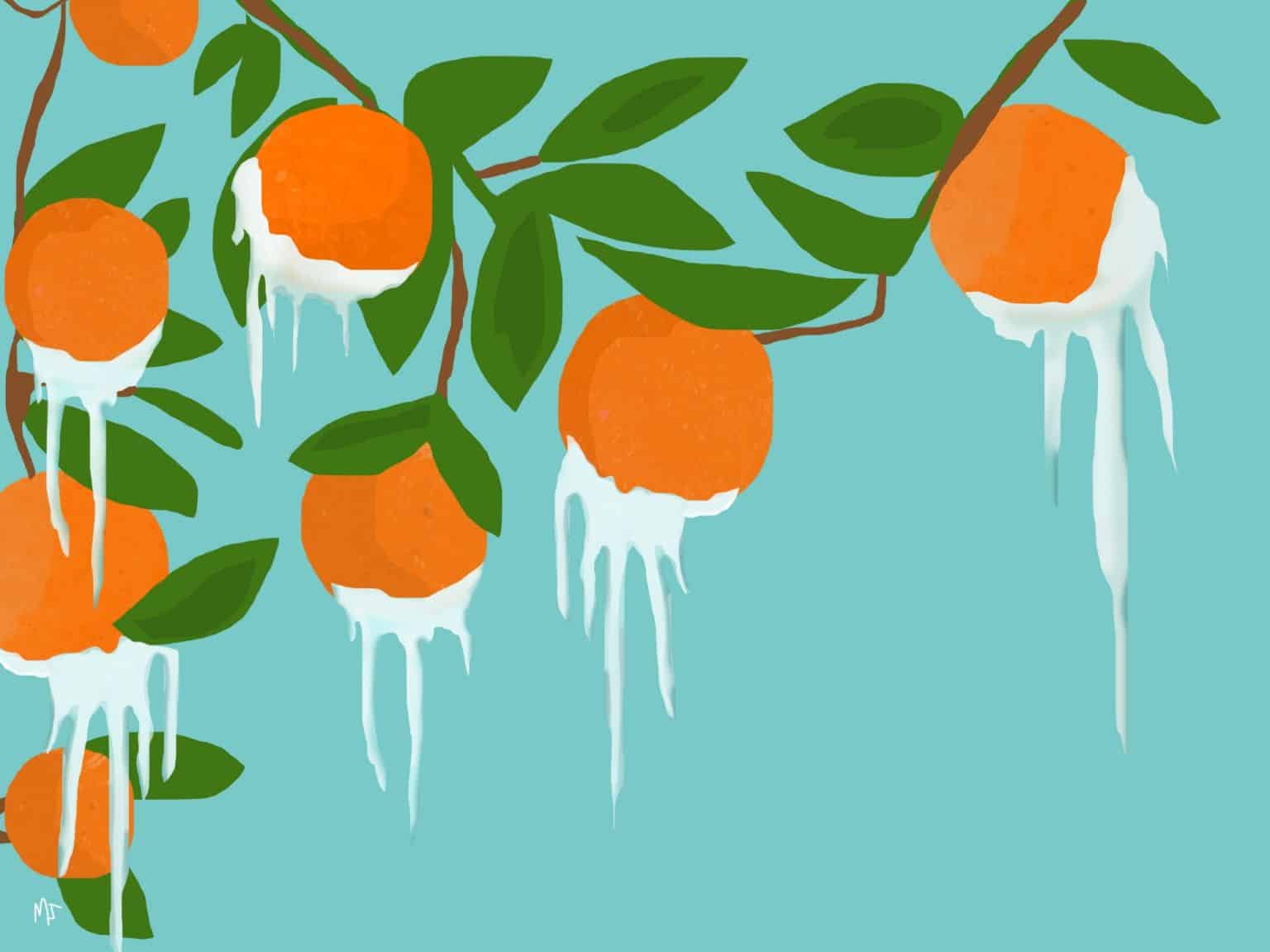
No city in Florida is truly immune to freezing temperatures, yet frost is far less alien than outsiders might assume. Historical accounts regarding the origin of the moniker vary, but the prevailing theory suggests that civic promoters adopted the name "Frostproof" as a clever psychological marketing ploy to encourage citrus growers—whose crops are notoriously vulnerable to sudden cold snaps—to invest and settle in the area. The strategy succeeded, linking the town’s destiny with citrus barons like Ben Hill Griffin Jr.
2. Howey-in-the-Hills
Resting in Lake County just northwest of Orlando’s theme park corridor, Howey-in-the-Hills houses roughly 1,175 residents. Founded in 1925 simply as "Howey" by industrialist and citrus juice manufacturer William John Howey, the town underwent a linguistic expansion in 1927.
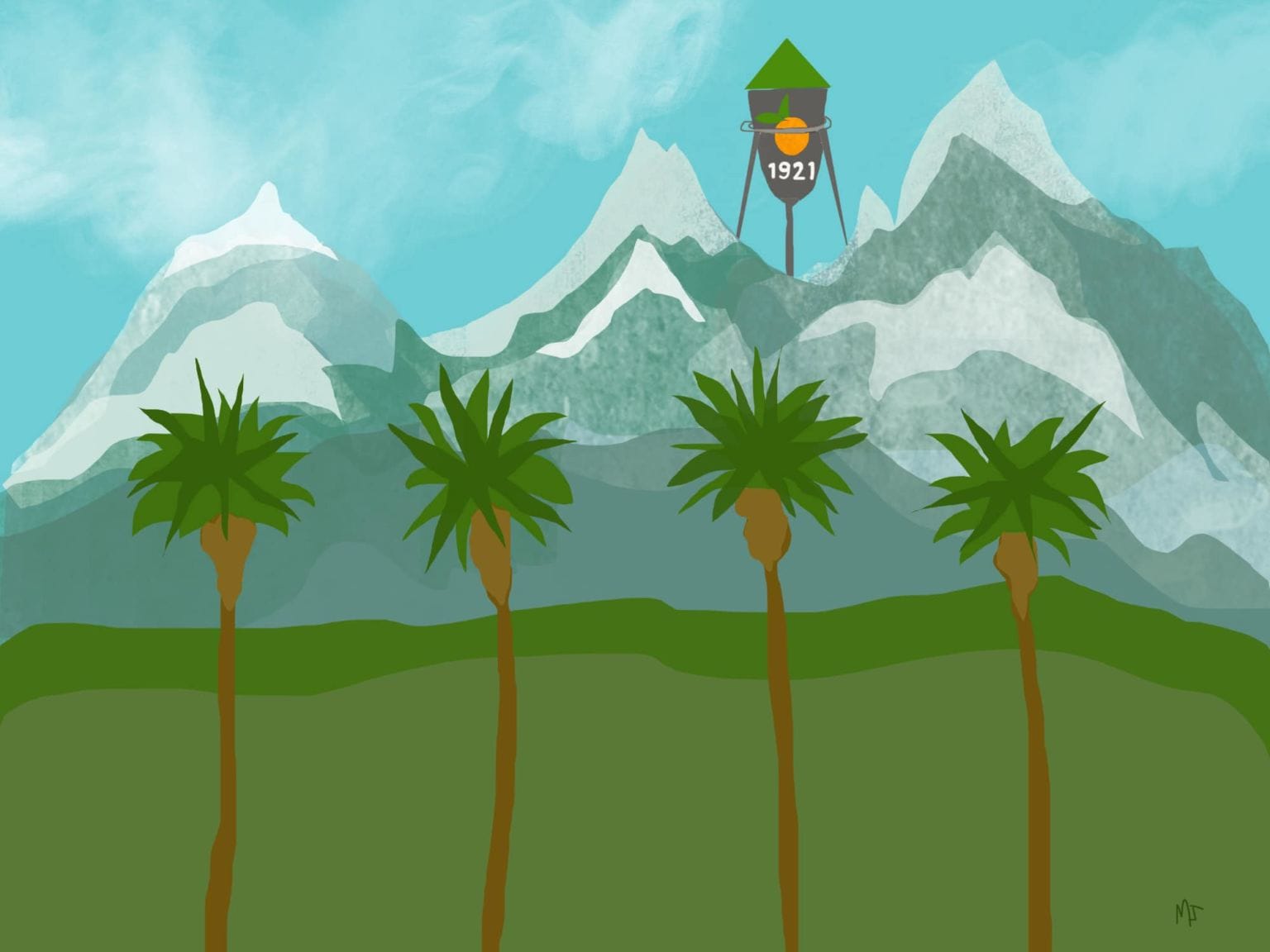
The name was updated to "Howey-in-the-Hills" to accurately reflect the surprisingly undulating, rolling topography of the region—a geological anomaly that Howey grandly dubbed "the Florida Alps." Adding to its industrial pedigree, the municipality hosted the opening of the state’s very first citrus juice processing plant in 1921.
3. Yeehaw Junction
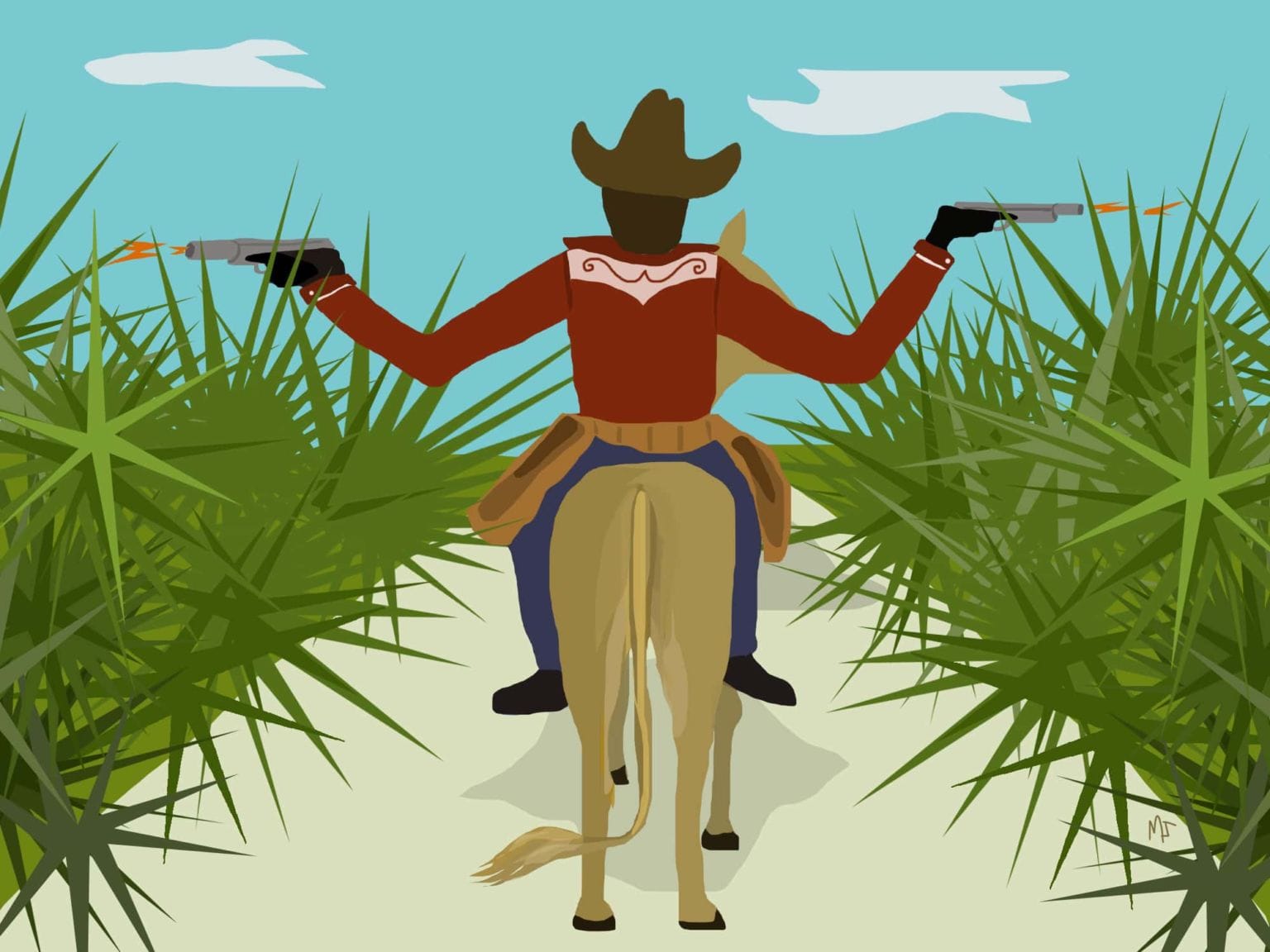
More of a geographical checkpoint than a conventional town, Yeehaw Junction is an unincorporated hamlet in Osceola County situated at the critical crossroads of Florida’s Turnpike and State Road 60. With a sparse population recorded around 240 in 2010, its origins are shrouded in competing folklore.
One prominent theory links the name to the nearby Yeehaw station on the Florida East Coast Railway. Another suggests a phonetic evolution of a Creek Indian word signifying "wolf," nodding to the extinct Florida Black Wolf. A third, saltier account claims the hub was once dubbed "Jackass Junction" due to the pack animals ridden by early regional ranchers.
Beyond its colorful name, Yeehaw Junction holds a darker historical footnote: in the late 1960s, it served as the site of clandestine testing for a biological warfare chemical designated "Agent TX," designed to blight rival nations’ wheat crops. The experiments remained classified until 2002.
4. Christmas
Located east of Orlando in Orange County, Christmas carries a population of roughly 1,146 residents whose mailboxes experience an annual deluge each December as holiday enthusiasts seek postmarks stamped from "Christmas, Florida."
The name stems from December 25, 1837, when a military force of 2,000 U.S. Army soldiers and Alabama volunteers erected Fort Christmas during the Second Seminole Indian War. Today, a full-scale replica of the fortification stands as a historical landmark.
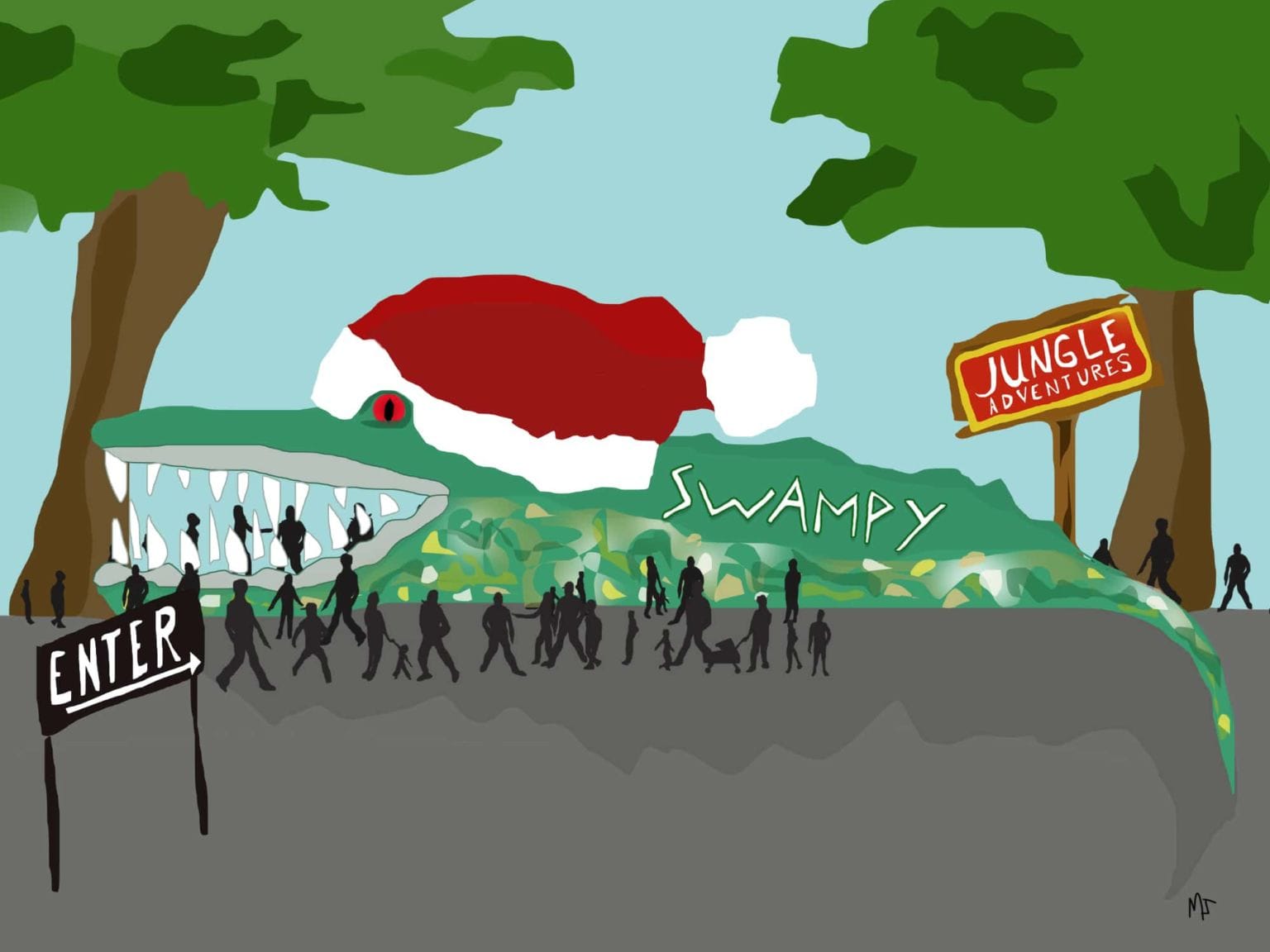
The area is equally famous for housing Jungle Adventures, home to the world’s largest alligator-shaped building, as well as being the birthplace of sculptor James Hughlette "Tex" Wheeler, renowned for his statue of champion racehorse Seabiscuit.
5. Two Egg
Tucked away in Jackson County near the Georgia border, the unincorporated community of Two Egg boasts an ancient indigenous history, with archaeological artifacts dating back millennia. Modern history, however, anchors its roots in the Civil War era.
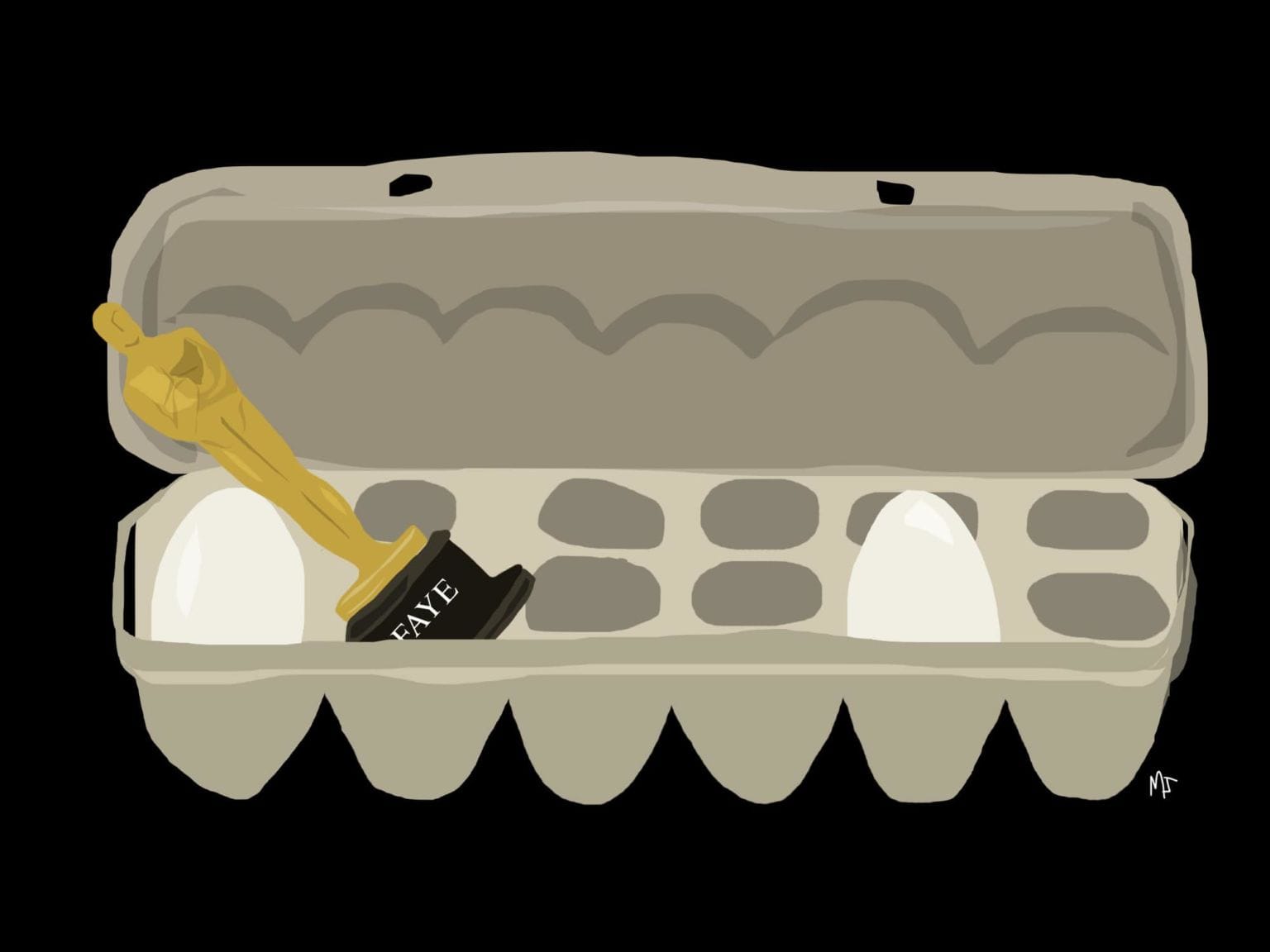
Originally platted as Allison after a company operating a local sawmill, the community earned its permanent moniker during the Great Depression. Local lore dictates that impoverished youths would frequent a general store to barter two fresh eggs for essential family groceries like sugar. The transaction became so synonymous with the outpost that both the store and the town assumed the name Two Egg. The settlement also claims fame as the childhood home of Academy Award-winning actress Faye Dunaway.
6. Bagdad
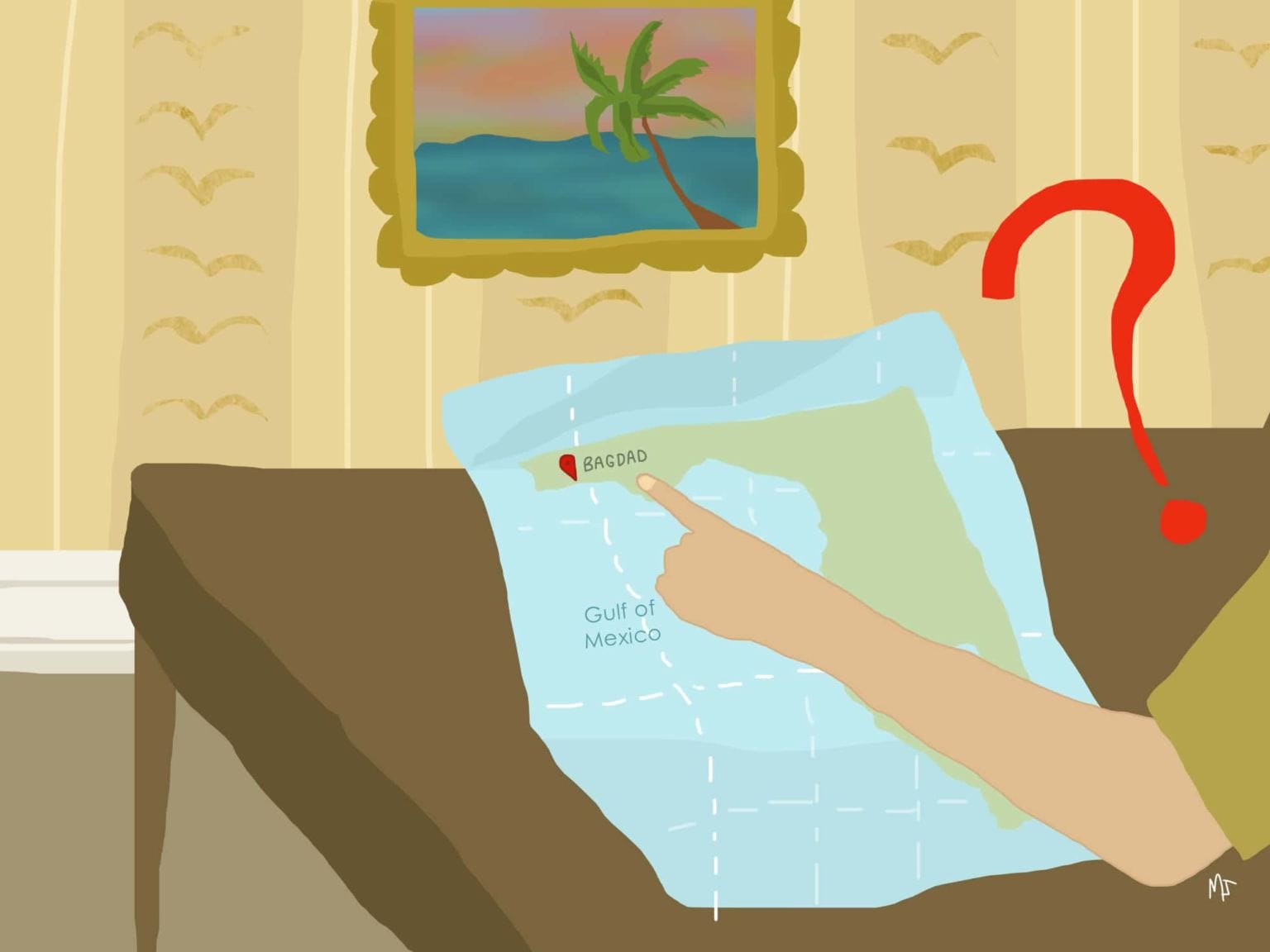
Positioned in Santa Rosa County within the Florida Panhandle, Bagdad was founded in 1840 as an industrial lumber mill town. While it shares its spelling minus a single letter with the capital of Iraq, the exact etymological inspiration remains a matter of local debate.
A 1990 media investigation surfaced a geographic theory: the convergence of Bagdad’s Pond Creek and the Cypress River mirrors the confluence of the Tigris and Euphrates rivers in the Middle Eastern nation. Today, the community is celebrated as the birthplace and childhood home of PGA golf star Bubba Watson.
7. Briny Breezes
Resting along the Atlantic coast in Palm Beach County, Briny Breezes—affectionately known locally as "Briny"—operates as a unique coastal micro-town. In the 1920s and 1930s, the land functioned as a strawberry farm owned by a Michigan lumberman who rented plots to tourists and trailers for three dollars a week.
When the owner retired, he offered residents the opportunity to purchase their parcels for roughly $2,000 each. The community incorporated as Briny Breezes, reflecting its maritime placement between the Atlantic Ocean and the Intrachoastal Waterway.
In 2005, the town captured international media attention when developers tabled a staggering $500 million offer to purchase the entire 0.1-square-mile municipality. Though the deal ultimately collapsed amid regulatory battles, Briny Breezes remains an independent coastal enclave largely populated by retirees in mobile homes, and served as the primary setting for the 2005 Cameron Diaz film In Her Shoes.
8. Lulu
Nestled within Columbia County in North-Central Florida, the unincorporated community of Lulu traces its origins to the 1890s. According to regional archives, the town’s first postmaster christened the settlement after his romantic partner at the time. Though the romance faded into obscurity, the toponym endured. Throughout the late twentieth century, the town’s tight-knit community maintained an annual festival dedicated to preserving its eccentric heritage.
9. Lorida
Located in Highlands County between Sebring and Lake Okeechobee, Lorida has weathered numerous identities over its lifetime, including Cow House, Sunnyland, and Istokpoga.
In 1937, persistent logistical confusion involving local railway designations prompted civic leaders to streamline the identity. They adopted the state’s name while efficiently dropping the leading "F," creating Lorida. Though the town has experienced cycles of economic expansion and contraction, it remains a quiet haven for rural fish camps and family-owned commerce, occasionally spawning tongue-in-cheek rumors regarding a fictitious "Six Flags over Lorida" amusement park.
10. Mayo
Serving as the sole incorporated municipality in Lafayette County, Mayo sits midway between the university cities of Gainesville and Tallahassee. Unlike many of its abstract neighbors, Mayo was named in honor of an actual historical figure: Confederate Colonel James Micajah Mayo.
Yet, the town’s most memorable modern cultural flashpoint occurred in 2018, when civic leaders executed a temporary corporate partnership. In exchange for a $250,000 community donation, the town temporarily rebranded itself as "Miracle Whip," outfitting residents in commemorative T-shirts and filming promotional commercials celebrating "Miracle Whip, Florida." Sports fans also recognize Mayo as the hometown of legendary University of Florida quarterback Kerwin Bell, affectionately dubbed the "Throwin’ Mayoan."
Future Outlook
As Florida continues to experience rapid population growth, urban sprawl, and modern real estate development, the state’s historical anomalies face a persistent tug-of-war between commercial modernization and historical preservation. Rural outposts like Yeehaw Junction, Two Egg, and Lorida serve as fragile anchors to a bygone era of frontier grit and eccentric whimsy.
While multimillion-dollar development pressures loom over coastal gems like Briny Breezes and suburban expansion edges closer to the rolling hills of Howey, the enduring appeal of these anomalous names highlights a fundamental truth about the Sunshine State. Florida’s strange identity is not merely a byproduct of modern media culture, but a deeply embedded structural facet of its historical blueprint. Whether through corporate rebrandings, poetic romances, or pragmatic civic shorthand, these ten towns guarantee that Florida’s unique place in American cartography will remain secure for generations to come.

0 Comments