Every region of the world possesses its own unique folklore, serving as a cultural ledger of its fears, history, and mysteries. The Pacific Northwest yields whispers of Bigfoot in the misty timberlands, Russia guards the terrifying acoustic anomalies of the "Well to Hell," and Scotland’s murky lochs are forever linked to the elusive plesiosaur known as Nessie. Yet, beneath the sun-drenched facade of palm trees, theme parks, and idyllic coastal resorts, Florida harbors a darker, far more surreal undercurrent of myth and macabre history.
From phantom hitchhikers traversing colossal spans of concrete to voodoo-cursed artifacts residing in southernmost museums, the Sunshine State’s urban legends are as diverse and eccentric as its human population. This investigation explores ten of Florida’s most haunting tales, examining the historical kernels, localized lore, and persistent cultural impact behind each spine-chilling narrative.
Executive Overview
Florida’s unique topography—stretching from sprawling sub-tropical swamps and isolated agrarian communities to centuries-old colonial settlements—has provided fertile ground for folklore. Unlike regions where ghost stories are primarily tied to European medieval castles or frontier tragedies, Florida’s legends reflect a collision of indigenous history, Spanish colonial expansion, Civil War turbulence, piracy, and twentieth-century developmental booms.
While state tourism boards market pristine beaches and perpetual sunshine, folklorists and paranormal investigators recognize Florida as one of the richest repositories of American urban legends. These tales are not merely passing ghost stories; they represent deeply entrenched cultural touchstones that continue to draw thousands of curious travelers, paranormal enthusiasts, and historians each year. This comprehensive review categorizes these phenomena, tracing the oral histories, architectural anomalies, and geographical anomalies that keep these ten legends alive.
Detailed Chronology & Legend Profiles
1. The Bloody Bucket Bridge (Wauchula, Hardee County)
Nestled southeast of Tampa in Hardee County—widely celebrated as the "Cucumber Capital of the World"—lies the sleepy municipal seat of Wauchula. Beneath its agricultural productivity, however, lies the grim folklore of the Bloody Bucket Bridge.
Dating back to the turbulent era of the American Civil War, local legend centers upon an enslaved woman who served as the community’s primary midwife. According to oral history, the midwife was psychologically fractured by the memory of her own infant child being forcefully taken from her and sold away. Consumed by grief and a twisted sense of retribution, she allegedly began smothering newborn infants during delivery, falsely informing distraught parents that their children were stillborn.
The myth dictates that she would collect the infants’ remains in a wooden bucket, walk to a nearby span over a local waterway, and cast the bodies into the current. Eventually driven completely mad by her actions, she reportedly suffered from perpetual hallucinations, claiming that her empty buckets spontaneously filled with fresh blood. Today, local lore warns that travelers visiting the bridge under the illumination of a full moon will witness the river water running a macabre, deep shade of crimson.
2. The Florida Skunk Ape (The Everglades & Ochopee)
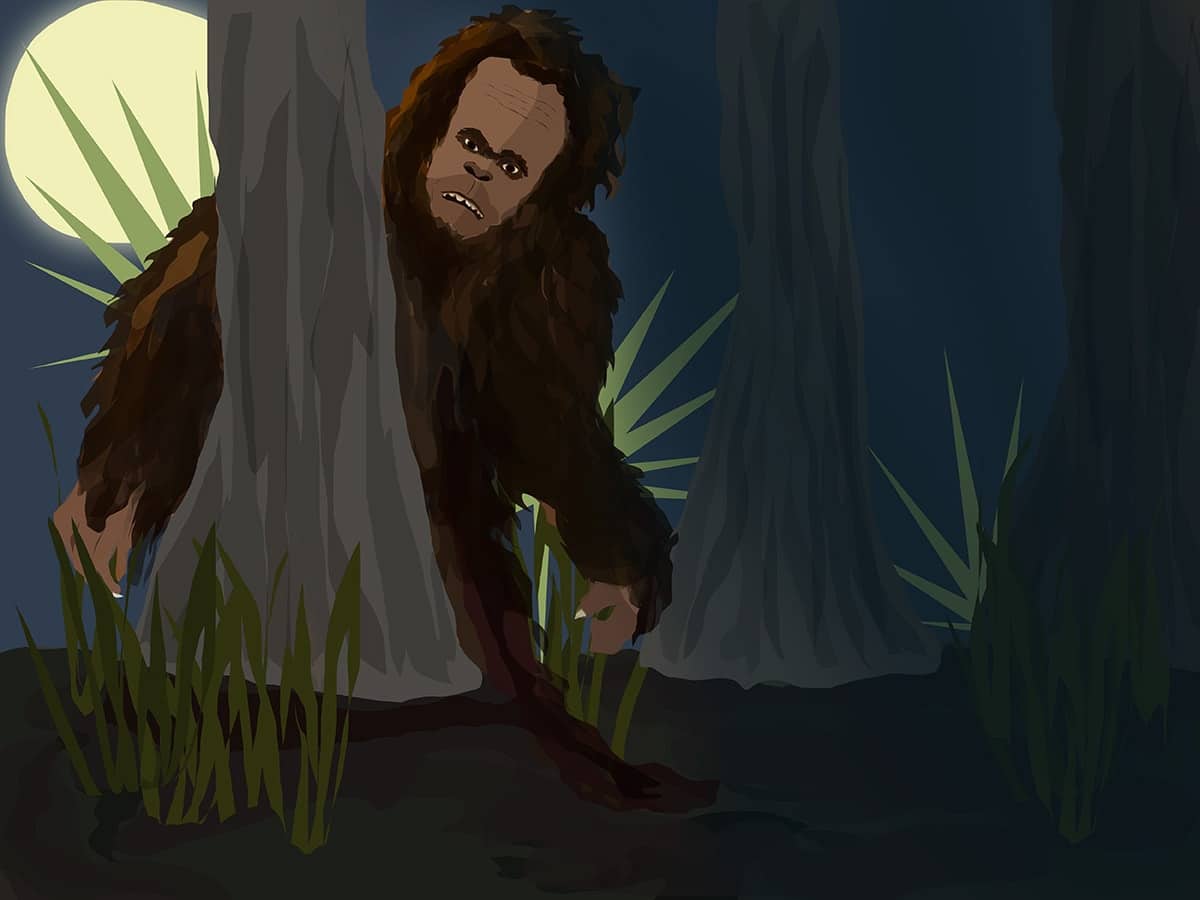
Often dubbed the "Swamp Cabbage Man," the "Stink Ape," or the "Myakka Skunk Ape," this cryptid represents Florida’s regional equivalent to the Pacific Northwest’s Sasquatch. Sightings and reports of a bipedal, ape-like hominid surged across Florida, North Carolina, and Arkansas during the cultural height of Bigfoot mania throughout the 1960s and 1970s.
Standing roughly six to seven feet tall and covered in thick, dark hair, the creature earned its distinct moniker from the overwhelming, putrid stench that reportedly precedes and follows its presence—a biological byproduct, locals suggest, of navigating the stagnant, alligator-infested muck of the deep Everglades. Unlike many cryptids confined purely to campfire tales, the Skunk Ape maintains an institutional footprint. The Skunk Ape Research Headquarters in Ochopee, Florida, operates as an active clearinghouse where researchers archive footprint casts, photographic evidence, and eyewitness testimonies from motorists and hunters.
3. Spook Hill (Lake Wales, Polk County)
Located in Lake Wales, Spook Hill is one of Florida’s most famous "gravity hills"—optical illusions where a slight downward slope appears to be an uphill incline. Motorists traveling along North Wales Drive can experience this phenomenon firsthand by bringing their vehicle to a complete stop, shifting into neutral, and watching in disbelief as their car seemingly coasts up the incline against the laws of physics. (Local authorities consistently advise drivers to activate their hazard lights, as the road remains an active thoroughfare.)
An official historical marker on-site attributes the anomaly to ancient folklore:
"Many years ago an Indian village on Lake Wales was plagued by raids of a huge gator. The Chief, a great warrior, killed the gator in a battle that created a small lake. The chief was buried on the north side. Pioneer mail riders first discovered their horses laboring down hill, thus naming it Spook Hill. When the road was paved, cars coasted up hill. Is this the gator seeking revenge, or the chief still trying to protect his land?"
4. Robert the Doll (Key West, Monroe County)
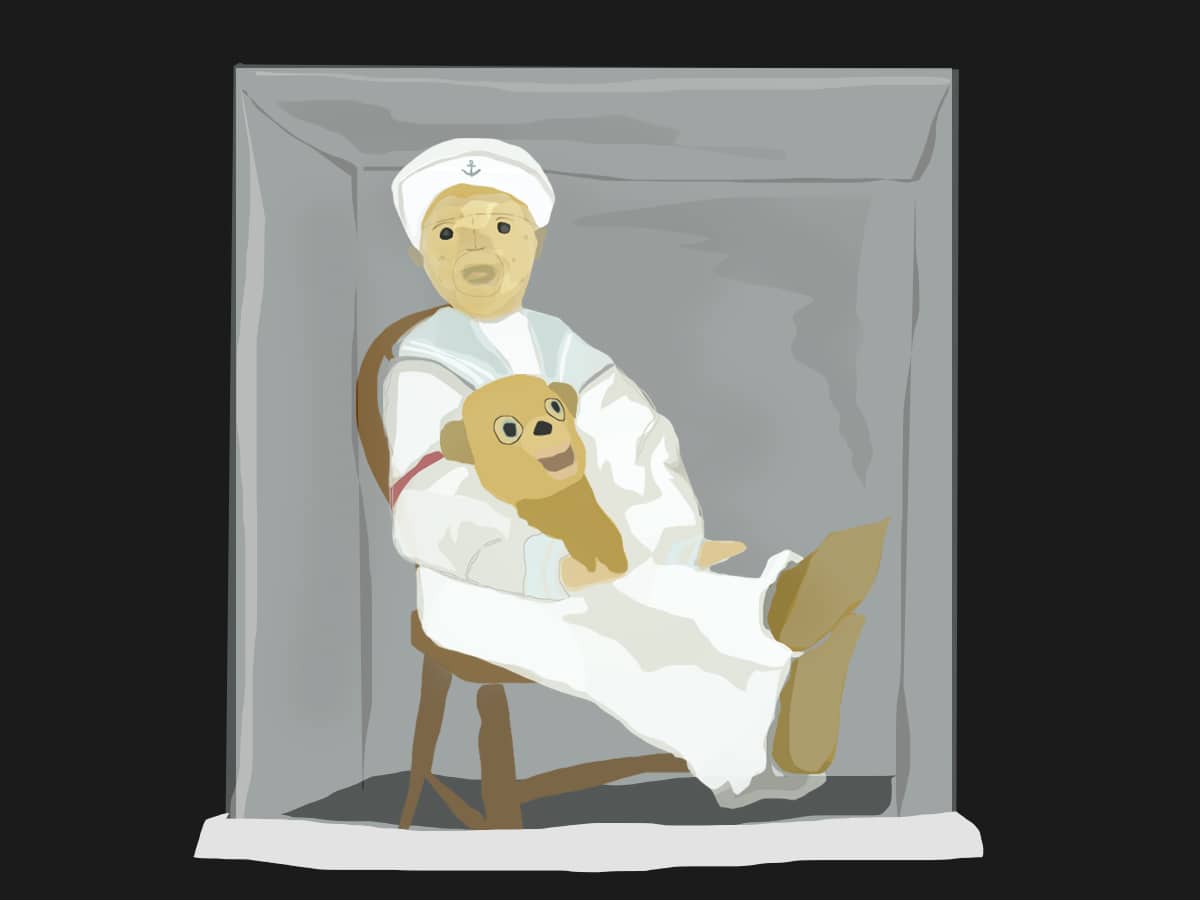
Scoring an absolute maximum on any index of the macabre, the legend of Robert the Doll is a cornerstone of Key West paranormal lore. In 1906, a young boy named Robert Eugene "Gene" Otto was raised under the care of a household staff member reportedly well-versed in Bahamian voodoo and occult practices. The nanny gifted the boy a 40-inch-tall, straw-stuffed sailor doll dressed in an authentic early-twentieth-century American naval uniform.
Gene quickly became obsessed with the toy, bestowing upon it his own first name and insisting that family and friends refer to him by his middle name, Gene, from that point onward. What followed was a classic psychological thriller brought to life: Gene was frequently overheard conversing with the doll, and family members insisted they heard a distinct, high-pitched voice reply in the empty room. Neighbors also reported witnessing the doll moving independently between second-story windows while the family was away. Today, Robert resides securely in a glass case at the Fort East Martello Museum. Museum curators and visitors maintain a strict protocol: one must politely ask the doll for permission before attempting to photograph him; failure to do so is routinely blamed for sudden camera malfunctions and electronic failures.
5. The Devil’s Chair (Cassadaga, Volusia County)
Cassadaga, a small unincorporated community in Volusia County, holds international renown as the "Psychic Capital of the World" due to the exceptionally high concentration of spiritualists, mediums, and clairvoyants who settled the area in the late nineteenth century. However, the hamlet’s most infamous landmark is not a psychic’s parlor, but a permanent piece of masonry located within the municipal cemetery: the Devil’s Chair.
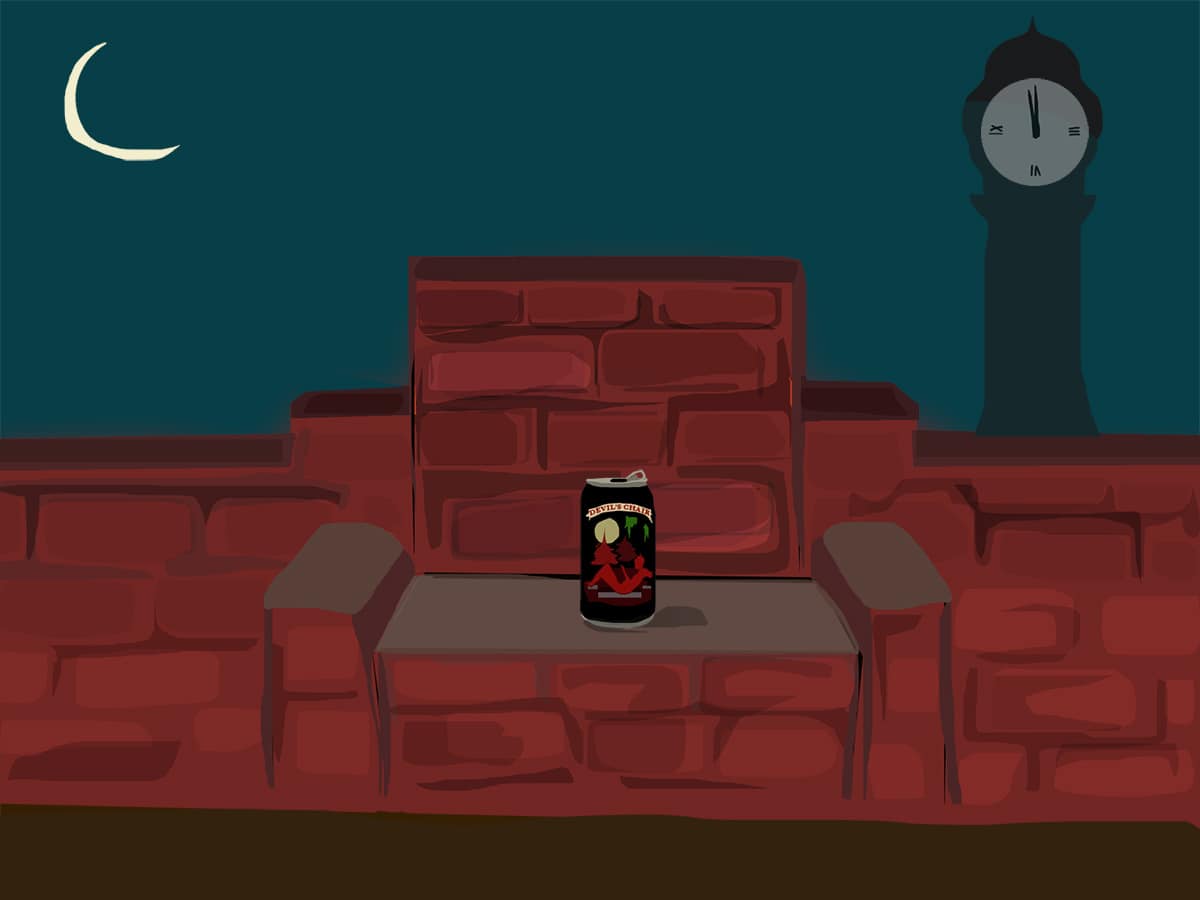
Crafted entirely from heavy brick, the wide memorial bench is the subject of persistent nocturnal folklore. Legend asserts that the seat was constructed or directly influenced by Lucifer himself. According to regional lore, the devil returns to lounge in the chair every evening at midnight, whispering intrusive, dark thoughts into the minds of any foolhardy individual brave enough to sit there—leaving the visitor forever psychologically scarred. A companion legend adds a bizarrely mundane layer of dark humor: if a visitor places an unopened can of beer on the chair at dusk, they will return the following morning to find the can entirely empty, yet completely unopened.
6. The Grave of the Tallahassee Witch (Tallahassee, Leon County)
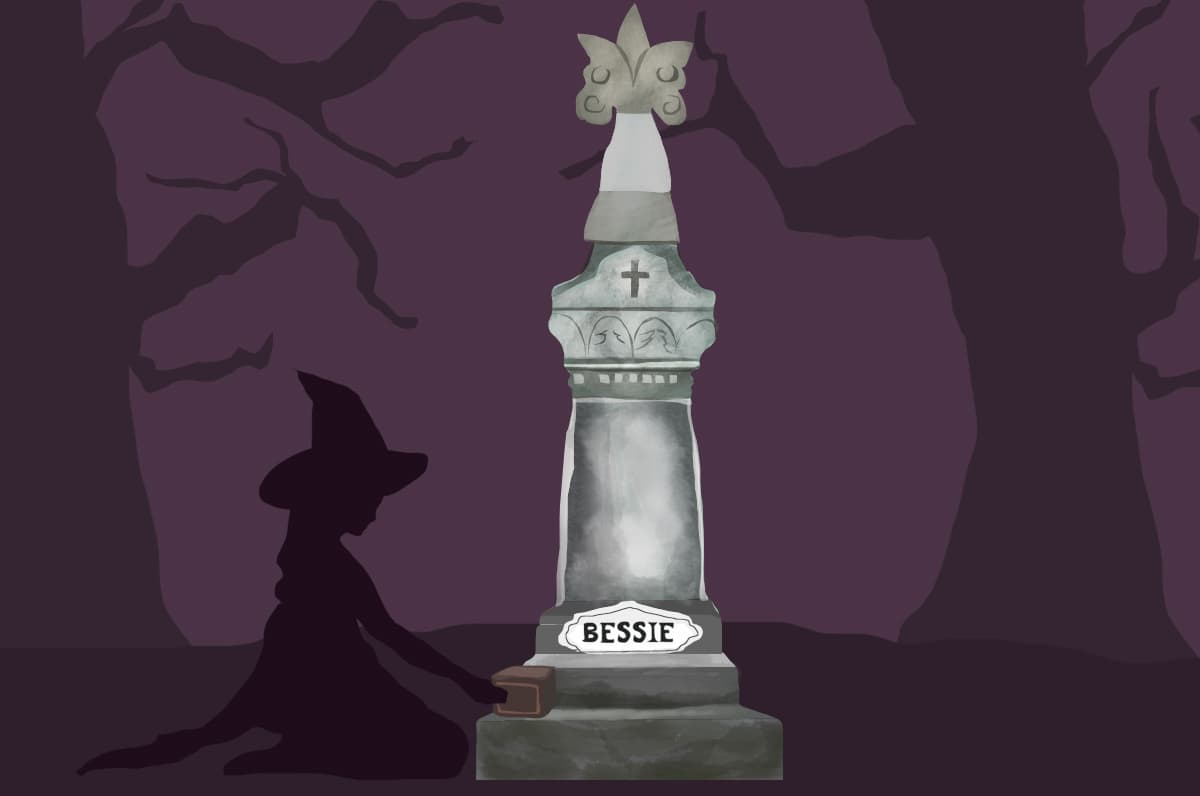
In 1889, Elizabeth "Bessie" Budd-Graham was laid to rest within the historic Old City Cemetery in Tallahassee. Just 23 years old at the time of her passing, Bessie was a wife and mother, yet her final resting place features one of the most elaborate and striking tombstones in the entire burial ground. Over the decades, this architectural distinction fueled local rumors that Bessie was secretly practicing witchcraft—despite an utter absence of historical documentation supporting the claim.
Paranormal investigators and folklore enthusiasts point to two primary anomalies: the grave’s unusual orientation facing west (violating standard Christian burial traditions of the era) and the haunting epitaph inscribed upon the stone, adapted directly from Edgar Allan Poe’s masterwork "Lenore":
"Ah! Broken is the golden bowl. The spirit flown forever! Let the bell toll! A saintly soul Floats on the Stygian River; Come let the burial rite be read. The funeral song be sung; An anthem for the queenliest dead that died so young. A dirge for her the doubly dead In that she died so young."
Occult scholars suggest the passage contains specific esoteric markers—such as references to a "broken bowl" representing the dispatching of a vampire, and "doubly dead" signifying a witch requiring dual executions. To this day, modern neo-pagans and curious locals frequently leave tokens, coins, and crystals upon Bessie’s headstone.
7. The Ghosts of the St. Augustine Lighthouse (St. Augustine, St. Johns County)
As the nation’s oldest continuously occupied European settlement, St. Augustine is saturated with maritime history and tragedy. Built in 1874 to guide vessels away from treacherous offshore shoals, the St. Augustine Lighthouse has developed a formidable reputation as one of the most actively haunted sites in the United States.
Among the earliest recorded phenomena is the lingering presence of early keeper Peter Rasmussen, a devoted cigar aficionado whose spectral presence is frequently announced by the distinct, rich aroma of burning tobacco drifting through the winding stairwells long after closing hours. Far more tragic is the enduring legend of Eliza and Mary Pity. In the late nineteenth century, the young daughters of a lighthouse construction worker drowned in the immediate waters while playing near ongoing architectural renovations. Visitors and staff members working late in the tower still report hearing the faint, distinct sound of young children laughing echoing down from the lantern room high above.
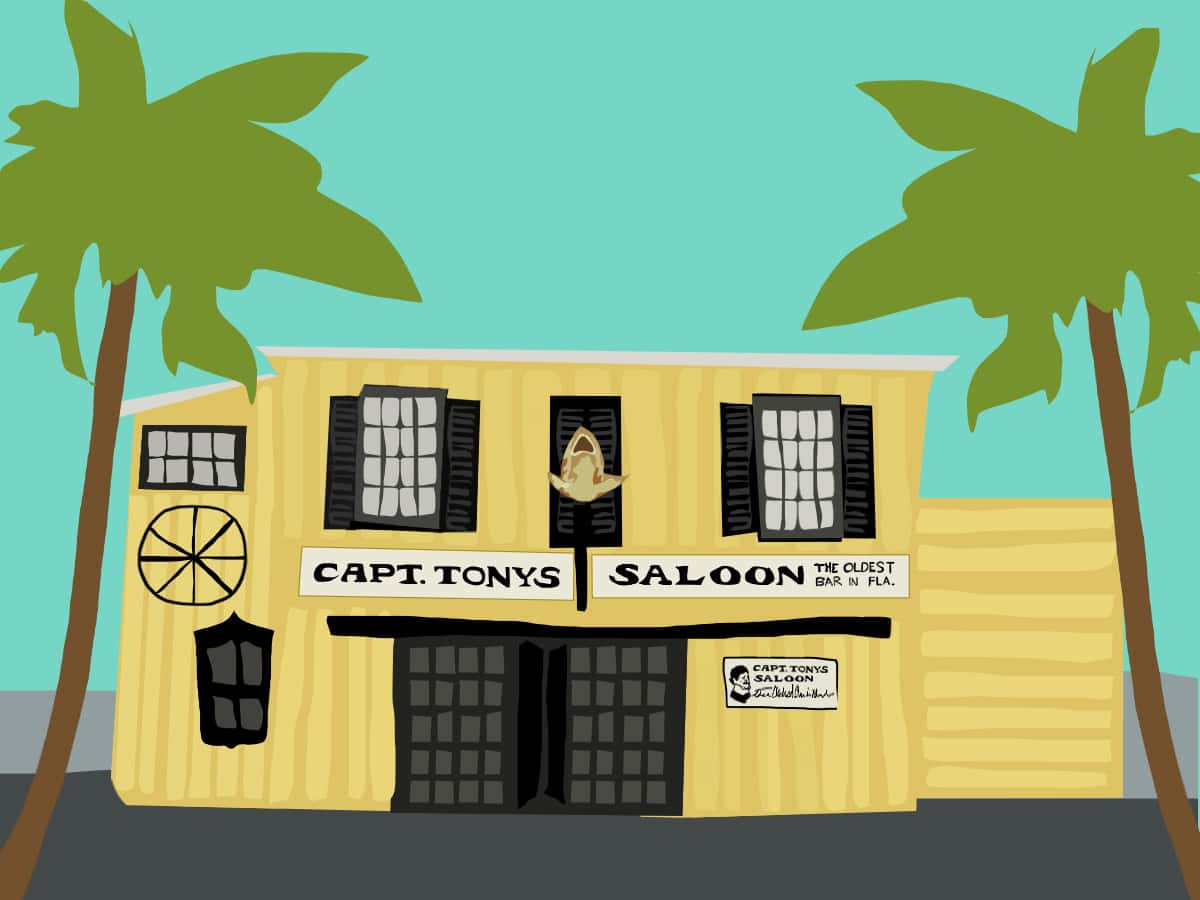
8. The Hanging Tree at Captain Tony’s Saloon (Key West, Monroe County)
Located in the heart of Old Town Key West, Captain Tony’s Saloon is universally recognized by historians and tourists as the original physical location of the legendary Sloppy Joe’s Bar, famously frequented by Ernest Hemingway. Over the centuries, however, the structure has served multiple vital functions: a wireless telegraph station, a cigar-manufacturing hub, a morgue, and a house of execution.
The building was constructed directly around Key West’s historic municipal "hanging tree," an ancient buttonwood tree utilized during the nineteenth century for the public execution of pirates and convicted criminals. Rather than felling the tree to clear space for modern construction, nineteenth-century builders simply framed the walls and roof around the trunk, which remains integrated into the interior architecture today.
During extensive flooring renovations in the 1980s, construction workers uncovered the skeletal remains of more than a dozen individuals buried directly beneath the floorboards. Patrons and staff have since reported rampant anomalous activity, including phantom whispers, disembodied footsteps, and bathroom stall doors that actively lock, unlock, and swing open with deliberate mechanical precision.
9. The Phantom Hitchhiker of the Sunshine Skyway Bridge (Tampa Bay)
Spanning the wide mouth of Tampa Bay to connect St. Petersburg to the north with Bradenton to the south, the Sunshine Skyway Bridge is a monumental feat of modern civil engineering. However, its soaring height and dramatic views have also made it a tragic focal point for hundreds of suicide jumpers throughout its operational history.
Motorists traversing the span late at night have repeatedly reported encountering a striking, blonde female hitchhiker standing near the apex of the bridge. According to recurring eyewitness accounts, drivers who pull over to offer assistance watch as the woman enters the vehicle, only to dissolve into silent, inconsolable weeping as the car nears the highest point of the span. When the startled driver turns to question her, she vanishes completely from the passenger seat. This spectral hitchhiker is frequently linked in local lore to the devastating maritime disaster of May 1980, when an empty phosphate freighter collided with a bridge pier, collapsing the central span and plunging 36 motorists to their deaths.
10. The Fairchild Oak (Bulow Creek State Park, Ormond Beach)
For nature enthusiasts and arborists, the Fairchild Oak located within Bulow Creek State Park in Ormond Beach is an awe-inspiring natural monument. Boasting a massive, fluted trunk and an expansive, sweeping canopy draped heavily in Spanish moss, the ancient live oak is estimated to be centuries old.
Yet, local wilderness folklore attaches a darker narrative to the serene grove. Legend maintains that the tree was the site of two tragic suicides during the nineteenth century. Regional oral history claims that the spectral apparition of a distressed man continues to haunt the immediate perimeter of the root system, and visitors standing directly beneath the massive canopy frequently report experiencing sudden, overwhelming waves of sorrow and inexplicable melancholy.
Supporting Context & Metrics
The persistence of these urban legends is not merely a cultural quirk; it is a significant economic driver within Florida’s robust tourism and hospitality sectors. According to data compiled by regional historical societies and paranormal tourism operators:
Economic Impact: Ghost tours, haunted historical museums (such as the Fort East Martello Museum), and cryptid excursions generate tens of millions of dollars annually in localized tourism revenue for communities like Key West, St. Augustine, and Cassadaga.
Archival Preservation: Municipalities that embrace their folklore—such as St. Augustine and Key West—often allocate specific historic preservation grants to maintain the structural integrity of reported haunted sites, including lighthouses, saloons, and cemeteries.
Demographic Engagement: Paranormal tourism in Florida appeals heavily to younger demographics (Millennials and Generation Z), who increasingly seek immersive, experiential travel alternatives to traditional beach vacations.
Official Statements & Preservation Perspectives
Local historians, folklorists, and civic authorities often balance the fine line between preserving cultural heritage and managing sensationalized folklore.
Dr. Elena Vance, a cultural anthropologist specializing in Southern folklore, emphasizes the sociological importance of these narratives:
"Urban legends function as a society’s shadow memory. Florida has experienced rapid, almost frantic modernization over the past century. These ghost stories and cryptid sightings provide a psychological anchor, allowing communities to connect with their complex, often violent frontier and colonial past in a way that dry historical texts rarely achieve."
Conversely, municipal leaders in quiet residential enclaves—such as Cassadaga and Wauchula—frequently urge visitors to balance their curiosity with respect for local residents and hallowed ground. Local law enforcement agencies maintain strict after-hours access protocols for historic cemeteries like the Old City Cemetery in Tallahassee and the Cassadaga graveyard to prevent vandalism and trespassing by overzealous ghost hunters.
Future Outlook
As Florida continues to expand its urban footprint and experience unprecedented population growth, the tension between modern development and historical folklore will undoubtedly persist. Preservation societies are increasingly leveraging digital media, podcasts, and virtual reality tours to document these legends for future generations.
Whether viewed through the lens of genuine paranormal phenomena, psychological projection, or masterfully preserved local history, Florida’s urban legends remain an indelible component of the state’s identity. They serve as a permanent reminder that beneath the glittering theme parks, endless coastlines, and perpetual sunshine, the Sunshine State holds mysteries that will continue to keep adventurous travelers awake long after nightfall.










0 Comments