

Executive Overview
Long before the Mayflower dropped anchor at Plymouth Rock, and decades before English settlers established a precarious foothold in Jamestown, Spanish ambition had already etched a permanent settlement into the northeastern coast of Florida. St. Augustine, founded on September 8, 1565, holds the prestigious and officially recognized title of the oldest continuously occupied European settlement in the United States.
While popular American folklore often casts the origin story of the nation strictly through the lens of the British colonies in Virginia and Massachusetts, the historical ledger reveals a much older, more complex narrative dominated by the Spanish Empire. Driven by geopolitical rivalry, religious zeal, and the quest for strategic dominance in the New World, Admiral Don Pedro Menéndez de Avilés anchored off the Florida coast more than four and a half centuries ago, planting seeds of civilization that have endured through centuries of war, shifting flags, and modern development.
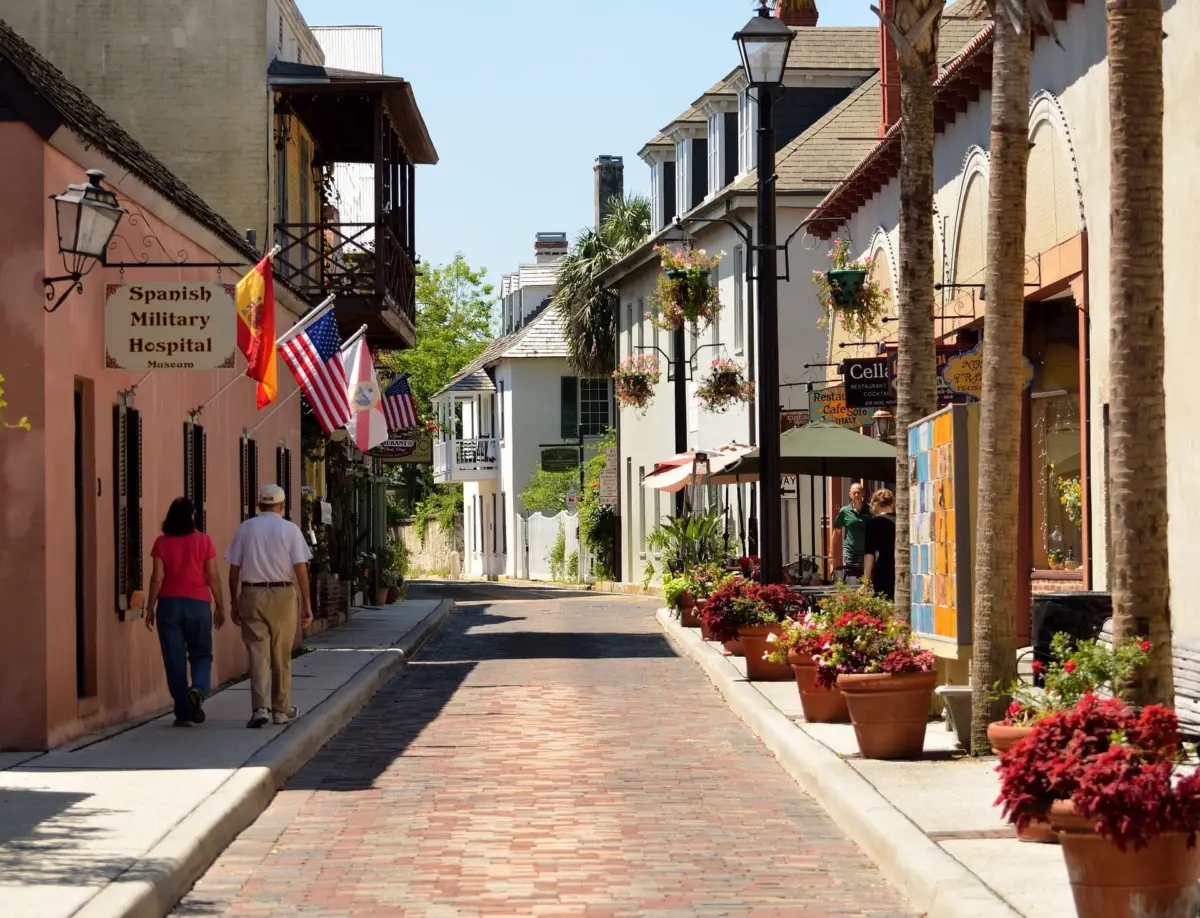
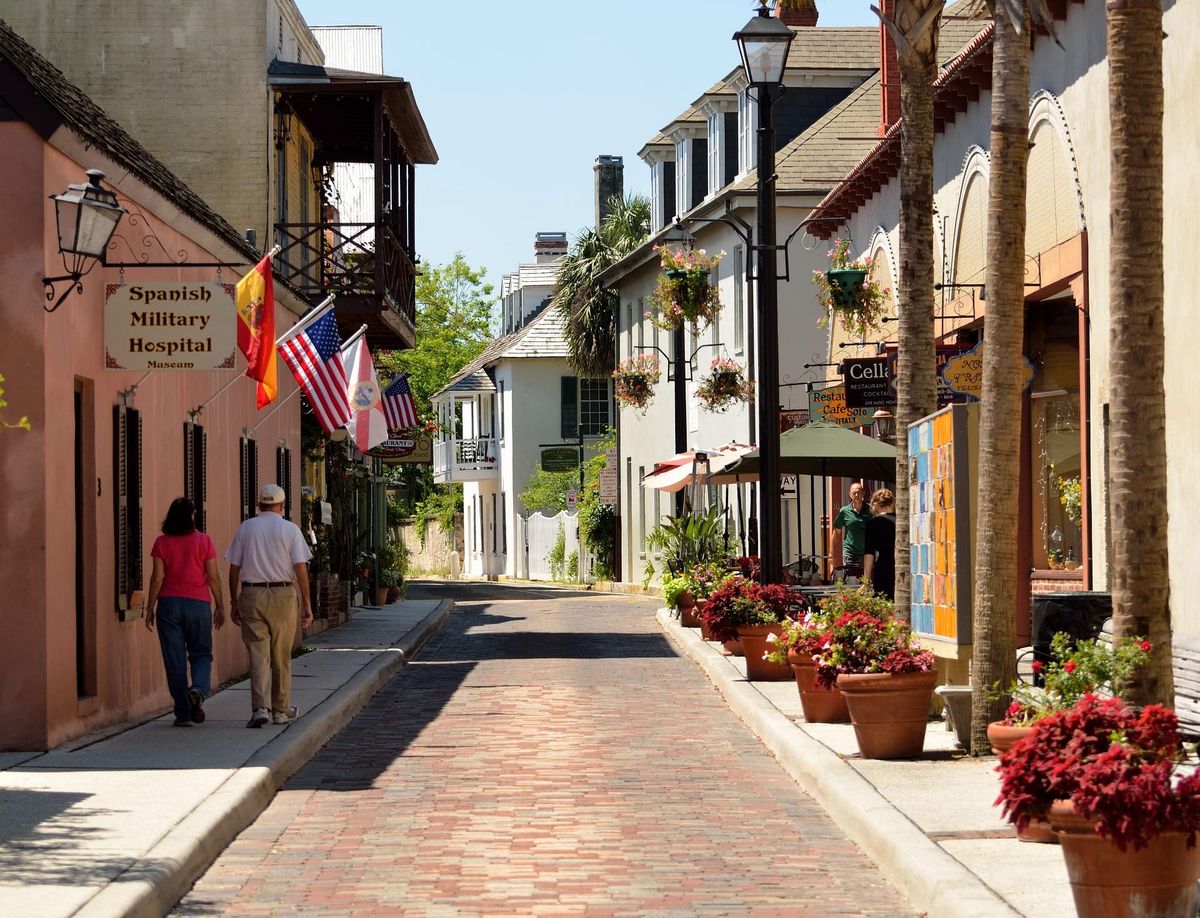
Today, this charming coastal enclave welcomes roughly two million visitors annually. They come not merely for the sub-tropical climate or coastal vistas, but to walk the narrow, coquina-paved lanes—such as Aviles Street, widely considered the oldest street in the United States—and to marvel at architectural marvels like the formidable Castillo de San Marcos. This comprehensive investigative report explores the deep historical chronologies, geopolitical catalysts, architectural achievements, and enduring cultural legacies that define America’s oldest city, offering an authoritative look at a foundational chapter of North American history.
Detailed Chronology: From First Contact to Permanent Settlement
To understand the magnitude of St. Augustine’s longevity, one must journey back through a turbulent era of discovery, rivalry, and colonization. The story of St. Augustine is not merely a tale of a single landing; it is the culmination of decades of failed colonial experiments, indigenous resistance, and fierce European competition for control of the Atlantic seaboard.
1513: Ponce de León and the Naming of La Florida
The Spanish narrative in Florida began more than half a century before St. Augustine’s founding. In the spring of 1513, Spanish conquistador Juan Ponce de León sighted the verdant coast of the peninsula. Believing it to be a massive island, he claimed the territory for the Spanish Crown, naming it La Florida (meaning "Flowery Land") in honor of Pascua Florida (the Feast of Flowers, or Easter season). Ponce de León explored the coastline between modern-day St. Augustine and Melbourne Beach, interacting with indigenous Timucua communities and setting the stage for future Spanish incursions.
However, Ponce de León’s subsequent attempt to colonize the region in 1521 ended in disaster. Landing on the southwest coast with roughly 200 men, horses, and supplies to build a settlement, he was mortally wounded by a poisoned arrow during an attack by local Calusa warriors. The survivors retreated to Cuba, leaving Florida temporarily devoid of European settlements.
The Decades of Failed Expeditions (1528–1561)
Ponce de León was far from the only explorer to underestimate the harsh environment and fierce indigenous resistance of Florida.
- Pánfilo de Narváez (1528): Landed near Tampa Bay with ambitions of carving out a vast empire, only to see his expedition disintegrate into starvation, shipwrecks, and hostile encounters. Out of several hundred men, only a handful—most notably Álvar Núñez Cabeza de Vaca—survived an epic eight-year trek across North America.
- Hernando de Soto (1539): Landed on the Gulf coast with a heavily armed force, marching deep into the American Southeast in search of gold and glory, ultimately finding death along the Mississippi River instead of a permanent colony.
- Tristán de Luna y Arellano (1559): Attempted to establish a major colony at Pensacola Bay. Within weeks of arrival, a catastrophic hurricane destroyed the fleet and its vital food supplies, leading to near-starvation and the eventual abandonment of the settlement.
By the mid-16th century, Spain’s track record in Florida was defined by ambition unfulfilled by endurance. Yet, the strategic imperatives of the region only intensified.
1564–1565: The French Threat and the Rise of Menéndez
The geopolitical calculus shifted dramatically in 1564 when French Huguenots—Protestants fleeing religious persecution in Catholic France—established Fort Caroline near the mouth of the modern-day St. Johns River in present-day Jacksonville. Led by René Goulaine de Laudonnière, the French Protestant enclave posed an unacceptable threat to the Spanish Empire. Not only was France trespassing on territory claimed by Spain, but Fort Caroline also served as a strategic base for French privateers (or pirates, from the Spanish perspective) to raid Spanish treasure fleets carrying gold and silver from the Americas back to Seville.
Alarmed by this direct challenge, King Philip II of Spain dispatched Admiral Don Pedro Menéndez de Avilés with a clear and urgent mandate: eradicate the French presence, secure the Florida coast for the Spanish Crown, and Christianize the indigenous populations.
+-----------------------------------------------------------------+
|              HISTORICAL TIMELINE COMPARISON                     |
+-----------------------------------------------------------------+
| 1513  - Juan Ponce de León explores the Florida coast           |
| 1564  - French Huguenots establish Fort Caroline                |
| 1565  - Pedro Menéndez de Avilés founds St. Augustine           |
| 1607  - English establish Jamestown, Virginia (42 yrs later)    |
| 1610  - Santa Fe, New Mexico, is founded                        |
| 1620  - Pilgrims land at Plymouth Rock (55 yrs later)           |
+-----------------------------------------------------------------+
Menéndez arrived off the coast of Florida on August 28, 1565—the feast day of St. Augustine of Hippo. On September 8, he officially stepped ashore, raising the Spanish banner and establishing a fortified encampment within a Timucua village known as Seloy. He named the fledgling settlement San Agustín (St. Augustine) in honor of the saint’s feast day.
Shortly after landing, Menéndez launched a decisive overland assault on Fort Caroline during a torrential hurricane, catching the French off guard and successfully eliminating their stronghold. Survivors who attempted to surrender later met a grim fate at the hands of Menéndez at an inlet just south of St. Augustine, an event that gave the site its enduring, sobering name: Matanzas (meaning "slaughters").
Supporting Context & Metrics: St. Augustine vs. The British Colonies
To truly appreciate the chronological weight of St. Augustine, historical comparisons are vital. Popular culture often frames Jamestown (founded in 1607) as the bedrock of American history, largely due to the dominance of English-language historiography in the formation of the United States. However, the numbers tell a starkly different story of precedence.
The Mathematics of Precedence
- St. Augustine vs. Jamestown: Founded in 1565, St. Augustine predates the permanent English settlement of Jamestown, Virginia, by 42 years.
- St. Augustine vs. Plymouth Rock: The Spanish stronghold predates the arrival of the Pilgrims aboard the Mayflower at Plymouth Rock in 1620 by a remarkable 55 years.
- St. Augustine vs. Santa Fe: While often cited alongside St. Augustine as one of the oldest cities in the United States, Santa Fe, New Mexico, was not established until 1610—making St. Augustine older by 45 years.
Economic and Demographic Impact Today
While its origins are rooted in imperial conquest, modern St. Augustine operates as a vibrant cultural hub and economic engine for Northeast Florida.
- Tourism Footprint: The city attracts approximately 2 million visitors annually, drawn by its unique blend of Spanish colonial architecture, living history museums, and coastal recreation.
- Preservation Metrics: The historic district spans over 144 blocks, featuring structures that represent various eras of occupancy, including the First Spanish Period (1565–1763), the British Period (1763–1784), the Second Spanish Period (1784–1821), and the Territorial and Victorian eras following Florida’s acquisition by the United States in 1821.
- The Castillo de San Marcos: Managed by the National Park Service, this massive masonry fortress—constructed between 1672 and 1695 out of coquina (a unique sedimentary rock formed from ancient shells)—remains the oldest masonry fort in the continental United States and has never fallen to a military siege.
Official Statements and Architectural Significance
Preserving a city with over 450 years of continuous history requires a delicate balance between modern urban infrastructure and rigorous historical stewardship. City officials, preservationists, and national park administrators view St. Augustine not merely as a tourist destination, but as a priceless archaeological archive.
Voices from the Preservation Community
Dr. Elena Vasquez, a leading architectural historian specializing in Spanish colonial settlements in the Americas, emphasizes the irreplaceable value of the city’s built environment:
"St. Augustine is an open-source history book written in stone, timber, and shell. When you walk down Aviles Street or gaze up at the towering walls of the Castillo de San Marcos, you are engaging with physical evidence of the 16th-century Atlantic world. Unlike cities that were entirely rebuilt after fires or industrial transformations, St. Augustine has retained its original 16th-century grid layout—the Law of the Indies in action—making it a landscape unlike anything else in the United States."
Local historic preservation officers and tourism directors routinely collaborate to maintain strict zoning ordinances within the historic core. These regulations ensure that commercial development respects the Spanish Colonial Revival and vernacular architectural styles that define the city’s visual identity.
The Engineering Marvel of Coquina
A significant focus of official preservation efforts centers on the Castillo de San Marcos and the surrounding fortifications. Built to defend the settlement from British attacks—such as the devastating raids led by Governor James Moore of Carolina in 1702 and General James Oglethorpe in 1740—the fortress owes its legendary resilience to its construction material.
Engineers of the era utilized coquina, quarried nearby on Anastasia Island. Rather than shattering under heavy cannon fire like traditional brick or granite, coquina absorbed the impact of enemy artillery balls, effectively swallowing the projectiles without compromising the structural integrity of the walls. Today, National Park Service structural engineers continuously monitor the coquina fortress against the dual threats of coastal erosion and rising sea levels, employing advanced conservation techniques to safeguard the monument for future generations.
Future Outlook: Balancing Heritage Tourism and Climate Resilience
As St. Augustine looks toward its fifth century of existence, the city faces a complex array of modern challenges that threaten its ancient foundations. Chief among these are the accelerating impacts of climate change, sea-level rise, and the pressures of mass tourism.
Confronting Environmental Vulnerabilities
Situated on a low-lying coastal peninsula flanked by the Matanzas and San Sebastian rivers, St. Augustine is highly susceptible to tidal flooding, severe storm surges, and tropical weather events. King tides and minor nor’easters frequently inundate low-lying historic thoroughfares, threatening ground-floor historical exhibits and underground archaeological deposits.
In response, municipal leaders and state agencies have launched proactive resilience initiatives. Projects include:
- Stormwater Infrastructure Upgrades: Installing advanced tidal valves, pumping stations, and elevated drainage systems to mitigate routine flooding in the historic district.
- Shoreline Stabilization: Utilizing living shorelines, oyster reef restoration, and reinforced seawalls to protect vulnerable cultural resources along the Matanzas River.
- Archaeological Monitoring Programs: Partnering with universities and state preservation offices to survey and document endangered archaeological sites before rising waters compromise subsurface artifacts.
Sustainable Tourism Management
With two million annual visitors pouring into a compact historic district, city planners are increasingly focused on sustainable tourism models. Initiatives include promoting off-peak travel, expanding cultural programming beyond the central downtown core into neighborhoods like Lincolnville (a historic African American community founded in the post-Civil War era), and encouraging pedestrian-friendly mobility to reduce vehicular congestion.
Conclusion
St. Augustine stands as a testament to human resilience, geopolitical ambition, and cultural persistence. From its founding by Pedro Menéndez de Avilés in 1565 through centuries of British, Spanish, and American governance, the city has evolved from a vulnerable military outpost into a cherished national treasure. By honoring its complex colonial heritage while aggressively tackling the modern realities of coastal preservation and climate change, St. Augustine ensures that its remarkable story will continue to captivate and educate generations to come.

0 Comments