

Executive Overview
When Americans are taught the foundational narrative of their nation’s European settlement, the curriculum almost invariably points northward. Generations of schoolchildren have memorized the pivotal years of 1607, marking the establishment of the English colony at Jamestown, Virginia, and 1620, commemorating the arrival of the Pilgrims aboard the Mayflower at Plymouth Rock. Yet, decades before these iconic milestones took root in the American consciousness, a different flag was planted deep in the humid coastal soil of what is now northeastern Florida.
St. Augustine, founded on September 8, 1565, holds the undisputed title of the oldest continuously occupied European-established settlement in the United States. Its origins predate Jamestown by 42 years and Plymouth Rock by 55 years, disrupting the traditional Anglo-centric narrative of American history and reframing the United States’ origin story through a distinctly Spanish lens.
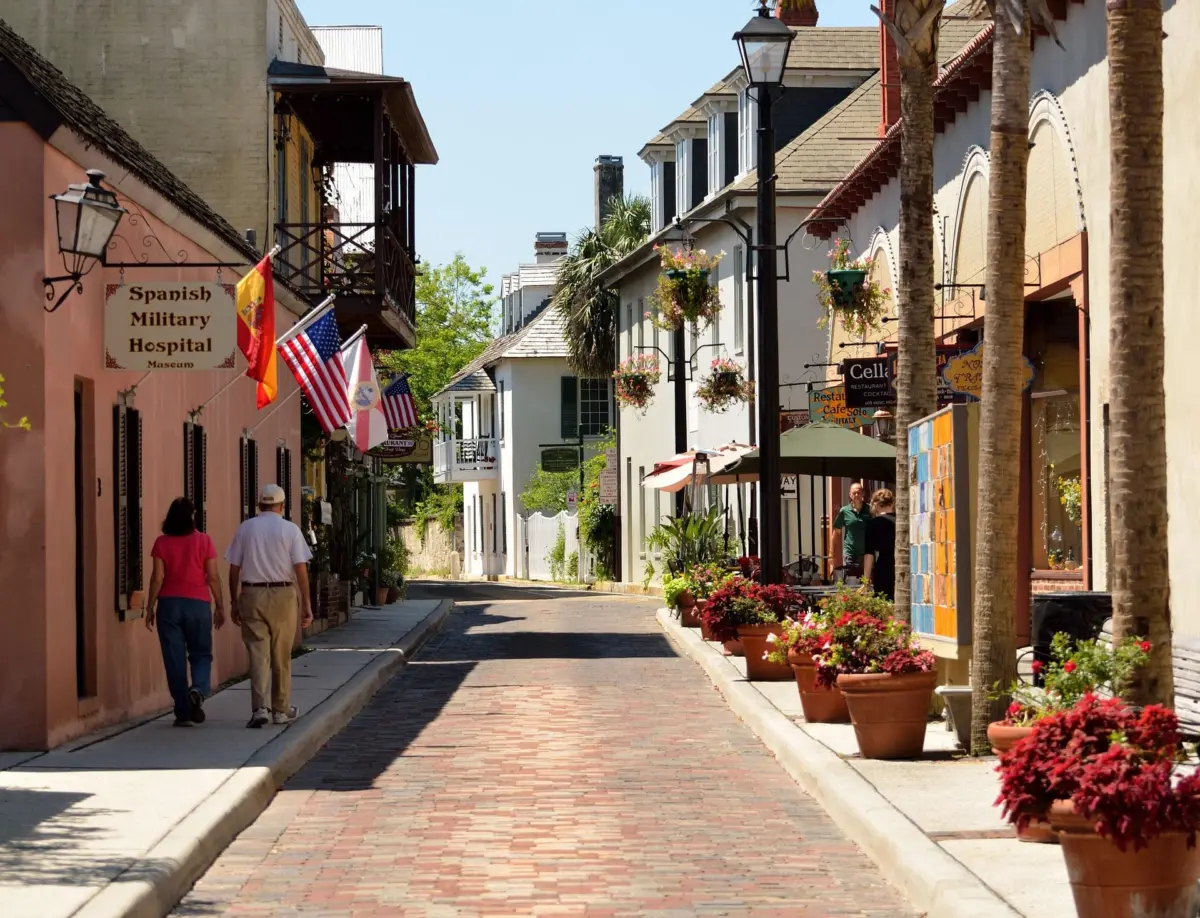
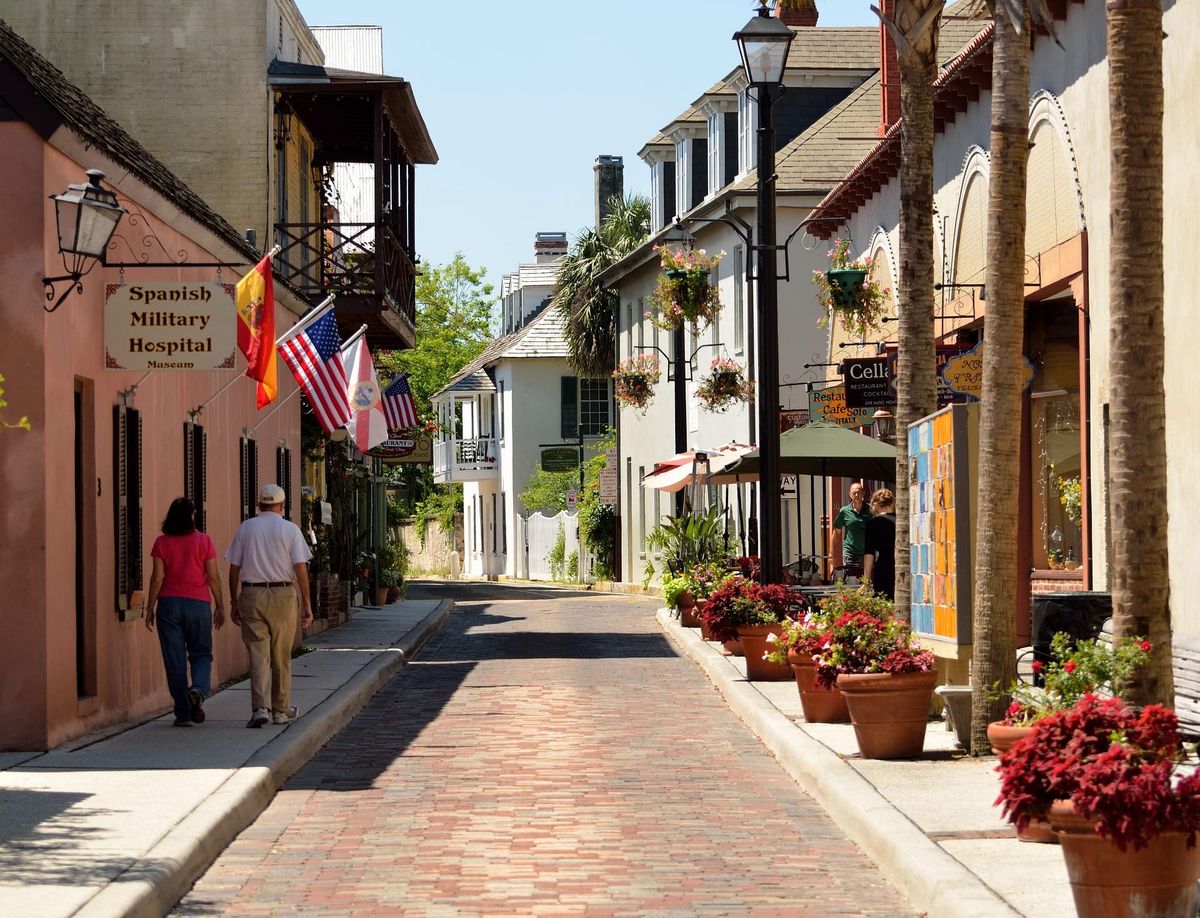
Far from being a mere historical footnote, St. Augustine is a living, breathing museum that welcomes approximately two million visitors annually. It bridges the gap between ancient maritime exploration and modern tourism, anchored by awe-inspiring fortifications like the Castillo de San Marco, narrow cobblestone thoroughfares like Aviles Street—widely believed to be the oldest street in America—and a complex cultural heritage that blends Spanish, Indigenous, Minorcan, African, and British influences. This investigative feature explores the deep chronology, geopolitical friction, architectural resilience, and economic heartbeat of the nation’s oldest city, examining how a fragile 16th-century military outpost evolved into an enduring American monument.
Detailed Chronology: From First Sighting to Permanent Fortress
To understand St. Augustine, one must journey backward through more than five centuries of shifting imperial ambitions, religious zeal, and brutal geopolitical maneuvering along the Atlantic seaboard.
1513: Ponce de León and the Discovery of La Florida
The story of European colonization in Florida begins more than half a century before St. Augustine’s founding. In the spring of 1513, Spanish conquistador Juan Ponce de León sailed from Puerto Rico in search of new lands, riches, and, according to popular myth, the legendary Fountain of Youth. On April 2, 1513, Ponce de León sighted the lush coastline of the peninsula during the Easter season—known in Spanish as Pascua Florida (the Feast of Flowers). He claimed the territory for the Spanish Crown, naming it La Florida.
Though Ponce de León explored the eastern coast between present-day Melbourne Beach and St. Augustine, his initial efforts to colonize the peninsula were thwarted by fierce resistance from the indigenous Timucua people and treacherous coastal conditions.
1562–1565: The French Threat and the Spanish Response
For decades, Spain claimed sovereignty over Florida but failed to establish a permanent foothold. This vacuum did not go unnoticed by rival European powers. In 1562, French Huguenot explorer Jean Ribault explored the region, and by 1564, fellow Frenchman René Goulaine de Laudonnière established Fort Caroline near the mouth of the modern St. Johns River in present-day Jacksonville.
The presence of a French Protestant (Huguenot) colony so close to the vital shipping lanes used by Spanish treasure fleets—which carried gold and silver from Central and South America back to Europe via the Gulf Stream—sent shockwaves through the court of King Philip II of Spain. The Spanish viewed the French settlement not only as a territorial encroachment but as a direct religious and economic threat.
Tasked with eliminating the French presence and securing the territory once and for all, Admiral Don Pedro Menéndez de Avilés arrived off the coast of Florida in late August 1565.
September 8, 1565: The Birth of St. Augustine
On September 8, 1565, Menéndez de Avilés waded ashore on the northeastern coast of Florida, accompanied by a contingent of soldiers, settlers, and Catholic priests. Kneeling before a hastily erected altar, Father Francisco López celebrated the first parish mass in what is now the United States, and the settlement was christened San Agustín (St. Augustine), named in honor of the saint upon whose feast day the fleet had first sighted the coast.
Menéndez quickly moved against the French, marching overland to launch a surprise attack on Fort Caroline in September 1565, successfully routing the French forces and executing most of the survivors, including Ribault. With the French threat neutralized, Menéndez secured strategic alliances with the local Timucua people, laying the groundwork for a permanent garrison and administrative hub.
The Crucible of Survival: Early Hardships
The early years of St. Augustine were defined by extreme hardship. The settlement was battered by severe hurricanes, plagued by tropical diseases, and plagued by chronic food shortages. Relations with the Timucua deteriorated as Spanish demands for labor and food strained local resources, leading to bloody uprisings.
Furthermore, the settlement was vulnerable to foreign attack. In 1586, the notorious English privateer Sir Francis Drake sacked and burned St. Augustine to the ground. Rather than abandoning the outpost, the resilient Spanish inhabitants rebuilt it, realizing that holding St. Augustine was essential to protecting Spain’s maritime empire in the New World.
Supporting Context & Metrics: Architecture, Demographics, and Economy
St. Augustine’s longevity is written into its physical landscape. The city’s historic district preserves a rare continuity of urban design and architectural evolution that is virtually unmatched in North America.
Architectural Milestones: The Castillo de San Marcos
Following a devastating raid by English pirate Robert Searles in 1668, the Spanish Crown finally approved the construction of a massive stone fortress to protect St. Augustine. Construction on the Castillo de San Marcos began in 1672 and was completed in 1695.
Engineered by Spanish military architects, the fort was built out of coquina—a unique sedimentary rock formed from millions of microscopic shell fragments compressed over thousands of years along the Anastasia Island coastline. Coquina proved to be a revolutionary building material for military defense: rather than shattering under heavy cannon fire, the spongy, resilient stone absorbed or deflected incoming cannonballs without fracturing.
The Castillo de San Marcos remains the oldest masonry fort in the continental United States and stands as an enduring testament to Spanish engineering prowess. During subsequent sieges by the British—including attacks led by South Carolina Governor James Moore in 1702 and Georgia founder James Oglethorpe in 1740—the fortress never fell to an invading army.
Economic and Demographic Impact Today
Today, St. Augustine is a thriving cultural and economic engine within St. Johns County, one of the fastest-growing regions in Florida.
- Tourism Footprint: St. Augustine and its surrounding beaches draw approximately 2 million visitors annually, making tourism the cornerstone of the local economy.
- Preservation Economy: The city’s historic preservation efforts are supported by strict architectural guidelines within the historic district, ensuring that structures dating back to the 18th and 19th centuries retain their historic integrity.
- Demographic Shift: While tourism dominates, the city has evolved into a desirable residential haven, attracting retirees, remote professionals, and families drawn to its coastal climate, low crime rates, and rich cultural offerings.
Notable Historic Distinctions
Beyond its primary title as the oldest continuously occupied European settlement, St. Augustine lays claim to a series of unique historical superlatives:
- Aviles Street: Widely recognized as the oldest documented public street in the United States, lined with artisan shops, galleries, and historic structures.
- The Fountain of Youth Archaeological Park: A 15-acre waterfront park commemorating the site of Menéndez’s original landing and early interactions with the Timucua.
- The oldest wooden schoolhouse: A fragile cypress and red cedar structure built in the late 18th century, symbolizing early education during the Spanish colonial era.
- The Shrine of Our Lady of La Leche: Located at Mission Nombre de Dios, it marks the site of the first Catholic mission in the United States, established in 1565.
Official Statements & Preservation Insights
Preserving a 460-year-old city in an era of rapid coastal development, climate change, and hyper-tourism requires a delicate balance between historical stewardship and modern municipal management. Local preservationists, historians, and civic leaders frequently address the unique responsibilities of maintaining America’s oldest urban landscape.
"St. Augustine is not merely a collection of old buildings; it is the physical manifestation of America’s complex, multicultural beginning," notes Dr. Elena Vance, a colonial historian specializing in Spanish-American borderlands. "When people walk down Aviles Street or gaze up at the coquina walls of the Castillo, they are touching a history that predates the creation of the United States by more than two centuries. It forces us to expand our historical imagination beyond Plymouth Rock."
Local municipal leaders emphasize the ongoing challenge of climate resilience, particularly rising sea levels and intense tropical storm systems that threaten low-lying coastal historic districts.
"Our mandate from history is clear: protect and preserve," stated a spokesperson for the St. Augustine Historic Preservation Office. "Every brick of coquina, every tabby foundation, and every coquina-shell pathway tells a story of survival against the odds. We are investing heavily in stormwater management, shoreline stabilization, and historic structural reinforcement to ensure that St. Augustine stands for another four centuries."
National Park Service rangers stationed at the Castillo de San Marcos echo these sentiments, highlighting educational outreach as a critical tool for modern visitors. Park interpretation programs deliberately emphasize the multi-ethnic roots of the city, highlighting the contributions of enslaved Africans, free Black militias (who established Gracia Real de Santa Teresa de Mose, the first legally sanctioned free Black settlement in what is now the U.S. in 1738), the Timucua, and the Minorcan settlers who arrived in the 18th century.
Future Outlook: Navigating Heritage, Growth, and Climate Realities
As St. Augustine looks toward the future, it faces a paradox familiar to many historic cities worldwide: how to honor the past while accommodating the pressures of the 21st century.
Managing Overtourism and Urban Development
With two million annual visitors concentrated primarily within a compact historic district, pedestrian congestion, parking constraints, and commercialization pose continuous challenges. City planners are actively exploring sustainable tourism initiatives, including expanded pedestrian-only zones, enhanced remote parking and shuttle systems, and smart-growth zoning ordinances designed to protect the residential neighborhoods surrounding the core.
Climate Adaptation and Coastal Resilience
Perhaps the most pressing existential challenge facing St. Augustine is environmental vulnerability. Situated at the confluence of the Matanzas and San Sebastian rivers near the Atlantic coast, the city is increasingly susceptible to tidal flooding ("sunny day flooding"), severe storm surges, and rising sea levels associated with global climate change.
In response, municipal and federal agencies have launched aggressive infrastructure projects. These include raising seawalls, upgrading stormwater pump stations, and utilizing nature-based solutions—such as living shorelines and oyster reef restoration—to buffer the historic core against extreme weather events. These resilience measures are critical to ensuring that the city’s irreplaceable architectural heritage survives for future generations.
Expanding the Historical Narrative
Finally, St. Augustine’s future lies in deepening and broadening its historical storytelling. Historians and community advocates are working to bring lesser-known chapters of the city’s past into the public spotlight. Exhibits focusing on Fort Mose—located just north of the city—demonstrate how St. Augustine served as a beacon of freedom for enslaved people escaping British colonies, offering a profound counter-narrative to the standard history of American slavery.
Conclusion
St. Augustine remains an irreplaceable cornerstone of American heritage. By looking past the conventional narrative of 1607 and 1620, visitors and historians alike discover a rich, tumultuous tapestry of Spanish exploration, indigenous resilience, colonial conflict, and cultural fusion. As it navigates the modern challenges of climate change and urban growth, St. Augustine continues to stand as a resilient monument on the Florida coast—a timeless reminder that the story of America began long before the founding of the republic.

0 Comments