

Executive Overview
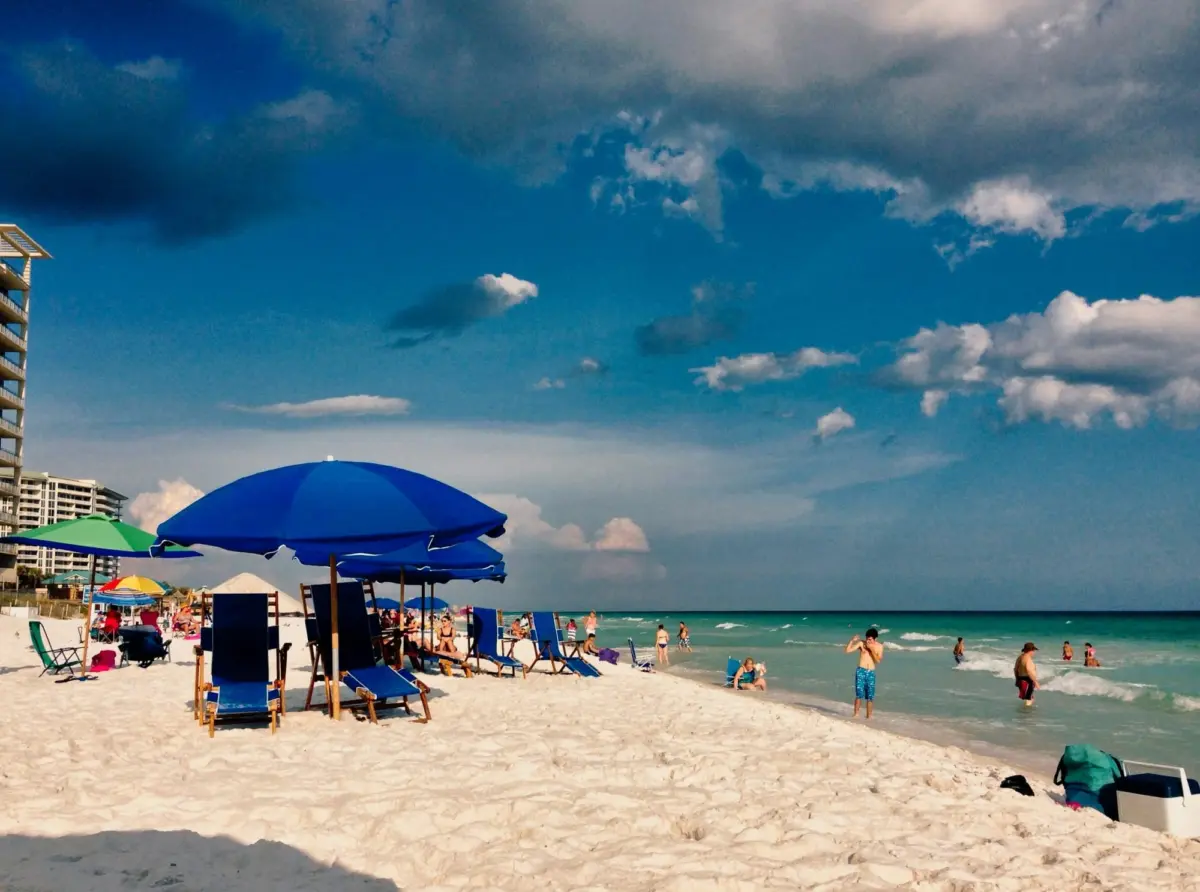
For over half a century, "The Sunshine State" has served as the globally recognized moniker for Florida. Emblazoned across millions of license plates, tourism brochures, and postcards, the phrase evokes images of endless blue skies, golden beaches, and perpetual warmth. Yet, beneath the polished veneer of this legendary marketing masterwork lies an inconvenient geographical and meteorological truth: Florida is not actually the sunniest state in America.
While state legislators officially adopted the nickname in 1970, empirical weather data, satellite measurements, and climatological studies reveal a surprising reality. Depending on the metrics evaluated, Florida often ranks outside the top tier of sun-drenched U.S. states, regularly losing out to arid western powerhouses like Arizona, New Mexico, and Nevada. Furthermore, the peninsula’s infamous seasonal weather patterns—marked by intense, predictable afternoon tropical downpours—have led some meteorologists to jokingly suggest that "The Partly Cloudy State" might be a far more accurate descriptor.
This deep dive investigates the origins of Florida’s famous moniker, analyzes the hard data behind national sunshine rankings, explores the geographical realities of America’s most tropical peninsula, and proposes alternative titles that more accurately reflect the true essence of the region.
Detailed Chronology: How Florida Claimed the Sun
To understand how Florida became inextricably linked to the sun, we must trace the history of its tourism economy and legislative branding efforts.
- The Late 19th and Early 20th Centuries (The Dawn of Tourism): Long before official state nicknames were codified into law, early railroad tycoons and real estate developers—most notably Henry Flagler—began marketing Florida’s mild winter climate to freezing northerners. The primary selling point was simple: escape the ice and snow for warmth and light.
- The Post-WWII Boom: Following the Second World War, returning veterans and retirees flooded the peninsula. The state’s identity shifted rapidly from an agricultural frontier to a leisure and retirement paradise. Postcards and promotional campaigns heavily leaned on imagery of bright blue skies and sandy shores.
- 1970 (Legislative Action): While the phrase had been colloquialized for decades, the Florida Legislature officially cemented "The Sunshine State" into state statute in 1970, replacing the older, less catchy official nickname, "The Ever-Glades State" (though "The Peninsula State" was also widely used historically). Lawmakers sought to optimize tourism marketing and unify the state’s brand identity.
- The Late 20th Century to Present: Despite growing meteorological data showing that other states received significantly more cloud-free days, the nickname stuck. It evolved into a cultural touchstone, generating billions of dollars in economic value through tourism and brand recognition, largely immune to scientific scrutiny until recent decades.
Supporting Context & Metrics: The Hard Data on Sunshine
When climatologists and meteorological organizations evaluate sunshine duration across the United States, they measure the percentage of possible sunshine—the amount of time the sun’s rays actually hit the ground versus the total amount of time the sun is above the horizon.
According to data compiled from the Centers for Disease Control and Prevention (CDC) and various meteorological agencies, Florida’s ranking often shocks casual observers.
Where Does Florida Rank?
- CDC and Demographic Rankings: Based on comprehensive national health and environmental datasets, Florida typically lands in 10th place among the sunniest states in the United States.
- National Weather Service Metrics: Depending on the specific seasonal weighting and historical averaging periods utilized, the National Weather Service occasionally places Florida closer to 6th place.
- The Reigning Champions: The top positions are overwhelmingly dominated by the American Southwest. States such as Arizona (specifically cities like Yuma and Tucson), New Mexico, Nevada, and California consistently report far fewer cloudy days, significantly lower relative humidity, and drastically less annual precipitation than the Sunshine State.
The Problem with Afternoon Thunderstorms
Why does a state surrounded by warm tropical waters and renowned for its bright days fall behind in national sunshine tallies? The answer lies in thermodynamics and geography.
Florida is a narrow peninsula bounded by the Gulf of Mexico and the Atlantic Ocean. During the spring and summer months, intense solar heating creates sea breezes that collide directly over the center of the state. This atmospheric collision spawns towering cumulonimbus clouds, leading to sudden, torrential afternoon thunderstorms. While these storms often blow over within an hour, leaving behind brilliant sunshine once more, they accumulate significant "cloud cover" hours in meteorological ledgers, dragging down Florida’s overall unbroken sunshine percentages.
City-Level Comparisons: Where is the Brightest Light?
When analyzing individual metropolitan areas across the United States, major Florida cities frequently fail to crack the absolute top tiers of national sunniness rankings. Cities in Arizona, Texas, and California regularly outpace Miami, Orlando, and Tampa in terms of total annual clear days.
Within Florida itself, a geographic divide exists regarding weather patterns. A comprehensive analysis by regional lifestyle and weather trackers (such as Only In Your State) highlights that the regions boasting the most consistent, stable weather conditions are heavily concentrated in Southwest Florida. Municipalities in this pocket of the state—benefiting from unique microclimates and specific wind patterns—tend to experience fewer washouts during the peak convective storm seasons, yet they still battle the statewide reality of high humidity and intermittent cloud cover.
Official Statements and Meteorological Perspectives
The mismatch between marketing mythology and meteorological reality has long amused weather professionals.
In discussions regarding regional climate labeling, one prominent Chicago-based meteorologist wryly observed that given Florida’s daily cycle of morning heat, midday buildup, and explosive 3:00 PM thunderstorms, "The Partly Cloudy State" would be a far more scientifically accurate moniker.
Tourism boards and state historians, however, view the nickname through a different lens. Representatives from historical preservation societies emphasize that "The Sunshine State" was never meant to be a strict meteorological index score; rather, it was conceived as an emotional and psychological promise. It speaks to a state of mind, an escape from the gloomy winters of the Midwest and Northeast, and a beacon of warmth.
State planners and economists argue that changing the nickname is neither practical nor necessary. Brands, once established in the global consciousness, transcend strict empirical validation. Coca-Cola is not literal medicine, and Florida’s sunshine, while occasionally interrupted by majestic anvil clouds, remains an abundant and defining feature of life on the peninsula.
Future Outlook: A More Fitting Moniker?
If Florida were to rebrand based strictly on its physical geography and overwhelming natural assets, what title would truly capture its identity? Regional enthusiasts and environmental geographers have offered several compelling alternatives.
1. The Water State
Perhaps the most geographically accurate proposal comes from outdoor advocacy groups such as Play Hard Florida. Consider the staggering aquatic metrics of the region:
- Coastline: Florida boasts approximately 1,350 miles of general coastline, giving it the longest general coastline in the contiguous United States and second only to Alaska nationwide.
- Lakes: The state cradles roughly 30,000 named and unnamed freshwater lakes, including the massive Lake Okeechobee.
- Rivers: An intricate network spanning over 26,000 miles of rivers and streams crisscrosses the landscape.
- Beaches: Visitors and residents enjoy over 663 miles of pristine sandy beaches.
- Ecosystems: The state is famously anchored by the unique, slow-moving river of grass known as the Everglades.
Water defines Florida’s past, present, and future. From subterranean aquifer systems and crystal-clear freshwater springs to the surrounding marine sanctuaries of the Atlantic and the Gulf, water is the lifeblood of the peninsula.
2. The Peninsula State
A nod to historical geography, this title has the distinct advantage of being indisputably correct. Jutting out between two major bodies of water, Florida’s physical shape is one of the most recognizable outlines on the North American continent.
Conclusion
While "The Sunshine State" may technically belong to Arizona or New Mexico if judged purely by unbroken blue-sky statistics, Florida’s cultural claim to the sun remains deeply entrenched. Yet, as travelers, residents, and environmental observers look deeper into the rich tapestry of the region, recognizing Florida as the ultimate Water State—a dynamic realm defined by its endless coastlines, vibrant wetlands, and aquatic wonders—might just offer a truer appreciation of its unique place on the map.

0 Comments