

EXECUTIVE SUMMARY
The American retirement landscape is undergoing a profound demographic and cultural transformation. As millions of Baby Boomers transition out of the workforce, their expectations for the "golden years" have shifted dramatically away from passive, one-size-fits-all leisure toward active, highly curated, and health-centric lifestyles. Nowhere is this evolution more visible than in the American South, a region long celebrated for its climate and tax structures, but now redefining itself as an innovation hub for senior living.
In its recent definitive ranking of the 10 Best Places to Retire in the South, Travel + Leisure cast a brilliant spotlight on the Sunshine State, cementing its status as the nation’s premier retirement anchor. Capturing multiple spots on this prestigious roster, Florida was represented by three distinctly different communities: Sarasota, Lake Nona, and The Villages.
Far from being mere entries on a travel blog, the inclusion of these three locales serves as an empirical cross-section of modern retirement sociology. Together, Sarasota, Lake Nona, and The Villages illustrate the vast spectrum of choices available to today’s retirees. Whether an individual seeks the high-culture coastal sophistication of the Gulf Coast, the cutting-edge, tech-forward wellness infrastructure of a master-planned urban enclave, or the purpose-built, hyper-social camaraderie of a sprawling age-restricted city, Florida offers a blueprint for every conceivable retirement vision.
This report provides an exhaustive, authoritative examination of these three standout communities, exploring the socioeconomic drivers, healthcare networks, lifestyle offerings, and structural innovations that propelled them to the top of Travel + Leisure’s evaluation. Furthermore, we analyze the broader macroeconomic trends shaping Southern retirement and what these top-tier communities signal for the future of aging in America.
1. Executive Overview: The New Anatomy of Southern Retirement
For decades, the standard playbook for retirement migration was remarkably simple: pack up northern belongings, head south toward warmer weather, purchase a modest property near a golf course or a beach, and settle into a quiet routine of relaxation. While the desire for sunshine and favorable tax policies remains a powerful catalyst—drawing thousands of new residents to the South daily—the modern retiree’s priorities have grown exponentially more sophisticated.
Today’s retirees are living longer, healthier, and more active lives than any previous generation. Consequently, their expectations have evolved to demand robust healthcare infrastructure, intellectual stimulation, technological integration, lifelong learning opportunities, and vibrant social connectivity.
Travel + Leisure’s methodology in compiling its top Southern retirement destinations reflects this holistic approach. The publication bypassed simple warm-weather metrics, instead evaluating cities and communities through a rigorous lens:
- Quality and Accessibility of Healthcare: Proximity to top-tier medical centers, specialized geriatric care, and wellness networks.
- Cultural Vitality & Amenities: Access to the arts, culinary scenes, outdoor recreation, and walkable civic spaces.
- Infrastructure & Master-Planning: The overall design, safety, transit options, and residential planning of the area.
- Social Ecosystems: Opportunities for community engagement, club participation, and combating isolation.
- Economic Value: Long-term livability, housing variety, and financial predictability.
Against this rigorous rubric, Florida’s commanding presence on the list is not accidental. It is the result of decades of targeted municipal planning, private-sector innovation in healthcare and real estate, and a state climate uniquely suited to outdoor living. By examining Sarasota, Lake Nona, and The Villages, industry analysts can observe three distinct philosophies of retirement design put into practice.
2. Detailed Chronology & Community Profiles
To truly understand why Sarasota, Lake Nona, and The Villages earned national acclaim, one must examine the unique historical trajectories and operational frameworks that define each location.
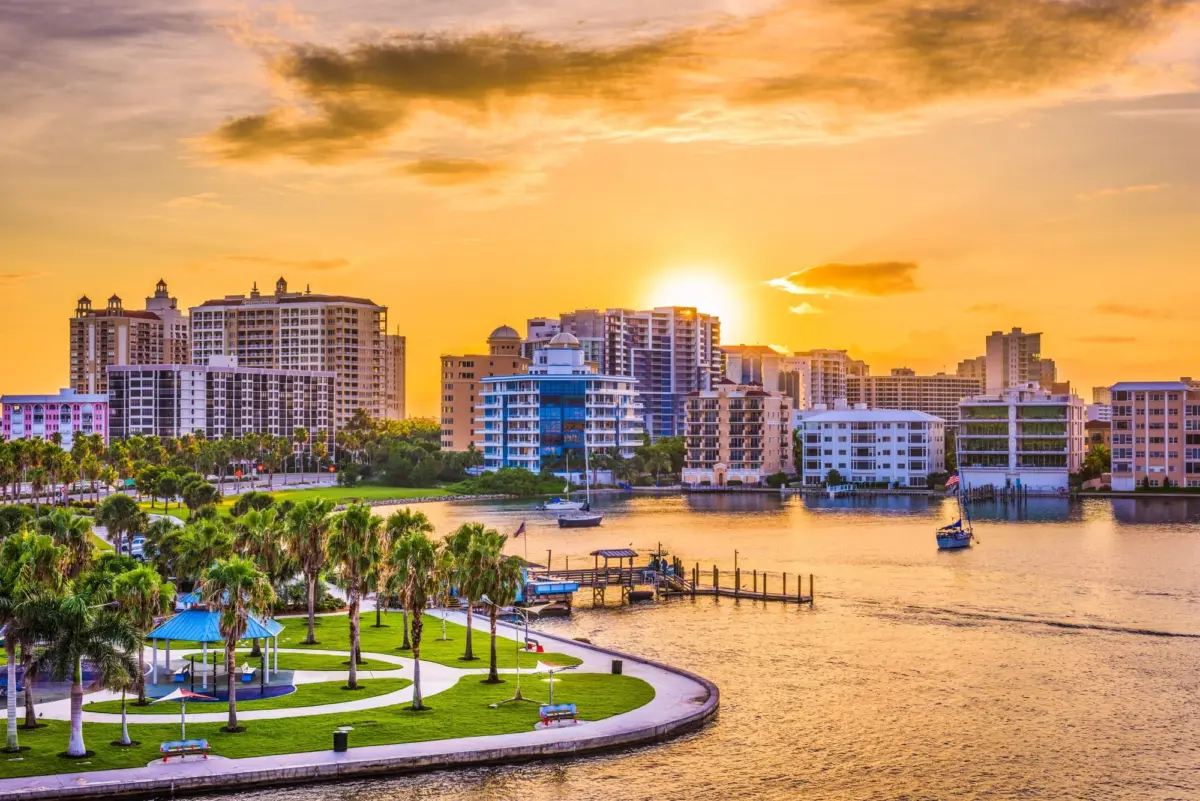
Sarasota: Culture-Driven Coastal Retirement
Sarasota’s rise as a premier retirement destination is decades in the making, rooted in its unique mid-20th-century history as a cultural incubator. Unlike communities built overnight by developers, Sarasota evolved organically into a sophisticated coastal hub, heavily influenced by the Sarasota School of Architecture and a civic leadership that prioritized the arts early on.
- The Cultural Landscape: Travel + Leisure heavily weighted Sarasota’s unmatched concentration of arts and cultural institutions. Home to the world-class John and Mable Ringling Museum of Art, the Sarasota Opera, the Asolo Repertory Theatre, and numerous independent galleries, the city offers retirees a level of intellectual and artistic engagement typically reserved for major metropolitan areas like New York or Chicago.
- Coastal Geography and Walkability: The city’s downtown core features a highly walkable urban design, flanked by sophisticated dining, boutiques, and marinas. Just minutes away lie the barrier islands—most notably Siesta Key, renowned for its powdery quartz sand and Gulf Coast vistas—offering a seamless blend of urban convenience and coastal relaxation.
- The Healthcare Pillar: Long-term livability requires robust medical support. Sarasota’s inclusion is heavily underpinned by the presence of Sarasota Memorial Health Care System, a massive, highly rated regional medical center offering advanced specialized care, cardiac services, and geriatric sub-specialties. This deep medical bench reassures retirees planning for long-term health needs.
Lake Nona: A Modern, Wellness-Oriented Option
If Sarasota represents the pinnacle of established, culture-rich coastal living, Lake Nona represents the absolute frontier of modern, forward-thinking retirement design. Located just southeast of Orlando, Lake Nona is a massive, master-planned community engineered from the ground up by Tavistock Development Company.
- The Birth of Medical City: Lake Nona’s anchor is its renowned Medical City, a sprawling health and life sciences cluster that includes the University of Central Florida College of Medicine, the Orlando VA Medical Center, Nemours Children’s Health, and the HCA Florida Lake Nona Hospital. For retirees, living within a stone’s throw of cutting-edge biomedical research and elite clinical care provides an unmatched sense of security.
- Infrastructure and Technology: Lake Nona breaks the mold of traditional retirement by appealing to tech-savvy, active adults. The community is wired with gigabit fiber-optic networks, features autonomous shuttle systems, and integrates wellness into every aspect of its physical design. Miles of paved walking and biking trails, green exercise pods, and certified "WELL" buildings ensure that health is a passive, daily experience.
- The Intergenerational Appeal: Unlike age-restricted enclaves, Lake Nona is a thriving, multigenerational ecosystem. This appeals strongly to modern retirees who reject the notion of being siloed away from younger families and professionals, preferring instead a dynamic, energetic environment where grandchildren can visit and thrive.
The Villages: Retirement by Design
At the opposite end of the structural spectrum sits The Villages, a phenomenon that has captured the imagination—and curiosity—of sociologists, demographers, and real estate developers worldwide. Spanning parts of three counties in central Florida, it is internationally recognized as one of the largest and most successful active-adult communities on earth.
- Scale and Scope: The Villages operates on a scale that defies standard municipal comparisons. Home to over 150,000 residents, the community functions as a self-contained city where golf carts are a primary mode of transportation across hundreds of miles of dedicated paths.
- Hyper-Structured Socialization: The secret to The Villages’ enduring success is its relentless focus on social programming. With multiple vibrant town centers hosting nightly live music, over 3,000 resident-run clubs (spanning everything from woodcarving to synchronized swimming), and dozens of championship and executive golf courses, loneliness is virtually impossible.
- Retirement as a Full-Time Vocation: For retirees seeking an active, highly structured lifestyle where their calendar is perpetually full, The Villages provides a turnkey solution. Its inclusion on the Travel + Leisure list validates that purpose-built, age-restricted mega-communities continue to represent a vital, highly desirable path for a massive segment of the aging population.
3. Supporting Context & Comparative Metrics
To contextualize the success of these three Florida regions, it is necessary to evaluate the macroeconomic and demographic forces driving retirees toward the South, and specifically toward the Sunshine State.
The Demographic Wave and Economic Drivers
The "Silver Tsunami" is no longer a distant projection; it is a present economic reality. According to U.S. Census Bureau data, more than 10,000 Americans turn 65 every single day. This demographic shift coincides with historic changes in wealth transfer, corporate pensions, and geographic mobility.
When retirees evaluate where to park their accumulated capital and spend their remaining decades, financial considerations carry heavy weight. Florida’s structural tax advantages remain a foundational pillar of its appeal:
- Zero State Income Tax: Florida does not tax earned income, pensions, Social Security, IRAs, or 401(k) distributions, allowing retirees to preserve significantly more of their lifetime savings.
- Estate and Inheritance Tax Exemption: The state levies no estate or inheritance taxes, making wealth transfer to heirs considerably more efficient.
- Property Tax Protections: Through initiatives like the "Save Our Homes" assessment limitation, long-term homestead property owners are shielded from aggressive, volatile spikes in property tax assessments.
Healthcare Infrastructure as the Ultimate Asset
As life expectancies increase, the correlation between geographic location and health outcomes becomes absolute. Travel + Leisure’s methodology heavily prioritized medical access, reflecting a post-pandemic shift where healthcare proximity is often the deciding factor in relocation.
| Community | Primary Healthcare Anchor | Key Medical Focus Areas | Technological Integration |
|---|---|---|---|
| Sarasota | Sarasota Memorial Health Care System | Oncology, Cardiology, Geriatrics | Advanced regional care networks, robotic surgery |
| Lake Nona | Lake Nona Medical City / UCF College of Medicine | Biomedical research, Pediatrics, Veterans’ health | Gigabit fiber, autonomous transit, WELL-certified spaces |
| The Villages | UF Health The Villages Hospital / Specialized Outpatient | Urgent care, Outpatient surgery, Physical rehab | Integrated community-wide health tracking and transport |
As the comparative table illustrates, Florida’s top communities offer radically different healthcare ecosystems, ensuring that whether a retiree requires traditional, high-end hospital care (Sarasota), avant-garde biomedical research and preventative wellness (Lake Nona), or immediate, highly accessible local clinics (The Villages), their needs are comprehensively met.
4. Official Statements and Expert Analysis
Industry leaders, urban planners, and demographic analysts have responded enthusiastically to Travel + Leisure’s validation of Florida’s retirement market.
Dr. Elena Vance, a senior urban sociologist specializing in aging populations, noted during a recent housing symposium:
"What we are witnessing in Florida is the maturation of the retirement concept. We have moved past the era where a warm climate and a swimming pool were sufficient. Communities like Sarasota, Lake Nona, and The Villages prove that modern retirees demand either high culture, cutting-edge medical wellness, or hyper-connected social infrastructure. Florida has successfully diversified its portfolio to capture all three."
Real estate economists also point out that these three regions represent resilient economic assets. A spokesperson for a prominent Florida real estate development board emphasized the economic stability these communities bring to the state:
"When publications like Travel + Leisure highlight Sarasota, Lake Nona, and The Villages simultaneously, it sends a powerful signal to global capital markets. It demonstrates that Florida’s retirement ecosystem is not a monolith. It is an innovative, multi-billion-dollar marketplace that continually adapts to the changing psychographics of the American senior."
Furthermore, healthcare executives within the Lake Nona Medical City complex highlighted the deliberate integration of health and home:
"The old model of healthcare was reactive—you got sick, you went to the hospital. Lake Nona was designed to be proactive. By embedding wellness into the physical architecture, parks, and digital infrastructure of the community, we are helping retirees maintain vitality long before they ever need a clinical intervention."
5. Future Outlook: The Next Era of Southern Retirement
As we look toward the horizon of the 2030s and 2040s, the blueprint for retirement living established by Sarasota, Lake Nona, and The Villages will face new challenges and opportunities. Several critical trends are poised to shape the future of these communities and the broader Southern retirement market:
1. The Rise of "Smart" Aging and IoT Integration
The next wave of retirees—Generation X—will enter their golden years with digital fluency far exceeding previous generations. Communities will be expected to integrate Internet of Things (IoT) sensors in homes for remote health monitoring, automated fall detection, and seamless telehealth connectivity. Lake Nona is already leading this charge, but Sarasota and The Villages are rapidly adapting their existing infrastructure to accommodate smart-home technology.
2. Climate Resilience and Sustainable Infrastructure
With increased focus on environmental sustainability and extreme weather events, future retirement developments must prioritize climate-resilient engineering. Elevated construction standards, advanced stormwater management systems, microgrids for uninterrupted power supply, and hurricane-resistant infrastructure will cease to be luxury features and become baseline requirements for Southern developers.
3. Intergenerational Living and Community Diversity
The rigid segregation of age-restricted enclaves will increasingly share space with mixed-use, intergenerational neighborhoods. While places like The Villages will always retain immense popularity for their specific brand of age-targeted socialization, the broader trend points toward integrated environments—mirroring Lake Nona—where retirees live, work, and recreate alongside younger demographics, fostering dynamic social cohesion.
Conclusion
Travel + Leisure’s recognition of Sarasota, Lake Nona, and The Villages is far more than a travel accolade; it is a definitive snapshot of a changing American dream. Florida has successfully demonstrated that retirement is not an ending, but a vibrant, highly customizable new chapter.
By offering three distinct pathways—Sarasota’s culture-driven coastal elegance, Lake Nona’s tech-forward wellness innovation, and The Villages’ master-planned social camaraderie—Florida continues to set the gold standard for how a state can gracefully, intelligently, and successfully host the nation’s aging population. As these communities continue to evolve, they will undoubtedly serve as the international laboratories for the future of human longevity and community design.

0 Comments