

Executive Overview
For decades, the standard narrative surrounding retirement has painted a picture of unbridled freedom—a golden horizon filled with stress-free mornings, expansive travel, and the pursuit of long-ignored passions. Millions of career professionals spend the final stretch of their working lives curating detailed bucket lists, envisioning a vibrant renaissance where every day is dedicated to self-fulfillment. Yet, as the reality of retirement sets in for most, a quiet and sobering paradox emerges: the vast majority of these ambitious aspirations never materialize.
According to behavioral insights and national time-use data, the primary barrier to an ideal retirement is not financial, nor is it related to physical capability. Rather, it is deeply psychological. Human beings are creatures of habit, conditioned by decades of routine, professional obligations, and familiar environments. When individuals step away from the workforce without a deliberate strategy for personal transformation, the vacuum left by employment is rarely filled with bold new adventures. Instead, old habits simply expand to fill the void.
This comprehensive investigation explores the psychological inertia that prevents retirees from achieving their dream lifestyles. By examining personal anecdotes, lifestyle friction points, and hard data from the U.S. Bureau of Labor Statistics (BLS), we uncover why changing nothing guarantees that nothing changes. Ultimately, achieving a fulfilling retirement demands a fundamental willingness to disrupt deeply ingrained routines, step outside the comfort zone, and make a conscious, intentional commitment to change.

Detailed Chronology: The Anatomy of Retiring Intentions versus Reality
To understand why retirement often falls short of its idealized promise, one must examine the timeline of human aspiration. The trajectory from a demanding corporate career to a stagnant post-work routine typically follows a predictable behavioral chronology.
Phase 1: The Corporate Accumulation Era (Decades of Habituation)
Throughout an individual’s working life, daily existence is governed by external structures. Projects, email inboxes, meeting schedules, and commute times dictate the rhythm of the day. Outside of work, domestic routines solidify. Over years and decades, households accumulate possessions—not out of immediate utility, but out of the passive habit of retention. Books, tools, spare building materials, and commemorative items pile up in garages, attics, and closets. Similarly, social circles are largely dictated by proximity to colleagues rather than intentional community-building.
During this prolonged phase, individuals often comfort themselves with a mental promissory note: "Once I retire, I’ll finally clean out the house, write that novel, travel the world, and learn new skills."

Phase 2: The Anticipation and Proclamation Stage (The Pre-Retirement High)
In the final years and months leading up to retirement, enthusiasm peaks. Future retirees proudly draft bucket lists and announce grand post-career plans. Many document these intentions—on personal blogs, in journals, or in conversations with peers. At this stage, the psychological barrier feels low because the friction of execution is still years away. The individual maintains the noble intention of radically reinventing their lifestyle the moment the final alarm clock goes off.
Phase 3: The Post-Employment Default (The Reality Gap)
Upon crossing the threshold into retirement, the immediate pressure of the workplace vanishes. However, without a pre-established framework for self-direction, retirees frequently default to the path of least resistance.
Take, for instance, the ambition of downsizing. Many retirees vow to purge decades of accumulated clutter within their first few months of freedom. Yet, years later, those boxes remain untouched in the garage. Without an immediate, external catalyst—such as an impending cross-country move—the profound psychological difficulty of discarding familiar possessions overrides the abstract desire for a minimalist, easy-to-manage home. The habit of keeping things wins out over the intention of letting go.

A parallel dynamic unfolds with creative pursuits. An aspiring author may harbor plot outlines for multiple books while in retirement, yet struggle to produce a single chapter. Decades of working life have conditioned the brain to react to external demands rather than self-generated discipline. Without the ingrained habit of dedicating an hour or two every single day to focused, independent creation, the aspiration to write falls prey to minor domestic chores, digital distractions, and general inertia.
Supporting Context & Metrics: What the Data Reveals About Retirement Time Use
While personal anecdotes illustrate the struggle of individual behavioral change, empirical data from federal agencies confirms that this phenomenon is widespread. The U.S. Bureau of Labor Statistics (BLS) regularly conducts extensive American Time Use Surveys (ATUS), offering a quantitative lens into how older adults actually allocate their hours once freed from employment.
The Expansion of Existing Habits
When evaluating the daily schedules of employed individuals versus those who are retired or not employed, BLS data reveals a striking truth: the removal of work does not trigger a wave of radical reinvention. Instead, the non-work activities that were already present in a person’s daily life simply expand to occupy the newly available hours.

- The Television Dominance: According to BLS metrics, the single largest consumer of newly acquired free time is television viewing. While retirees often express excitement about increased "leisure and sports" time, a granular breakdown of these categories tells a different story. Over half of all designated leisure time for older demographics is consumed by watching television.
- The Fitness Gap: Actual physical activity and structured exercise make up a mere fraction—roughly 5%—of total leisure time.
- The Myth of the Renaissance: Comprehensive BLS charts tracking average time spent in selected activities show negligible statistical spikes in high-engagement pursuits such as intensive travel, community volunteering, serious artistic creation, or skill acquisition.
The Friction of Lifestyle Pivots
The data underscores a fundamental truth about human psychology: lifestyle friction is uncomfortable. Consider the major lifestyle adjustments often associated with an ideal retirement:
- Relocation: Moving to a new city, state, or country sounds romantic, but it requires completely rebuilding a support system. It means finding new preferred grocery stores, establishing relationships with unfamiliar healthcare providers, and forging friendships from scratch. For those accustomed to decades of geographical stability, this level of friction often deters action.
- Financial Restructuring: Transitioning from an accumulation mindset to a judicious, fixed-income lifestyle requires breaking lifelong consumer habits, such as frequent dining out or impulse buying. Without conscious financial discipline, retirement savings can dwindle rapidly.
- Social Initiative: Relying on workplace socialization for decades leaves many retirees unequipped to proactively seek out new social connections, leading directly to post-retirement isolation.
Ultimately, the data paints a clear picture: without intentional intervention, the default state of retirement is not an adventurous renaissance, but an amplified version of one’s previous sedentary habits.
Expert Perspectives and Behavioral Insights
To bridge the gap between idealized retirement dreams and daily reality, lifestyle planners and behavioral experts emphasize that change cannot be left to chance. It requires a deliberate, systematic overhaul of personal identity and daily routines.

In his comprehensive guide Smooth Sailing Into Retirement, author and retirement strategist Dave Hughes explores the emotional and logistical hurdles that accompany the transition out of the workforce. Hughes notes that one of the greatest psychological obstacles retirees face is shedding the restrictive identity of a former job
"You will learn how to design your new day-to-day life in a way that will reflect your passions and interests. You will be inspired to create a new identity for yourself that embodies the way you plan to live in retirement and frees you from the limitations of your former job title."
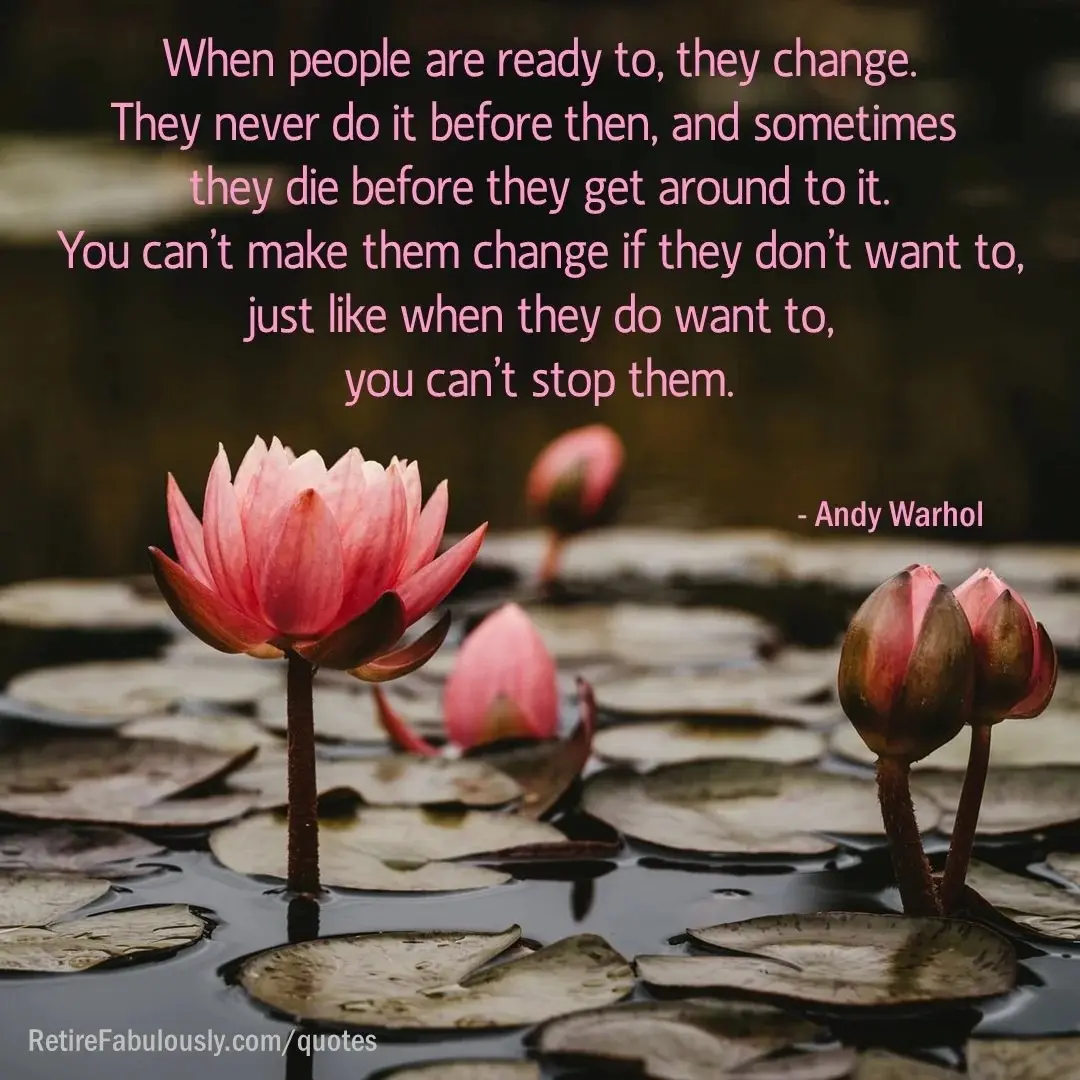
Behavioral psychologists echo this sentiment, pointing out that humans are fundamentally wired for comfort and predictability. When people are ready to change, they do so through decisive commitment—not passive wishing. As the timeless observation by artist Andy Warhol suggests:

"When people are ready to, they change. They never do it before then, and sometimes they die before they get around to it. You can’t make them change if they don’t want to, just like when they do want to, you can’t stop them."
Experts argue that preparing for retirement must involve "habit stacking" and routine redesign well before the final day on the job. If an individual wants to be a painter, writer, or musician in retirement, they must practice dedicating time to those crafts while still employed. Waiting for retirement to magically supply discipline is a recipe for inaction.
Future Outlook: Charting a Path to an Intentional Retirement
As demographic shifts bring millions more workers toward retirement age, society must re-evaluate how it prepares individuals for this profound life stage. Financial planning is only half the battle; psychological and behavioral preparation is equally critical for long-term health, happiness, and cognitive vitality.

Looking ahead, successful retirees will be those who treat their post-career years not as an indefinite vacation, but as a deliberate enterprise requiring structure, accountability, and courage. To break free from the gravitational pull of old habits, future retirees must ask themselves hard questions:
- What specific routines am I willing to alter today to support the lifestyle I want tomorrow?
- Am I holding onto physical and emotional clutter that serves no purpose other than comfort through familiarity?
- Am I relying on hope, or am I building daily disciplines to ensure my creative and personal goals are actually met?
As the old cliché reminds us, the definition of insanity is doing the same things and expecting different results. If your ideal retirement involves more than just watching television and letting old habits expand, change cannot be a passive wish. It must be an intentional, daily commitment. Only by stepping out of your comfort zone can you finally turn the retirement of your dreams into your lived reality.

0 Comments