
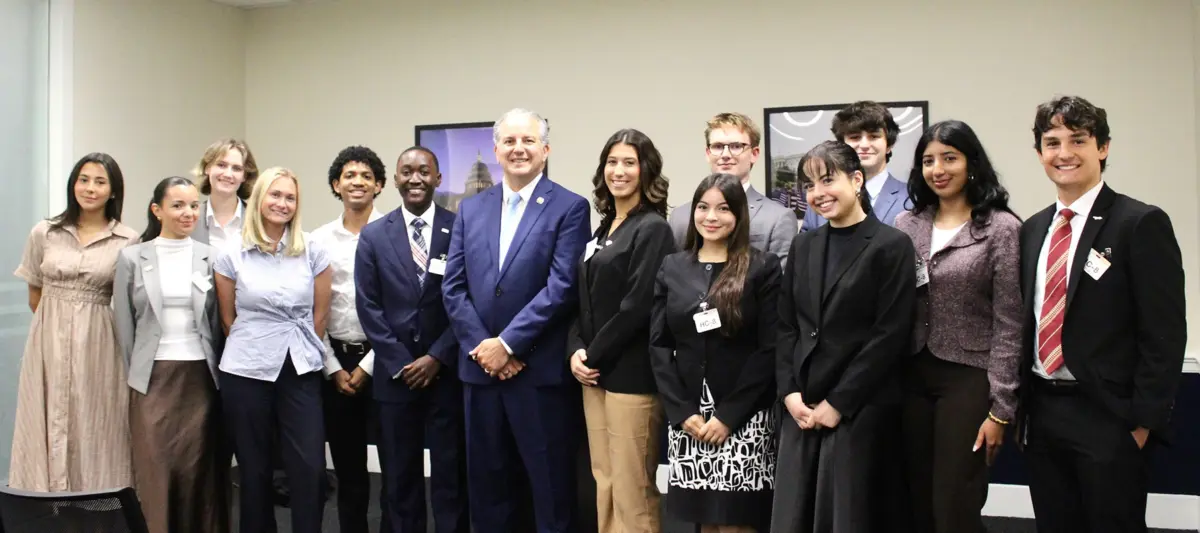

TALLAHASSEE, Fla. — Four years after its inception, Florida State University’s Applied Politics and Policy Learning Experience (APPLE) has firmly established itself as a premier incubator for the next generation of civic leaders. Housed within the Department of Political Science—part of the prestigious College of Social Sciences and Public Policy (COSSPP)—the program is welcoming its fifth cohort this fall. With a growing record of student achievement, direct community impact, and strategic institutional partnerships stretching from the local chambers of Tallahassee to the halls of Congress in Washington, D.C., APPLE is redefining how undergraduate students learn the mechanics of government.
The milestone follows another successful summer in the nation’s capital, marking the culmination of a rigorous three-semester, multi-jurisdictional experiential learning journey. For FSU undergraduates selected for the program, APPLE offers an immersive dive into public service that systematically bridges theory and practice, transforming traditional political science education into an active, hands-on career launchpad.
Executive Overview
The Applied Politics and Policy Learning Experience was built on a foundational premise: students grasp the complexities of governance differently when they experience it from the inside. Rather than relying solely on textbooks and classroom lectures, APPLE takes select cohorts of undergraduate political science majors through a continuous, three-semester arc examining policy and administration at the local, state, and national levels.
- Phase One (Fall): A deep dive into local governance and community-level problem-solving within Tallahassee and Leon County.
- Phase Two (Spring): Hands-on professional immersion during the Florida legislative session via the FSU Governmental Relations Internship Program.
- Phase Three (Summer): Full-time internships and professional networking in Washington, D.C., working within Congress, federal agencies, and major advocacy organizations.
By integrating mentorship, high-level internships, and direct civic engagement, APPLE addresses a critical gap in undergraduate education: providing equitable access to high-impact career pathways regardless of a student’s socioeconomic background. Supported by institutional pillars such as the FSU Institute for Governance and Civics, the program has grown from an ambitious academic experiment into a benchmark for experiential higher education.
Detailed Chronology: The Three-Semester Journey
The architecture of the APPLE program is intentionally designed to scale students’ perspectives outward, beginning in their own backyard and expanding to the federal stage.
Semester One: Ground Zero in Local Governance
The APPLE journey kicks off each fall by confronting a tangible municipal challenge. For the 2025–26 cohort, the academic focus centered on a critical question: How does a community prepare for an emergency?
Students engaged directly with elected officials, local administrators, emergency management professionals, and community stakeholders to dissect the complex mechanics of local disaster preparedness and essential service delivery. Discussions were candid and illuminating. Leon County Commissioners Brian Welch and Christian Caban, alongside county officials Kevin Peters, Mathieu Cavell, and Pamela Monroe, offered students an unfiltered look at the multi-agency coordination required among local governments, non-profit organizations, and residents during crises.
Rather than merely writing traditional academic papers, students translated these insights into actionable Civic Action Plans. One standout team proposed expanding the Leon County Public Library’s popular "Library of Things" to incorporate essential emergency-preparedness resources for local residents. Demonstrating the immediate real-world value of the program, Leon County officials subsequently incorporated this student-generated concept into the county’s official 2026 strategic plan—serving as a shining example of undergraduate research directly shaping public policy.
Semester Two: The Florida Capitol and State-Level Bureaucracy
As the calendar turns to spring, the cohort shifts its analytical lens from local municipalities to state government. Operating in tandem with the Florida legislative session, APPLE students leverage FSU’s Governmental Relations Internship Program.
Placements span the breadth of state leadership, including positions within the Florida Legislature, state agencies, and the Office of the Governor. Here, students navigate the fast-paced, high-stakes environment of state policymaking. They learn the art of legislative drafting, constituent services, and executive lobbying, gaining a nuanced understanding of federalism and the unique policy drivers of the nation’s third-most populous state.
Semester Three: The Capstone Experience in Washington, D.C.
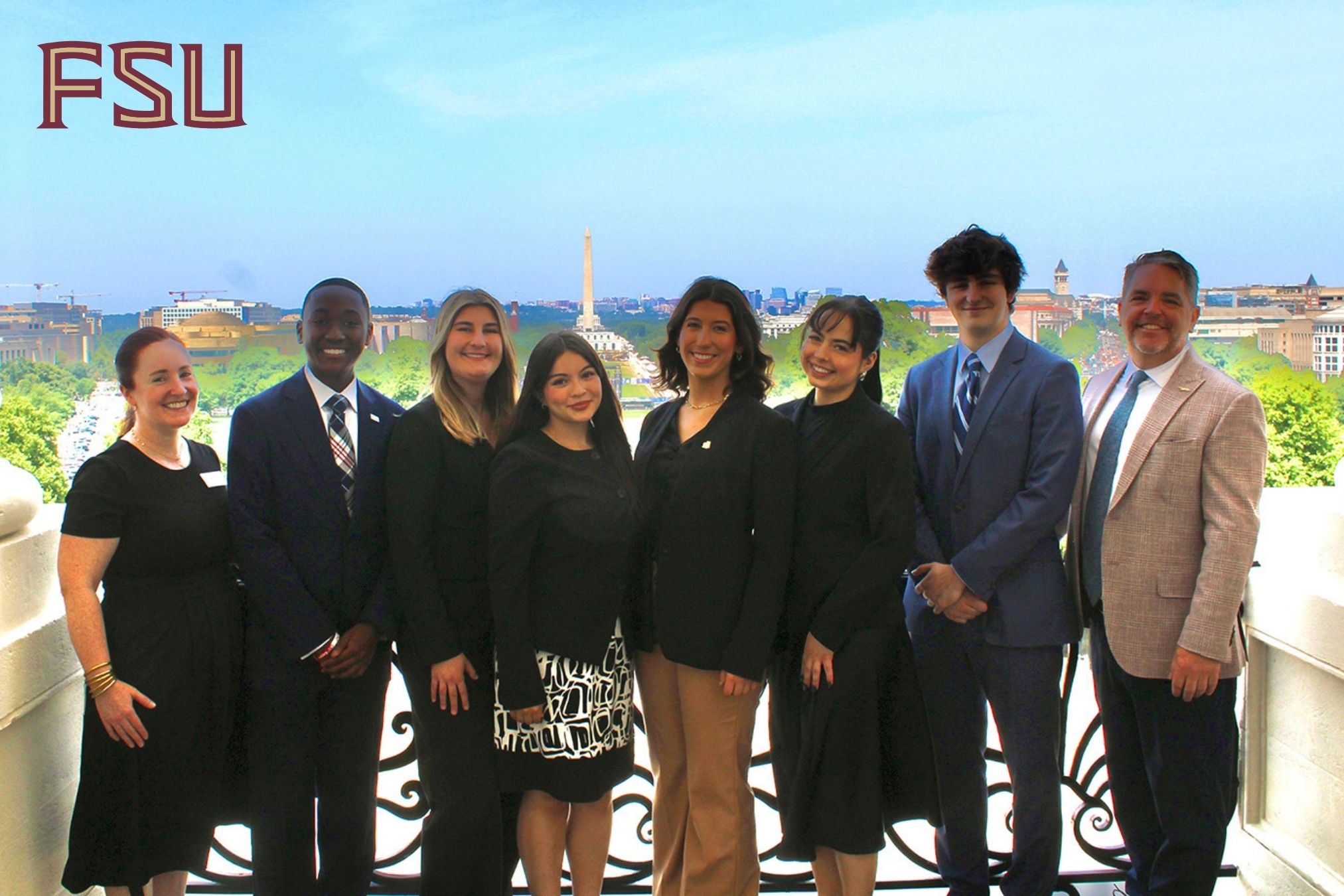
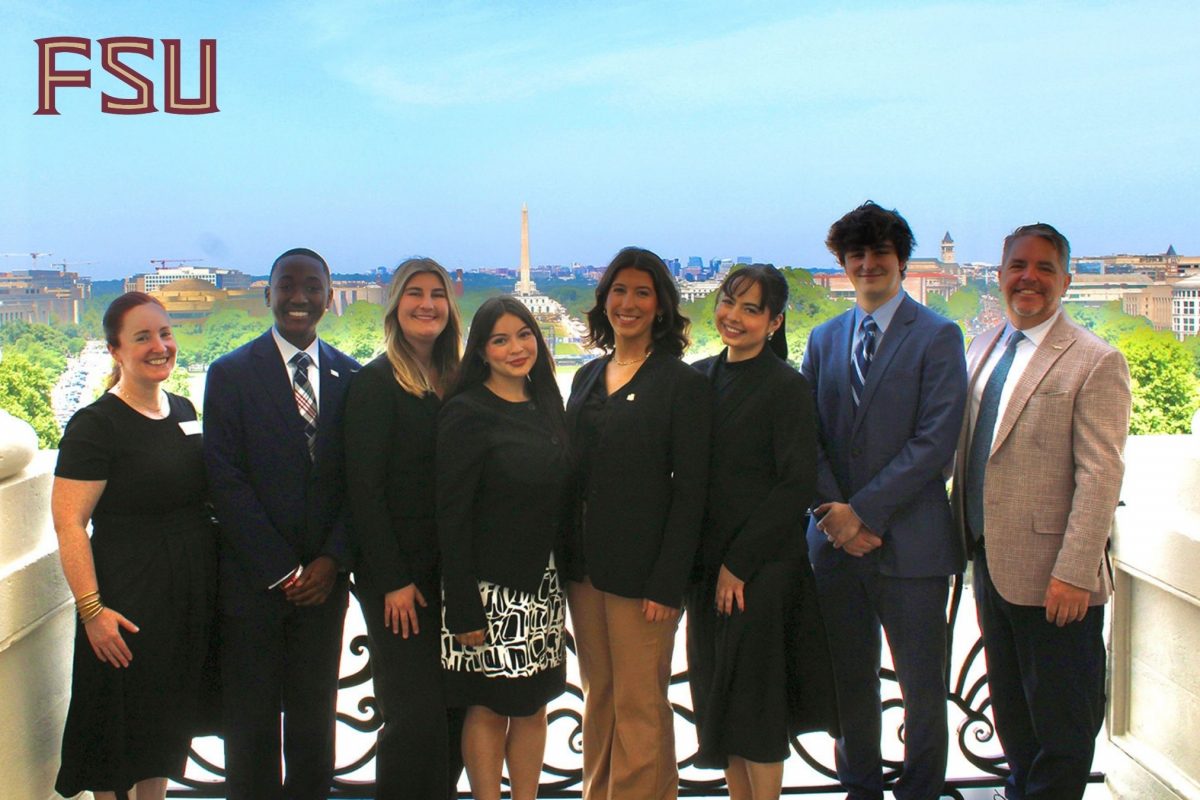
The three-semester arc culminates each July in Washington, D.C., where students complete full-time summer internships in congressional offices, federal relations firms, and prominent national advocacy organizations.
During their time in the nation’s capital, APPLE students do not operate in a vacuum. They are woven into FSU’s extensive alumni network—a powerful web of graduates working at the highest levels of government, law, public affairs, and lobbying. The summer capstone celebration on Capitol Hill provides a focal point for these connections, bringing current undergraduates face-to-face with distinguished alumni who share insights on sustaining a career in public service.
Supporting Context, Partnerships, and Metrics
The rapid rise and sustained success of the APPLE program are anchored by deep institutional backing and strategic financial support. Experiential learning of this caliber—particularly involving multi-city relocation and professional internships—can often present financial barriers to talented undergraduates. To mitigate this, substantial financial backing from the FSU Institute for Governance and Civics has been instrumental, ensuring that summer opportunities in Washington, D.C., remain accessible to students regardless of their personal financial circumstances.
Key partnerships that fuel the program include:
- The College of Social Sciences and Public Policy (COSSPP) and the Department of Political Science, which provide the core academic framework and administrative oversight.
- FSU Governmental Relations, led by institutional advocates who secure high-value placements across state and federal pipelines.
- Josh Duncan, FSU’s Director of Federal Relations, whose ongoing expertise has been foundational to expanding and maintaining the program’s footprint in Washington.
- The Washington Center, which assists in facilitating housing, academic seminars, and professional integration during the summer capstone.
- Local government entities, university benefactors, and an active community of alumni donors.
The metrics of success extend well beyond course completion rates. Program surveys and alumni tracking indicate that APPLE graduates enter competitive job markets with significantly enhanced resumes, elevated professional confidence, and extensive networks of mentors. Many alumni transition directly into graduate programs, law school, or full-time careers in public policy, government affairs, and campaigns—with several returning to mentor subsequent cohorts.
Official Statements & Perspectives
Leadership and alumni alike emphasize that the core value of APPLE lies in demystifying the corridors of power and proving to students that they belong in rooms where critical decisions are made.
"The program is premised on the idea that students learn government differently when they have the opportunity to experience it from the inside," said Dr. Amanda Driscoll, co-founding director and Professor of Political Science. "By the end of the program, they have not simply studied local, state, and national government. They have worked alongside the people who make those institutions function and see themselves as capable of contributing to them."
Co-founding director Bradley Kile echoed this sentiment, emphasizing the empowerment fostered during the local policy semester:
"This is exactly what we hope students take away from the local semester. They learn that local government is accessible and that thoughtful research, strong relationships, and a good idea can make a meaningful contribution to their community."
During the July capstone celebration on Capitol Hill, students engaged in a dynamic roundtable with prominent alumnus Congressman Jimmy Patronis (B.S. ’96, Political Science), Florida’s former Chief Financial Officer and a 2022 COSSPP Distinguished Alumnus. Offering pragmatic advice drawn from decades in public service, Patronis distilled professional success down to three fundamental tenets for the aspiring policymakers:
- Arrive early.
- Listen carefully.
- Treat every single interaction as an opportunity to make a powerful, lasting first impression.
Participants have been effusive in their praise. One recent graduate from the fourth cohort described the APPLE trajectory as "nothing short of transformative," crediting the program with sharpening their legislative instincts, instilling unshakeable professional confidence, and making a career in Washington, D.C., both attainable and financially viable.
Future Outlook: The Road Ahead for Cohort 5
As the APPLE program steps into its fifth year with the launch of the Fall 2026 cohort, its foundational philosophy remains steadfast: the subject matter may evolve, but the experiential model is permanent.
For the incoming Fall 2026 cohort, the local policy challenge shifts from emergency management to municipal infrastructure and sustainability: how Tallahassee and Leon County manage nonhazardous residential solid-waste services, including comprehensive garbage collection and recycling.
Once again, students will begin by sitting down with municipal leaders, sanitation experts, and environmental stakeholders before synthesizing their research into innovative Civic Action Plans. From there, they will carry those hard-earned lessons forward into the chambers of the Florida Capitol and, ultimately, to the national stage in Washington, D.C.
By intentionally scaffolding experiential learning across all three tiers of American governance, FSU’s Applied Politics and Policy Learning Experience is not just teaching political science—it is actively forging the architects of our civic future.
For more information regarding the APPLE program, curriculum requirements, and admission timelines, visit the Florida State University College of Social Sciences and Public Policy website.

0 Comments