In an era defined by corporate restructuring, economic volatility, and shifting paradigms of work and life, major workforce reductions have become an increasingly common mechanism for large enterprises seeking to optimize operational efficiency. Recently, a prominent household-name corporation announced a sweeping strategic initiative to reduce its headcount by 15%. To achieve this target without relying solely on involuntary layoffs, the organization rolled out a robust, voluntary early retirement package to eligible employees.
This corporate maneuver has triggered a cascade of complex decision-making processes across cubicles, boardrooms, and family dining tables. For many workers, a lucrative early retirement incentive feels like a golden opportunity—a chance to step off the corporate treadmill years ahead of schedule. For others, it introduces acute anxiety about financial security, loss of professional identity, and the daunting prospect of unstructured time.
Statistical data underscores that this phenomenon is far from isolated. According to a landmark 2023 Retirement Confidence Survey published by the Employee Benefits Research Institute (EBRI), a staggering 70% of individuals transition into retirement earlier than originally anticipated, stepping away from the workforce an average of three years ahead of schedule. Whether driven by corporate downsizing, health considerations, or a sudden realization of lifestyle priorities, early retirement is rapidly transitioning from the exception to the rule.
This investigative and analytical report examines the multifaceted realities of taking an early retirement package. Drawing on longitudinal insights from career transition experts, psychological frameworks, and the lived experiences of those who have successfully navigated the leap, this article explores the crucial non-financial preparation required to transform an unexpected corporate exit into the most rewarding chapter of your life.
Detailed Chronology: A Personal and Professional Retrospective
To understand the emotional and practical gravity of accepting an early retirement package, it is instructive to examine the trajectory of those who have walked this path before.
Eleven years ago, Dave Hughes—then a 56-year-old software engineering manager at a major corporation—found himself facing a similar crossroads. With a meticulously planned career horizon that mapped out another three and a half years of full-time employment, Hughes had his financial and professional life mapped down to the quarter. Then, his employer introduced a generous early retirement package designed to trim executive and managerial overhead.
"I was in the same situation over 11 years ago," Hughes recalls. "I was 56 at the time (almost 57) and planned to work another 3½ years. But the company offered a generous package and after running the numbers and contemplating at great length, I decided to do it. I’ve never regretted my choice."
The decision, however, was not without immediate operational hurdles. Stepping away from the corporate world more than three years early meant forfeiting a significant amount of projected salary and pension accrual. To bridge the financial gap before he became eligible to draw Social Security at age 62, Hughes embarked on a deliberate pivot, working as a professional wedding officiant for five years to generate supplemental income.
Yet, the true hurdle of early retirement is rarely financial alone; it is fundamentally psychological. Hughes admits that his successful transition hinged on a vital prerequisite: he was mentally ready to end his career, and he possessed a crystalline vision of what his post-corporate life would entail.
"Fortunately, I already had a clear picture of what I wanted to do with my life after I retired," Hughes notes. "I firmly believe this is one of the keys to a happy, fulfilling retirement."
Today, as waves of corporate downsizing ripple through the economy once again, Hughes observes history repeating itself among his personal network. Four of his former colleagues recently accepted the corporation’s latest early retirement buyout, while another 56-year-old friend—who had previously planned to work deep into his sixties—grapples with the exact calculus Hughes faced over a decade ago. Their deliberations highlight a universal truth: when corporate restructuring forces your hand, your readiness to embrace the unknown will dictate whether your retirement is characterized by panic or peace.
Supporting Context & Metrics: The Reality of Early Departures
The corporate trend of trimming workforces through voluntary early retirement packages is symptomatic of broader macroeconomic shifts. Companies facing margin pressures, technological disruption, and post-pandemic organizational realignments frequently utilize buyouts as a humane and legally sound method of talent shedding. However, the ripple effects on the American workforce are profound.
Key Findings from the EBRI Retirement Confidence Survey (2023)
The 70% Rule: A remarkable 70% of retirees surveyed reported leaving the workforce earlier than they had originally planned.
The Three-Year Gap: On average, these individuals retired three years ahead of their target timeline, often compressing their wealth-accumulation phase and expanding their drawdown phase.
Drivers of Early Retirement: While corporate buyouts and restructuring account for a significant percentage of early exits, health problems, caregiving responsibilities, and workplace burnout are primary catalysts.
Financial planners frequently emphasize the mathematical equations of retirement—savings rates, safe withdrawal rates, inflation hedges, and tax optimization. However, financial readiness is only half the battle. A report by non-financial retirement advocates stresses that individuals must be mentally prepared for the seismic shift in daily routines, social structures, and psychological validation that accompanies the cessation of work.
Official Statements and Expert Perspectives
While financial advisors crunch the numbers to determine whether a buyout affords you the luxury of paying your mortgage and medical bills, transition specialists argue that the qualitative questions are equally critical.
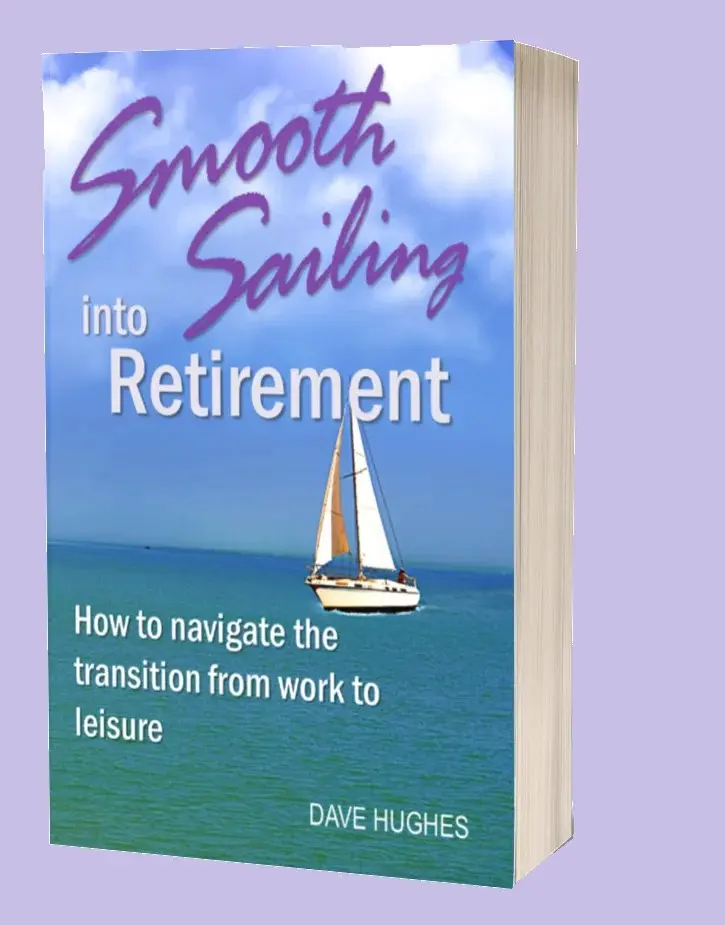
"I am not a financial planner," notes Hughes, author of Smooth Sailing Into Retirement. "Whether you can afford to retire early is a separate matter. But it’s important to be mentally prepared for retirement and have a realistic idea of how your life will change and what you’ll do with your newfound freedom."
Experts in occupational psychology emphasize that retirement must not be viewed as an endless vacation. The human brain craves structure, purpose, and community. When a corporate entity removes 40 or more hours of mandatory weekly obligations, a vacuum is created. Without deliberate curation, that vacuum is frequently filled by lethargy, isolation, and an existential crisis of identity.
Martha Felt-Barton, a notable voice in retirement lifestyle design, encapsulates this sentiment powerfully:
"There are so many other interesting ways to spend your time. I feel like early retirement is a gift, but it’s such an incredible gift. It’s a gift I need to use."
Viewing early retirement not as a forced exile from the workforce, but as a blank canvas, requires adopting a proactive framework centered on four core pillars: physical activity, mental stimulation, socialization, and fulfillment.
Future Outlook: Designing Your Post-Corporate Life
Transitioning into early retirement demands a complete recalibration of how you define purpose, structure your days, and derive self-worth. To successfully navigate this transition, future retirees must construct a balanced lifestyle framework.
1. Reimagining the Daily Routine: The 7-Day Weekend
We all cherish weekends and vacations because they offer a temporary reprieve from the relentless demands of employment. However, treating retirement as a permanent, unstructured vacation is a recipe for stagnation.
When you wake up on your first official non-work day—ideally without an alarm clock—you face an immediate question: What will you do? While allowing yourself a few weeks to decompress, sleep in, and tackle deferred household chores is healthy, that novelty quickly wears off.
Early retirement returns over 40 hours a week to your control. The challenge is populating those hours with intentional pursuits across four essential domains:
Physical Activity
Retirement environments can easily become sedentary, particularly for individuals who swap office desks for living room couches. Combatting this requires conscious integration of movement. Whether through structured recreational sports—such as pickleball, tennis, golf, hiking, or cycling—or simple daily habits like a half-hour walk, physical vitality is the bedrock of longevity. Even micro-choices, such as taking the stairs or parking further away in a lot, compound over time to preserve mobility and health.
Mental Stimulation
The human mind thrives on continuous learning. In the workplace, mental stimulation is often mandated by projects, problem-solving, and professional challenges. In retirement, you must curate your own intellectual diet. This can include reading thought-provoking literature, visiting museums, or enrolling in classes. Many community colleges and universities welcome older adults—sometimes offering tuition waivers or auditing opportunities for seniors—providing rich environments to explore subjects ranging from history to coding, entirely free of GPA pressure.
Socialization
During your working years, socialization is frictionless. You are surrounded by colleagues, clients, and professional acquaintances. You have built-in lunch companions and casual watercooler chats.
Once you retire, that social scaffolding largely vanishes. Research shows that outside of a select few deep friendships forged at work, most professional acquaintances fade rapidly.
Be Proactive: You must take the initiative to plan get-togethers, join community groups, or participate in local bands, choruses, or clubs.
Cultivate Support Systems: Intentionally building deep, supportive friendships ensures you have a network of people who care about your well-being.
Fulfillment
Fulfillment is deeply personal. It is whatever makes your heart sing, makes you feel fully alive, and allows you to lose track of time. It might be expressed through creative endeavors like art, writing, or music; through dedicated community volunteering; through exploring nature; or simply through deep engagement with family. Crucially, fulfilling activities do not need to be economically productive; their sole metric of success is the joy they impart.
2. Shedding the Corporate Identity
Beyond logistics and routines, early retirement requires shedding a psychological armor that many professionals wear for decades: their job title.
For career-focused individuals, a title provides identity, status, prestige, and a ready-made answer to the cocktail party question, "What do you do?" It reflects accumulated knowledge, skill, and societal contribution. When you retire, that title dissolves in the present tense. You become a "former" or "retired" professional, descriptors that rarely carry the same immediate validation.
Navigating this identity shift successfully means redefining who you are outside of corporate metrics. Hughes reflects on his own evolution: "Before I retired, I was a software engineer and, for the last ten years, a manager. Now I can say that I’m a musician and an author."
The title itself matters far less than the underlying principle: you must retain a compelling reason to get out of bed each morning. By replacing corporate quotas and annual reviews with personal passions and self-directed goals, you transition successfully from working for a living to living with intention.
Conclusion
A corporate announcement of a 15% workforce reduction and the offering of an early retirement package can initially feel like an earthquake shaking the foundation of your professional stability. Yet, for those who approach the opportunity with meticulous preparation—balancing financial pragmatism with rigorous psychological and lifestyle design—it can prove to be the most liberating transition of a lifetime.
As the data from the EBRI confirms, millions of Americans are already walking this path, leaving the workforce years ahead of schedule. By embracing early retirement not as an ending, but as a blank canvas for physical vitality, mental growth, social connection, and profound personal fulfillment, you can turn an unexpected corporate exit into a masterclass in living fabulously.



0 Comments