
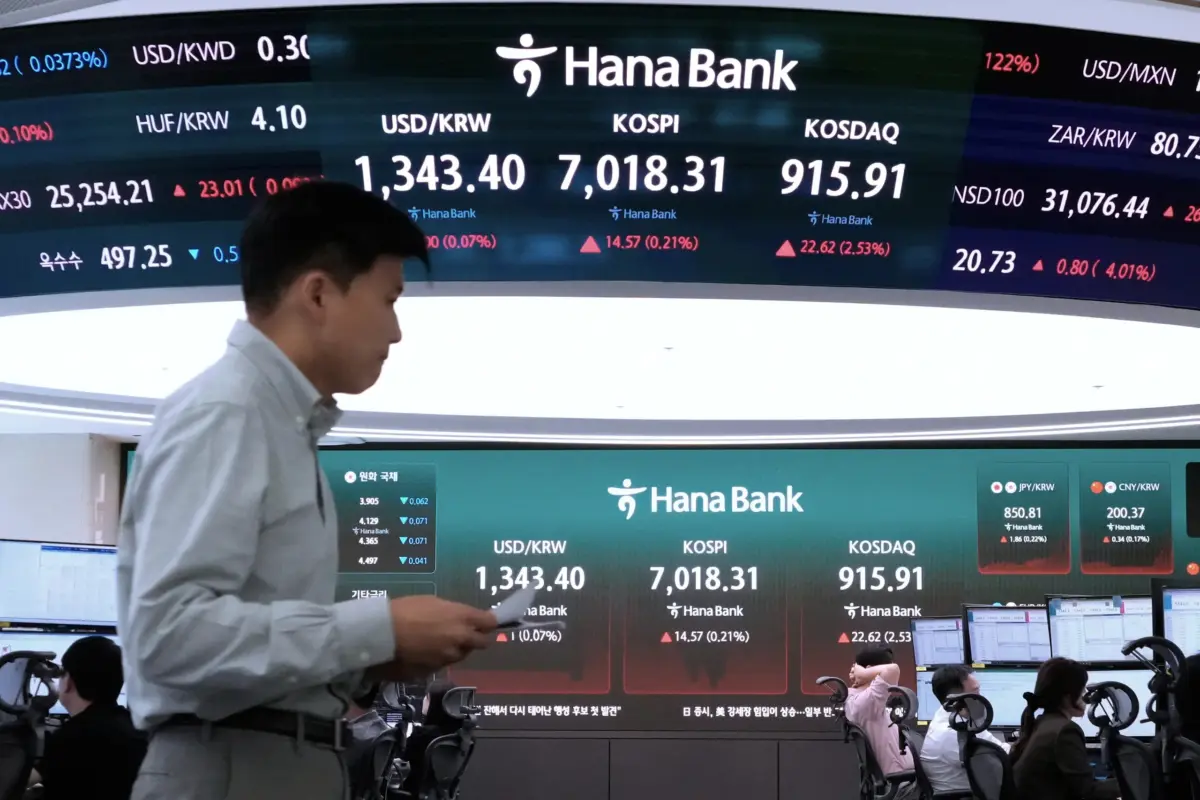

HONG KONG — Global financial markets are charting a complex course as investors weigh the momentum of Wall Street’s record-breaking trajectory against persistent macroeconomic headwinds, including soaring U.S. Treasury yields, elevated energy prices driven by Middle Eastern geopolitical friction, and a burgeoning national debt profile.
Asian equity markets turned in a mixed performance on Tuesday, following a strong session in the United States that pushed major benchmarks to the precipice of historic milestones. While regional powerhouses like Japan and Hong Kong registered modest gains, other key markets faced downward pressure, reflecting localized volatility in the technology sector and broader investor caution.
Executive Overview
The global economic landscape at the outset of October 2026 is defined by a delicate balancing act. On one hand, strong corporate earnings expectations and sustained enthusiasm for artificial intelligence (AI) and semiconductor equities continue to buoy equity valuations, driving Wall Street’s S&P 500 and Nasdaq composite toward or past all-time closing highs. On the other hand, traditional safe-haven metrics and fixed-income markets are flashing warning signs.
U.S. 10-year Treasury yields are hovering near multi-decade highs not seen since 2002—surpassing 5.3%—as inflationary pressures and an unprecedented national debt milestone exceeding $40 trillion weigh heavily on sentiment. Simultaneously, international energy markets remain skittish. Although critical oil transit routes through the Persian Gulf and Saudi Arabia show signs of operational recovery, the lingering shadow of U.S.-Iran tensions keeps crude prices elevated, complicating the global fight against inflation and forcing central banks to maintain a cautious stance.
Detailed Chronology of Regional Market Movements
Asian Trading Session: A Mixed Picture
During Tuesday’s trading session across the Asia-Pacific region, indices reacted differently to Wall Street’s overnight optimism, heavily influenced by sector-specific swings in technology and regional holiday closures.
- Japan: The benchmark Nikkei 225 advanced 0.5% to close at 70,321.83. This marks a significant technical milestone, with the index pushing back above the 70,000 threshold for the first time since early July. Chip-testing equipment manufacturer Advantest stood out as a primary gainer, rising 2%. However, sentiment was tempered by caution surrounding artificial intelligence investments; SoftBank Group shares fell 2.5% following public warnings from CEO Masayoshi Son regarding the potential systemic risks and dangers associated with rapid AI deployment.
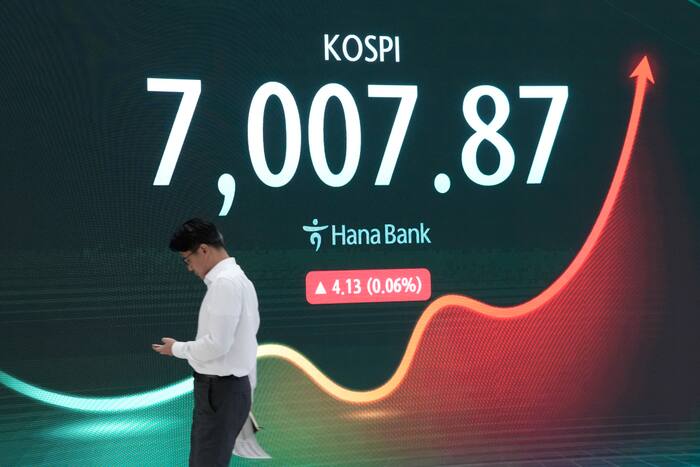
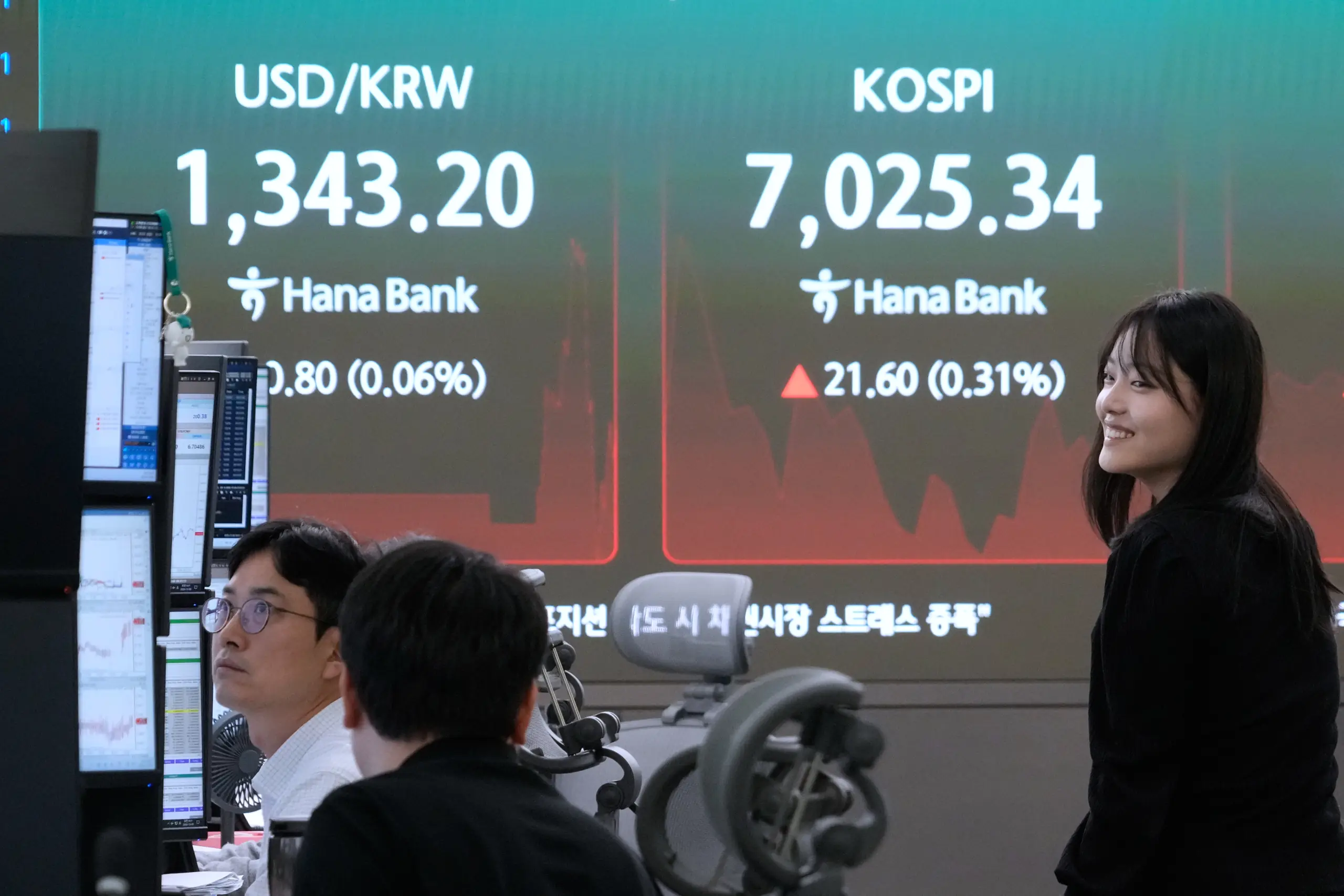
- South Korea: The Kospi index slipped 1% to settle at 6,936.60. South Korea’s heavy weighting in memory semiconductors and technology manufacturing led to broad pullbacks. Heavyweight Samsung Electronics dropped 1.6%, while rival memory chipmaker SK Hynix fell 2.9% amid profit-taking and valuation concerns.
- Greater China and Hong Kong: Hong Kong’s Hang Seng Index climbed 0.8% to reach 24,228.47, drawing support from bargain-hunting in select blue-chip equities. Meanwhile, financial markets across mainland China remained completely closed for a national holiday, muting regional trade volumes.
- Oceania and South Asia: Australia’s S&P/ASX 200 rose 0.6% to 8,735.20, driven by steady resource and financial sectors. Taiwan’s Taiex edged down marginally by 0.1%, while India’s Sensex posted a modest gain of 0.2%.
Wall Street’s Preceding Momentum
The regional reactions in Asia followed a robust session on Wall Street. On Monday, the benchmark S&P 500 advanced 0.7%, bringing it within striking distance of its previous all-time closing high. The Dow Jones Industrial Average rose a more modest 0.2%, while the tech-heavy Nasdaq Composite outperformed, climbing 1.1% to secure a fresh all-time closing high.
The rally in the U.S. was primarily propelled by mega-cap technology and semiconductor giants. Nvidia gained 2.1%, and Broadcom matched that advance with a 2.1% increase. Analysts note that while investors remain anxious about the secondary effects of expensive borrowing costs and energy shocks, anticipation surrounding the upcoming corporate earnings season is providing a robust underlying floor for stock prices.
Supporting Context & Metrics: Commodities, Bonds, and Currencies
Energy Markets and Geopolitical Risk
Crude oil prices steadied early Tuesday following weeks of volatility tied to ongoing uncertainties in the Middle East. Brent crude, the international benchmark, ticked up 0.4% to $100.71 per barrel—a stark contrast to the calmer pricing environment seen earlier in the year when it traded around $72 a barrel in late February. Benchmark U.S. West Texas Intermediate (WTI) crude added 0.3% to $89.73 per barrel.
Energy analysts point out that while the immediate risk of a catastrophic supply cutoff has receded, the market remains on edge.
"While there are growing signs of a recovery in oil flows from the Persian Gulf, the market remains nervous about potential supply disruptions from the region. This is keeping prices well-supported for now," noted ING commodities strategists Warren Patterson and Ewa Manthey in a joint Tuesday commentary.
The easing of upward pressure has been supported by larger volumes of crude successfully navigating the Strait of Hormuz, alongside the gradual restoration of throughput via Saudi Arabia’s critical East-West pipeline. Nonetheless, the underlying friction between Washington and Tehran continues to command the attention of energy traders.
The Fixed-Income Dilemma: Yields and National Debt
In the U.S. Treasury market, yields remain entrenched near multi-decade highs, creating a competitive alternative for risk-averse capital. The 10-year U.S. Treasury yield climbed to approximately 5.32%, up from 5.28% at the close of the previous week, after briefly breaching 5.35%—its loftiest level since 2002.
This persistent upward trajectory in yields is fueled by a combination of factors:
- Resurgent Inflationary Pressures: Driven largely by the energy shock stemming from the regional conflict involving Iran, consumer and producer price expectations have proven sticky.
- Fiscal Expansion: Investor demand for higher sovereign bond yields is also a response to structural supply concerns, compounded by the recent milestone of the U.S. national debt crossing the historic $40 trillion threshold.
Foreign Exchange Dynamics
In the currency markets, the U.S. dollar experienced minor appreciation against safe-haven peers. The greenback rose to 157.96 Japanese yen, up marginally from 157.91 yen. Meanwhile, the euro traded softer at $1.1222, edging down from $1.1223 in the previous session as foreign exchange traders weighed diverging central bank monetary policy outlooks against macroeconomic volatility.
Official Statements and Market Commentary
Financial institutions and market strategists have increasingly emphasized the dichotomy between robust corporate equity performance and tightening macroeconomic constraints.
According to market commentary distributed by institutional brokerages, the divergence between soaring stock indices and restrictive bond yields cannot persist indefinitely without corporate earnings fully justifying current high valuations. Equity strategists point out that the willingness of investors to absorb high equity multiples relies heavily on the assumption that artificial intelligence monetization and productivity gains will offset margin pressures caused by expensive capital and elevated operational costs.
Concurrently, commodity analysts maintain a vigil on maritime choke points. Statements from maritime security and energy monitoring cells underline that insurance premiums for tankers transiting the Persian Gulf and surrounding waters remain elevated, serving as a permanent tax on global energy logistics even as physical barrels continue to move.
Future Outlook
As global markets transition further into the final quarter of 2026, market participants are bracing for several high-stakes catalysts that will dictate asset allocation strategies through the end of the year:
- Corporate Earnings Season: With upcoming quarterly reports set to roll out across major global exchanges, investors will scrutinize profit margins to determine whether corporations can successfully pass on rising energy and labor costs to consumers without eroding demand.
- Central Bank Policy Trajectories: With U.S. Treasury yields testing 22-year highs, the Federal Reserve and its international peers face mounting scrutiny over whether further monetary easing is viable or if persistent inflation will force a prolonged "higher-for-longer" interest rate regime.
- Geopolitical Developments: The trajectory of oil prices will remain inextricably linked to diplomatic and military developments in the Middle East. Any sudden disruption to logistics in the Strait of Hormuz or escalation between the U.S. and Iran has the immediate capacity to shatter the fragile stability currently observed in energy markets.
- Tech Sector Valuation Sustainability: As demonstrated by the divergent performances of firms like Advantest and SoftBank in Asia, market leadership by mega-cap technology and AI-related stocks will be heavily tested by valuation scrutiny and regulatory or operational headwinds.
Ultimately, while the current market ecosystem continues to demonstrate remarkable resilience—exemplified by Wall Street’s flirtation with record highs—investors are navigating an increasingly complex web of fiscal, monetary, and geopolitical risks that demand heightened vigilance.

0 Comments