
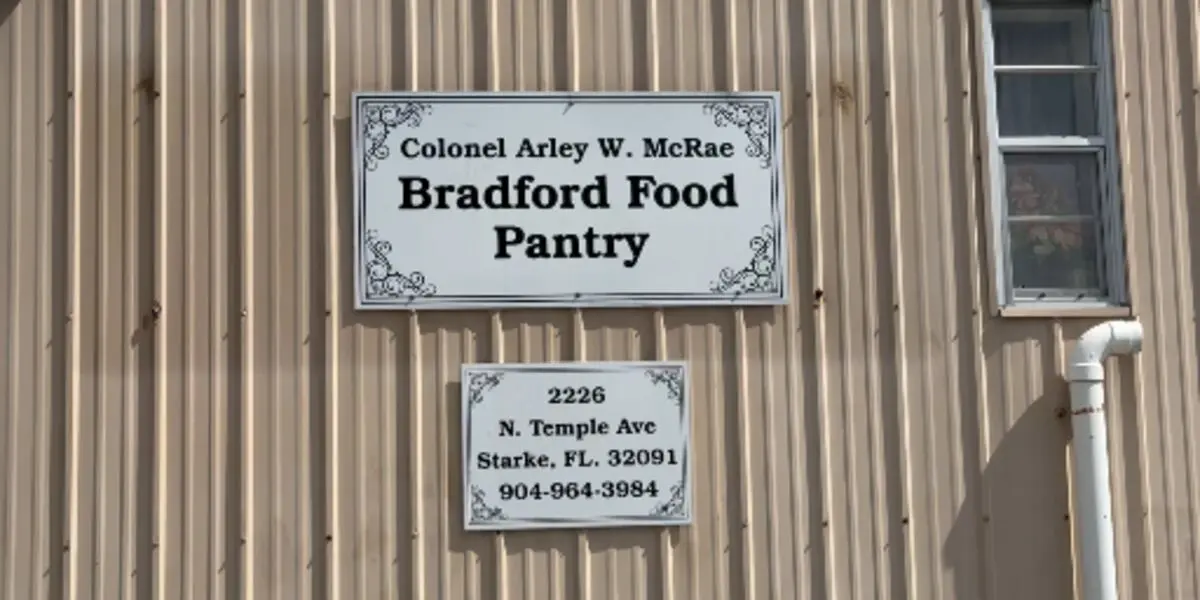

STARKE, Fla. — In an era marked by fluctuating economic indicators and relentless inflation, the macro-level statistics of national financial recovery often obscure the micro-level realities unfolding in rural American communities. For hundreds of residents in Bradford County, Florida, the local grocery store aisle is an unaffordable luxury, and the basic human necessity of a daily meal is an ongoing hurdle.
Yet, tucked away on North Temple Avenue in the heart of Starke, a quiet resilience takes shape week after week. The Bradford County Food Pantry has evolved far beyond a simple distribution center for canned goods and boxed staples. For a diverse cross-section of the local population—spanning disabled veterans, fixed-income seniors, the underemployed, and the unhoused—this modest facility functions as an essential lifeline, offering not just nutritional sustenance, but a profound sense of dignity, community stability, and hope during deeply turbulent times.
As economic pressures mount, the facility’s volunteers and leadership find themselves on the front lines of an escalating battle against rural food insecurity. Their daily operations shed light on a broader, systemic challenge facing rural America: how communities care for their most vulnerable when traditional safety nets begin to fray.
Executive Overview
Food insecurity in the United States is rarely distributed evenly. While metropolitan areas often benefit from expansive, multi-tiered social service networks, rural counties frequently grapple with isolated pockets of poverty, limited public infrastructure, and fewer economic drivers. Bradford County is no exception.
The Bradford County Food Pantry serves as a critical buffer against hunger in North-Central Florida. Operating largely on the dedication of volunteers, grassroots donations, and community goodwill, the pantry addresses the immediate physiological needs of residents who slip through the cracks of state and federal assistance programs. However, the organization’s significance extends beyond the physical tonnage of food distributed each month.
Key themes defining the pantry’s current operational landscape include:
- The Persistence of Need: Despite shifting broader economic reports, local demand remains unabated, characterized by a steady, unwavering line of individuals seeking weekly assistance.
- Demographic Diversity: The pantry’s clientele is not monolithic; it encompasses people from all walks of life, including individuals facing acute financial hardship, chronic illness, and physical disabilities.
- The Transportation Barrier: A defining challenge for rural food security is physical access. Lacking robust public transit, Bradford County residents utilize unconventional, often arduous means—bicycles, mobility scooters, and long walks—to reach the distribution site.
- Community Interdependence: The sustainability of the pantry relies entirely on local civic engagement, underscoring a model of neighbor helping neighbor in the absence of corporate or heavy governmental backing.
This report examines the intricate realities of the Bradford County Food Pantry, charting the operational history, the human stories behind the statistics, the structural challenges of rural poverty, and the urgent call for sustained community support.
Detailed Chronology: The Evolution of a Community Lifeline
To understand the current impact of the Bradford County Food Pantry, one must trace its evolution from a grassroots response to an established pillar of community infrastructure.
The Early Roots and Incremental Growth
Decades ago, informal efforts to feed the hungry in Starke were scattered, often driven by local churches and civic organizations operating independently. Recognizing the inefficiency of fragmented distribution, community leaders and faith-based volunteers converged to centralize efforts. The goal was simple: establish a permanent, reliable location where surplus food could be funneled directly to those experiencing acute need.
Over the years, the pantry adapted to changing economic tides. The 2008 financial crisis brought a surge of newly unemployed residents to its doors, testing the limits of its inventory and volunteer base. A decade later, the COVID-19 pandemic introduced unprecedented hurdles, forcing the organization to completely overhaul its distribution models to comply with health guidelines while managing a staggering spike in demand driven by local business closures and supply chain disruptions.
The Post-Pandemic Normal
Today, the pantry operates in a post-pandemic landscape defined by a different kind of crisis: persistent inflation. While emergency pandemic-era funding and supplemental nutrition assistance programs have largely wound down, the cost of living—particularly housing, utilities, and groceries—has remained stubbornly high.
Chronologically, the operational calendar of the pantry revolves around its scheduled intake and distribution hours. Tuesdays and Wednesdays are often dedicated to logistics: receiving shipments from regional food banks, sorting donations, and packing boxes. Thursdays and Fridays mark the culmination of the weekly cycle:
- Thursdays (9:00 AM to 12:00 PM): A primary window for community distribution, where the steady stream of residents arrives to collect provisions.
- Fridays (8:00 AM to 10:00 AM): An early morning distribution slot catering to individuals whose work schedules or transportation constraints require immediate morning access.
This structured cadence has allowed the pantry to maintain order amidst chaos, ensuring that hundreds of families receive predictable assistance week after week.
Supporting Context & Metrics: The Anatomy of Rural Food Insecurity
To view the Bradford County Food Pantry merely as a warehouse of goods is to misunderstand its complex operational environment. The effectiveness of the pantry must be contextualized within the broader framework of rural demographics, economic indicators, and the logistics of poverty in North Florida.
The Demographics of Need
Food insecurity is frequently misunderstood as a crisis confined to urban centers or visible homelessness. In reality, rural food insecurity is largely "invisible." It affects working families who earn too much to qualify for traditional government assistance like SNAP (Supplemental Nutrition Assistance Program), yet earn too little to absorb a sudden medical bill or car repair.
At the Starke distribution site, the demographic profile is broad. Volunteers routinely assist:
- Seniors on Fixed Incomes: Elderly residents whose social security checks have been severely devalued by inflation, forcing agonizing choices between purchasing prescription medications and buying groceries.
- The Underemployed: Individuals working part-time or hourly jobs in agriculture, service, or retail sectors who lack job security, paid sick leave, or predictable scheduling.
- Individuals with Disabilities: Residents facing physical or cognitive impairments that preclude traditional employment, relying on modest disability benefits that fail to cover basic living expenses.
The Transportation Crisis in Rural Counties
One of the most profound metrics of hardship in Bradford County is not measured in pounds of rice or cans of soup, but in miles traveled and modes of transit. In major metropolitan areas, public bus lines, subways, and rideshare services provide multiple avenues to reach social services. In rural Florida, public transit options are sparse to nonexistent.
This geographic isolation transforms the simple act of acquiring food into a logistical trial. For many clients, traveling to the Temple Avenue facility requires traversing miles of asphalt without the luxury of an automobile. The barriers to access are physical, immediate, and unrelenting.
Official Statements and Voices from the Front Lines
The human face of the Bradford County Food Pantry is best captured through the perspectives of those who manage its daily operations and witness its impact firsthand.
Marty Best, president of the Bradford County Food Pantry, has spent countless hours observing the triumphs and tragedies of the community from the vantage point of the distribution desk. His insights cut to the core of the economic distress gripping the region.
"Listen, we got disabled people that come up here," Best states, reflecting on the sheer determination of the pantry’s clients. "We got people that walk up here, people that ride bicycles up here. We got one gentleman that comes up on his scooter. They’re just trying to make ends meet."
This quote encapsulates the quiet desperation and unyielding tenacity of Starke residents. The image of a man navigating a mobility scooter down North Temple Avenue simply to secure a box of groceries serves as a powerful indictment of the systemic gaps in rural social support. It highlights a population driven not by entitlement, but by the fundamental human drive to survive.
Volunteers echo Best’s sentiments, noting that the emotional and psychological support provided during these interactions is often just as vital as the food itself. For isolated seniors and marginalized individuals, the pantry volunteers may be the only human contact they experience in a given week. A warm greeting, a respectful exchange, and a supportive ear transform a transactional food drop into a community-building exercise.
Future Outlook: Challenges, Sustainability, and How to Help
As the Bradford County Food Pantry looks toward the future, its leadership faces a sobering reality: the demand for assistance shows no sign of abating. Long-term forecasting suggests that rural food pantries will continue to serve as the primary shock absorbers for economic instability unless structural changes occur in housing affordability, wage growth, and rural infrastructure.
Operational Challenges Ahead
- Supply Volatility: The pantry relies heavily on a combination of purchased food, regional food bank allocations, and direct community donations. Fluctuations in corporate supply chains and agricultural yields directly impact the volume and variety of food available for distribution.
- Volunteer Burnout: Like many non-profits, the Bradford County Food Pantry depends heavily on an aging pool of dedicated volunteers. Recruiting and retaining a younger generation of volunteers is critical for long-term operational continuity.
- Facility and Logistical Constraints: As demand plateaus at elevated levels, storage capacity, refrigeration units, and distribution logistics will require continuous upgrades and financial investment.
A Call to Action: How the Community Can Support the Pantry
The survival and efficacy of the Bradford County Food Pantry are inextricably linked to the generosity of the community it serves. Leadership emphasizes that public involvement—whether through material donations, financial contributions, or the gift of time—is the singular force keeping the doors open.
For individuals, businesses, and civic groups wishing to support the pantry’s mission, several avenues are available:
- Direct Contact:
- Phone: 904-964-3984
- Email: [email protected]
- Physical Location & Drop-Off Hours:
- Address: 2226 N. Temple Ave., Starke, FL 32091
- Donation Windows:
- Thursdays: 9:00 AM to 12:00 PM
- Fridays: 8:00 AM to 10:00 AM
- Accepted Contributions: Non-perishable food items (canned proteins, vegetables, pasta, rice, and shelf-stable milk), hygiene products, and monetary donations to assist with operational overhead and bulk food purchasing.
Conclusion
The Bradford County Food Pantry is more than a charitable organization; it is a testament to the power of community solidarity in the face of structural adversity. While macroeconomic policies and national political debates play out on television screens, the real-time work of feeding the hungry happens on dusty streets in small towns like Starke, Florida.
By supporting this institution, residents do more than fill empty plates—they affirm the inherent dignity of their neighbors, bridging the gap between despair and hope, one grocery bag at a time.

0 Comments