

Executive Overview
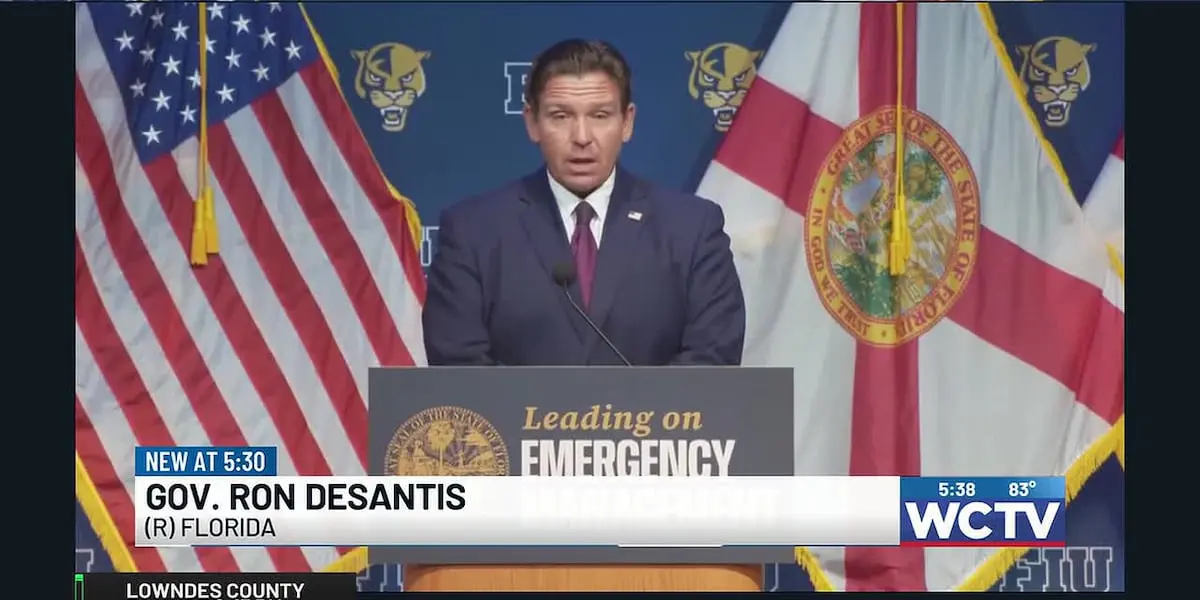
In an era defined by intensifying meteorological threats, shifting climate patterns, and increasingly complex natural disasters, emergency management has evolved from a reactive logistical challenge into a sophisticated, highly technical discipline. Recognizing a critical need to future-proof the state’s emergency workforce, Florida Governor Ron DeSantis announced a sweeping, first-of-its-kind higher education initiative during a high-profile address at Florida International University (FIU).
The newly unveiled Coalition for Operational Readiness in Education (CORE) represents a strategic paradigm shift in how the Sunshine State prepares for, responds to, and recovers from catastrophes ranging from catastrophic hurricanes to localized civil and environmental crises. Formed as a collaborative bridge between the Florida Division of Emergency Management (FDEM) and the state’s robust network of public universities, state colleges, and technical institutions, CORE is designed to tackle a dual challenge: closing the talent gap in emergency response agencies and providing students with experiential, real-world learning that translates directly into high-impact public service careers.
Rather than treating emergency management as a career path entered strictly post-graduation through traditional, siloed application processes, CORE embeds real-time disaster operations directly into the academic DNA of Florida’s higher education system. By establishing formal pipelines between classrooms and command centers, the program ensures that students do not merely study past disasters from textbooks—they actively participate in live emergency scenarios, training alongside seasoned state coordinators, logisticians, and mitigation experts.
As the program scales across the state—with 11 institutions already committed and nearly half a dozen more in active negotiations—CORE stands poised to become a national model for institutional resilience. This comprehensive report examines the genesis of the CORE program, explores its structural framework and academic integration, analyzes the economic and logistical metrics surrounding Florida’s emergency workforce, details official stakeholder responses, and projects the long-term outlook for the state’s disaster response capabilities.
Detailed Chronology: The Road to CORE
The conceptualization and rollout of the Coalition for Operational Readiness in Education did not happen in a vacuum. It is the culmination of years of iterative scaling within Florida’s emergency management apparatus, accelerated by lessons learned from successive major hurricane landfalls and systemic shifts in post-secondary workforce development.
Phase 1: The Post-Storm Catalyst (2018–2022)
In the wake of major hurricanes like Michael, Ian, and Nicole, Florida’s emergency management leadership repeatedly confronted a persistent logistical bottleneck: while state agencies possessed the material resources and infrastructural frameworks to respond to catastrophic events, they frequently faced personnel constraints during peak operational surges. The demand for specialized analysts, GIS mapping experts, supply chain logisticians, and mass-care coordinators consistently outpaced the full-time capacity of state and local government agencies. Concurrently, students graduating from Florida universities with degrees in emergency management, public administration, and related fields often found themselves facing a steep learning curve when transitioning from theoretical academic settings to high-stress, fast-paced emergency operations centers (EOCs).
Phase 2: Pilot Programs and Institutional Partnerships (2023–2024)
Recognizing the untapped potential of Florida’s vast collegiate student body, FDEM began experimenting with ad-hoc internship pipelines and specialized training modules with select research institutions, most notably Florida International University. FIU’s Extreme Events Institute and International Hurricane Research Center already possessed world-class testing and research infrastructure, making them natural incubators for operational collaboration. Over a series of storm responses, student volunteers and research assistants were integrated into lower-tier EOC support roles, yielding overwhelmingly positive results. These informal collaborations proved that undergraduates and graduate students could perform at a high professional standard under pressure if given the proper pre-clearance, credentialing, and operational context.
Phase 3: Formalizing the Vision (Late 2024–Early 2026)
As emergency management practices modernized to incorporate predictive artificial intelligence, advanced data analytics, and decentralized supply chain monitoring, FDEM leadership formalized plans to institutionalize these partnerships on a statewide scale. Working alongside the Governor’s office and state university system administrators, state planners drafted the foundational framework for CORE. The initiative was designed to standardize curriculum adaptations, streamline security clearances and credentialing for student workers, and establish direct hiring pathways bypassing conventional bureaucratic hiring delays for qualified graduates.
Phase 4: The Official Statewide Announcement (Wednesday, 2026)
The multi-year planning effort culminated on a Wednesday morning at Florida International University, where Governor Ron DeSantis officially unveiled CORE to an audience of university presidents, state emergency officials, and students. In his address, the Governor framed the initiative as a pragmatic, forward-looking investment in Florida’s sovereignty and public safety. Immediately following the speech, foundational memoranda of understanding (MOUs) were unveiled, confirming that FIU and 10 other major state universities would immediately begin adapting their curricula to align with CORE standards, with preliminary discussions underway to bring nearly a dozen more institutions into the fold.
Supporting Context & Metrics: The Architecture of the Program
To understand the transformative potential of the CORE program, one must examine the operational mechanics of how it bridges the gap between campus lecture halls and active disaster zones.
How CORE Works: The Three-Tiered Model
The program operates on three distinct, mutually reinforcing pillars:
- Curricular Integration: Participating universities and colleges are redesigning existing coursework—or introducing specialized tracks—within disciplines such as emergency management, public safety, logistics, geographic information systems (GIS), public administration, and engineering. Rather than relying solely on historical case studies, coursework incorporates live data feeds, simulation software utilized by FDEM, and collaborative problem-solving exercises based on active state response protocols.
- Experiential Deployment: CORE participants are not confined to the classroom. Through structured deployment frameworks managed jointly by university faculty and FDEM coordinators, vetted students are given opportunities to intern, volunteer, or work part-time within state and local emergency management agencies. During blue-sky (non-disaster) periods, these students assist with hazard mitigation planning, community outreach, and logistical database maintenance. During gray-sky or black-sky (active disaster) events, students can be mobilized—depending on their training level and age—to support remote mapping operations, call-center management, supply chain tracking, and EOC administrative functions.
- The Post-Graduation Pipeline: The ultimate economic and structural value of CORE lies in its recruitment pipeline. By embedding FDEM recruiters and operational liaisons directly into campus networks, the state creates an expedited path from student status to full-time employment. Graduates who have completed the CORE curriculum and demonstrated competency during active scenarios enter the workforce with pre-established security clearances, institutional familiarity, and hands-on crisis experience. This drastically reduces onboarding time and provides state, local, and private-sector emergency partners with a reliable, highly vetted talent pool.
The Institutional Footprint: Who Is Involved?
The geographic and institutional breadth of CORE is sweeping, encompassing research powerhouses, regional universities, and state colleges across Florida’s diverse educational landscape.
- Founding and Initial Adopter Institutions: Alongside Florida International University (FIU), ten other premier institutions have committed to implementing the CORE framework within their academic programs. This group includes flagship research institutions such as Florida State University (FSU), the University of Florida (UF), and the University of South Florida (USF). These universities bring massive student enrollments and diverse academic departments—ranging from public health to civil engineering—into the coalition.
- Expanding Horizons: The state is actively engaged in advanced negotiations with six additional institutions to launch their own customized CORE programs. Notable names in this expansion tier include Florida A&M University (FAMU), St. Petersburg College, and the University of North Florida (UNF). This inclusion of state colleges and historically black universities (HBCUs) ensures a geographically diverse and demographically broad talent pipeline reaching every corner of the peninsula.
| Institution Category | Participating / Committed Institutions | Status |
|---|---|---|
| Flagship Research Universities | FIU, UF, FSU, USF | Implementing Curriculum & Pipelines |
| Regional & Specialized Universities | Institutions across the State University System | Adapting Frameworks |
| Expansion Pipeline | FAMU, UNF, St. Petersburg College, +3 others | In Active Negotiations |
The Economic and Logistical Imperative
Florida’s exposure to tropical cyclones, severe weather events, flooding, and coastal erosion is well-documented. From an economic standpoint, the cost of delayed or inefficient disaster response is measured in billions of dollars in property damage, business interruption, and protracted recovery timelines.
By utilizing university students as an auxiliary operational force, the state achieves several critical objectives:
- Cost Efficiency: It optimizes public expenditure by integrating educational workflows with public service missions, reducing the reliance on costly out-of-state private contractors for routine administrative, analytical, and logistical support functions.
- Workforce Retention: Historically, emergency management suffers from high burnout rates and a shortage of trained professionals entering the field. By engaging students early, CORE builds professional identity and loyalty, encouraging graduates to remain in Florida and serve their local communities rather than migrating to private sector fields entirely disconnected from public safety.
- Local Resiliency Multiplier: Because students hail from diverse communities across Florida, graduates return to their hometowns equipped with professional emergency management competencies. This decentralizes institutional knowledge, strengthening the emergency preparedness of county governments, municipal offices, and local private-sector supply chains statewide.
Official Statements and Stakeholder Perspectives
The announcement of the Coalition for Operational Readiness in Education has drawn praise from state leaders, university presidents, and emergency management professionals who view the initiative as a decisive step forward in institutional adaptability.
During his address at Florida International University, Governor Ron DeSantis emphasized the proactive philosophy underpinning the initiative. He noted that Florida’s leadership in disaster response relies not only on physical stockpiles, generators, and infrastructure hardened against high winds, but equally on the quality and readiness of its human capital.
"When disaster strikes, Florida doesn’t wait for solutions to find us—we build them," Governor DeSantis stated during his address. "With the launch of CORE, we are breaking down the artificial walls that have historically separated higher education from public service. We are giving our brightest students a front-row seat to real-world emergency operations, ensuring that when they graduate, they aren’t just holding a diploma—they are holding the practical skills and experience necessary to keep our communities safe when it matters most."
State emergency management officials echoed the Governor’s sentiment, emphasizing the operational utility of the student pipeline. Representatives from the Florida Division of Emergency Management (FDEM) pointed out that modern disasters require an unprecedented volume of data analysis, rapid communication, and logistical coordination.
"The nature of emergency management has fundamentally transformed over the past decade," a senior FDEM official noted following the announcement. "We are dealing with complex data sets, real-time predictive modeling, and massive logistical chains that require nimble, highly trained minds. The CORE program gives us a sustainable, institutionalized mechanism to tap into the intellect and energy of Florida’s university students. It is a win-win: students get unparalleled resume-building experience, and the state secures a continuous pipeline of dedicated professionals ready to step into critical roles on day one."
University administrators have likewise embraced the curriculum adaptations required by CORE. Deans and department chairs across participating institutions have highlighted how the program enhances the value proposition of a modern college degree by guaranteeing that theoretical classroom learning is immediately tested against the anvil of practical application. Faculty members involved in the preliminary design phases noted that student enthusiasm for experiential learning in high-stakes environments is exceptionally high, particularly among younger generations eager to contribute directly to community resilience and public safety.
Future Outlook: The Horizon of Florida’s Disaster Readiness
As the Coalition for Operational Readiness in Education moves from its initial launch phase into full operational implementation, its long-term trajectory holds profound implications for the state of Florida and potentially for national emergency management paradigms.
Scaling and Standardization (2026–2028)
Over the next 24 to 36 months, the immediate priority for FDEM and university administrators will be finalizing agreements with the six pending institutions—including FAMU, UNF, and St. Petersburg College—to ensure statewide coverage. Concurrently, the coalition will focus on standardizing credentialing levels across all participating campuses. Establishing uniform training protocols ensures that whether a student graduates from an urban research university in South Florida or a regional state college in North Florida, they meet the exact same rigorous competency standards required for state deployment.
Technological Integration and Future Threats
Looking further ahead, the CORE program is strategically positioned to evolve alongside emerging technologies in disaster management. As artificial intelligence, autonomous drone logistics, and advanced predictive meteorological modeling become standard tools in emergency operations centers, university research labs embedded within the CORE framework will serve as testbeds for these innovations. Students participating in the program will not only utilize current state systems but will also help research, test, and implement next-generation tools designed to mitigate future climate and security risks.
A National Blueprint for Resilience
As other states grapple with the compounding pressures of severe weather events, infrastructure strains, and workforce shortages in public safety sectors, Florida’s CORE initiative is already attracting national attention. By proving that higher education systems can be successfully integrated into the active operational machinery of state government, Florida has established a compelling blueprint for other jurisdictions seeking to fortify their emergency response capabilities from the ground up.
In conclusion, the launch of the Coalition for Operational Readiness in Education marks a definitive evolution in how Florida approaches resilience. By transforming classrooms into extensions of emergency command centers and treating students as vital operational assets rather than passive observers, the state is investing in its most valuable resource: the next generation of leaders dedicated to protecting and rebuilding communities in times of crisis.

0 Comments