

Executive Overview
On a bustling Wednesday afternoon just after high noon, the University of Florida (UF) Public Safety apparatus triggered an urgent campus-wide advisory. The catalyst: multiple panicked reports concerning two individuals traversing a public sidewalk adjacent to the Gainesville campus while openly brandishing rifles. In an era marked by heightened anxiety over campus security, the sight of long guns instantly mobilized local law enforcement and unsettled students, faculty, and staff navigating the bustling grounds.
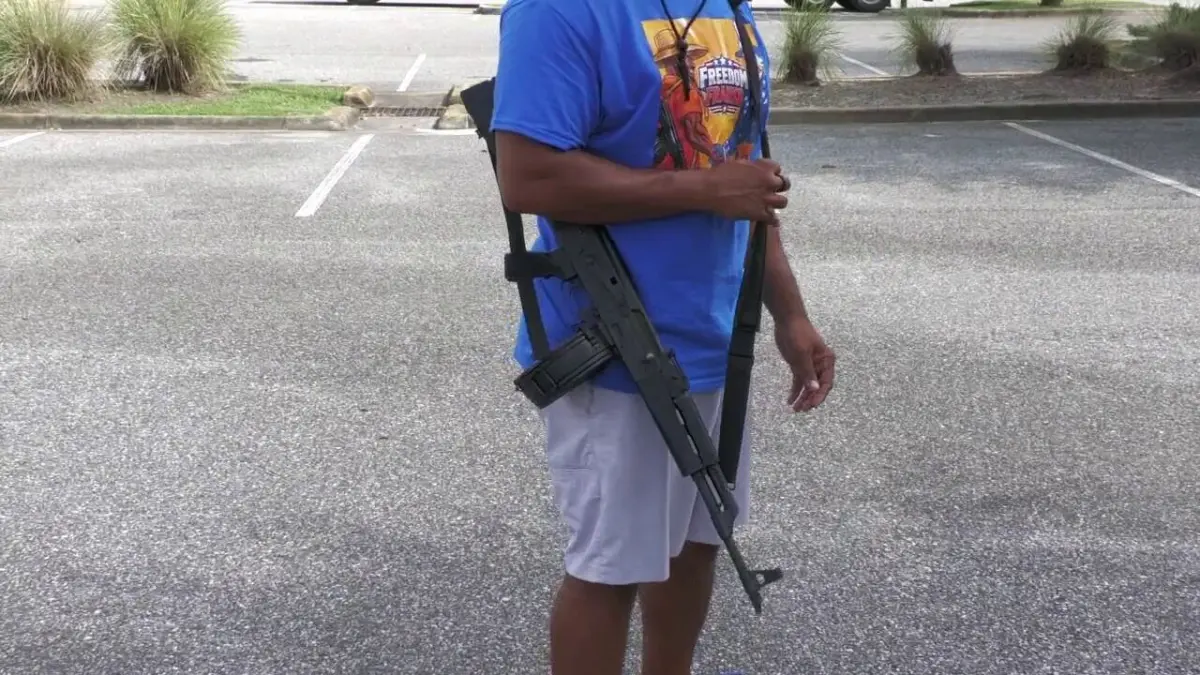
Yet, despite the alarm, the incident ultimately unfolded without physical confrontation or criminal charges. The armed individuals—one of whom is a well-known regional activist operating under the online moniker "Freedom Franko"—were engaged in a self-styled public education campaign. Their objective: to test the boundaries of Florida’s complex firearm statutes, exercise open-carry provisions where permitted on public infrastructure, and challenge common public misconceptions regarding the proximity of firearms to educational institutions.
This comprehensive report examines the anatomy of Wednesday’s alert, the intricate legal framework governing open carry and school safety zones in the Sunshine State, the starkly polarized reactions from the academic community, and the broader implications of utilizing collegiate perimeters as forums for constitutional demonstrations.
Detailed Chronology of Events
The Initial Alerts and Campus Response
At approximately 12:15 p.m. on Wednesday, the University of Florida Police Department (UFPD) began receiving emergency calls from distressed students and campus employees. Witnesses reported seeing two unidentified individuals marching steadily along a public sidewalk directly adjacent to university property, each openly carrying rifles.
Given the geographic layout of the University of Florida—where campus boundaries frequently blur into municipal sidewalks, commercial thoroughfares, and residential neighborhoods—the proximity of the armed individuals immediately triggered heightened operational readiness. UFPD dispatchers coordinated with local municipal units to assess the threat level, track the movement of the individuals, and evaluate whether an emergency campus notification system warning was warranted.
By keeping strictly to public sidewalks, however, the demonstrators remained outside the direct jurisdiction of university-specific code restrictions that typically govern interior campus spaces. UFPD officers maintained a monitoring presence to ensure public safety while verifying that the individuals were not crossing into restricted zones or brandishing the weapons in a threatening or disorderly fashion.
The Encounter with the Demonstrator
Local media outlet TV20 caught up with one of the central figures of the demonstration: Freedom Franko, a North Central Florida resident recognized across regional social media platforms for staging similar open-carry events. Franko, who was documented earlier in the year walking through regional municipalities with an AK-47, explained that Wednesday’s walk past the University of Florida was a calculated exercise in public legal education.
According to Franko, law enforcement officers observed his movements closely but did not detain, question aggressively, or arrest him, acknowledging that his actions remained protected under current state statutes. While traversing the campus perimeter, Franko noted that the public reaction was intensely mixed. Some pedestrians recoiled in visible fear, hurriedly changing directions or seeking shelter inside campus buildings, while others paused to record the interaction, debate the demonstrators, or express tacit support for Second Amendment advocacy.
Supporting Context & Metrics: Florida’s Open-Carry Laws and Educational Zones
To fully comprehend why armed individuals can legally walk past a major university campus without immediate arrest, it is necessary to examine the specific intersection of Florida firearm statutes, historical legislative precedents, and judicial interpretations.
The Mechanics of Florida Firearm Statutes
Florida maintains a reputation as a robust pro-Second Amendment state, yet its open-carry laws contain notable nuances. Broadly speaking, Florida statute generally prohibits the open carrying of handguns and long guns in public places, with specific, heavily scrutinized exemptions.
- The Hunting, Fishing, and Camping Exemption: Historically, open carry has been legally permissible if an individual is engaged in, or traveling to and from, specific outdoor recreational activities such as hunting, fishing, or target shooting.
- The "Educational Proximity" Misconception: A primary focal point of Franko’s demonstration centers on how citizens interpret laws restricting firearms near schools and universities. Under Florida law, carrying a firearm onto the physical campus of a school, university, or other educational institution is strictly prohibited. However, public sidewalks, municipal rights-of-way, and general thoroughfares adjacent to these institutions often fall under municipal or county public property classifications rather than university-owned real estate.
Interpreting the "Careless and Threatening" Threshold
During his interviews, Franko emphasized a vital legal distinction that often confuses the general public: the difference between simply possessing a firearm near a school zone and displaying it in a prohibited manner.
Florida statutes criminalize the exhibition of firearms in a "rude, careless, angry, or threatening manner" in the presence of one or more persons. Franko’s legal philosophy—shared by various open-carry advocacy groups across the United States—asserts that as long as a firearm is carried securely, pointed in a safe direction, and not brandished to intimidate or coerce specific individuals, the act of mere transport on public sidewalks does not inherently cross the threshold into criminal brandishing or disturbing the peace.
Campus Safety Metrics and Psychological Impact
While legal scholars and gun rights advocates debate the letter of the law, university administrators and campus security professionals must grapple with the psychological and operational reality of firearms near academic hubs.
- Heightened Anxiety: In the wake of decades of high-profile mass casualty events on educational properties nationwide, the visual presence of long guns near a school instantly triggers fight-or-flight responses among students and staff.
- Resource Strain: When campus police receive reports of armed individuals, departments must divert finite security resources away from routine patrols and student safety escorts to monitor the demonstrators, manage 911 dispatch surges, and respond to panicked community inquiries.
- Institutional Disruption: Even peaceful demonstrations can prompt professors to alter class schedules, lock building entry points preemptively, and create an atmosphere of acute apprehension that runs counter to an optimal learning environment.
Official Statements and Institutional Responses
The incident prompted prompt public communications from campus safety leadership, designed to balance legal transparency with community reassurance.
University of Florida Public Safety Office
In an official statement released shortly after the situation stabilized, UFPD officials addressed the community’s concerns directly, acknowledging both the alarm generated by the event and the legal realities governing public spaces:
"While this type of demonstration can be alarming, Florida law does not prohibit individuals from carrying rifles openly while in public spaces," the UFPD statement read.
At the same time, department leadership praised the vigilance of the university community, reinforcing the core tenet of modern campus security:
"UFPD would like to thank all who have taken the time to report this incident. A safe campus is a vigilant one."
Perspectives from the Activist Community
Defending his tactical choice of location, Freedom Franko argued that educational institutions are prime environments for legal awareness campaigns precisely because misinformation is so widespread.
"There was a stigma around you can’t be ‘X’ amount of feet within a school," Franko explained during his interview with regional media. "But that statute says you can’t be ‘X’ amount of feet in front of that school if you’re carrying in a reckless, careless, angry, or rude manner, and that’s the main thing."
Franko maintained that his demonstrations are peaceful educational tools designed to force municipal authorities and citizens alike to confront the literal text of the law, rather than relying on emotional assumptions about where firearms are allowed.
Future Outlook: Navigating the Intersection of Rights and Campus Security
As the dust settles on Wednesday’s demonstration, the University of Florida community and regional stakeholders are left to consider the long-term ramifications of open-carry activism near sensitive public infrastructure.
The Ongoing Legal and Legislative Debate
The clash between the absolute interpretation of constitutional rights and the collective desire for institutional safety shows no sign of abating. Lawmakers in Tallahassee frequently face pressure from both gun control advocacy organizations—who push for stricter buffer zones around schools, hospitals, and municipal buildings—and Second Amendment proponents, who lobby for constitutional carry expansions and the elimination of remaining open-carry restrictions.
For universities like UF, the legal grey area surrounding perimeter sidewalks presents an ongoing management challenge. Unless legislative bodies enact explicit buffer zones that prohibit the open transport of firearms on public rights-of-way immediately adjacent to educational campuses, law enforcement agencies will remain legally bound to permit such demonstrations as long as they remain peaceful and non-threatening.
Preparedness and Community Resilience
In response to Wednesday’s events, campus safety advocates emphasize the importance of continuous education for students and staff regarding emergency reporting protocols.
- Immediate Reporting: Campus officials reiterate that community members should never hesitate to report sightings of armed individuals near campus. Even if an act is ultimately determined to be legal, rapid notification allows UFPD to verify the identities and intentions of the individuals, ensuring that an unfolding security threat is not misidentified as a peaceful protest.
- De-escalation and Situational Awareness: University counseling and administrative departments continue to provide resources for students experiencing trauma or distress stemming from visible firearm displays, emphasizing mental health support and open dialogue.
- Future Demonstrations: Given Franko’s stated intention to continue touring communities across North Central Florida, UFPD and municipal law enforcement agencies are expected to maintain enhanced communication channels, monitoring public sentiment and preparing for potential future occurrences along the university’s borders.
Ultimately, Wednesday’s demonstration serves as a stark reminder of the fragile balance between individual constitutional expressions and the collective tranquility required for higher education. As the legal debate persists in state capitals and courtrooms, the University of Florida community remains on alert, balancing vigilance with a pragmatic understanding of the rule of law.

0 Comments