

Executive Overview
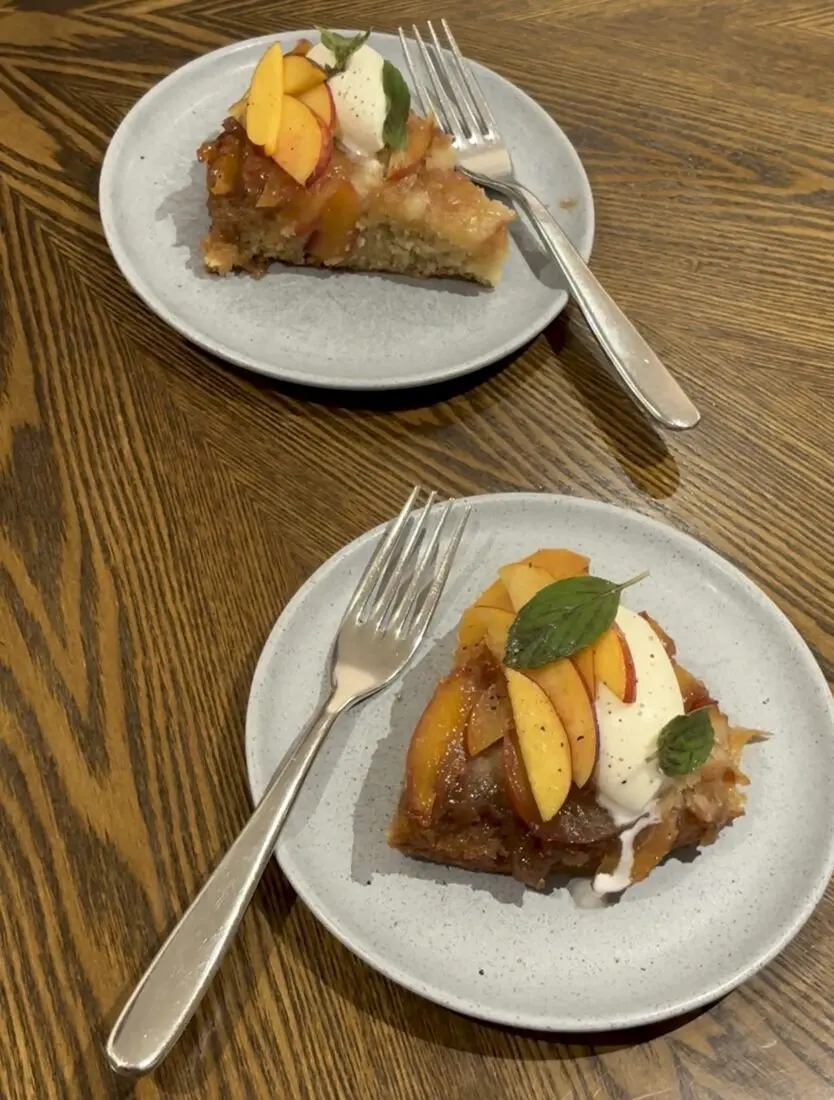
In the upper echelons of modern American pastry, where technique often supersedes emotion and conceptual minimalism frequently reigns supreme, James Beard Award–winning pastry chef Susan Bae remains an outlier. Operating out of Washington, D.C., Bae has carved out a distinct culinary identity that bridges the nostalgic comfort of childhood fast-food indulgences with the rigorous, delicate precision of contemporary fine dining. Her latest creation—the Peach Jasmine Upside-Down Cake, elevated with white pepper and green Sichuan peppercorn oil—serves as a masterclass in this philosophy.
At first glance, the recipe reads as an exercise in high-low juxtaposition: the comforting, rustic familiarity of a classic fruit-laden upside-down cake married to the complex, aromatic heat of Sichuan peppercorns and the delicate, floral fragrance of jasmine. Yet, for Bae, every element is rooted in a deeply personal narrative. This is not innovation for the sake of novelty; it is an act of culinary translation. It takes the ephemeral, visceral joy of a warm McDonald’s apple pie—the very treat that first sparked her adolescent curiosity in baking—and elevates it into an unforgettable sensory experience.
This article explores the trajectory of Susan Bae’s career, the philosophy of "cooking from memory" that defines her kitchen, and an analytical breakdown of the sensory architecture behind her signature peach and jasmine cake. Through interviews, industry context, and a rigorous examination of modern flavor pairings, we trace how a simple childhood memory transformed into one of the most compelling pastry creations of the contemporary dining scene.
Detailed Chronology: From Golden Arches to James Beard Gold
To understand the sophistication of Susan Bae’s current pastry program, one must examine the winding path that led her from domestic curiosity to professional acclaim.
The Genesis: Nostalgia and the McDonald’s Apple Pie
Long before she was orchestrating complex plating lines or commanding the respect of the James Beard Foundation, Bae was simply a kid captivated by the simple pleasures of food. Her initial foray into the world of baking was not inspired by classic French pâtisserie or high-end culinary textbooks, but rather by her father’s profound affinity for the warm, handheld McDonald’s apple pie.
There was something undeniably magnetic about that specific dessert: the blistering, golden-brown fried crust; the molten, cinnamon-spiced apple filling that always seemed dangerously hot; and the sheer accessibility of it. For a young Bae, watching her father enjoy that simple treat planted a seed. It demonstrated the primal, emotional power of pastry—how a simple handheld pie could alter a mood, spark a conversation, and provide comfort. That foundational memory remains the North Star guiding her creative process today.
Professional Ascent and Fine Dining Pedigree
Bae’s journey from home baker to a formidable force in the restaurant industry required years of relentless technical training and creative exploration. She honed her craft in some of the most demanding kitchens in the country, mastering the exacting science of pastry where chemistry and art intersect. Precision is non-negotiable in the pastry arts, where a fraction of a gram or a degree off in temperature can ruin an entire batch.
Yet, as Bae climbed the ranks, she actively fought against the clinical coldness that often pervades fine-dining dessert menus. While many pastry chefs lean heavily into intellectual deconstructions or overly technical showpieces, Bae anchored her work in emotional resonance. Her appointment at Moon Rabbit in Washington, D.C., provided the ideal platform for this philosophy. Working within the vibrant, deeply personal context of modern Vietnamese-American cuisine, Bae found the creative freedom to experiment with ingredients that bridged her Asian heritage with classic Western pastry techniques.
The James Beard Accolade and National Recognition
The pinnacle of this approach arrived when the James Beard Foundation officially recognized Susan Bae as one of the nation’s premier pastry talents, awarding her the coveted title of Best Pastry Chef. For the industry, the win was a validation of a quieter, more thoughtful style of pastry—one that honors the diner’s emotional history rather than just testing the limits of culinary physics.
Rather than resting on her laurels, Bae used the platform provided by the award to double down on her core ethos. The Peach Jasmine Upside-Down Cake stands as a direct product of this post-accolade era: confident, deeply personal, technically flawless, and entirely unpretentious in its delivery despite its sophisticated flavor profile.
Supporting Context & Metrics: The Anatomy of Modern Flavor
To fully appreciate the Peach Jasmine Upside-Down Cake, one must analyze the components that elevate it from a traditional fruit dessert into a masterclass in modern flavor pairing.
[Flavor Architecture of Bae's Upside-Down Cake]
 ├── Base & Structure: Classic Upside-Down Cake Batter (Butter, Flour, Sugar)
 ├── Fruit Foundation: Seasonal Fresh Peaches (Caramelized in Pan)
 ├── Floral Infusion: Jasmine (Imparting Delicate, Aromatic Notes)
 └── The Counterpoint: White Pepper & Green Sichuan Peppercorn Oil (Tingle & Citrusy Heat)
The Psychology of "Cooking from Memory"
In contemporary gastronomy, the phrase "cooking from memory" is often tossed around as a marketing buzzword, but in Bae’s kitchen, it is a rigid methodology. Culinary psychologists note that taste and olfaction are our oldest evolutionary senses, wired directly into the limbic system—the brain’s emotional and memory center. This is why a specific aroma can instantly transport a person back to their childhood kitchen decades later.
Bae leverages this neurological quirk intentionally. When she constructs a dessert like her peach jasmine cake "entirely from memory," she is not relying on a dogmatic adherence to a cookbook; she is channeling an emotional blueprint. She remembers the texture, the sweetness, the warmth, and the feeling she wants to evoke in the guest. This emotional authenticity translates onto the plate, creating what regular diners describe as an immediate sense of comfort paired with intellectual surprise.
The High-Low Chemistry: Sichuan Peppercorn and Stone Fruit
The true genius of Bae’s recipe lies in its unexpected seasoning. Traditional upside-Down cakes rely on a predictable matrix of sugar, butter, fruit, and perhaps a touch of cinnamon, nutmeg, or vanilla. Bae shatters this paradigm by introducing white pepper and green Sichuan peppercorn oil.
- Green Sichuan Peppercorn Oil: Unlike black or white peppercorns (which derive their heat from piperine), Sichuan peppercorns contain hydroxy-alpha-sanshool, a compound that creates a unique tingling, numbing sensation on the tongue. Crucially, green Sichuan peppercorns are prized for their bright, intensely citrusy, and floral aroma profile.
- White Pepper: Offering a sharper, more earthy, and direct warmth than black pepper, white pepper acts as a bridge, grounding the citrusy brightness of the Sichuan oil and connecting it to the rich, buttery crumb of the cake.
- The Stone Fruit Synergy: Peaches are naturally high in lactones—organic compounds that deliver peach, coconut, and floral aromas. When caramelized in a traditional upside-down cake pan, their sugars concentrate, developing deep toffee and brown-butter notes. The floral, citrusy, and numbing qualities of the Sichuan oil cut through this rich sweetness, lifting the fruit profile and preventing the dessert from becoming cloying.
Official Statements and Culinary Philosophy
In conversations regarding her creative process, Susan Bae consistently emphasizes the communal and emotional purpose of food over ego-driven showmanship. Her philosophy serves as an antidote to the burnout and sterile perfectionism that often plagues the modern culinary landscape.
"As chefs, we take pride and joy in cooking from memory," Bae reflects, offering a rare window into the internal monologue of a master artisan. "We take a lot of joy in creating experiences for others. You make something beautiful, somebody tastes it, and it takes them back to a moment or makes them happy. It’s the grounding foundation of why I do what I do."
This statement dismantles the often-elusive barrier between fine dining and home cooking. While the execution of Bae’s menu items requires the precision of a seasoned professional, the intent is universally accessible. It is about hospitality in its purest form: making someone feel cared for through the medium of flavor.
Food critics and industry observers have frequently noted this empathetic streak in her work. Where other pastry programs aim to shock or awe with architectural feats of sugar glass and isomalt, Bae’s creations invite the diner to relax. The Peach Jasmine Upside-Down Cake is inviting; its golden, caramelized fruit top and rustic geometry signal comfort before a single fork is lifted. Yet, the moment the palate registers the subtle, electric tingle of the Sichuan oil dancing alongside the floral jasmine notes, the diner realizes they are experiencing the work of a brilliant, forward-thinking mind.
Future Outlook: The Evolution of Pastry in the Post-Bae Era
As the culinary world looks toward the future, the influence of chefs like Susan Bae is reshaping how upcoming generations approach pastry arts.
The Shift Toward Personal Narrative
For decades, pastry was dominated by a strict Eurocentric orthodoxy. Classic French techniques were treated as sacred, inviolable laws, and straying from them was viewed as culinary heresy. Bae, alongside a vanguard of diverse modern chefs, has successfully shattered this glass ceiling. By infusing her heritage, her personal memories, and unconventional pantry staples like Sichuan peppercorn oil into classic Western formats, she has proven that the future of pastry lies in hybridity and personal storytelling.
We are already seeing the ripple effects of this shift across American restaurants. Pastry chefs are increasingly looking inward—mining their own cultural backgrounds, family histories, and childhood nostalgia for inspiration rather than relying solely on classical repertoire. The result is a richer, more diverse, and infinitely more interesting American dessert landscape.
What’s Next for Susan Bae
With her James Beard recognition firmly secured and her reputation as one of the country’s most innovative pastry minds cemented, Bae continues to push the boundaries of what dessert can be. Whether through pop-ups, menu evolutions at Moon Rabbit, or potential future cookbook ventures, her exploration of flavor memory is far from exhausted.
For home bakers and professional cooks alike, recipes like the Peach Jasmine Upside-Down Cake offer a thrilling blueprint. They challenge us to look at our own spice racks—and our own childhood memories—with fresh eyes. They remind us that the best food is born where technical mastery meets emotional vulnerability, proving that a simple peach cake, when touched by a master’s hand and a dash of Sichuan pepper, can become nothing short of a revelation.

0 Comments