

Executive Overview
JACKSONVILLE, Fla. — As the November ballot approaches, voters in Duval County face a high-stakes decision that could profoundly shape the future of local public education. At the center of the debate is the renewal of a 1-mill property tax originally approved by voters four years ago in 2022. This recurring ballot measure is not a new tax; rather, it is a continuation of an established financial commitment designed to bolster educator compensation through targeted annual bonuses.
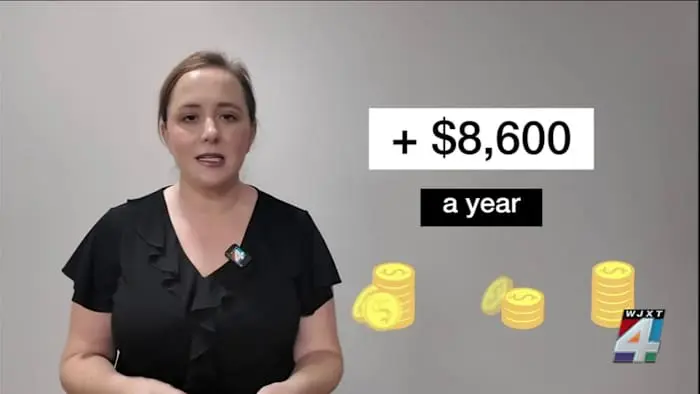
For Duval County Public Schools (DCPS), the stakes could not be higher. Superintendent Dr. Christopher Bernier has emerged as a vocal advocate for the tax’s renewal, warning that allowing the measure to lapse would trigger a mass exodus of educators to neighboring, better-funded districts. At an average of $8,600 per teacher annually, the bonus functions as a vital economic lifeline in a state that historically trails the rest of the nation in average educator compensation.
According to data from the National Education Association (NEA), Florida ranks dead last in the United States for average teacher pay, with a state average hovering around $56,700 compared to a national average approaching $74,500. Against this sobering backdrop, the 1-mill property tax has become a primary instrument for regional competitiveness. District leadership, educators, and community advocates argue that keeping the tax in place is essential for maintaining classroom quality, mitigating chronic vacancies, and ensuring that Duval County can attract and retain top-tier instructional talent.
Yet, the decision ultimately rests in the hands of property owners, who must weigh the tangible costs of the assessment against the broader societal and economic implications of underfunded public schools. With early information campaigns already underway and the district launching dedicated web resources to educate the public, the upcoming election promises to be a referendum on how Jacksonville values its educators.
Detailed Chronology: From 2022 Implementation to the 2026 Renewal Battle
To understand the urgency surrounding this year’s ballot measure, one must trace the timeline of the 1-mill property tax from its inception to the current political and educational landscape.
2022: The Initial Leap of Faith
Four years ago, Duval County voters were asked to approve a localized solution to a statewide crisis. Facing mounting educator shortages and a widening pay gap between Florida and the rest of the nation, DCPS pushed for the 1-mill property tax initiative. Proponents framed the tax not as an unnecessary burden on homeowners, but as an urgent investment in community stability and educational excellence.
When voters approved the measure in 2022, it established a dedicated revenue stream exclusively earmarked for teacher recruitment and retention. For the past four years, this mechanism has funneled crucial funds directly into the pockets of classroom teachers, providing a predictable financial cushion that has helped stabilize a volatile labor market.
The Intervening Years: Measuring the Impact
Throughout its four-year lifecycle, the 1-mill tax has served as a psychological and financial anchor for DCPS staff. District officials point to internal metrics showing that the infusion of approximately $8,600 per teacher annually has helped curb turnover rates and reduce classroom vacancies. In a region where school districts fiercely compete for a shrinking pool of qualified education graduates, the bonus program allowed Duval to remain competitive against surrounding counties that had implemented similar localized millage rates.
2024–2025: Rising Economic Pressures
As inflation and the cost of living surged across Northeast Florida, the reliance on the 1-mill bonus intensified. Teachers who initially viewed the bonus as a helpful supplement increasingly saw it as essential to maintaining basic financial solvency. Meanwhile, property values across Duval County experienced substantial growth, making the financial impact of the 1-mill assessment a frequent topic of conversation among local homeowners navigating their own economic challenges.
2026: The Critical Renewal Threshold
Now, exactly four years since its initial authorization, the tax is set to expire unless renewed by the electorate. Recognizing the existential threat that a lapse in funding would pose to district stability, Superintendent Bernier and the school board formally placed the renewal item on the November ballot. The district has wasted no time in mobilizing informational campaigns, launching specialized portals on the DCPS website to break down how every cent of the revenue is collected and distributed, setting the stage for a contentious and high-turnout November election.
Supporting Context & Metrics: The Financial Reality of Florida Education
To evaluate the necessity of the Duval County 1-mill tax, one must examine the broader economic realities defining public education in Florida. The state’s persistent struggles with teacher compensation provide the critical context for why local municipalities have had to resort to property tax referendums to keep their classrooms staffed.
The National Education Association Rankings
According to the latest comprehensive data from the National Education Association, Florida ranks dead last in the United States for average teacher pay. While the national average teacher salary sits just under $74,500, Florida’s average lags significantly behind at approximately $56,700. This nearly $18,000 deficit creates a formidable challenge for school districts attempting to recruit recent college graduates and seasoned professionals alike.
Breaking Down the Cost to Homeowners
Critics of property tax measures frequently express concern over rising local tax burdens. However, DCPS has worked to demystify the exact financial impact of the 1-mill assessment through public outreach initiatives.
By definition, one mill equals one dollar of tax property assessment for every $1,000 of assessed home value. To illustrate what this means for the average Duval County resident:
- For a home assessed at $300,000 with a standard taxable value of $275,000 (after exemptions), the 1-mill tax amounts to $275 per year.
- Broken down further, this represents an investment of roughly $23 per month from the homeowner.
District officials argue that this modest investment yields outsized returns for the local economy, protecting property values by ensuring strong neighborhood schools while directly supporting the families of the educators who live and spend money within the community.
Regional Competition: The Inter-County Rivalry
Duval County does not exist in an educational vacuum. It operates within a hyper-competitive regional labor market, bordered by Clay, Nassau, and St. Johns counties. Notably, all three neighboring districts have implemented their own localized bonus structures or millage rates to attract and retain teaching talent.
If Duval County fails to renew its 1-mill tax, it risks instantly losing its competitive edge. An educator weighing job offers across district lines would face a stark financial disparity, heavily incentivizing them to seek employment in counties where the supplemental bonus remains guaranteed.
Official Statements and Frontline Perspectives
While financial metrics and policy debates form the structural core of the 1-mill discussion, the human element provides the most compelling argument for its renewal. District leadership, current educators, and former teachers have shared powerful testimony regarding what the bonus means for daily survival and professional longevity.
Superintendent Dr. Christopher Bernier on Regional Competitiveness
During a recent school board meeting, Superintendent Dr. Christopher Bernier addressed the board and the public with a blunt assessment of the district’s vulnerabilities should the tax fail.
"I’m also concerned that if a teacher knows they can make more in another county, they’ll go to that county and fill that vacancy before they’ll come to us," Bernier warned. "The millage that you provided is working. It’s helping us keep teachers. It’s helping us recruit teachers."
Bernier’s comments underscore the precarious nature of modern school administration. In an era defined by teacher shortages, recruitment is no longer just about hiring qualified individuals; it is about outbidding neighboring districts for a limited supply of human capital.
Monica Gold: The Reality of Financial Stability
For current DCPS teacher Monica Gold, the $8,600 annual bonus represents the fragile barrier between financial security and chronic stress.
"It’s the difference between someone being able to save for a home, to pay off their car, to get a root canal without feeling like they’re in financial disrepair," Gold said. "Everyone deserves those things. We want our teachers to be able to live with some security."
Despite receiving the bonus, Gold candidly admits that she still maintains a second job to help pay off burdensome student loans, illustrating just how foundational the supplemental income is to her baseline survival.
"The mill rate — that does contribute to helping me with my finances," Gold reflected. "I would be in a far worse place without it. I’m very, very grateful for it."
Darellee Naccarato: The Threat of Retrenchment
Darellee Naccarato, who taught in Duval County public schools until departing last year, offered a retrospective view on the impact of the supplemental pay. Having experienced both classroom teaching with the bonus and the broader struggles of Florida’s compensation structure, Naccarato emphasized the devastating psychological and economic impact of an $8,000 pay cut.
"I can’t imagine anybody taking $8,000 from your salary — it wouldn’t make a huge sacrifice in your family life or what you do for your family," Naccarato noted.
For Naccarato, the bonus was the deciding factor that kept her from needing to take on a second job while actively managing a full-time classroom workload, allowing her to focus her energy on her students and her own children.
"It made a significant dent with my own children, helping make sure that they had what they needed, our family to not struggle and for me not to need a second job," she said.
Addressing the broader pipeline of talent, Naccarato warned that the state’s compensation crisis threatens to push away the brightest minds entering the profession.
"There are so many young teachers that are so great, they have so many great ideas, they’re full of energy, they want to make a difference," she said. "लेकिन if they can’t make it and they can’t afford to be a teacher, I don’t know what’s going to happen to our schools."
Future Outlook: What Happens Next?
As the November election draws closer, the debate over the Duval County 1-mill tax moves from school board chambers and faculty lounges to the broader public square.
The Campaign Ahead
Over the coming months, DCPS and allied community organizations will ramp up informational efforts, utilizing digital tools like their dedicated voter education webpage to ensure residents understand the mechanics of the tax and the consequences of its expiration. Proponents face the challenge of cutting through anti-tax sentiment by framing the assessment not as an expense, but as a critical civic investment.
Implications of Defeat vs. Victory
- In the Event of Renewal: If voters choose to extend the 1-mill tax for another four years, DCPS will secure its financial footing regarding teacher compensation well into the late 2020s. This stability will allow the district to aggressively recruit new educators, retain seasoned professionals, and maintain lower vacancy rates compared to its statewide peers.
- In the Event of Defeat: Conversely, should the ballot measure fail, the district would face an immediate budgetary crisis. Stripping an average of $8,600 from thousands of teacher salaries would almost certainly trigger an exodus of instructional staff to neighboring counties like St. Johns, Clay, and Nassau, exacerbating local vacancy rates and placing an unprecedented strain on remaining personnel.
A Community Verdict
Ultimately, the November election will serve as a definitive test of community values in Jacksonville. As educator Monica Gold eloquently summarized:
"I think it’s an investment in community. Sometimes we have to vote as if we’re a part of a community. The best teachers and the best schools — that’s something to strive towards for a community that makes us stronger and better. We already have such great teachers in Duval County. Let’s make sure that they’re cared for."
With the future of thousands of educators and students hanging in the balance, Duval County voters will have the final say this November.

0 Comments