

Executive Overview
It has been over half a decade since a routine afternoon of competitive esports turned into one of the darkest days in the history of Jacksonville, Florida. On August 26, 2018, a peaceful gathering of gaming enthusiasts at the Jacksonville Landing was shattered by mass violence. What was meant to be a regional qualifying event for the Madden NFL 19 video game tournament became the site of a targeted shooting that claimed two lives, injured 11 others, and permanently scarred the community’s collective psyche.
The tragedy, perpetrated by a disgruntled 24-year-old competitor from Baltimore who ultimately died by suicide at the scene, laid bare profound vulnerabilities across multiple industries. It ignited a fierce national conversation regarding the adequacy of physical security at esports gatherings, the legal liabilities of major gaming corporations and tournament organizers, the enforcement of local building and fire codes, and the responsibility of public venues in safeguarding patrons.
In the wake of the bloodshed, the legal fallout was swift and sprawling. Thirty-two separate lawsuits were filed, plunging survivors, families of the victims, corporate entities, and local property managers into protracted legal battles over negligence and security lapses. Simultaneously, the physical landscape of downtown Jacksonville underwent a radical transformation. The Jacksonville Landing—a once-vibrant open-air waterfront marketplace that had served as a focal point of downtown life for decades—was completely demolished less than a year after the shooting.
Today, the site has been reborn as Riverfront Plaza, a testament to urban renewal and resilience. Yet, even as new green spaces, pedestrian pathways, and community gathering areas rise along the St. Johns River, the legacy of August 26, 2018, remains an indelible part of Jacksonville’s history. This comprehensive report examines the chronology of the attack, the tragic human toll, the subsequent legal and regulatory reckonings, and the long-term architectural and community-led redevelopment of the waterfront.
Detailed Chronology: The Anatomy of a Tragedy
To understand the full scope of the Jacksonville Landing shooting, it is necessary to reconstruct the timeline of events on that fateful Sunday in August 2018. The tournament was part of the Madden Challenge, a competitive circuit operated under the umbrella of Electronic Arts (EA Sports). Players had traveled from across the country to compete in the regional qualifier, held inside the "Good Luck Have Fun" (GLHF) game bar, located within the Chicago Pizza restaurant at the Jacksonville Landing complex.
The Buildup and the Attack
The venue was packed with competitors, spectators, and staff. The atmosphere was typical of competitive gaming events: intense, focused, and communal. Many of the participants knew each other through online circuits, making the community tight-knit and vulnerable when trust was weaponized.
According to investigative reports, the shooter had participated in earlier rounds of the tournament earlier that day. Following a loss, the suspect left the venue, retrieved a handgun from a vehicle, and re-entered the restaurant. Witnesses reported hearing multiple gunshots ring out shortly after 1:30 p.m.
The gunman systematically targeted rival players. In the chaotic moments that followed, competitors and bystanders scrambled for cover, attempting to flee through the restaurant’s exits or barricading themselves in back rooms. Within minutes, law enforcement and emergency medical services flooded the Jacksonville Landing complex. However, the violence was over almost as quickly as it began; the gunman took his own life before police could engage him, leaving behind a scene of absolute devastation.
Immediate Aftermath and Emergency Response
First responders faced a scene of unprecedented confusion. In total, 13 people had been shot—two fatally, and 11 others sustaining various physical injuries ranging from graze wounds to severe trauma requiring emergency surgery. Survivors recounted harrowing tales of hiding under tables, applying makeshift tourniquets to fellow competitors, and fleeing into the sunlit downtown streets in absolute terror.
Hospitals across Duval County mobilized trauma teams to handle the influx of victims. Blood banks issued urgent calls for donations as the local community rallied to support the survivors. Within 36 hours of the shooting, makeshift memorials began forming at the main entrance of the Jacksonville Landing. Piles of flowers, flickering candles, and handwritten notes became the only remaining signs of the tragedy at the site, transforming a commercial hub into a place of mourning.
Supporting Context & Metrics: The Human Toll and Regulatory Fallout
The shockwaves of the Jacksonville Landing shooting extended far beyond the immediate physical casualties, triggering swift scrutiny from municipal regulators, safety inspectors, and legal experts.
The Victims: Lives Cut Short
The attack stole the lives of two promising young men, leaving families and communities devastated:
- Elijah Clayton (22): Known to his friends and family as "Trueboy," Clayton was a talented competitive gamer and a former high school football player from Woodland Hills, California. He was remembered as a gentle, focused competitor with a bright future ahead of him.
- Taylor Robertson (27): Hailing from West Virginia, Robertson was widely respected in the Madden community, having won previous major tournaments. Known as "SpotMePlzzz," he was a devoted husband and the father of a young son.
The eleven survivors bore both physical and psychological scars. Among them was a young competitor from Wisconsin who sustained three gunshot wounds. His recovery would require multiple surgeries and extensive physical and mental health therapy to cope with the trauma of surviving a mass shooting.
Code Violations and Municipal Scrutiny
In the days immediately following the massacre, local authorities turned their attention to the physical infrastructure of the venue where the shooting occurred. On August 28, 2018—just 48 hours after the attack—the Jacksonville Fire Marshal’s Office officially shut down Chicago Pizza after discovering severe fire and safety code violations.
Inspectors cited the establishment for three major infractions:
- Blocked Egress Routes: Video game cabinets, arcade machines, and other heavy equipment were found blocking primary emergency exits, severely restricting the ability of patrons to evacuate the premises quickly.
- Improper Permanent Wiring: The restaurant was utilizing strip plugs in a manner that violated electrical safety codes for permanent installations.
- Misuse of Extension Cords: Extension cords were being used as a permanent substitute for fixed wiring, presenting a significant electrical and fire hazard in a crowded public space.
These revelations added fuel to public outrage, highlighting how lax oversight and regulatory non-compliance can compound the dangers during a crisis. If patrons had attempted to flee in a panic, the blocked exits could have resulted in an even higher death toll due to trampling or entrapment.
The Legal Battleground: 32 Lawsuits Filed
The tragedy sparked an unprecedented wave of civil litigation. In total, 32 lawsuits were filed in state and federal courts, naming various defendants, including the operators of the Jacksonville Landing, Chicago Pizza, security firms, and video game giant Electronic Arts (EA).
The lawsuits brought forth critical questions regarding corporate accountability in the booming esports industry. Plaintiffs argued that:
- Electronic Arts failed to implement adequate security protocols, background checks, or risk-assessment screening for players entering live, in-person tournaments bearing its brand.
- The Jacksonville Landing property management provided insufficient security measures, failing to deter armed individuals from entering the complex.
- Chicago Pizza and the GLHF game bar operated a venue unapproved or improperly configured to host large-scale competitive gaming events, compounded by the severe fire code violations uncovered post-incident.
While many of these legal battles were settled out of court over the subsequent years, the sheer volume of litigation reshaped how tournament organizers and venue owners approach risk management, event security, and player vetting across the United States.
Official Statements and Institutional Responses
In the wake of the shooting, government officials, corporate leaders, and community advocates released statements addressing the tragedy and promising systemic change.
Corporate Reckoning in Esports
Electronic Arts faced intense pressure to reevaluate its live-event strategy. In the immediate aftermath of the Jacksonville attack, EA canceled all remaining qualifiers for the Madden Championship Series and suspended upcoming live competitive events worldwide.
In official statements issued by EA executives, the company expressed profound grief over the loss of Elijah Clayton and Taylor Robertson and pledged to overhaul its security framework. "We are committed to learning from this tragedy," the company stated, announcing comprehensive security reviews for all future partnered and owned esports events. These measures included mandatory metal detectors, bag checks, uniformed law enforcement personnel on-site, and restricted access zones separating competitors from the general public.
Local Government and Community Resilience
Local leaders in Jacksonville emphasized unity and resolve. Then-Mayor Lenny Curry and other municipal officials visited the site, expressing solidarity with the victims’ families and vowing to support the downtown business community.
"Jacksonville is a resilient city," local leaders repeated in various public forums. However, beneath the rhetoric of resilience lay a growing realization that the Jacksonville Landing—long a point of contention in urban planning debates—was nearing the end of its viable lifespan. The tragedy catalyzed long-standing discussions regarding the economic viability, safety, and future aesthetic of the city’s downtown riverfront.
Future Outlook: From Tragedy to Transformation at Riverfront Plaza
The physical structure where the tragedy occurred did not survive the decade. The Jacksonville Landing, which opened in 1987 as a festive marketplace designed to revitalize downtown, had struggled with declining retail tenancy, financial disputes between tenants and the city, and shifting urban consumer habits for years. The mass shooting added a tragic final chapter to the commercial complex’s history.
Demolition of the Jacksonville Landing
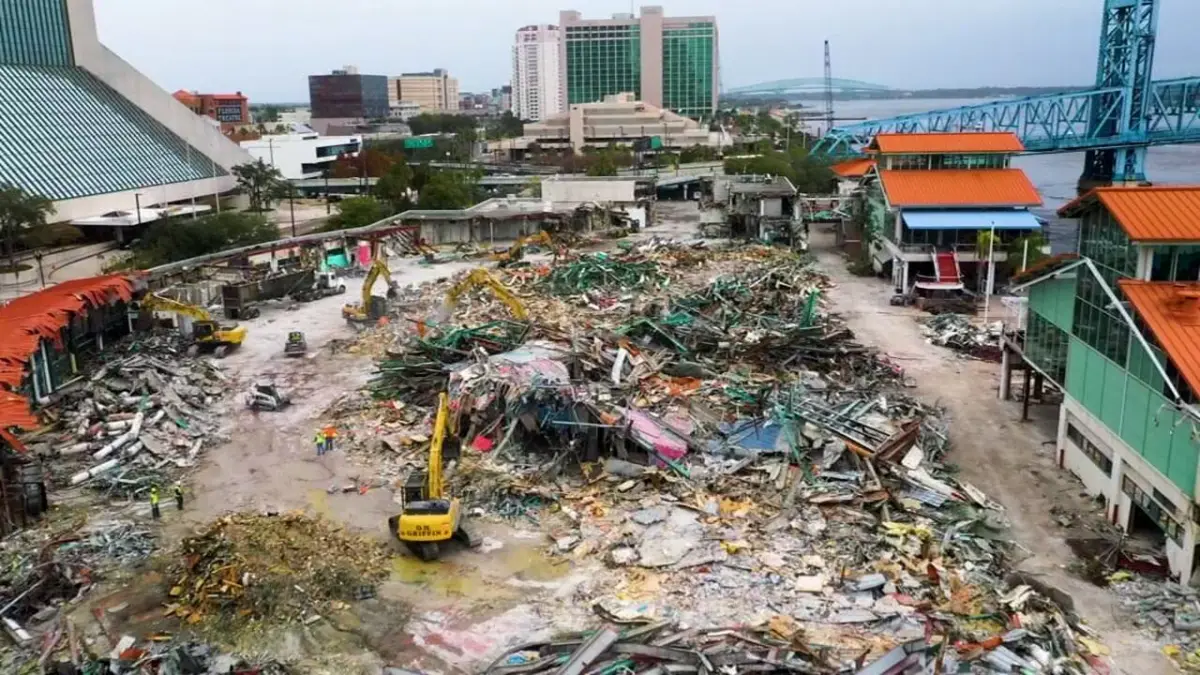
In July 2019, heavy machinery moved in to begin the systematic demolition of the Jacksonville Landing. Over the course of several months, the sprawling multi-level pavilions were reduced to rubble. For many residents, the demolition brought mixed emotions: it was a necessary step toward economic revitalization, yet it also erased a prominent landmark forever linked in the public consciousness with the 2018 massacre.
The Birth of Riverfront Plaza
Following the clearance of the site, the City of Jacksonville invested heavily in reimagining the waterfront parcel. The goal was to create an inclusive, open, and secure public space that would reconnect downtown Jacksonville with the St. Johns River.
The result of this multi-phase urban renewal project is Riverfront Plaza, which officially opened to the public in December of the prior year. The completed first phase of the development focuses heavily on open public green spaces, seating areas, and unobstructed views of the river. Designed to host community gatherings, festivals, and daily leisure activities, the park represents a deliberate shift away from enclosed commercial structures toward accessible public commons.
Phase Two and Memorialization
Looking ahead, Phase Two of the Riverfront Plaza development promises to expand the site’s amenities further. Plans include the construction of a modern beer garden, integrated artistic installations, and a dedicated bike and pedestrian connection linking the plaza directly to the Main Street Bridge. Additionally, architectural proposals feature a proposed cafe with a rooftop play area, designed to draw families and young professionals back to the urban core.
Crucially, city planners and community advocates have emphasized the importance of ensuring that the memory of Elijah Clayton and Taylor Robertson, as well as those who survived the attack, is honored within the new landscape. While urban renewal transforms the physical geography of downtown Jacksonville, the city remains dedicated to ensuring that the victims of August 26, 2018, are never forgotten.
Conclusion
The mass shooting at the Jacksonville Landing remains a watershed moment for the esports industry, local governance, and urban planning in Florida. It exposed the fragile intersections of physical security, regulatory oversight, and corporate responsibility in modern competitive gaming.
Though the Jacksonville Landing has been replaced by the verdant expanses of Riverfront Plaza, the legacy of that dark August afternoon endures. It serves as a permanent reminder of the lives lost, the resilience of the survivors, and the ongoing obligation of society to ensure the safety of public spaces. Through rigorous security reforms, legal accountability, and thoughtful urban design, Jacksonville continues to honor the past while building a safer, more connected future along the banks of the St. Johns River.

0 Comments