For nearly a century, the historic Gunter Hotel in downtown San Antonio, Texas, has stood as a silent witness to the evolution of American popular music. Long before recording studios were engineered as hermetically sealed, multi-million-dollar acoustic laboratories, legendary blues pioneer Robert Johnson walked up the steps of the Gunter in November 1936. Checking into Suite 414, Johnson spent three intensive days cutting sixteen immortal tracks—including "Sweet Home Chicago," "Rambling on My Mind," and "Cross Road Blues"—that would permanently alter the DNA of modern music.
Now, following a comprehensive multi-million-dollar revitalization project, the Gunter Hotel is transforming its storied past into an active, tactile present. Spearheaded by lead music consultant Elizabeth Fauerso and a high-profile curatorial council, the historic property has unveiled an on-site professional recording studio, a curated 1,000-album vinyl library, record players in every guest room, and an ambitious live-performance series. By fusing preservation with working production infrastructure, the Gunter is deliberately positioning itself alongside legendary sanctuaries of sound like Muscle Shoals, Abbey Road, and Electric Lady Studios—proving that historic preservation can do more than display the past; it can amplify it.
Detailed Chronology: From Frontier Inn to Sonic Sanctuary
To understand the weight of the Gunter’s recent musical renaissance, one must trace the timeline of a property that has mirrored the shifting tides of Texas history for nearly two centuries.
1837–1908: The Foundation and Early Years
The physical lineage of the site traces back to 1837, mere blocks from the Alamo—which had fallen in battle just one year prior. Originally opened as a humble hostelry named the Frontier Inn in the heart of a raw and expanding San Antonio, the location changed hands multiple times over the subsequent decades. During the Mexican-American War, the building served a strategic military function as barracks for U.S. soldiers. As the city matured from a frontier outpost into a bustling commercial hub, civic leaders recognized the need for a grand, world-class hotel that could accommodate travelers arriving via the burgeoning railway lines.
1909: The Birth of the Gunter Hotel
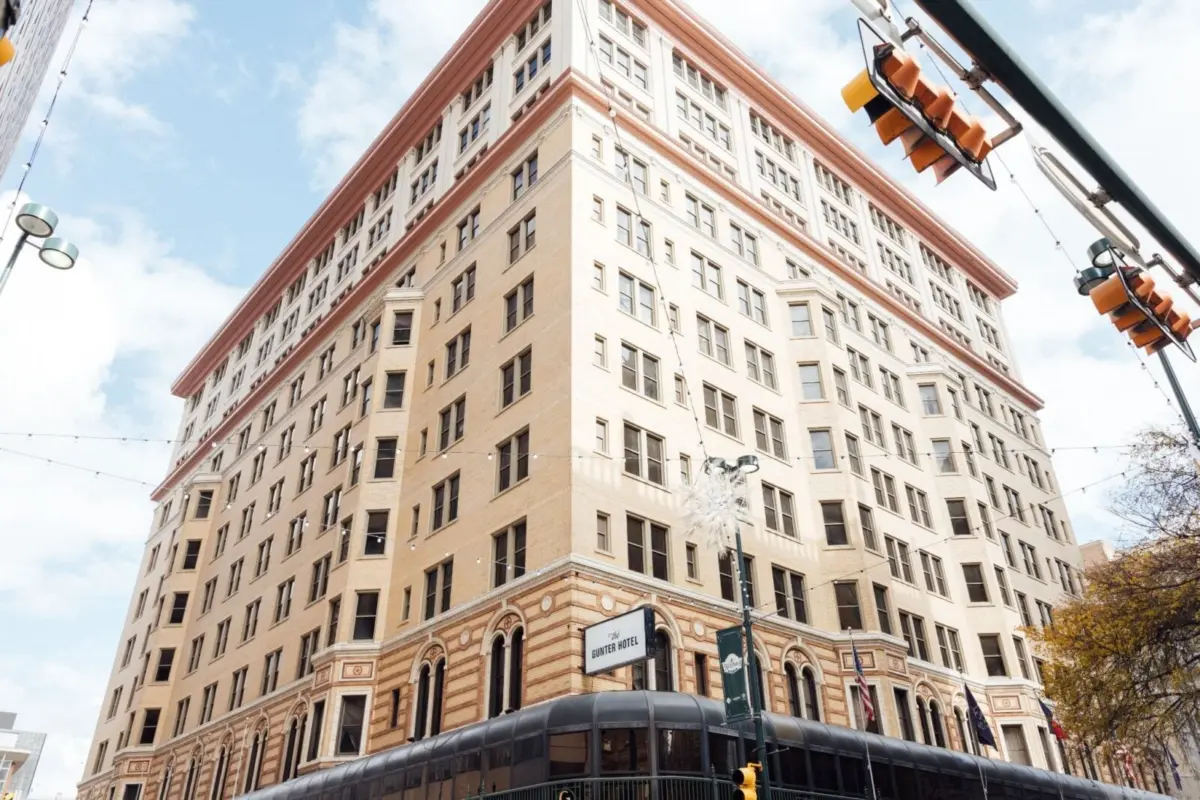
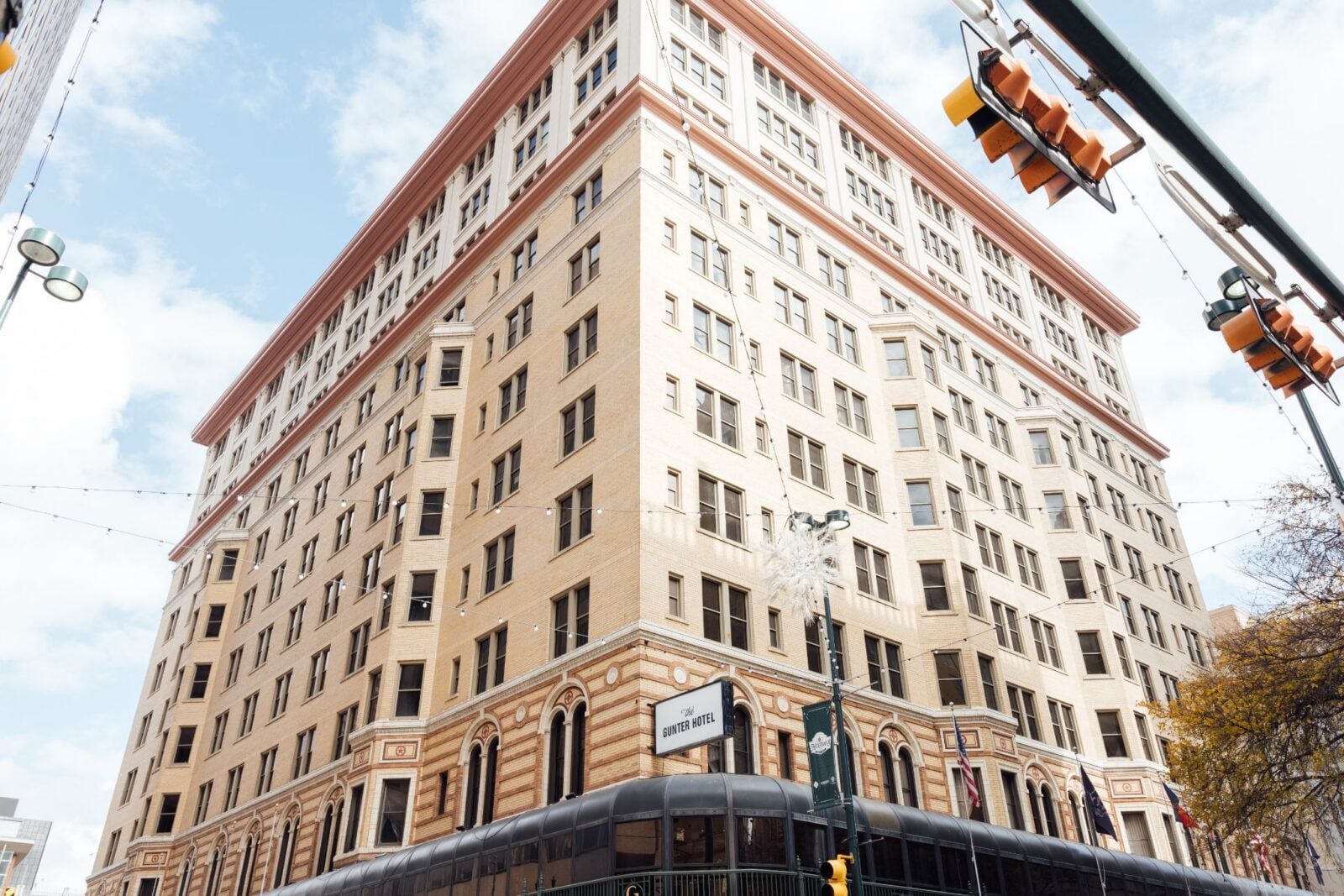
In 1909, the modern iteration of the property materialized with the grand opening of the Gunter Hotel. Boasting eight stories and 301 meticulously appointed guest rooms, the hotel immediately established itself as the social and architectural anchor of downtown San Antonio. Featuring soaring vaulted ceilings, an ornate grand lobby staircase, and an imposing limestone facade, the hotel exuded early-twentieth-century elegance. Crucially, from its earliest days of operation, the Gunter welcomed the era’s emerging sounds. Between 1916 and 1918, the hotel’s resident band was helmed by Alphonse Trent, a visionary jazz pianist and bandleader who would go on to shape the territory-band era of Southwestern jazz.
1936: Robert Johnson’s Fateful Session
The defining moment of the Gunter’s cultural legacy occurred in late 1936. A young, itinerant bluesman from Mississippi named Robert Johnson was brought to San Antonio by the American Record Corporation (ARC) to commit his haunting slide guitar and searing vocalizations to shellac. Eschewing a traditional studio, ARC engineers set up portable recording equipment inside Suite 414 of the Gunter Hotel.
Over a three-day marathon session, Johnson recorded foundational blues standards. The tracks captured in that modest hotel room—including "Cross Road Blues," "Terraplane Blues," and "Kind Hearted Woman Blues"—would later be revered as gospel by generations of rock icons, from Eric Clapton and Keith Richards to Led Zeppelin and Bob Dylan.
Mid-20th Century: A Broadcast and Booking Hub
Throughout the 1930s, 40s, and 50s, the Gunter remained a bustling epicenter for regional and national audio culture. WOAI radio, San Antonio’s oldest operating broadcast station, frequently utilized the hotel to air live programs and remote musical broadcasts. During the same decade, the American Record Corporation continued its field-recording expeditions at the Gunter, documenting the tight-knit spiritual harmonies of the Chuck Wagon Gang and scouting, signing, and recording Lydia Mendoza, the pioneering Mexican-American singer known as "The Lark of Texas" (La Alondra de la Frontera). Over the decades, the hotel played host to multiple performance spaces, including a subterranean basement nightclub and an open-air rooftop venue that captured the cool breezes of the Texas Hill Country.
2026: The Modern Renaissance
Following a painstaking modernization effort that updated guest amenities while preserving the historic structural core—including the original facade, vaulted ceilings, and grand lobby staircase—the Gunter entered a new chapter in August 2026. The opening of an on-site commercial recording studio and a hotel-wide vinyl immersion program effectively completed the circle, marrying nineteenth-century Texas architecture with twenty-first-century audio engineering.
Supporting Context & Metrics
The transformation of the Gunter Hotel is not merely an aesthetic overhaul; it is a meticulously engineered sonic ecosystem designed to cater to modern creators, audiophiles, and cultural tourists alike.
Architectural and Acoustic Engineering
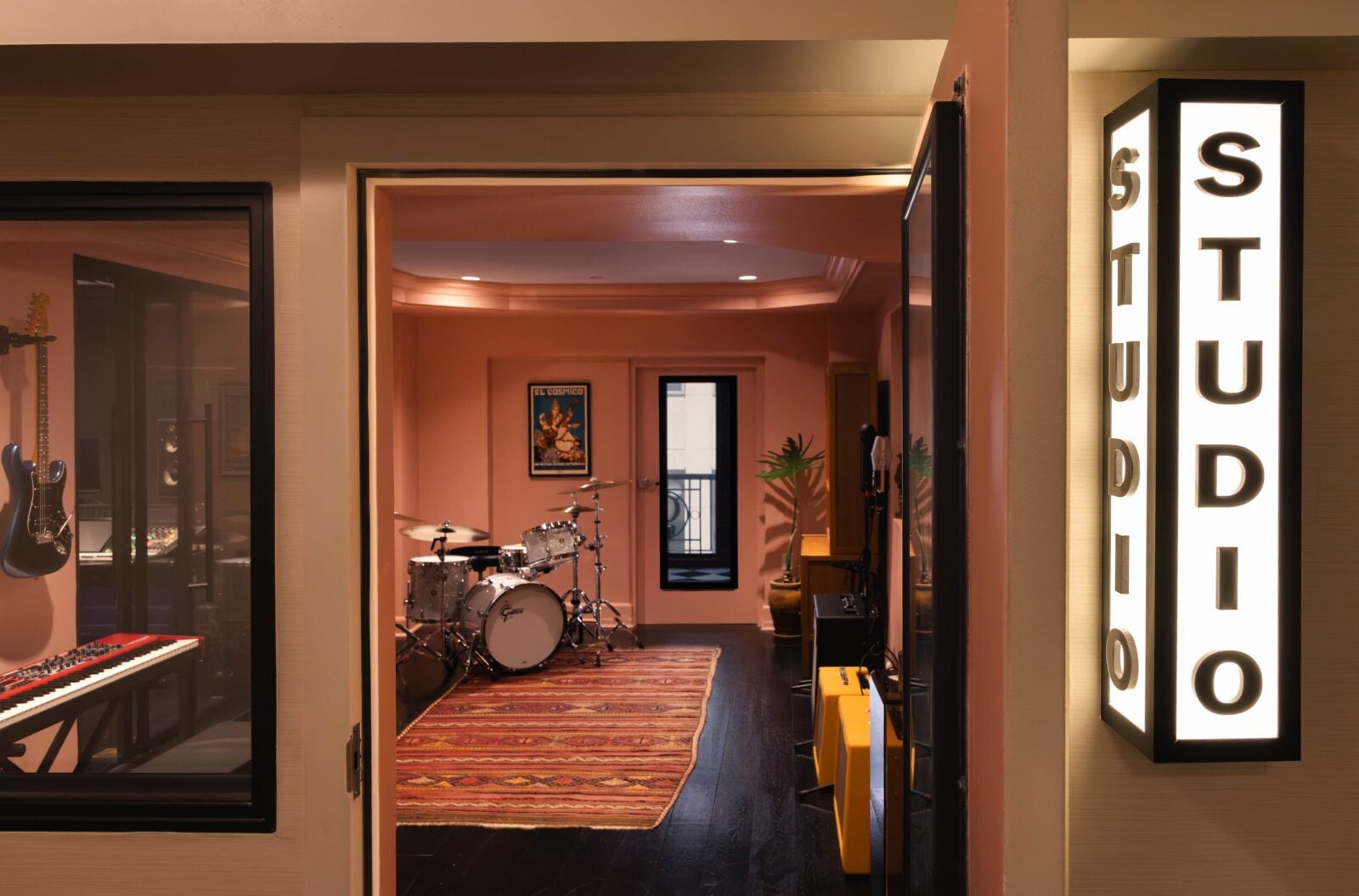
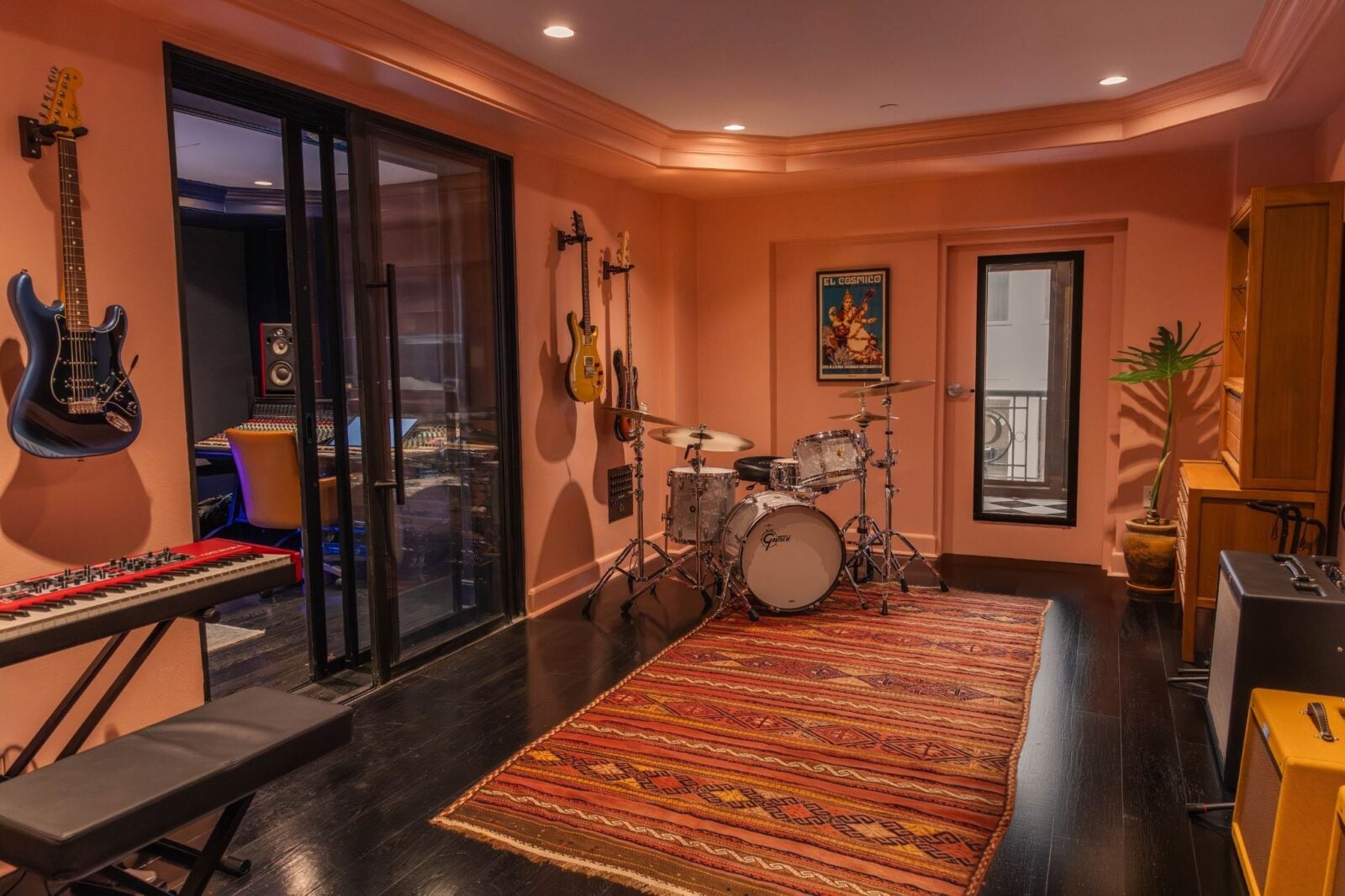
Tucked intelligently into a former storage room on the hotel’s second floor, the new recording facility represents a collaboration between Grammy Award–winning producer and songwriter Michael Ramos and renowned acoustician Steve Derr. The spatial layout is divided into three primary zones:
The Live Room: An acoustically treated tracking space designed to accommodate full bands with optimal natural reverberation.
The Control Room: Lined with custom acoustic panels and anchored by a state-of-the-art Neve Genesys Black 48-channel hybrid mixing console, bridging warm analog summing with cutting-edge digital workflow.
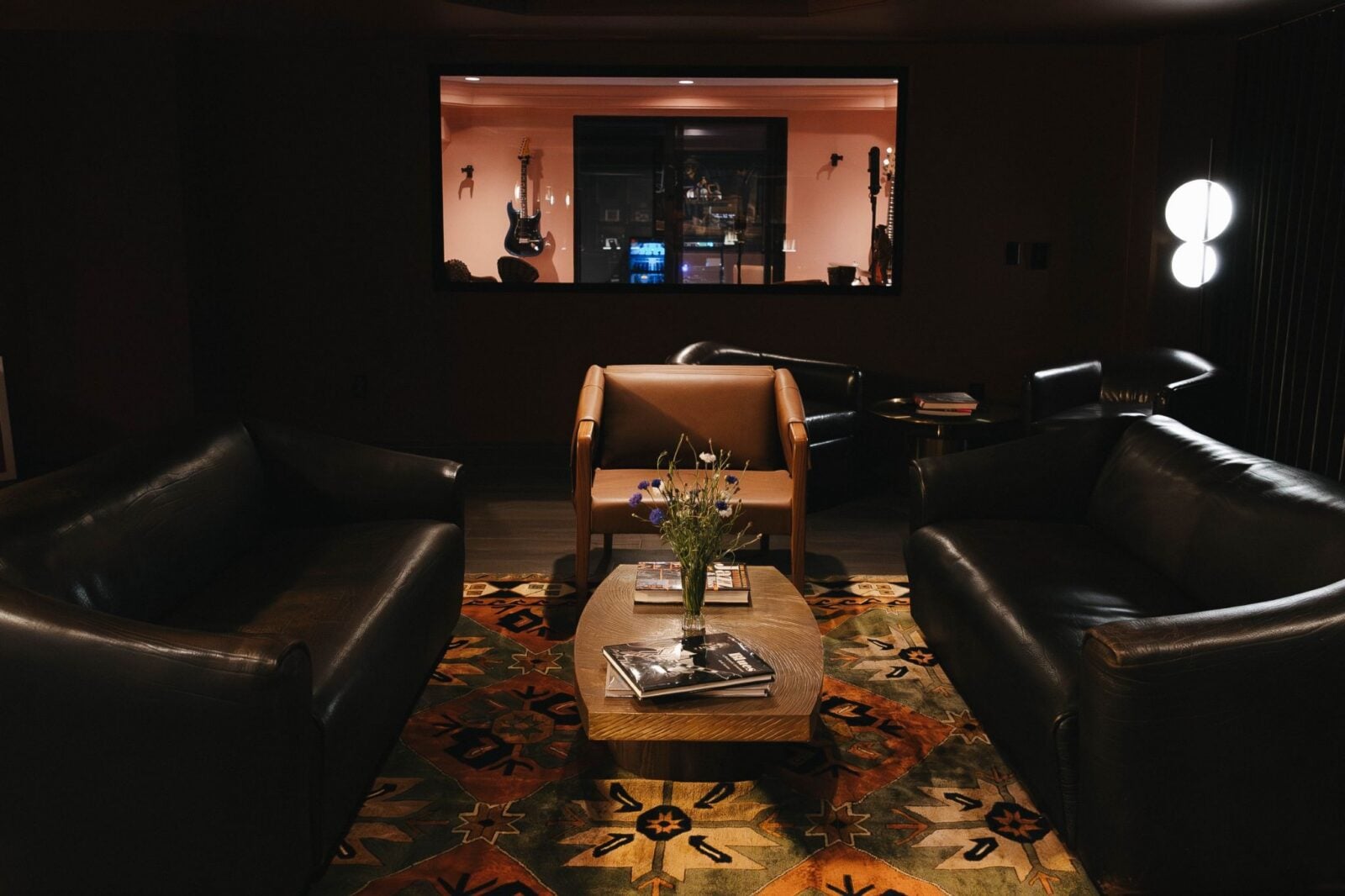
The Lounge: An intimate, dimly lit viewing area adjacent to the control room where hotel guests and invited visitors can observe live recording sessions in real time.
In a brilliant nod to historical continuity, Ramos and Derr engineered a direct hardware tie-line connecting the studio control room directly to Robert Johnson’s legendary Suite 414. This allows modern artists to record tracks inside the exact historical space where Johnson played in 1936, piping the raw audio feed down to the second-floor mixing desk.
Guest Experience Metrics & Amenities
The Gunter’s immersion in music extends well beyond the professional recording facilities into the everyday guest experience:
1,000-Album Vinyl Library: Located in the grand lobby, a curated collection of 1,000 vinyl records spanning blues, jazz, Tejano, rock, and soul is available for guest perusal and checkout.
In-Room Turntables: Every single guest room in the hotel has been outfitted with a dedicated record player, encouraging guests to spin physical media pulled from the lobby library.
Concierge Guidance: A specialized front-desk concierge staff is trained to provide personalized record recommendations based on guest tastes and the rich musical history of San Antonio.
Official Statements & Industry Perspectives
The resurrection of the Gunter’s musical identity has drawn widespread acclaim from industry veterans, historians, and artists.
Elizabeth Fauerso, the Gunter’s lead music consultant and the creative force behind the programming, framed the project’s core philosophy during the opening launch:
"How do you make all that into something people can experience, not just as history? You think about these studios throughout history that have their own identity, like Muscle Shoals and Abbey Road and Jimi Hendrix’s studio in New York, where there’s magic in the walls. I think a lot of people feel that way about the Gunter."
To guide the cultural programming of the space, the hotel assembled an elite advisory council comprising blues artist Nicky Diamonds, Black Pumas musician and producer Adrian Quesada, and San Antonio guitarist Joe Reyes. This council ensures that the studio and performance series remain authentically connected to the Texan roots music community rather than serving as a sterile corporate pastiche.
The studio’s grand opening in August 2026 was marked by an intimate live performance by acclaimed Americana, country, and soul artist Angel White, setting a high artistic bar for the venue’s ongoing singer-songwriter performance series.
Future Outlook
As the Gunter Hotel steps into its next century of operation, its trajectory is defined by a busy calendar of high-profile events and community-focused initiatives.
The 90th Anniversary Celebration (November 2026): The milestone event of the autumn season will take place in November, when Steven Johnson—grandson of Robert Johnson—travels to San Antonio for a multi-day commemoration marking exactly ninety years since his grandfather’s historic 1936 recording session in Suite 414.
Community and Educational Access: While operating as a top-tier commercial facility for Grammy-winning producers and touring professional musicians, the studio has carved out dedicated scheduling blocks to serve local students and non-profit arts organizations, ensuring the next generation of Texas musicians has access to world-class tools.
Ongoing Performance Series: The hotel’s singer-songwriter showcase series will continue to bring regional and national touring acts into intimate performance spaces throughout the property, cementing downtown San Antonio as an essential stop on the American roots music touring circuit.
By bridging the gap between 1837 and the modern digital era, the Gunter Hotel proves that architectural preservation is most powerful when it remains a living, breathing art form. Whether a guest is dropping the needle on a vintage jazz LP in a newly renovated room, watching a tracking session from the lounge, or walking the historic hallways that Robert Johnson once paced, the Gunter ensures that the ghosts of American music are not merely remembered—they are given a microphone.



0 Comments