
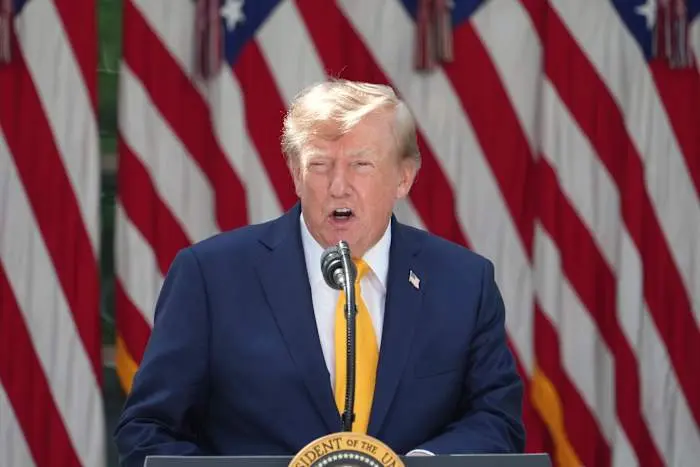

WASHINGTON — The economic relationship underpinning North America is facing its most severe stress test in decades. The United States and Canada have plunged headlong into a rapidly escalating trade conflict, trading a barrage of punitive, tit-for-tat tariffs that threaten to destabilize an integrated cross-border market worth $880 billion annually.
Despite a volatile cycle of threats, political posturing, and brinkmanship from Washington and Ottawa, international trade analysts, geopolitical strategists, and economic historians increasingly suspect that this high-stakes standoff will ultimately give way to a negotiated settlement. Neither longtime ally can afford the structural damage of a protracted trade war, yet the path back to the negotiating table remains obstructed by deep political animosities, populist fervor, and competing visions of sovereignty.
Executive Overview
The current conflagration represents a watershed moment in U.S.–Canadian relations, transforming what were once routine bilateral trade disagreements into an open economic conflict. Sparked by President Donald Trump’s sweeping utilization of a Depression-era trade statute to impose 50% tariffs on select Canadian imports, the dispute has rapidly expanded into a multi-front economic confrontation.
In response, Canadian Prime Minister Mark Carney has authorized retaliatory tariffs on $20 billion worth of American goods, while provincial leaders like Ontario Premier Doug Ford have threatened to cut off essential shipments of electricity and critical minerals to the United States. President Trump, showing no signs of backing down, has countered with threats to penalize Canada’s vital automotive sector and provocatively floated the idea of renaming Lake Ontario.
Beneath the rhetorical bluster, however, economic realities loom large. With the U.S. midterm elections approaching in November 2026 and consumer anxiety over the cost of living running high, political pressures are mounting on both sides to find an off-ramp. While the structural integrity of the United States-Mexico-Canada Agreement (USMCA) hangs in the balance, experts emphasize that a window of opportunity remains open to avert catastrophic, long-term economic fallout.
Detailed Chronology: How the Crisis Unfolded
The genesis of the current crisis traces back to mounting frustration in Washington over longstanding Canadian trade protections, particularly concerning dairy, alcoholic beverages, and the automotive sector.
The Ultimatum and the Invocation of Section 338
Following the U.S. Supreme Court’s decision earlier this year to strike down several of the administration’s primary tariff tools, President Trump pivoted to an obscure, untested provision: Section 338 of the Tariff Act of 1930. This Depression-era statute grants the executive branch sweeping authority to impose import taxes of up to 50% on countries deemed to be discriminating against U.S. commerce, without requiring lengthy investigations or congressional approval.
Utilizing this mechanism, Trump announced an initial wave of 50% tariffs targeting roughly $20 billion—or approximately 5%—of Canadian exports to the United States. He set a firm deadline of August 19 for Ottawa to capitulate to U.S. demands or face the full brunt of the economic penalties.
The 11th-Hour Collapse in Negotiations
Intense, last-minute negotiations in Washington last week initially appeared to yield a breakthrough. Less than two hours before the levies were scheduled to take effect, President Trump took to social media to announce that a tentative deal had been reached, pending final documentation. U.S. Trade Representative Jamieson Greer later confirmed that Washington had offered to halve existing 50% tariffs on Canadian steel and aluminum, alongside substantial reductions on Canadian auto and softwood lumber imports.
However, the fragile accord shattered on Friday when the Canadian delegation abruptly walked away from the table. Prime Minister Carney stated unequivocally that the terms demanded by Washington were fundamentally unacceptable. According to Canadian officials, the U.S. side insisted on provisions that would have given Washington effective veto power over trade deals pursued by Canada with third-party nations—a direct infringement on national sovereignty. Furthermore, Canadian negotiators balked at American efforts to weaken domestic protections for French and Canadian culture, which Ottawa views as non-negotiable fundamental rights.
Retaliation and Counter-Escalation
The breakdown of talks triggered an immediate tit-for-tat escalation:
- Canadian Retaliation: Prime Minister Carney announced retaliatory tariffs targeting $20 billion of U.S. imports, including steel, dairy products, household appliances, and agricultural machinery, set to take effect on September 8.
- Provincial Threats: Ontario Premier Doug Ford escalated the stakes further, warning that his province stood ready to halt electricity and critical mineral exports to neighboring U.S. states.
- Presidential Counter-Threats: In response to Canada’s defiance, President Trump declared his intention to slap punitive import taxes on the Canadian auto industry if Ottawa refuses to "fall in line," with a tentative implementation date set for January 1.
Supporting Context & Metrics: The Anatomy of an Interdependent Economy
To understand the gravity of the current trade war, one must examine the profound economic integration connecting the two nations. According to the U.S. Department of Commerce, bilateral trade between the U.S. and Canada totaled $880 billion last year. Canada relies heavily on its southern neighbor, sending approximately 72% of its total exports across the border.
Conversely, critical sectors of the American economy are deeply dependent on Canadian inputs:
- Energy Security: U.S. refineries in the Midwest and other regions rely heavily on heavy crude imports sourced from Alberta’s oil sands.
- Electricity Grids: Several northern U.S. states depend on Canadian cross-border power transmission to maintain grid stability.
- Agriculture and Industry: American farmers rely on steady supplies of Canadian potash fertilizer, while North American automotive supply chains cross the border multiple times during the manufacturing process of a single vehicle.
Despite these vulnerabilities, initial macroeconomic models suggest the immediate impact of the current tariffs may be contained. Oxford Economics projects that the trade conflict will shave a relatively modest amount off Canadian economic growth next year, adjusting forecasts downward from 1.6% to 1.4%. U.S. Trade Representative Jamieson Greer attempted to downplay the rift earlier this week, characterizing the bilateral flare-up as a "tempest in a teapot."
Official Statements and Political Dynamics
The political calculus driving the conflict differs sharply on either side of the border, complicating efforts to achieve a diplomatic resolution.
Ottawa’s Hardline Stance
For Prime Minister Mark Carney, who ascended to power last year on an explicit mandate to stand up to the Trump administration, resisting American pressure is politically essential. With Canadian public sentiment inflamed by inflammatory rhetoric from Washington—including past musings about Canada becoming the 51st U.S. state, threats to penalize Canada over wildfire smoke, and recent suggestions to rename Lake Ontario as "Lake America"—fighting back has become a potent political winner.
"You’re at war when you get attacked. We got attacked," Prime Minister Carney declared over the weekend, capturing the defiant mood in Ottawa.
Ontario Premier Doug Ford echoed this sentiment, noting that standing firm against external economic coercion resonates strongly with the Canadian electorate, regardless of political affiliation.
Washington’s Domestic Pressures
In the United States, the administration faces a complex domestic political landscape. With the November midterm elections fast approaching, the Republican Party is fighting to maintain its legislative majorities amidst widespread voter anxiety regarding inflation and the high cost of living.
Free-trade advocates and economic analysts point out that tariffs remain deeply unpopular with American consumers, who directly associate them with rising retail prices. Scott Lincicome of the Cato Institute noted that political advisors within the administration are undoubtedly warning the president that initiating an expansive trade war with America’s largest trading partner could severely jeopardize Republican electoral prospects in the midterms.
Future Outlook: Finding an Off-Ramp
Despite the current rhetoric and the suspension of formal talks, experienced trade diplomats remain cautiously optimistic that a catastrophic, all-out trade war can be averted.
Time for De-escalation
Observers point out that structural buffers exist within the current timeline. Because Canada’s retaliatory tariffs do not take effect until September 8, and President Trump’s threatened auto tariffs are slated for January 1—well past the November midterms—both governments possess a valuable window of breathing room to recalibrate.
Potential Diplomatic Channels
Former trade officials suggest that resolving the impasse will likely require creative diplomacy and trusted intermediaries. Wendy Cutler, senior vice president at the Asia Society Policy Institute and a former U.S. trade negotiator, recalled how the successful negotiation of the USMCA eight years ago was facilitated by discreet back-channel emissaries. She suggests that deploying a trusted intermediary could help bridge the chasm between Washington’s demands and Ottawa’s non-negotiable sovereignty concerns.
Furthermore, analysts recall that during previous trade disputes, the Trump administration demonstrated a willingness to temporarily suspend global tariffs to allow trading partners space to negotiate—a dynamic that previously led allies like Japan and the European Union to forge modified trade understandings. However, given the deep public resentment currently coursing through Canada, any future agreement will need to be carefully structured to avoid appearing lopsided or demeaning to Canadian national pride.
Conclusion
As Christopher Sands, director of the Center for U.S.-Canada Studies at Johns Hopkins University, aptly observed: "It’s almost like it’s not real until somebody walks away from the table. … I’m not panicked."
While the economic machinery of North America has undoubtedly hit a turbulent patch, the sheer volume of mutual economic interdependence and the looming reality of domestic political consequences ensure that cooler heads will likely be forced to prevail before long. Whether through back-channel diplomacy, strategic pauses, or mutual concessions, the two neighbors remain tethered by geography and necessity—making an eventual return to the negotiating table not merely a possibility, but an inevitability.

0 Comments