
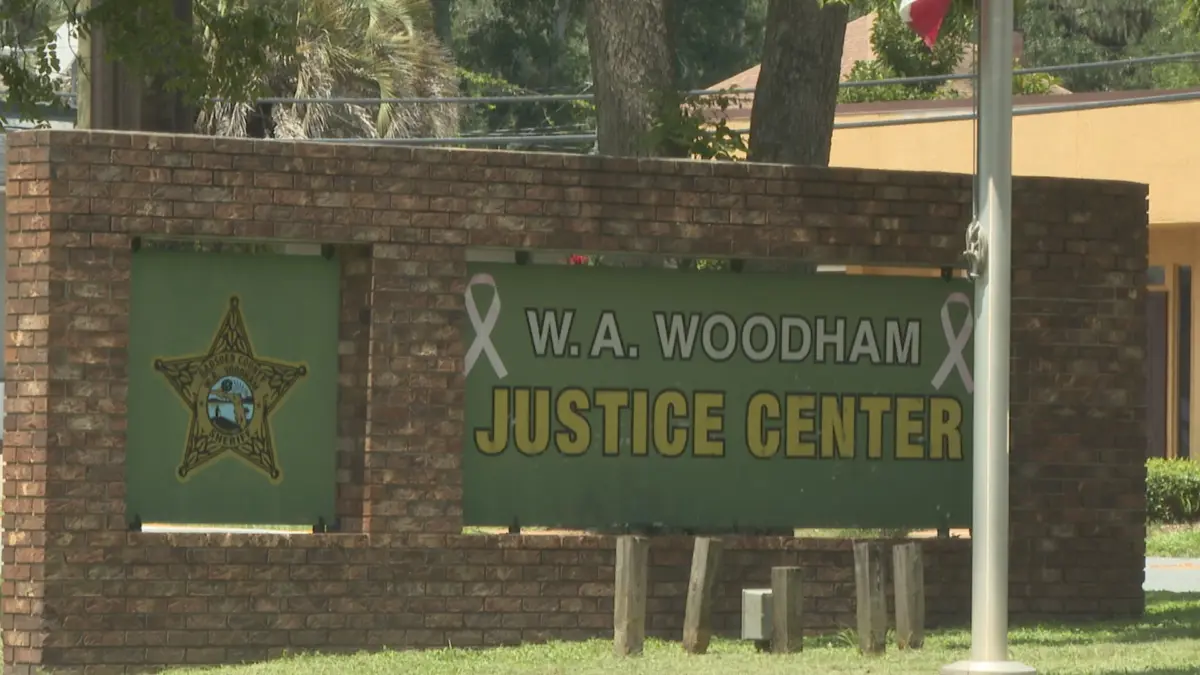

QUINCY, Fla. — In a dramatic fiscal showdown that has laid bare simmering tensions between local government bodies, the Gadsden County Board of Commissioners unanimously approved $78,000 in emergency funding for the Gadsden County Sheriff’s Office (GCSO) late Tuesday evening. The eleventh-hour rescue package was hastily deployed after agency leadership revealed that operating funds had been completely depleted, leaving the department unable to cover its final payroll cycle at the close of the fiscal period.
The emergency authorization averted an immediate crisis that could have halted salary disbursements for local deputies and administrative personnel. However, it also dragged a deeper, more systemic administrative dispute into the public eye. The sudden shortfall has left residents, taxpayers, and local officials grappling with troubling questions regarding institutional accountability, budgetary transparency, and financial oversight within the county.
While the Board of Commissioners maintains that it has generously augmented law enforcement funding—pointing to millions in recent budget amendments and targeted allocations—representatives for the Sheriff’s Office argue that promised funds have been improperly withheld. According to GCSO officials, the agency is short by more than $300,000 of the total sum authorized by the commission, creating a crippling operational deficit.
The public clash underscores a broader, recurring friction point in local governance across Florida: the delicate, often adversarial financial dynamic between elected constitutional officers—such as sheriffs—and the county boards of commissioners responsible for approving and distributing their operating budgets. As community members demand answers regarding how a critical deficit could go unnoticed until the precipice of a payroll collapse, local leaders are under mounting pressure to establish a transparent, permanent accounting framework to ensure public safety operations are never again brought to the brink of insolvency.
Detailed Chronology of the Crisis
The Tuesday Night Hearing
The gravity of the crisis dictated the tone of Tuesday’s regular meeting of the Gadsden County Board of Commissioners in Quincy. Opening the evening’s session with a hastily arranged public hearing, commissioners addressed the emergency surrounding the Sheriff’s Office’s budget shortfall. The atmosphere in the chambers was tense, characterized by palpable anxiety from local residents who had caught wind of the payroll crisis earlier in the day.
With zero operating capital left in the GCSO’s primary accounts, the County Administrator proposed an immediate, unconventional fix: temporarily diverting $78,000 from the county’s School Resource Officer (SRO) fund. This pool of money, typically earmarked to maintain campus security details in local schools, was deemed the only liquid reserve available to bridge the immediate gap and ensure that deputies received their earned wages.
Faced with the immediate prospect of law enforcement personnel working without pay—a scenario carrying severe legal, operational, and morale implications—the commission voted unanimously to approve the transfer. Yet, while the measure successfully averted an immediate catastrophe, it did little to quell the underlying confusion and anger permeating the packed commission chambers.
Public Reaction and Scrutiny
For local residents, the revelation that a vital county agency was moments away from missing payroll sent shockwaves through the community. The timing of the disclosure—surfacing precisely at the threshold of a new fiscal year—served as a primary point of contention for citizens demanding accountability.
Derrick Elias, a prominent community member who addressed the board during the public comment period, voiced the collective frustration of many constituents.
"How did the Sheriff’s Office get to this point where the payroll could not be met? And you don’t find out until the beginning of the new fiscal year?" Elias asked the board, capturing the bewilderment of taxpayers who expect rigorous, proactive financial management from elected and appointed officials alike.
Residents expressed deep concern that systemic communication breakdowns between the county administration and the Sheriff’s Office could jeopardize public safety services. The reliance on emergency stopgaps—such as raiding SRO funds—further stoked fears that long-term strategic planning was being sidelined in favor of reactive damage control.
Supporting Context & Metrics: The Financial Tug-of-War
At the heart of the Gadsden County funding crisis lies a fundamental discrepancy in accounting interpretations, communication breakdowns, and competing claims over ledger entries. Both sides present starkly different narratives regarding the flow of capital, creating a complex web of financial figures that has baffled observers.
The Sheriff’s Office Perspective
Speaking on behalf of the Gadsden County Sheriff’s Office, Captain Anthony Boyland offered the agency’s perspective on the origins of the shortfall. According to Boyland, the root of the crisis is not reckless spending by the department, but rather a failure by the county commission to fully disburse the funds it formally promised.
Boyland stated that the commission voted to allocate a specific, agreed-upon operational amount to the Sheriff’s Office, yet the actual cash transfers delivered to the agency’s accounts fall more than $300,000 short of that figure.
"We’re just asking not to give a particular amount; just give what you gave your word on, and we’ll be able to meet budget and meet payroll," Boyland told the commission, casting the dispute as a matter of unfulfilled financial commitments rather than budgetary mismanagement.
The County Administration’s Counter-Narrative
Conversely, county administrators and financial officers strongly push back against the assertion that funds are being withheld. They argue that the commission has not only met its obligations but has actively gone above and beyond to support law enforcement amid rising operational costs.
According to Chief Budget and Procurement Officer Rose Raynak, the county implemented substantial financial enhancements for law enforcement during recent budget cycles. Notably, the board approved an additional $1.1 million addition to the Sheriff’s Office baseline budget during the 2025–2026 budget hearings. Furthermore, the county injected $210,000 into the previous year’s budget specifically to fund three new nighttime officer positions designed to bolster nocturnal patrols across the county.
Raynak pointed to a critical accounting distinction as the source of the confusion: a sum of approximately $322,000 included in the broader law enforcement budget allocations is not structured as a direct cash transfer to the GCSO. Instead, these funds are retained by the county to cover mandatory overhead expenditures—such as municipal utilities and institutional insurance policies—associated with running the department’s facilities.
County officials suggest that the Sheriff’s Office operated under the erroneous assumption that 100% of the newly authorized funds would be directly wired into departmental operating accounts as discretionary spending money, rather than being parsed out to pay centralized fixed costs.
Official Statements and Leadership Perspectives
The standoff has triggered strong reactions from county leadership, reflecting the high stakes of managing public trust and taxpayer dollars in a rural North Florida county.
Commission Leadership Responds
Board Chairman Eric Henson expressed acute frustration with the recurring nature of the fiscal crises, emphasizing that the commission has repeatedly stepped in to bail out the law enforcement agency without receiving a corresponding stabilization in its fiscal discipline.
"Commissioner Eric Henson, the chairman of the board, did respond accordingly. We did a budget amendment last year. We gave them between 1.2 and 1.5 million dollars, and now we got a shortfall again," Henson remarked during the proceedings, highlighting a pattern of financial friction that has strained relations between the two administrative bodies over successive budget cycles.
Henson’s comments underscore the board’s sentiment that the legislative body has exercised fiscal responsibility by expanding appropriations, only to be confronted with unexpected emergency demands at the eleventh hour. The implication from the commission dais is clear: unlimited financial influxes cannot substitute for internal budgetary controls and transparent forecasting within the Sheriff’s Office.
Broader Commission Actions and Future Outlook
While the Sheriff’s Office budget crisis dominated the emotional landscape of Tuesday night’s meeting, the Gadsden County Board of Commissioners also advanced several other significant municipal agenda items before adjourning.
Public Safety Infrastructure Investments
In a unanimous vote that signaled broad support for regional emergency preparedness, the commission approved critical funding for the final phases of construction on the new Emergency Operations Center (EOC) and Public Safety Complex. This state-of-the-art facility is designed to enhance the county’s disaster response capabilities—a vital priority for a region frequently vulnerable to severe weather events in the Florida Big Bend. The advancement of the EOC project demonstrates the board’s continued commitment to long-term capital infrastructure investments, even as day-to-day operational accounts face turbulence.
Deferred Decisions on Community Programs
Additionally, the commission addressed community-focused initiatives, voting unanimously to table all discussions and formal decisions regarding the Boys and Girls Club funding requests. This matter has been deferred to a joint special meeting scheduled with the City of Quincy, signaling an intent to foster inter-governmental collaboration before committing municipal resources to youth development programs.
Looking Ahead
As Gadsden County steps into the new fiscal year, the immediate payroll crisis has been averted, but the structural wounds remain exposed. The emergency diversion of $78,000 from the School Resource Officer fund serves as a temporary tourniquet, not a cure.
To prevent future financial precipices, local stakeholders agree that a comprehensive, transparent audit of the accounting mechanics between the county administration and the Sheriff’s Office is urgently required. Taxpayers and community leaders are expected to demand rigorous oversight in the coming months, ensuring that the lines of communication between Quincy’s civic leaders and law enforcement remain open, accountable, and fiscally sound.

0 Comments