
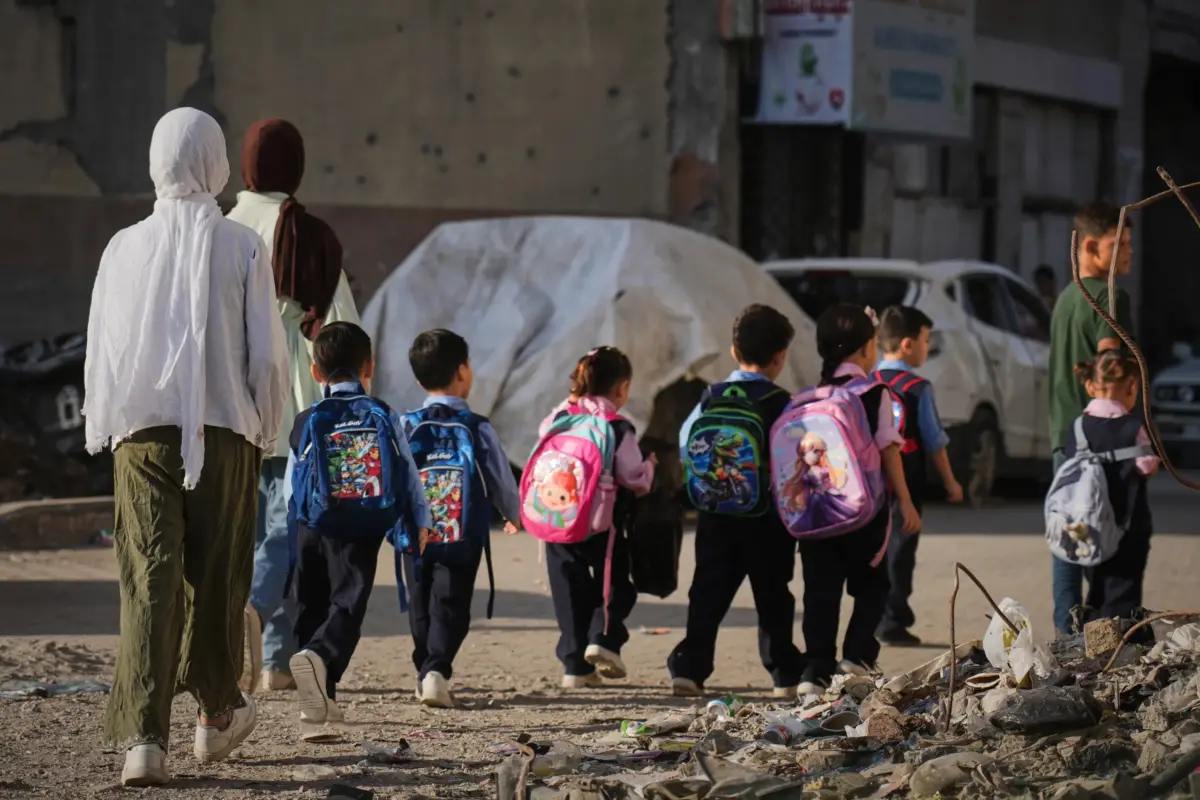

In the war-scarred landscape of Gaza, where the infrastructure of education has been profoundly decimated by years of relentless conflict, a well-intentioned American charity’s initiative has sparked a fierce geopolitical, ethical, and technological controversy. The Gaza Children Village—a U.S.-based nonprofit operating "Academies of Hope" schools in central and southern Gaza—has revealed plans to deploy artificial intelligence-powered surveillance systems inside its classrooms. The stated objective of this system is to record daily classroom interactions, screen for speech deemed "hateful," "antisemitic," or "inciting," and ensure that instructors adhere strictly to a modified curriculum engineered for peace and de-radicalization.
However, the implementation of automated surveillance in a war zone has triggered widespread alarm among Palestinian rights advocates, local educators, and even members of the charity’s own board and partner organizations. Critics argue that utilizing AI speech-monitoring technology opens a dangerous "Pandora’s box," threatening academic freedom, student privacy, and psychological safety in a region where the population has endured intensive high-tech surveillance by the Israeli military.
As international humanitarian agencies grapple with how to restore educational access to hundreds of thousands of displaced and traumatized children in postwar Gaza, the Gaza Children Village initiative underscores the deep tensions between localized autonomy, foreign-funded reconstruction agendas, and the ethics of digital policing in the classroom.
Detailed Chronology and Operational Evolution
The genesis of the Gaza Children Village traces back to the humanitarian crises witnessed during the recent multi-year conflict. Dr. David Hasan, a Palestinian-American neurosurgeon born in Kuwait and currently a professor at Duke University Medical School, conceived the charity after volunteering in Gaza hospitals. Witnessing firsthand the immense trauma inflicted upon successive generations, Hasan sought to establish an educational alternative aimed at interrupting cycles of violence and fostering cross-cultural tolerance.
Phase 1: Establishment of the Academies of Hope
- Summer 2025 – Early 2026: The charity successfully raised capital primarily from individual donors in the United States, including American Jewish philanthropists, while forging partnerships with various North American, Israeli, and European medical and aid organizations.
- Mid-2025: The first "Academy of Hope" school opened its doors, designed to provide not only basic education but also crucial psychosocial support, medical care, and daily meals to children who had lost parents or family members in the war.
- Curriculum Modifications: Rather than utilizing a completely foreign framework, the schools adopted a modified version of the traditional Palestinian Authority (PA) curriculum. Hasan noted that content perceived as glorifying violence, anti-Israel sentiment, or antisemitism was systematically excised to align with principles of peaceful coexistence.
Phase 2: The Introduction of AI Monitoring
- August – September 2026: In internal communications, including text messages reviewed by independent journalists and a public webinar hosted with humanitarian stakeholders, Dr. Hasan outlined plans to implement classroom audio and video monitoring.
- The Mechanism: According to these disclosures, classroom conversations are slated to be recorded and processed through an AI-powered analytical system capable of detecting linguistic markers flagged as problematic. If the system flags potential infractions, automated alerts are sent directly to Hasan, who retains the authority to review the context, contact the instructor, and provide feedback. The charity maintained that these recordings would be stored temporarily for 72 hours and not shared externally.
- Technological Attribution: Initial text messages from Hasan indicated that the surveillance infrastructure was developed in collaboration with PollyLabs, a New York-based nonprofit specializing in crisis technology solutions. PollyLabs subsequently stated it had no active role in the development or deployment of the classroom monitoring system.
Supporting Context & Metrics: Education and Surveillance in Gaza
To fully understand the gravity of the Gaza Children Village controversy, one must examine the broader socioeconomic and geopolitical realities governing postwar Gaza.
The Educational Crisis
According to data compiled by UNICEF, hundreds of thousands of school-aged children in Gaza remain entirely out of the classroom. The overwhelming majority of educational facilities across the Strip were either structurally destroyed or heavily damaged during the three-year war, creating an unprecedented humanitarian crisis regarding youth development.
The Curriculum Debate
The core curriculum utilized across Palestinian territories has long been a subject of international scrutiny.
- The GAO Report: A 2026 U.S. Government Accountability Office (GAO) report examining "problematic textbook content" highlighted long-standing Israeli complaints. Examples included abstract math problems utilizing the "number of martyrs," historical texts referencing "Jerusalem as the capital of Palestine," and depictions of youth protests against individuals held in Israeli detention.
- Precedents of Modification: The United Nations Relief and Works Agency (UNRWA) has historically faced immense pressure from international donors to modify the PA curriculum to eliminate content running counter to neutrality and nonviolence. However, these efforts routinely encountered fierce resistance from local teachers and communities who viewed curriculum oversight as an infringement on national identity and educational sovereignty.
The Shadow of High-Tech Surveillance
The introduction of AI monitoring in Gaza classrooms cannot be divorced from the lived trauma of the local population. Throughout the protracted conflict, the Israeli military heavily utilized advanced artificial intelligence and automated interception systems to monitor communications, map population movements, and identify targets for kinetic strikes.
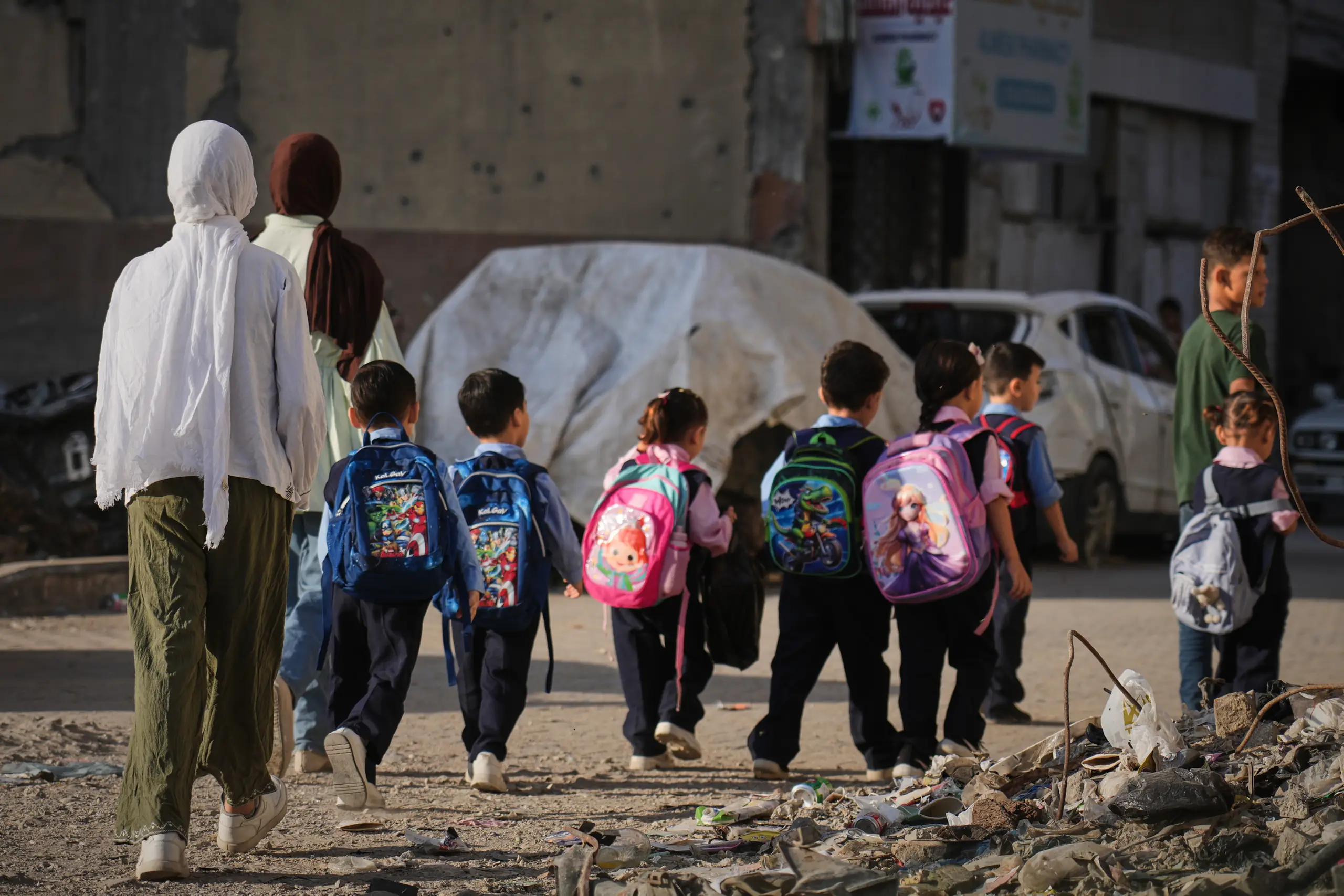
- Dystopian Realities: Analysts emphasize that decades of high-tech warfare have fostered a deep, pervasive anxiety surrounding digital tracking among Palestinians. The fear that everyday speech, digital footprints, or casual remarks could be weaponized creates an environment where freedom of expression is severely compromised.
Official Statements and Stakeholder Reactions
The proposal to monitor classrooms using automated artificial intelligence has fractured consensus within the humanitarian community, drawing sharp rebukes from human rights advocates, internal dissent from charity leadership, and cautious statements from governmental bodies.
Internal Discontent and Board Reservations
Even within the Gaza Children Village apparatus, the surveillance plan caught key stakeholders by surprise.
- Bishara Bahbah, Board Member: The prominent Palestinian-American political activist expressed significant reservations upon learning of the initiative. "Cameras to monitor the performance of students and teachers is acceptable. But cameras to silence students and teachers from being able to have a free exchange in a classroom are not acceptable," Bahbah stated, noting that the proposal had never been formally vetted or raised with the organization’s governing board. He emphasized that the immediate priority must remain enrolling out-of-school children rather than introducing punitive technologies.
- Anonymous Staff and Partner Feedback: A staff member at the charity revealed that local educators operate under intense fear—caught between the risk of questioning by local factions like Hamas regarding modified curricula and the discomfort of working for an organization tied to foreign and Israeli aid networks. Furthermore, an official representing a major humanitarian partner organization warned that the deployment of AI classroom monitoring could force them to sever ties, characterizing the move as opening a dangerous "Pandora’s box."
Palestinian Advocacy and Governance Responses
Civil society organizations and official authorities have universally condemned the integration of surveillance into educational environments.
- Ines Abdel Razek (Palestine Institute for Public Diplomacy): Strongly criticizing the initiative, Abdel Razek stated, "It is very concerning, they’re trying to control the minds of new generations." She argued that educational reconstruction should remain under the purview of recognized bodies like the Palestinian Authority and UNRWA rather than unaccountable private foreign entities.
- Mohammad AbuAlrob (Palestinian Government Spokesperson): While noting that the PA lacks comprehensive data regarding the charity’s specific operational framework, AbuAlrob asserted that utilizing surveillance tools inside classrooms crosses an unacceptable line, compromising the fundamental sanctity of the educational space.
Future Outlook: Governance, Autonomy, and Reconstruction
As the Gaza Children Village moves forward with its educational mission, the controversy surrounding its AI monitoring initiative highlights enduring questions regarding the future governance and reconstruction of the Gaza Strip.
- The Battle for Educational Sovereignty: The fundamental question of who ultimately controls what children learn in Gaza remains unresolved. As international donors, diaspora charities, and local authorities vie for influence over the postwar rebuilding process, curriculum design has emerged as a major ideological battleground.
- The Limits of Technocratic Solutions: While proponents argue that artificial intelligence and rigorous oversight are necessary tools for eradicating incitement and fostering peace in fractured societies, critics maintain that forced ideological compliance achieved through surveillance undermines the very values of trust, critical thinking, and mutual respect that education seeks to instill.
- The Risk of Alienation: For any educational intervention to succeed long-term in Gaza, it must secure the genuine buy-in of local educators, parents, and community leaders. If foreign-backed charities rely on intrusive surveillance technologies that evoke memories of wartime monitoring, they risk alienating the very populations they aim to uplift, turning classrooms into spaces of anxiety rather than liberation.

0 Comments