
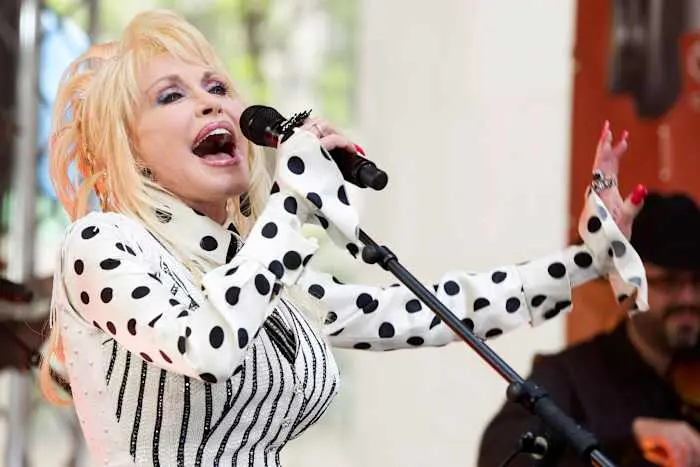

The passing of Dolly Parton at the age of 80 marks the end of an era for global music, culture, and philanthropy. Across a career spanning over six decades, Parton transcended the boundaries of country music to become a universally beloved icon. Yet, as cultural historians, feminist scholars, and legions of devoted admirers reflect on her monumental legacy, a complex discussion has resurfaced regarding how the superstar navigated the politics of gender and identity.
Throughout her life, Parton famously eschewed political labels, deliberately declining to identify as a feminist. She inhabited a musical and cultural landscape that often demanded stark binaries, choosing instead to remain universally accessible. Yet, beneath the rhinestones, towering wigs, and disarming self-deprecating humor lay a fiercely independent businesswoman who lived entirely on her own terms. By subverting patriarchal expectations, weaponizing her own aesthetic, and championing economic and social justice through her songwriting, Parton quietly lived out the core tenets of feminism.
This retrospective examines Parton’s complex relationship with feminism, exploring how her life choices, business acumen, and radical lyrics cemented her status as an accidental architect of women’s liberation—embraced by the movement itself, most notably by feminist pioneer Gloria Steinem, long before mainstream culture fully understood the depth of her impact.
Detailed Chronology: Milestones of a Quiet Revolutionary
To understand how Dolly Parton became an inadvertent icon of women’s liberation, it is essential to trace the key milestones of her career where art, commerce, and gender politics intersected.
- January 1987: Parton is featured prominently on the cover of Ms. magazine, co-founded by Gloria Steinem, alongside 11 other "Women of the Year." The group includes U.S. senators, novelists, and human rights advocates. Steinem highlights Parton’s unique ability to utilize her business acumen and flamboyant style to uplift women and deconstruct patriarchal symbols.
- The 1977 Barbara Walters Interview: At just 31 years old, Parton sits down for a famously intrusive interview with Barbara Walters. Confronted with invasive questions about her body, marital fidelity, and public perception, Parton responds with grace, unshakeable confidence, and profound self-awareness. Her declaration that she is "sure of myself as a person and I am sure of my talent" serves as a masterclass in autonomous self-presentation.
- 1975 — "The Bargain Store": Parton releases a critically misunderstood single that country radio largely shuns, fearing its lyrics about "used merchandise" pertain to prostitution. In reality, the song addresses emotional healing after trauma and asserts a woman’s intrinsic worth outside the confines of traditional relationships.
- 1980 — 9 to 5: Parton stars alongside Jane Fonda and Lily Tomlin in the cinematic blockbuster 9 to 5, also penning its iconic title track. The anthem becomes a global rallying cry for working-class women, directly addressing economic exploitation, workplace inequality, and collective female solidarity.
- 2019 — Newport Folk Festival: In her early 70s, Parton takes the stage at the Newport Folk Festival, delivering a cheeky, empowering rendition of "Just Because I’m a Woman." She contextualizes the song for a modern audience, unapologetically dismantling double standards regarding female purity and societal expectations.
Supporting Context & Metrics: Deconstructing the "Magic Cloak"
Parton’s genius lay in her mastery of presentation. Cultural critics often point to her exaggerated physical appearance—her towering blonde wigs, heavy makeup, and hourglass silhouette—as a masterstroke of psychological misdirection.
According to Evelyn McDonnell, editor of the music anthology Women Who Rock and professor at Loyola Marymount University, Parton’s aesthetic functioned as a "magic cloak."
"She took the objectification of being a pop star and embraced it," McDonnell notes. "It was like her magic cloak—she could be saying feminist things and doing feminist things and modeling a life and a voice that was outspoken, progressive, political. But you saw the package and you’re like, ‘Oh, okay.’ It made it safe."
This sentiment is echoed by music writer Caryn Rose, who highlights Parton’s calculated navigation of the music industry: "She knew she was blonde and pretty, and that it was always going to work against her. So she figured out how to make it work FOR her. There’s not anything more feminist than that!"
The Subversive Songbook
While commercial country radio historically preferred palatable, non-confrontational themes for female artists, Parton continually pushed the envelope, tackling issues that were entirely taboo at the time:
- Economic Empowerment & Equal Pay: Through anthems like "9 to 5," Parton shone a harsh light on systemic wage gaps and toxic corporate hierarchies, proving that commercial pop could carry profound socio-political weight.
- Reproductive Justice & Unwed Motherhood: In her 1970 track "Down from Dover," Parton tackled the harrowing realities faced by a pregnant teen abandoned by her partner. As Parton noted in a 2023 interview with Vulture, "I wrote that back during a time when people didn’t talk about unwed mothers. They wouldn’t play that on the radio."
- Challenging Sexual Double Standards: In "Just Because I’m a Woman," Parton directly confronted the hypocritical moral expectations placed on women regarding sexual history prior to marriage, demanding parity and mutual accountability.
Official Statements and Scholarly Perspectives
The discourse surrounding Parton’s legacy draws heavily from feminist theorists, literary figures, and the cultural icons who witnessed her rise firsthand.
Gloria Steinem, writing in the landmark 1987 Ms. magazine issue, captured the essence of Parton’s contribution to the movement:
"People who haven’t listened to Dolly Parton or to feminism may be surprised to learn that they go together. She has used her business sense to bring other women and poor people along with her. And her flamboyant style has turned all the devalued symbols of women to her own ends. If feminism means each of us finding our unique power, and helping other women to do the same, Dolly Parton certainly has done both."
Author Lynn Melnick, who chronicled her own recovery from trauma through the lens of Parton’s catalog in I’ve Had to Think Up a Way to Survive: On Trauma, Persistence, and Dolly Parton, emphasizes that Parton’s refusal to wear a political label never negated the radical nature of her actions.
"She didn’t tell us she was a feminist," Melnick observes. "She showed us—in her actions and her words and in her songs. And I think that’s why people loved her so much… One thing about Dolly is that no matter what side of the political spectrum you’re on, you think she’s with you. Everyone claims her."
Melnick further argues that Parton serves as an early archetype of "third-wave feminism"—a paradigm that emerged prominently in the 1990s, championing individual choice, bodily autonomy, and the reclamation of femininity. For Parton, wearing towering heels and glittering garments was never about subjugation to the male gaze; it was an act of deliberate, joyful self-expression.
Future Outlook: The Enduring Blueprint of Dolly’s Legacy
As cultural institutions, music historians, and fans worldwide mourn the loss of Dolly Parton, her legacy extends far beyond her chart-topping catalog or her prolific philanthropic efforts, such as the Dollywood Foundation’s Imagination Library.
Parton leaves behind a vital blueprint for modern womanhood. She demonstrated that empathy and boundary-setting are not mutually exclusive, and that true autonomy does not require public posturing or ideological conformity. By weaponizing self-deprecation, maintaining absolute ownership over her publishing and likeness, and speaking truth to power through accessible storytelling, Parton achieved what few artists ever manage: she changed the cultural fabric of society while keeping everyone smiling.
In an era increasingly defined by polarization, Parton’s universal embrace reminds us that solidarity often transcends vocabulary. Whether she explicitly claimed the title of feminist or not, her life’s work remains one of the most powerful testimonials to female independence the world has ever seen. As her millions of admirers continue to unpack her profound impact, one central truth remains undisputed—Dolly Parton lived life entirely on her own terms, leaving a blueprint for liberation that will inspire generations to come.

0 Comments