

In the heart of Nashville’s historic Music Row, a quiet yet profound resonance has taken hold. Following the passing of country music titan Dolly Parton, the East Nashville neighborhood—and indeed the broader cultural landscape of the American South—has found itself immersed in a continuous wave of remembrance. From front porches to four-way stops, Parton’s timeless catalogue echoes through the streets, reminding residents of the enduring power of her artistry and humanitarian legacy.
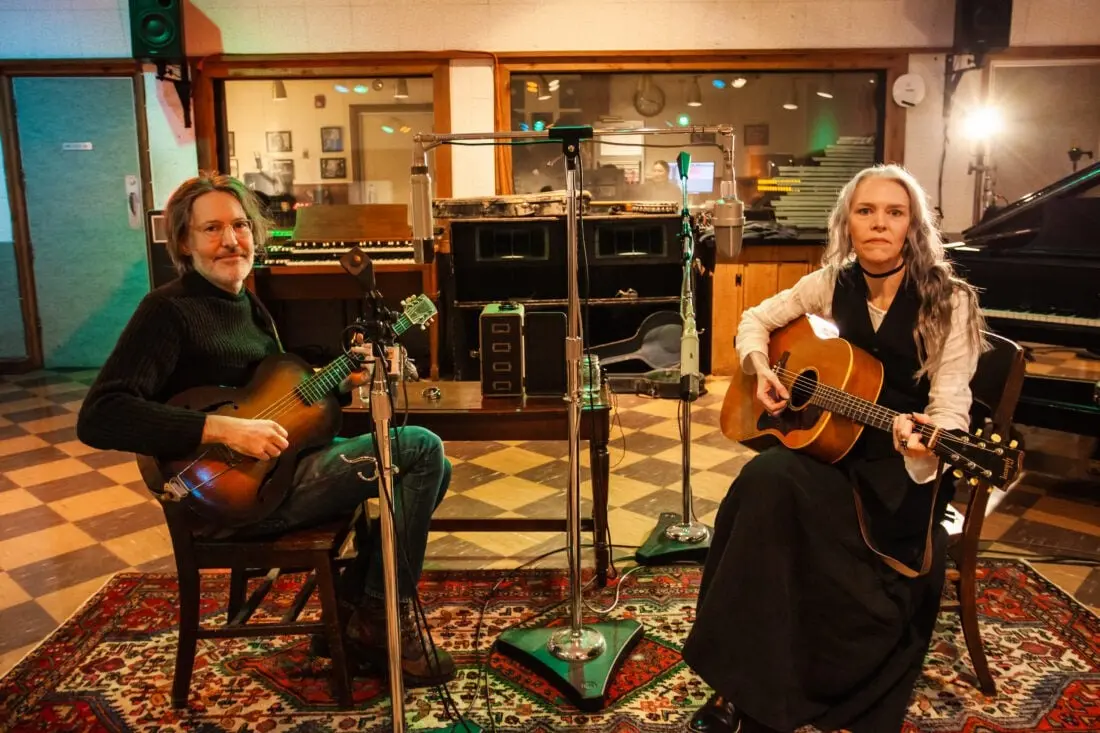
Against this backdrop of national mourning and celebration, the Country Music Hall of Fame and Museum has launched an ambitious new performance initiative: the Studio B Side Sessions. To inaugurate this milestone video series, acclaimed Americana duo Gillian Welch and Dave Rawlings stepped back into the legendary RCA Studio B. There, they recorded a stripped-down, deeply poignant rendition of Parton’s 1971 classic, "Coat of Many Colors."
This feature explores the convergence of these historic moments. It examines Welch and Rawlings’ return to the hallowed room where they cut their Grammy-nominated 2001 masterpiece, Time (the Revelator), highlights Welch’s intimate childhood recollections of Parton, and explores the launch of a performance series poised to redefine how contemporary artists interact with Nashville’s architectural and sonic roots.
Detailed Chronology: From RCA Studio B’s Origins to Modern Reverberation
To understand the weight of Welch and Rawlings’ recent session, one must examine the lineage of RCA Studio B. Opened in 1957 by guitar innovator Chet Atkins and music executive Steve Sholes, the studio rapidly established itself as the birthplace of the "Nashville Sound"—a sophisticated pop-country hybrid that rescued Music Row from commercial stagnation. Over the ensuing decades, the studio played host to an unmatched roster of legends, including Elvis Presley, the Everly Brothers, Willie Nelson, and Dolly Parton. It was within these walls that Parton recorded "Coat of Many Colors," a deeply autobiographical track that cemented her status as a master songwriter capable of translating working-class hardship into universal beauty.
Decades later, in 2001, Gillian Welch and Dave Rawlings chose this same acoustic environment to record Time (the Revelator). Working under intense pressure—including the logistical challenge of breaking down their recording rig every few days to accommodate international tourist groups—the duo captured a sparse, haunting record that would go on to define modern Americana music.
Fast-forward to September 2026. Following the death of Dolly Parton, the Country Music Hall of Fame and Museum—which now owns and operates Studio B—unveiled the Studio B Side Sessions. The initiative invites contemporary roots artists to record live performances inside the historic room, bridging the gap between past legends and present-day innovators. Welch and Rawlings’ performance of "Coat of Many Colors" serves as the crown jewel of this launch, followed closely by upcoming sessions from artists like Ashley McBryde and Devon Gilfillian.
Supporting Context & Metrics: The Making of a Masterpiece and an Icon
The intersection of Gillian Welch’s career and Dolly Parton’s legacy is rooted in both professional admiration and deeply personal encounters. During an exclusive interview with Garden & Gun, Welch reflected on what it meant to experience Parton’s kindness firsthand as a child, and how those formative moments influenced her own trajectory as an artist.

A Childhood Encounter with an Icon
Reflecting on the day after her tenth birthday in 1977, Welch recounted a moment of unexpected grace. Living in Los Angeles where her parents wrote music for television, Welch had planned a grand slumber party complete with a piñata and an ice cream parlor trip. Instead, a severe stomach flu brought the festivities to a crashing halt.
The following day, Dolly Parton—who was collaborating with Welch’s parents on television music—arrived at the house for a rehearsal.
"I was laid out on the pull-out sofa with a bucket next to me, still sick, and she came into the room and was just so nice," Welch recalled. "It felt like an angelic visitation… She totally understood that a ruined ten-year-old’s slumber party was catastrophic. She understood the heartbreak."
This foundational display of empathy left a permanent mark on Welch, who later experienced Parton’s professional grace when the two competed for the same bluegrass award alongside Alison Krauss. Upon winning, Welch and Krauss received a handwritten, congratulatory note from Parton—an act of sportsmanship and solidarity rare in the upper echelons of the music industry.
The Sonic Architecture of RCA Studio B
Discussing the acoustic realities of RCA Studio B, Welch and Rawlings offered a rare glimpse into the psychological and technical hurdles of recording within its walls. Unlike cavernous modern facilities designed to inflate a performer’s ego, Studio B demands vulnerability.
"That room is a joy, but also a little disconcerting," Welch noted. "You don’t sound big and epic; you sound a bit small—but good. You have to get your courage up to record in there because it’s not one of those big, glamorous rooms where you feel like you have the voice of God. There’s something a little fragile about it."
This fragility mirrors the thematic core of Time (the Revelator), which celebrates its twenty-fifth anniversary in 2026. Conceived during a turbulent era for the music industry—marked by industry-wide downsizing and financial uncertainty—the album’s minimalist production and stark lyrical themes found their ideal incubator in Studio B’s intimate recording spaces.

Official Statements and Artistic Perspectives
The launch of the Studio B Side Sessions represents a major institutional commitment by the Country Music Hall of Fame and Museum to keep historical spaces active rather than turning them into static museums. By inviting artists like Welch, Rawlings, McBryde, and Gilfillian to track live performances, the museum reinforces the continuity of the Nashville songwriting tradition.
In discussing Dolly Parton’s enduring cultural footprint, Welch emphasized the importance of looking past the public persona to examine the intentionality behind Parton’s life’s work:
"All the ‘cornball’ stuff is true—she was a shining example of what you can do: rise above, respond with humor and humanity, put your money into good works. You really can be a light in the world, and that’s what I’ve been thinking about this week."
Furthermore, Rawlings highlighted the immediate communicative power of Parton’s songwriting, noting how "Coat of Many Colors" forces listeners to re-evaluate their perception of wealth, dignity, and aesthetic value. Welch expanded on this sentiment, drawing a direct parallel between Parton’s artistic mission and her own creative output:
"I see beauty in sadness and shadow. I’ve never seen those things as bad—they’re just another side of the coin, a beautiful and necessary part of our lives. That’s one of the reasons I connect with that song. I feel her bewilderment at people who just won’t open their eyes."
Future Outlook: The Evolution of Music Row Preservation
As the Studio B Side Sessions roll out their initial lineup, industry observers and fans alike are watching closely to see how the Country Music Hall of Fame and Museum balances historic preservation with contemporary artistic expression. In an era where many traditional recording studios on Music Row have fallen victim to commercial development and real estate pressures, active performance initiatives like this one serve a vital defensive function. They remind the public—and industry stakeholders—that these rooms are not merely tourist attractions, but working laboratories of American culture.
For Gillian Welch and Dave Rawlings, the twenty-fifth anniversary of Time (the Revelator) and their return to RCA Studio B mark a full-circle moment in a career defined by uncompromising artistic independence. As Nashville continues to process the loss of Dolly Parton, the collective mourning has catalyzed a broader cultural rediscovery of authenticity, kindness, and lyrical truth. Through stripped-down sessions and timeless songwriting, the spirit of Music Row remains unbreakable, carrying the foundational ethos of its pioneers into a new generation.

0 Comments