
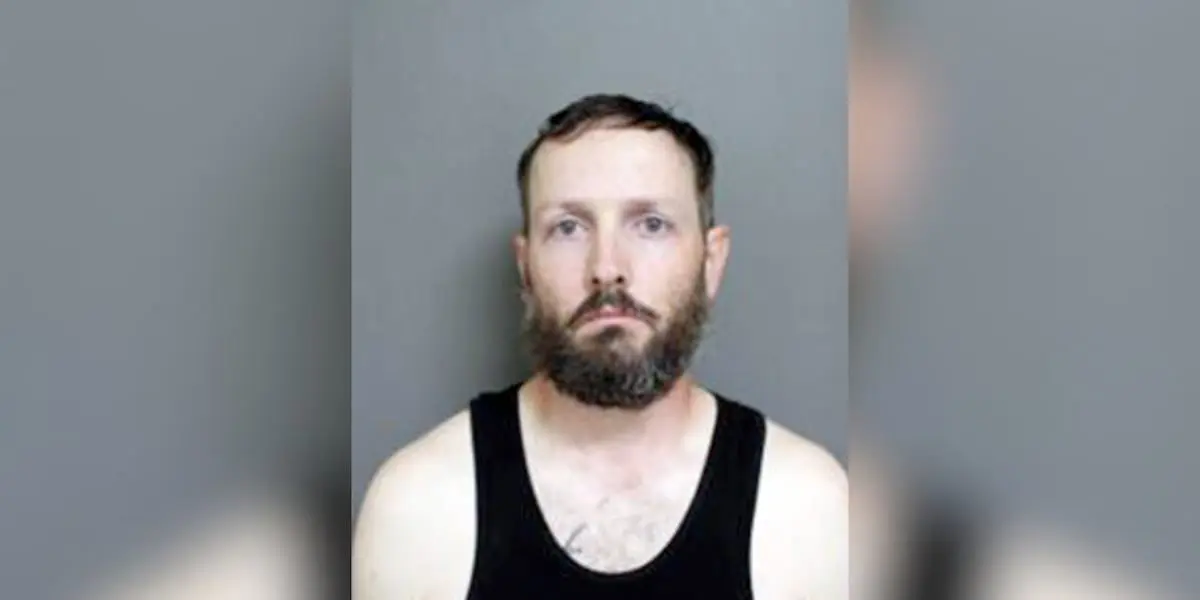

IRVINE, Calif. — In an unsettling breach of consumer trust and personal privacy, an internet service technician performing routine residential installations has been arrested following allegations that he weaponized his professional access to exploit a client. The suspect, identified as 37-year-old Logan Edward Gray-McCannon, was taken into custody at his residence by authorities with the Irvine Police Department. Investigators allege that Gray-McCannon used the pretext of troubleshooting a home network to secretly pilfer intimate media from a customer’s personal device, forwarding the explicit content directly to his own phone under the guise of conducting a routine Wi-Fi diagnostic test.
The case, which has sent shockwaves through the community and ignited urgent conversations regarding the vulnerabilities of inviting service personnel into private residences, underscores a terrifying intersection of modern smart-home integration and digital privacy invasions. According to police reports, Gray-McCannon was employed as a contractor handling deployments for GFiber when the incident occurred in early August. What should have been a standard infrastructure upgrade transformed into a calculated digital intrusion, exposing systemic concerns regarding background-checking protocols, contractor oversight, and the physical proximity technicians maintain to our most sensitive personal devices.
Following a thorough investigation spearheaded by Irvine detectives, law enforcement officials have expressed grave concern that Gray-McCannon’s alleged actions were not an isolated aberration, but rather part of a broader, predatory pattern. Investigators are actively appealing to the public, urging other recent customers of the suspect to review their digital footprints and come forward if they suspect they may have been similarly targeted. Gray-McCannon has since been booked into the Orange County Jail, facing a barrage of serious felony charges, including commercial burglary, the non-consensual dissemination of private sexual images, and unauthorized computer access. As the legal proceedings unfold, the incident serves as a glaring wake-up call for utility providers, smart-home consumers, and regulatory bodies alike, highlighting the urgent need for enhanced security measures when granting third-party vendors access to private homes.
Detailed Chronology of the Incident
To fully understand the gravity of the allegations against Logan Edward Gray-McCannon, investigators have pieced together a precise timeline of the events that transpired in early August within an Irvine apartment complex, culminating in the suspect’s arrest weeks later.
The Initial Service Call
The incident began as a routine utility appointment. The victim, a female resident of Irvine, had scheduled a service visit to install GFiber internet in her apartment. Logan Edward Gray-McCannon arrived at the residence acting in his capacity as an internet installation technician. For the first portion of the appointment, the installation proceeded according to standard operating procedures, with the technician working on wiring, router placement, and initial system configurations.
The "Wi-Fi Test" Ruse
As the installation neared its final stages, Gray-McCannon reportedly informed the customer that he needed to perform a diagnostic check to verify the signal strength and network connectivity. Under the plausible-sounding pretext of needing to "test the Wi-Fi" signal using a mobile device, he requested to use the customer’s personal smartphone.
Trusting the credentialed technician representing a major internet service provider, the resident handed over her unlocked device. Gray-McCannon then stepped away or positioned himself in a manner that shielded the screen from the homeowner’s view. Approximately 10 to 15 minutes elapsed while the technician remained in possession of the phone. When the homeowner checked on his progress, she noticed she could not clearly observe what he was doing with her device, though she initially dismissed any suspicions, assuming he was running network diagnostics or pinging servers.
The Digital Discovery
The true nature of the interaction did not come to light until later, when the victim discovered a profound digital breach. While reviewing her communications, she realized that a deeply personal, sexually explicit video—which she had previously recorded and shared exclusively with her romantic partner—had been surreptitiously accessed.
Utilizing the ecosystem of her linked Apple devices, the victim discovered the digital trail. The confidential video had been transmitted via iMessage from her personal iPhone to an outside telephone number. Crucially, while the perpetrator had attempted to cover his tracks by deleting the outgoing transmission thread directly from the primary smartphone, the message history had automatically synced to her linked iPad.
Upon inspecting the recipient details of the rogue iMessage, the victim was horrified to discover that the explicit video had been sent directly to Logan Edward Gray-McCannon’s personal cell phone number.
Reporting and Arrest
Recognizing the malicious violation of her privacy, the victim immediately preserved the digital evidence and formally reported the crime to the Irvine Police Department on September 9. Detectives launched an immediate inquiry, corroborating the digital footprint left behind in the iMessage sync logs and matching the recipient’s phone number to employment records provided by GFiber.
Armed with sufficient probable cause, Irvine police investigators secured an arrest warrant. On Friday, September 15, authorities moved in and took Gray-McCannon into custody at his home without incident. He was subsequently transported to the Orange County Jail, where he was booked on multiple felony counts.
Supporting Context & Metrics: The Vulnerability of the Connected Home
The arrest of Logan Edward Gray-McCannon brings to the forefront a deeply unsettling reality of modern living: our homes, devices, and personal lives are increasingly accessible to strangers whose backgrounds, vetting, and ethical boundaries remain largely opaque to the consumer.
The Rise of Smart-Home Intrusions
In an era where high-speed fiber internet, smart appliances, home security systems, and automated lighting are standard amenities, residential service calls have multiplied exponentially. Homeowners routinely welcome cable technicians, smart-home installers, utility workers, and repair personnel into their private sanctuaries. These workers are frequently granted access to Wi-Fi networks, smart hubs, and—by extension—the personal computers, tablets, and smartphones connected to those ecosystems.
Security analysts point out that while physical locks on doors protect homes from traditional burglars, digital vulnerabilities in the modern household often go unguarded. When a technician asks to "test the Wi-Fi" using a client’s device, the average consumer lacks the technical oversight to monitor background actions, such as file transfers, cloud access, or messaging applications being opened in a matter of seconds.
The Threat Landscape of In-Home Contractors
Incidents involving service personnel abusing their physical access to customer homes—though representing a fraction of total service calls—have devastating psychological and privacy impacts on victims. According to digital privacy advocates, smartphones act as external hard drives containing the entirety of an individual’s private life, including banking information, private correspondence, intimate photographs, and personal journals.
When a technician breaches this boundary, it shatters the fundamental sense of safety associated with the home. Cybersecurity experts emphasize that corporate background checks, while standard practice for major utility providers, cannot always predict opportunistic criminal behavior or aberrant psychological impulses. Consequently, consumer advocacy groups recommend several defensive protocols for homeowners inviting service personnel indoors:
- Never Hand Over Unlocked Devices: If a technician needs to verify network speed or connectivity, they should ideally use their own diagnostic tools, company-issued laptops, or test equipment. If a personal device must be utilized, the owner should monitor the screen continuously.
- Utilize Guest Networks: Homeowners should configure a separate "Guest Wi-Fi" network for visitors and contractors, limiting their access to the primary household router configuration pages and preventing lateral movement across connected personal devices.
- Enable Biometric Locks and App Shields: Implementing strict security settings—such as requiring FaceID or passcodes to open photo galleries, messaging apps, and cloud storage—adds a critical layer of defense against unauthorized snooping.
- Verify Credentials: Always inspect company identification badges, cross-reference scheduled appointments with customer service hotlines, and verify that contracted personnel are wearing official company uniforms and driving marked corporate vehicles.
Official Statements and Law Enforcement Perspective
The Irvine Police Department has handled the investigation with utmost seriousness, highlighting not only the severity of Gray-McCannon’s alleged actions but also the potential that other individuals may have fallen prey to a similar modus operandi.
Irvine Police Department Investigation Update
In official press releases and statements to the media, Irvine police detectives have emphasized that the meticulous digital trail left by the suspect was instrumental in securing a swift arrest. The synchronization capabilities of modern consumer operating systems—which inadvertently saved the victim when the message synced to her iPad despite being deleted from her phone—served as the linchpin for the criminal complaint.
However, law enforcement officials have expressed deep apprehension that this specific incident may not be an isolated occurrence. Because Gray-McCannon worked as an active installer for GFiber, his job duties required him to enter numerous residential properties throughout the region on a regular basis. Detectives are operating under the hypothesis that a technician willing to exploit a customer’s trust in this manner may have engaged in similar predatory behavior during previous service calls.
"Based on the evidence recovered thus far, our investigators have valid concerns that there may be additional victims who have not yet come forward or who may be unaware that their privacy was compromised," an Irvine Police Department spokesperson noted during a media briefing. "We urge anyone who utilized these installation services and experienced suspicious circumstances to contact local authorities immediately."
Corporate Response and Accountability
The employing utility and internet infrastructure provider, GFiber, has faced mounting scrutiny regarding contractor vetting, oversight, and operational safety protocols in the wake of the arrest. While corporate entities typically distance themselves from rogue contractors by emphasizing strict codes of conduct and comprehensive background screening procedures, consumer rights advocates argue that corporations must bear a degree of structural responsibility for the safety of the individuals they send into private homes.
Industry watchdogs are calling for tighter regulatory oversight of third-party contractor networks, demanding that service providers implement real-time tracking of technician interactions, mandatory customer feedback loops regarding device handling, and stricter technological safeguards that prevent technicians from handling customer electronics without direct supervision.
Future Outlook: Legal Proceedings and Industry Implications
As the case against Logan Edward Gray-McCannon transitions from the investigative phase to the judicial arena, the legal repercussions for the suspect are severe, while the broader implications for the smart-home service industry are far-reaching.
Criminal Charges and Potential Sentencing
Gray-McCannon was booked into the Orange County Jail facing a triad of felony charges that reflect the multi-faceted nature of his alleged digital transgression:
- Commercial Burglary: Under California law, entering a residential or commercial structure with the intent to commit grand or petit larceny or any felony constitutes burglary. Prosecutors are expected to argue that Gray-McCannon’s entry into the apartment under false pretenses with the underlying intent to illicitly acquire personal data satisfies the legal threshold for commercial/residential burglary charges.
- Sharing a Private Sexual Image Without Consent ("Revenge Porn" Laws): California has stringent legislation penalizing the intentional distribution or transmission of sexually explicit material of an individual without their explicit consent, particularly when distributed to third parties or personal devices with the intent to cause emotional distress or gratify illicit desires.
- Unauthorized Computer Access: This charge addresses the deliberate circumvention of digital security barriers, accessing personal data storage systems, and transmitting files without authorization from the device owner.
If convicted on all counts, Gray-McCannon faces significant prison time, steep financial penalties, and mandatory registration as a sex offender, depending on the specific sentencing enhancements pursued by the Orange County District Attorney’s Office. An arraignment is scheduled to take place at the Central Justice Center in Santa Ana, where defense counsel will enter pleas and preliminary pre-trial motions will be heard.
Transforming the Service Industry
Beyond the courtroom, the fallout from the Irvine incident is expected to catalyze long-overdue reforms within the telecommunications and in-home service sector. Companies dispatching field technicians are re-evaluating their risk management strategies, balancing the necessity of third-party contract labor with the absolute imperative of consumer safety.
Experts predict several structural shifts in how home installations will be managed moving forward:
- Mandatory No-Device Policies: More service providers are expected to enforce strict internal policies prohibiting technicians from requesting, holding, or utilizing customer-owned smartphones, tablets, or computers under any circumstances during service appointments. Technicians will be required to rely entirely on company-issued diagnostic hardware.
- Enhanced Audit Trails: Implementing digital tracking systems that log every interaction a technician has with network hardware, alongside customer verification prompts, will likely become standard operating procedure to deter unauthorized device access.
- Public Awareness Campaigns: Law enforcement agencies and consumer protection bureaus are partnering to educate the public on digital hygiene during in-home service visits, empowering citizens to assert their privacy rights without fear of intimidation by service personnel.
Ultimately, the arrest of Logan Edward Gray-McCannon stands as a sobering reminder that as our physical and digital lives merge, the vulnerabilities we expose within our own four walls require unprecedented vigilance. For the victim in Irvine, the journey toward justice has only just begun, but her swift action in preserving digital evidence has ensured that the alleged perpetrator will face the full weight of the law—and potentially brought peace of mind to other victims who have yet to discover the truth.

0 Comments