
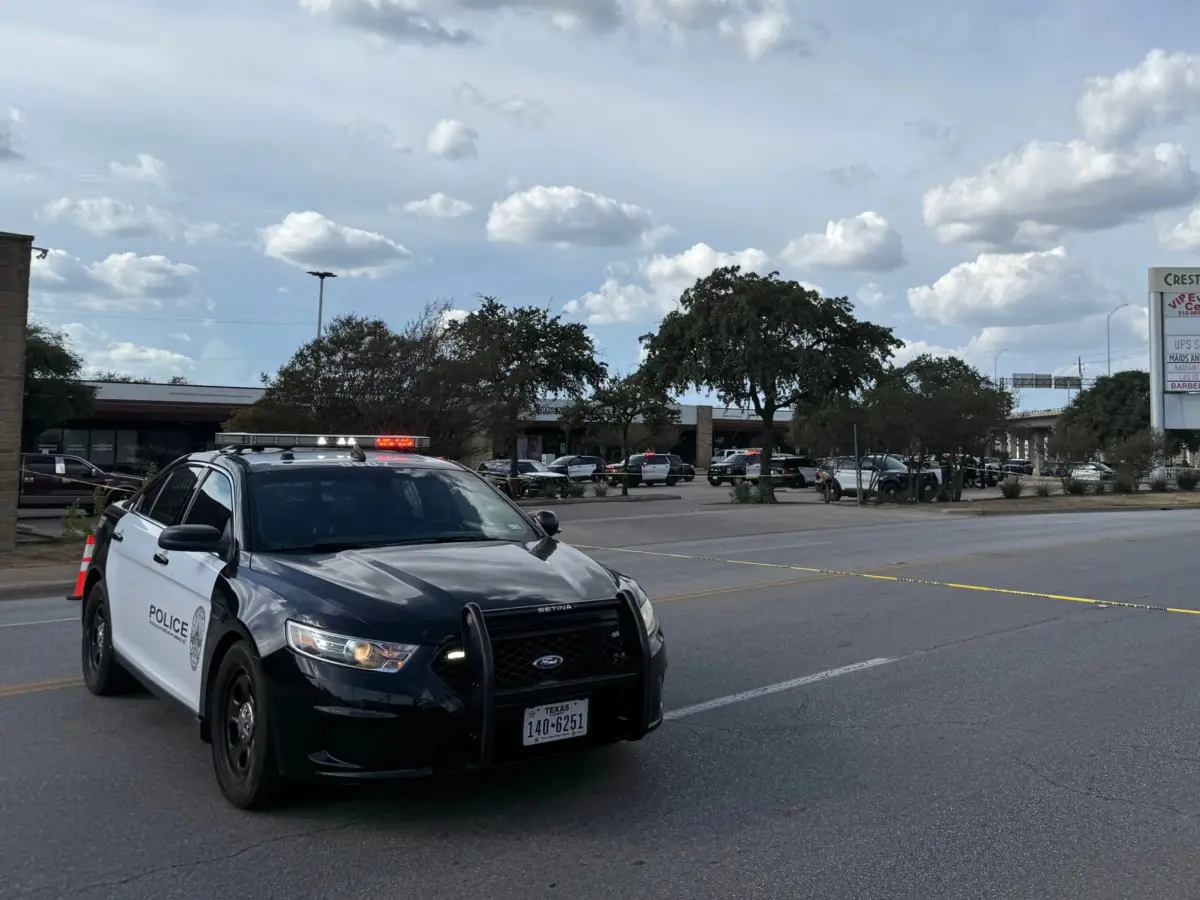

AUSTIN, Texas — A Sunday afternoon routine on the north side of Austin, Texas, devolved into a scene of chaotic confrontation, gunfire, and rapid civic mobilization on September 20, 2026. A U.S. Immigration and Customs Enforcement (ICE) officer shot and wounded an unidentified man in the torso following what local law enforcement described as a traffic stop. The incident immediately ignited intense local outrage, drawing a crowd of roughly one hundred anti-ICE demonstrators to the cordoned-off intersection, where police in riot shields squared off against angry protesters.
The shooting underscores escalating national tensions surrounding heightened federal immigration enforcement operations. As ICE aggressively ramps up its footprint across the United States—surging past 50,000 monthly arrests over the summer months—incidents involving the use of lethal force by federal agents have sparked acute friction between local municipal governments and federal authorities.
In Austin, city leaders moved swiftly to distance themselves from the federal operation, emphasizing that local police had no role in the traffic stop or the subsequent shooting. Austin Mayor Kirk Watson and Police Chief Lisa Davis held an urgent joint press conference to demand transparency and accountability, insisting that the Austin Police Department (APD) participate directly in the investigation to ensure an independent, third-party evaluation of the federal agent’s actions. Meanwhile, federal representatives from the Department of Homeland Security (DHS) remained conspicuously absent from the briefing, declining to immediately field media inquiries or provide an official accounting of the operation.
Detailed Chronology of Events
The sequence of events on Sunday, September 20, 2026, unfolded rapidly across a commercial and residential thoroughfare on Austin’s north side. According to initial briefings from the Austin Police Department, the incident began as a vehicle encounter involving an armed ICE officer executing field duties.
The Traffic Stop and Shooting
At approximately mid-afternoon, the federal agent initiated a traffic stop involving a dark blue Toyota Corolla. Details regarding the precise justification for the stop remain unreleased by federal authorities. During the encounter, an altercation or escalation occurred, culminating in the ICE officer discharging a firearm.
The driver of the Toyota Corolla—whose identity, age, and nationality have not yet been publicly confirmed by authorities—was struck once in the torso. Emergency medical services were dispatched to the scene, and the wounded man was transported to a local hospital. According to Police Chief Lisa Davis, the victim was listed in serious but stable condition as of Sunday evening.
Photographs and local media reports from the scene depicted the dark blue Toyota Corolla parked beneath a municipal overpass. The vehicle sustained visible damage to its passenger-side door alongside what appeared to be multiple bullet holes, signaling the close-quarters nature of the shooting.
The Immediate Aftermath and Public Outcry
Within hours of the shooting, news of the incident rippled across digital networks and community groups, drawing an immediate and volatile crowd to the intersection. By late afternoon, approximately one hundred anti-ICE protesters had converged on the police lines blocking off the street.
The atmosphere at the scene quickly grew tense. Local police officers, deployed to secure the perimeter and manage public safety, found themselves facing a hostile crowd. Some demonstrators directed verbal anger at officers outfitted with riot shields, while passing motorists slowed down to honk their horns in solidarity with the protesting crowd. Banners and placards featured sharp condemnations of federal immigration policies, with one demonstrator holding a sign reading "Nobody is safe" on one side and "ICE Nazi" on the reverse.
Amid the mounting local agitation, questions immediately arose regarding the whereabouts and operational status of the federal agent involved in the shooting. Noting a troubling historical pattern wherein federal agents involved in high-profile use-of-force incidents have departed the jurisdictions where they occurred, Mayor Kirk Watson voiced deep concern over potential jurisdiction evasion.
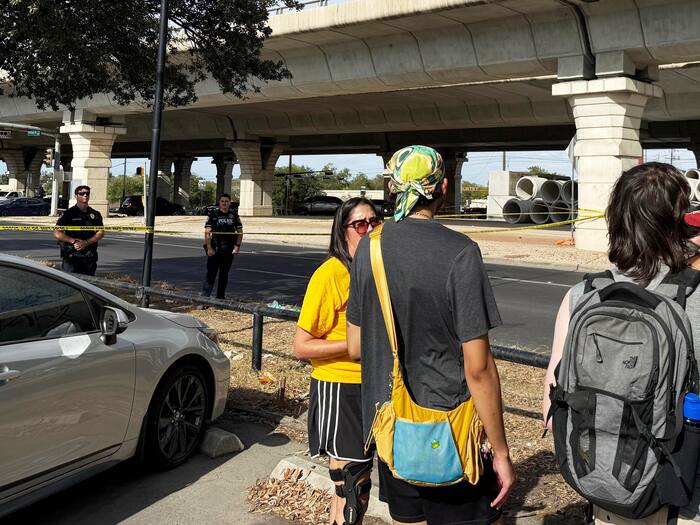
"We do not know that," Mayor Watson told reporters when asked if Austin authorities had secured the agent’s location. "But my hope would be that an agent that’s involved in an officer-involved shooting would not leave the city. Certainly not leave the state."
Official Statements and Political Fallout
The shooting has triggered a sharp fracture between municipal leadership in Austin and the federal apparatus operating within city limits, fueling a broader debate over accountability, transparency, and federalism.
Municipal Leadership Demands Oversight
At the joint press conference, Mayor Kirk Watson, a Democrat, took a hardline stance on the necessity of local oversight. Asserting that Austin residents possess an intrinsic "right to feel safe in their city," Watson stated unequivocally that ICE should not be permitted to investigate its own personnel in an incident involving critical injury to a civilian.
"We want the city’s police department to be involved in the investigation so it can provide clear, third-party eyes in the process," Watson declared. He emphasized that an independent, locally scrutinized inquiry is the only mechanism capable of restoring credibility and public trust in the wake of such a high-stakes event.
Police Chief Lisa Davis reinforced the mayor’s stance, noting that while information remained sparse due to the preliminary stage of the inquiry, the department’s specialized investigation unit had been immediately deployed to the scene to secure evidence and interview witnesses. Davis reiterated that APD personnel bore zero responsibility for, and played no part in, the botched federal operation.
Federal Silence and Congressional Condemnation
Significantly, the Department of Homeland Security—the cabinet-level agency exercising ultimate authority over ICE—refused to participate in the municipal press conference and failed to provide timely responses to persistent media requests for operational logs, body-camera footage status, or the legal predicate for the initial traffic stop.
Federal inaction drew fierce rebukes from Texas congressional representatives. U.S. Rep. Greg Casar, a Democrat representing portions of Austin, minced no words when addressing the media regarding the shooting.
"It is awful that this horror has come to our doorstep," Casar said. "For Austin to be safe, ICE should end its surge here."
Casar joined local activists in demanding sweeping transparency from federal agencies, arguing that the heavy-handed tactics characterizing the nationwide enforcement surge are incompatible with public safety in diverse urban communities.
Supporting Context & Metrics: A Summer of Escalating Lethal Encounters
The Austin shooting does not exist in a vacuum; rather, it represents the latest in a troubling string of high-consequence incidents tied to a historically aggressive federal immigration enforcement posture.
The National Enforcement Surge
Throughout the summer months of 2026, ICE and associated federal task forces have executed an unprecedented enforcement blitz across the United States. Driven by top-down directives to accelerate apprehensions and deportations, the agency reached grim operational milestones, logging more than 50,000 arrests per month in both July and August—the highest sustained volume in the agency’s history.
Critics, civil rights organizations, and community advocates have repeatedly warned that ramping up numerical arrest targets inevitably compromises operational safety, increases reliance on unbadged or high-risk tactics, and heightens the probability of fatal or injurious encounters involving civilians and bystanders.
A Pattern of Deadly Use-of-Force Incidents
Sunday’s shooting in Austin echoes several other high-profile, violent encounters involving ICE personnel over the past year:
- Houston, Texas (July 2026): In a strikingly similar Texas incident just two months prior, an ICE officer fatally shot 52-year-old Lorenzo Salgado Araujo of Houston. Federal agents operating unmarked vehicles pursued Araujo as he transported members of his construction crew to a morning job site, a chase that culminated in lethal gunfire.
- Maine (July 2026): A 25-year-old Colombian national named Johan Sebastián was shot and wounded by an ICE officer in Maine. Subsequent investigative reporting revealed that the involved officer—an Army veteran with a documented history of severe mental health struggles dating back to early childhood—had been cleared to carry a badge and patrol American streets, drawing intense scrutiny from lawmakers and relatives who questioned the agency’s psychological vetting protocols.
- Minnesota (Winter 2025–2026): The federal administration’s immigration enforcement strategies faced severe national condemnation following the high-profile killings of Alex Pretti and Renee Good in Minnesota, incidents that permanently altered the political landscape surrounding federal-local cooperation in sanctuary and non-sanctuary cities alike.
These cumulative events have transformed routine immigration checks into flashpoints for civil unrest, forcing municipal police departments nationwide to manage the fallout of federal operations over which they exert little to no operational control.
Future Outlook and Systemic Implications
As Austin investigators sift through forensic evidence, recover traffic camera footage, and attempt to interview the hospitalized victim, the long-term ramifications of Sunday’s shooting extend far beyond the borders of Travis County.
The Clash Over Local Sovereignty
The immediate demand by Mayor Watson and Chief Davis for a localized, third-party investigation sets up a potential constitutional and bureaucratic showdown between municipal authorities and the federal government. If DHS attempts to shield its officer from local interrogation, sequester investigative files, or unilaterally extract the agent from Texas, it will likely trigger formal legal challenges from city and state officials. Such a standoff would further erode the already fragile channels of communication between local police departments and federal immigration authorities.
Civil Unrest and Political Pressures
On the ground in Austin, civil rights groups and immigrant advocacy coalitions have signaled that Sunday’s demonstration was only the beginning. Activists are planning a series of rallies in the coming days to demand the immediate cessation of ICE surge operations within city limits, echoing Representative Casar’s legislative calls.
For the federal administration, the political cost of high-casualty enforcement operations continues to mount. As suburban and urban populations push back against militarized tactics on local streets, the pressure on Congress to institute rigorous independent oversight, mandatory body-camera protocols, and strict restrictions on vehicle pursuits by federal immigration agents will intensify.
Ultimately, the shooting in Austin serves as a volatile case study in the perils of aggressive, uncoordinated federal enforcement actions within municipal spaces. Whether the incident leads to substantive institutional reform or merely deepens the chasm between local communities and federal law enforcement remains one of the most pressing questions facing the nation’s domestic security apparatus.

0 Comments