College football culture faced a harsh reckoning on Saturday, September 26, 2026, under the bright lights of the Los Angeles Memorial Coliseum. During a high-stakes, nationally televised matchup between powerhouse programs, a moment of profound athletic brilliance disintegrated into a harrowing scene of physical danger and controversial sportsmanship.
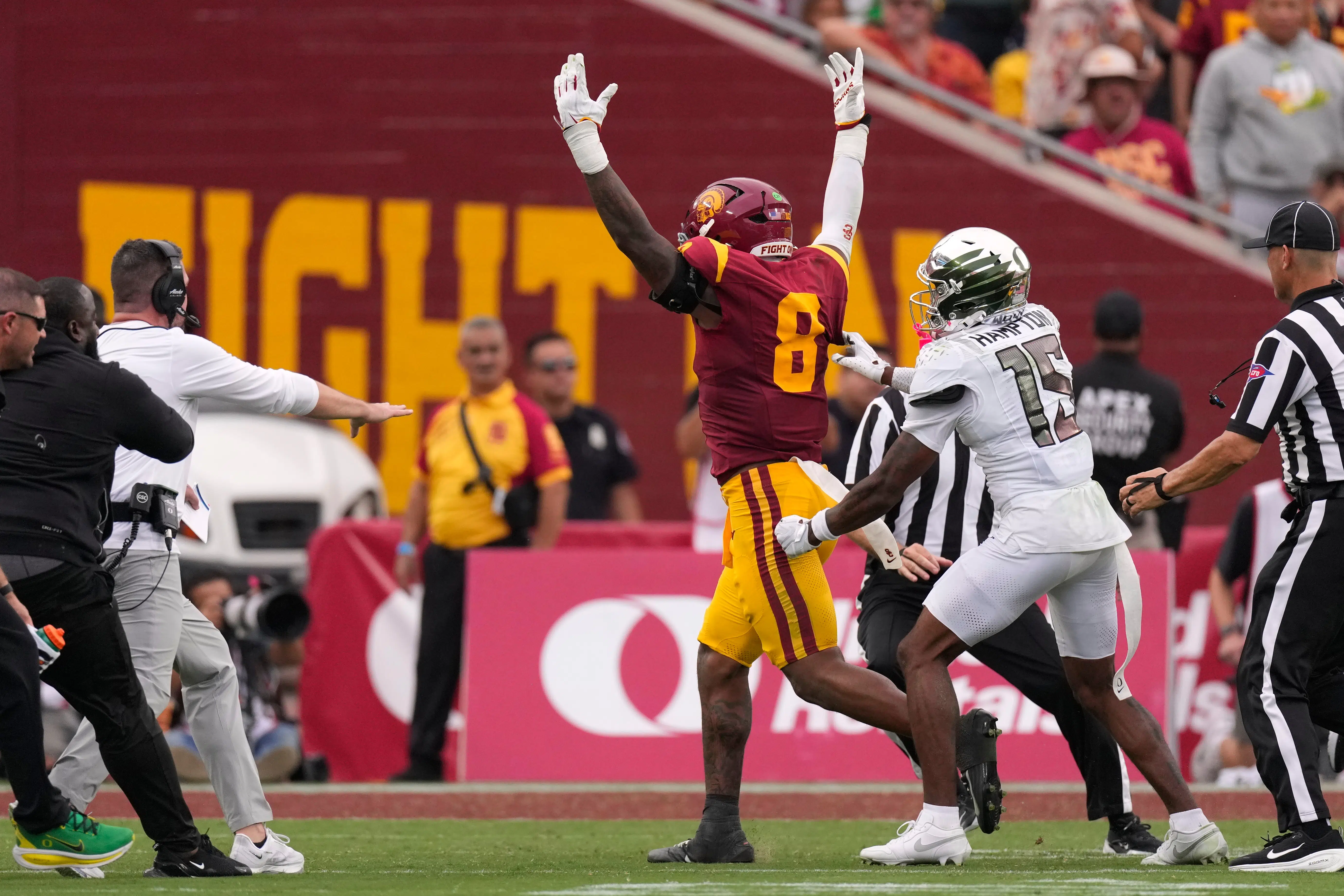
Late in the first half of Oregon’s 41–27 victory over Southern California, USC junior linebacker Desman Stephens II delivered a vicious, illegal hit on sliding Oregon quarterback Dante Moore. The blow—flagged immediately for targeting and late-hit infractions—sent Moore’s head violently into the turf, leaving the talented signal-caller motionless on the field. What compounded the outrage and sparked a national conversation about player safety and empathy in sports was Stephens’ immediate reaction: celebrating the blow, smiling on the bench after his ejection, and allegedly returning to the Trojans’ sideline in the second half.
The fallout was swift and severe. By Sunday afternoon, USC head coach Lincoln Riley announced a formal one-game suspension for Stephens, ruling the starting linebacker out for the Trojans’ upcoming clash against Washington. Stephens released a public apology taking full responsibility for his conduct, while Oregon head coach Dan Lanning did not mince words, labeling the play and subsequent celebration “disgusting.”
This incident has transcended the box score of a regular-season contest, amplifying ongoing debates regarding player safety, the policing of targeting rules, the emotional volatility of elite college athletes, and the institutional accountability of major collegiate athletic programs.
Detailed Chronology of Events
The Buildup and First-Half Tension
The atmosphere inside the historic Coliseum was electric from kickoff. As two titans of the college football landscape collided, the physical intensity of the game quickly escalated. Both teams understood the broader implications of the matchup for conference standings and the College Football Playoff picture.
Throughout the first two quarters, defenses swarmed, and offensive units traded blows. Oregon, utilizing a balanced and explosive playbook, had maneuvered deep into USC territory during the closing minutes of the first half. Quarterback Dante Moore, orchestrating the Ducks’ offense with poise, scrambled toward the red zone looking to pad his team’s lead before halftime.
The Play: Targeting and Impact
With the play breaking down and defenders converging, Moore initiated a textbook slide to protect himself and yield to the rules designed to safeguard ball carriers. However, USC linebacker Desman Stephens II abandoned proper tackling mechanics.
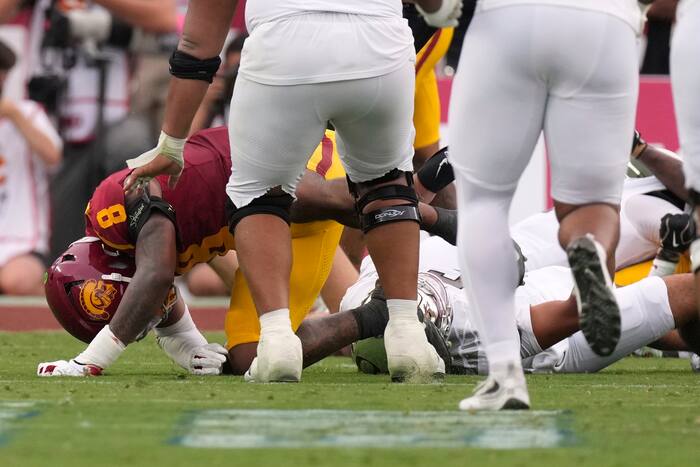
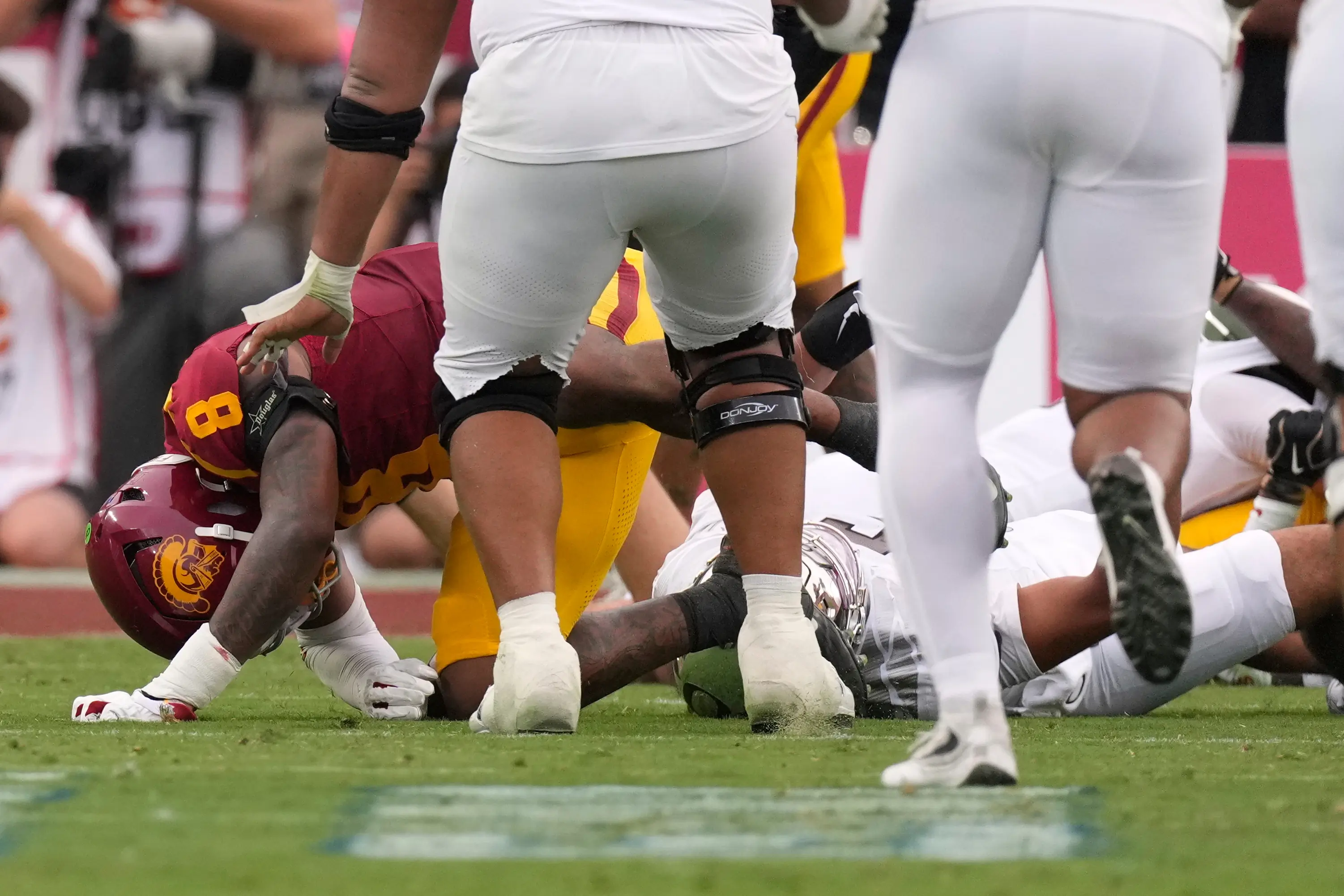
Driving forward at full speed, Stephens launched himself downward, delivering a vicious helmet-to-helmet and body-to-body blow as Moore was already sliding into the turf. The collision was sickeningly loud, the kinetic force instantly snapping Moore’s head backward into the unyielding grass of the Coliseum field.
The quarterback collapsed, dropping motionless onto the turf. Referees immediately whistled the play dead, throwing flags for targeting and unnecessary roughness.
The Aftermath and On-Field Melee
As medical staff rushed frantically from the sidelines to attend to the prone quarterback, the mood on the field shifted from competitive adrenaline to stark panic and fury. Oregon players, witnessing their leader lying incapacitated, confronted Stephens, who was visibly celebrating the hit. Teammates shoved and squared off with the USC linebacker amidst a rapidly escalating melee.
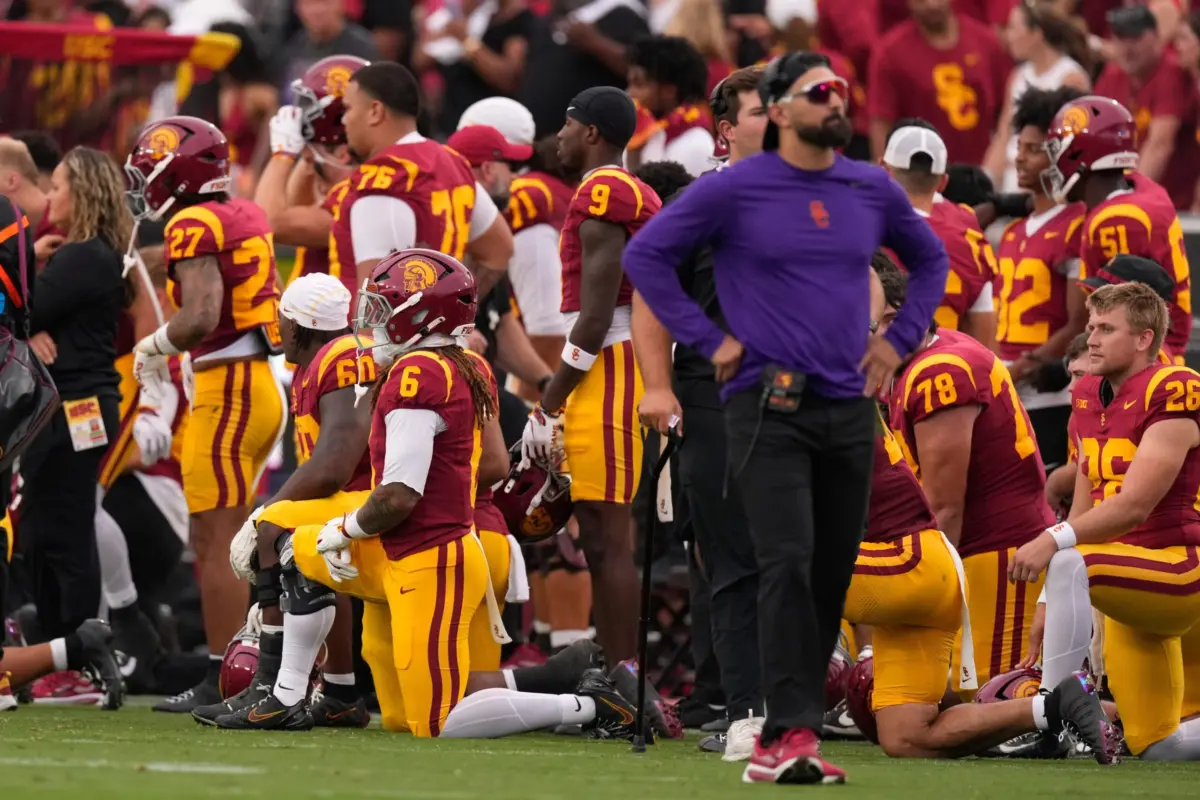
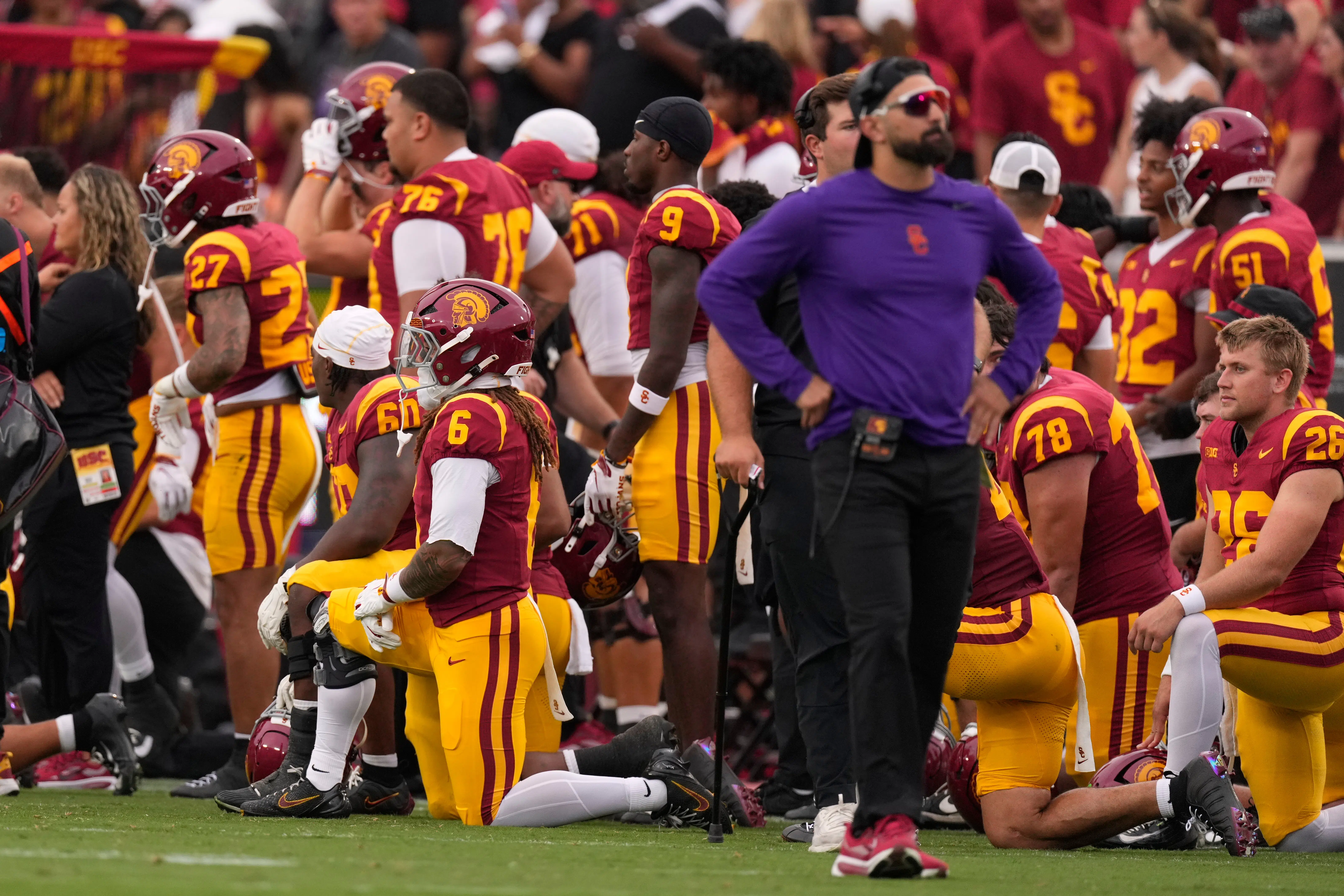
Oregon head coach Dan Lanning strode onto the field, his expression a mix of grave concern for his player and blistering anger toward the opposing sideline. Meanwhile, members of the Southern California team took a knee around their own area, though the optics of the situation remained heavily compromised by Stephens’ initial celebratory posture.
For several agonizing minutes, the stadium fell into an eerie silence. Medical personnel carefully stabilized Moore’s neck, secured him to a spine board, and loaded him onto a stretcher. He was wheeled off the field and directly into an awaiting ambulance, receiving an outpouring of support from fans of both programs as he was transported to a local hospital.
Ejection, Sideline Controversy, and Sunday Fallout
Stephens was rightfully ejected from the game following a video review that confirmed the targeting infraction. Yet, the controversy deepened when the junior linebacker was spotted returning to the USC sideline during the second half.
When questioned about this post-ejection presence after the game, Lincoln Riley defended the decision, noting simply that Stephens was allowed back because “he’s on our football team.” This defense drew swift criticism from analysts and fans alike, who argued that an ejection should completely remove a player from the competitive environment, particularly after committing a flagrant safety violation.
By Sunday morning, the pressure mounting on the USC athletic department led to decisive internal disciplinary action. Riley reversed tone, issuing a formal statement announcing Stephens’ one-game suspension.
Supporting Context & Metrics
The Medical and Human Element
While college football is built on collision, speed, and gladiatorial grit, the sport has increasingly faced scrutiny over traumatic brain injuries and spinal trauma. Dante Moore’s motionless state on the field and subsequent transport via ambulance served as a sobering reminder of the fragile line between competitive sport and severe medical catastrophe.
Neck braces, stretchers, and neurotrauma protocols are becoming routine fixtures of Saturday afternoons, yet incidents involving player safety violations continue to test the boundaries of acceptable play. The physical toll on Moore—and the emotional trauma inflicted upon his family watching from the stands and television screens—cannot be quantified by traditional statistics.
Team Dynamics and Game Outcome
On the field, the game continued after the prolonged delay, with Oregon rallying around their fallen teammate to secure a decisive 41–27 victory. The emotional catalyst of the injury galvanized the Ducks, who utilized the adversity to tighten their execution on both sides of the ball.
However, the victory was largely overshadowed by the overarching narrative of sportsmanship. For USC, the loss was compounded by the loss of one of their defensive anchors. Desman Stephens, a junior product of Clarkston, Michigan, has been a vital component of the Trojans’ defensive front seven. His absence against a formidable Washington offense next weekend will test the depth of the USC defensive roster.
Statistical and Disciplinary Precedent
Targeting rules were implemented by the NCAA to eliminate launching and forcible contact to the head and neck area of defenseless players. Despite years of emphasis, officials continue to struggle with consistency, and players continue to push the envelope of legal physics at game speed.
Stephens’ mandatory ejection automatically carried into the contest’s remainder, but the additional institutional suspension highlights a growing trend among elite programs to self-police behavior that violates the core tenets of sportsmanship.
Official Statements & Reactions
The incident prompted strong, immediate public reactions from key figures within both athletic programs, reflecting the gravity of the situation.
Desman Stephens II’s Apology
In a statement released through the USC athletic department on Sunday, Desman Stephens expressed deep remorse for his actions:
"I want to sincerely apologize for my actions during yesterday’s game. Seeing a player injured like that is incredibly serious, and my reaction in the moments afterward was completely inappropriate and inexcusable. Regardless of what was going through my mind at the time, there is no justification for smiling or celebrating while another player receives medical attention. I take full responsibility for my actions. That is not the person or teammate I want to be, and I will learn from this.
I am deeply sorry to Dante, his family and everyone who saw my reaction. It is not representative of USC or our program. I hope he makes a full and speedy recovery."
USC Head Coach Lincoln Riley
Lincoln Riley addressed both the hit and his player’s subsequent sideline return, announcing the disciplinary measures taken by the university:
"Desman’s actions in last night’s game are unacceptable and are not reflective of USC football nor of his personal character. He understands his mistake, accepts the consequences of his actions and will learn from this. The entire Trojan Family wishes Dante a full recovery, and we send our best regards to him and his family."
Regarding Stephens’ presence on the sideline after being ejected, Riley initially defended the action on Saturday night by stating: "He’s on our football team." However, the subsequent Sunday suspension signaled a shift toward recognizing the broader public relations and ethical issues raised by allowing a penalized player to remain in the team area after such a dangerous infraction.
Oregon Head Coach Dan Lanning
Oregon head coach Dan Lanning pulled no punches in his post-game evaluation of the hit, describing the sequence with blunt candor:
"Disgusting."
Lanning’s immediate on-field defense of his quarterback and subsequent post-game comments underscored the protective bond between coaches and players in an era where player welfare is constantly under the microscope.
Future Outlook & Broader Implications
The Road Ahead for Dante Moore and Oregon
As Dante Moore continues his medical evaluations and recovery process, the Oregon Ducks face the immediate challenge of maintaining their momentum in the national rankings without knowing their star quarterback’s immediate timeline for return. The psychological impact of witnessing a teammate sustain such a severe injury can linger within a locker room, requiring strong leadership from the coaching staff and team captains to refocus the squad on their championship aspirations.
USC’s Defensive Adjustments and Cultural Check
For Southern California, the loss of Desman Stephens for the upcoming matchup against No. 18 Washington forces defensive coordinator D’Anton Lynn to shuffle personnel and rely on rotational depth. More importantly, the program faces a reputational challenge. Lincoln Riley and athletic administration must navigate the fallout of how the incident was handled in real-time—particularly the optics of a celebrating player and his continued presence on the sideline.
The suspension serves as an institutional acknowledgment that accountability must extend beyond the referee’s whistle and the confines of the sixty minutes of game time.
The Macro View: Player Safety in Modern Football
Ultimately, the Stephens-Moore incident feeds into a much larger, ongoing dialogue within collegiate athletics. As athletes grow faster, stronger, and more explosive, the margin for error in defensive technique shrinks dramatically. Governing bodies, conferences, and coaching staffs will continue to face immense pressure to not only enforce stringent on-field rules against targeting but also to instill a baseline culture of empathy, respect, and mutual preservation among competitors.
Saturday night in Los Angeles will be remembered not just for the final score, but as a stark reminder that sportsmanship and human safety must forever remain paramount, transcending the fierce tribalism of college football rivalries.



0 Comments