
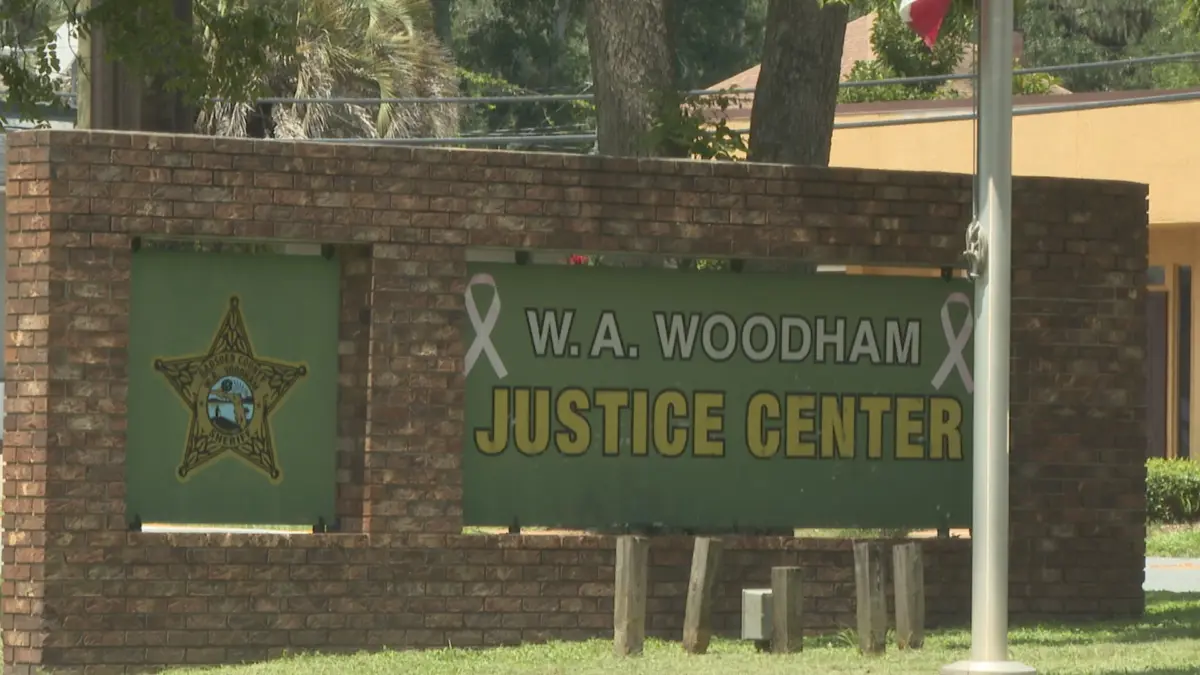

VALDOSTA, Ga. — An ordinary Tuesday night in a quiet Valdosta residential neighborhood abruptly descended into tragedy when a late-night encounter between a local resident and undercover law enforcement ended in a fatal officer-involved shooting. The incident, which unfolded shortly before 9:45 p.m. on a stretch of East Brookwood Drive, has left a local family grieving, a neighborhood shaken, and multiple state and local agencies scrambling to piece together the exact sequence of events that led to the death of 39-year-old Denesha Miller.
According to official joint press releases issued by the Lowndes County Sheriff’s Office (LCSO) and the Georgia Bureau of Investigation (GBI), Miller—a mother of five—was shot and killed by deputies after allegedly drawing a firearm and pointing it in close proximity to law enforcement officers. The shooting occurred during a spontaneous street-side interaction after Miller reportedly flagged down an unmarked law enforcement vehicle occupied by two Lowndes County deputies.
While the preliminary narratives provided by the state investigative agency and the local sheriff’s office paint a picture of a split-second, high-threat confrontation that forced deputies to use deadly force to protect their own lives, the human cost and the complex realities of the case have ignited profound questions within the community. Family members, neighbors, and civil rights observers are demanding deeper transparency, pushing for a thorough accounting of how a distress signal or an attempted civilian interaction could escalate so rapidly into lethal gunfire.
As is standard protocol in Georgia for use-of-force incidents involving local police agencies, the GBI has taken over as the lead investigative body, tasked with conducting an independent review to determine whether the deputies’ actions conformed to state and federal statutes governing the use of deadly force. In the wake of the tragedy, this comprehensive report examines the available details of the incident, the chronology of the investigation, official statements released by participating agencies, insights from mourning family members and stunned neighbors, and the broader implications of officer-involved shootings in contemporary American policing.
Detailed Chronology of Events
The events of Tuesday night unfolded rapidly across the 700 block of East Brookwood Drive, a residential corridor in Valdosta typically characterized by quiet evenings and low vehicular traffic at that hour.
The Approach and Identification
At approximately 9:45 p.m., two deputies with the Lowndes County Sheriff’s Office were on routine patrol in the area. According to subsequent disclosures from the GBI, the deputies were operating an unmarked LCSO SUV. Despite the lack of standard police agency markings or traditional light bars on the vehicle’s exterior, the deputies were reportedly wearing official clothing and tactical equipment that clearly identified them as law enforcement officers.
As the vehicle navigated the neighborhood, 39-year-old Denesha Miller was present along the roadway. Investigators established that Miller actively signaled to the occupants of the unmarked SUV, ostensibly attempting to get their attention. Recognizing the signal, the deputies brought their vehicle to a halt and prepared to engage with her, assuming the interaction would be routine—perhaps a request for assistance, directions, or the reporting of a local disturbance.
The Escalation
What transpired immediately after the SUV came to a stop remains the central focus of the ongoing GBI investigation. According to statements released by the Lowndes County Sheriff’s Office, the dynamic shifted instantaneously when Miller allegedly produced a firearm.
Investigators assert that during the course of the interaction, Miller pulled a handgun from concealment and brought it into plain view of the deputies. More critically, the LCSO stated that she proceeded to point the firearm "in close proximity at the deputies," creating what law enforcement authorities describe as an immediate, lethal threat to their physical safety.
Faced with the sudden display of a weapon pointed directly at them from a short distance, the deputies discharged their service weapons. The exact number of rounds fired, the precise distance between Miller and the vehicle, and whether verbal commands were issued before the shots were fired have not yet been publicly detailed by investigators.
The Aftermath and Medical Response
Following the gunfire, the scene shifted immediately into a medical emergency. According to official reports, the deputies involved in the shooting immediately rendered emergency medical aid to Miller while calling for emergency medical services (EMS).
First responders arrived shortly thereafter to take over life-saving measures. However, despite the combined efforts of the deputies and EMS personnel, Miller’s injuries proved fatal. She was pronounced dead at the scene.
In the immediate aftermath, a perimeter was established to secure the area for forensic processing. The GBI’s Valdosta regional field office was summoned to assume jurisdiction over the case—a procedural safeguard designed to ensure impartiality in investigations involving the use of deadly force by local law enforcement officers. Crime scene technicians spent hours collecting ballistic evidence, mapping the trajectory of the rounds, and recovering the firearm allegedly brandished by Miller. Crucially, the GBI confirmed that no deputies were physically injured during the exchange.
Supporting Context & Metrics
To fully understand the gravity of the Valdosta incident, it is vital to examine the broader context of officer-involved shootings (OIS) within the state of Georgia and across the United States. Fatal encounters between armed citizens and law enforcement officers represent some of the most complex, high-stakes events in modern policing, frequently intersecting with issues of mental health, crisis intervention, weapon proliferation, and police training.
The Role of the Georgia Bureau of Investigation
In Georgia, independent oversight of police-involved shootings is heavily reliant on the GBI. When a local law enforcement officer discharges a firearm resulting in injury or death, the local agency typically calls in the state bureau to conduct an independent, objective investigation. This structural separation is designed to mitigate conflicts of interest—real or perceived—that might arise if a police department were to investigate its own personnel.
Once the GBI completes its exhaustive investigation, which includes forensic ballistics analysis, autopsies, and interviews with all available witnesses, the case file is handed over to the local district attorney. The district attorney then determines whether the evidence warrants presenting the case to a grand jury for potential criminal indictments against the involved officers, or whether the use of force was legally justified under Georgia law.
National Statistics on Armed Confrontations
Data compiled by criminologists and tracking organizations, such as The Washington Post’s fatal force database and the Centers for Disease Control and Prevention (CDC), highlight the statistical realities surrounding fatal police encounters:
- Armed vs. Unarmed Subjects: The overwhelming majority of individuals shot and killed by law enforcement nationwide are reported to be armed with a firearm, cutting edge, or another lethal weapon at the moment of the encounter. Statistically, encounters where a suspect points a firearm directly at law enforcement carry an exceptionally high rate of lethal retaliation, as department policies uniformly dictate that officers are authorized to use deadly force to protect themselves or others from imminent death or serious bodily harm.
- Unmarked Vehicles and Citizen Confusion: Incidents involving unmarked law enforcement vehicles introduce unique variables. Citizens are frequently trained to be wary of unmarked cars pulling alongside them, which can occasionally lead to defensive postures, misunderstandings, or heightened anxiety. While the GBI noted that the deputies were wearing identifiable law enforcement gear, the psychological impact of interacting with an unmarked vehicle late at night remains a frequently debated topic in tactical training and civil litigation.
Impact on the Valdosta Community
Lowndes County, situated in South Georgia along the Florida border, is a tight-knit community where high-profile violent incidents involving law enforcement are relatively rare. The death of Denesha Miller has reverberated deeply through the local populace, prompting renewed conversations regarding community-police relations, de-escalation protocols, and the availability of crisis support resources in Valdosta.
Official Statements and Community Perspectives
As the investigation progresses, the narrative of what happened on East Brookwood Drive is being shaped by two distinct lenses: the formal accounts provided by state and local authorities, and the emotional, often conflicting perspectives shared by the victim’s grieving family members and local residents.
Official Statements from Law Enforcement
The initial public communications regarding the shooting were coordinated through formal press releases issued concurrently by the Lowndes County Sheriff’s Office and the Georgia Bureau of Investigation.
The LCSO emphasized the immediate danger faced by the deputies on the scene, noting that Miller’s decision to point a firearm "in close proximity at the deputies" left them with no tactical alternative other than to use deadly force to neutralize the threat. The agency expressed standard condolences while maintaining transparency by deferring the primary investigative authority to the state bureau.
The GBI reinforced these points in its subsequent statements, outlining the chronology of the unmarked SUV, Miller’s attempt to gain their attention, and the rapid descent into violence when the handgun was brandished. The GBI reiterated its commitment to a thorough, impartial review of the physical evidence and witness testimonies.
The Family’s Grief and Pursuit of Answers
Beyond the police blotter lies the human tragedy of a fractured family. Sister-station WALB reached out to Miller’s family shortly after the incident, revealing a devastating personal reality: Denesha Miller was a mother of five children who are now left to navigate life without their mother.
Family members have expressed shock and profound sorrow, describing a woman whose life extended far beyond the tragic final moments on East Brookwood Drive. While relatives have acknowledged the gravity of the allegations made by law enforcement, they have also raised critical questions about the nature of the interaction, urging the public and investigators not to rush to definitive judgments until all the facts—including potential body-worn camera footage, dashcam recordings, and independent witness accounts—are fully examined and made public.
Neighborhood Accounts
Residents living along East Brookwood Drive have also stepped forward to share fragments of what they heard and saw that Tuesday night. In interviews with local media, one neighbor suggested that Miller may have displayed the weapon to law enforcement not necessarily as an active assault, but rather as an erratic demonstration or to show that she was armed, just moments before shots rang out.
While civilian eyewitness accounts in high-stress, nighttime scenarios are notoriously variable and subject to perceptual distortion, neighborhood commentary underscores the complexity of the event. Such statements highlight the pressing need for the GBI’s investigation to reconcile differing perceptions of intent, distance, and movement during the fatal encounter.
Future Outlook & Next Steps
The investigation into the death of Denesha Miller is far from over, and the coming weeks and months will be critical in determining the legal, procedural, and social fallout of the incident. Several key milestones lie ahead:
1. Completion of the GBI Investigation
The Georgia Bureau of Investigation is continuing its meticulous review of the physical evidence. Forensic experts are analyzing ballistic trajectories, testing the firearm recovered at the scene, and evaluating toxicology reports from the medical examiner’s office. Furthermore, investigators are continuing to canvass East Brookwood Drive for any potential private security camera footage, doorbell video recordings, or audio captures that might corroborate or challenge the initial accounts.
2. Review by the District Attorney
Once the GBI compiles its comprehensive investigative file, it will be delivered to the local District Attorney’s Office for the Southern Judicial Circuit. The District Attorney will independently review the findings to assess whether the deputies’ use of deadly force complied with Georgia statutory law regarding self-defense and the lawful execution of police duties. The DA will then decide whether to close the file without charges or present the evidence to a grand jury.
3. Internal Administrative Review
Running parallel to the criminal investigation, the Lowndes County Sheriff’s Office will conduct its own internal administrative review. This process will evaluate whether the deputies adhered to departmental policies regarding tactical approaches, de-escalation techniques, and the use of force. Depending on the findings, the agency may implement additional training protocols or alter policies regarding interactions involving unmarked vehicles.
4. Community Dialogue and Accountability
Regardless of the ultimate legal findings, the shooting has left an indelible mark on Valdosta. Community leaders, civil rights advocates, and local residents are expected to continue pushing for greater transparency, including the potential release of any available video footage and increased funding for mental health crisis intervention teams that can respond alongside or instead of armed deputies in non-violent distress situations.
As the legal and investigative processes unfold, WCTV will continue to monitor developments closely, providing updates as new information becomes available from the Georgia Bureau of Investigation, the Lowndes County Sheriff’s Office, and legal representatives for the Miller family.

0 Comments