


LAS VEGAS — For the second consecutive postseason, the championship aspirations of the Indiana Fever have run into a brick wall named the Las Vegas Aces. Yet, the narrative surrounding Thursday night’s 94-83 series-clinching victory for the Aces at Michelob ULTRA Arena extends far beyond a standard playoff elimination. It serves as the dramatic punctuation mark on a season defined by unprecedented scrutiny, physical escalation, and the relentless evolution of Caitlin Clark as the undisputed lightning rod of modern women’s professional basketball.
Last October, a hobbled Clark sat helplessly on the bench, watching in frustration as her teammates bowed out to this very same powerhouse franchise. On Thursday, October 1, 2026, Clark was actively on the floor, battling through every possession, taking hard contact, and fighting until the final buzzer. But the destination remained unchanged. The third-seeded Aces—a seasoned dynasty that has captured three of the past four WNBA titles—triumphed in Game 3 to sweep the first-round series, putting a definitive halt to Indiana’s promising campaign.
For the Fever, the conclusion is bittersweet. After navigating a grueling 2026 schedule marred by external media storms, immense pressure, and a late-season stumble that cost them crucial home-court advantage, Indiana proved they could push basketball royalty to the brink. They fell short, however, due to a combination of offensive stagnation after a blistering start, fierce defensive adjustments by Las Vegas, and ongoing controversies surrounding officiating and the intense physical play directed at the league’s most famous face.
As the Fever pack their bags for the offseason, the overarching questions facing the franchise—and the WNBA at large—only grow louder. How does a young, hyper-scrutinized team take the next step toward a championship? And how will the league manage the unprecedented cultural and physical pressures that accompany the Caitlin Clark phenomenon?
Detailed Chronology: Game 3’s Tipping Points
The tone for Game 3 was established early, featuring a frantic, high-octane pace that favored Indiana’s explosive offensive capabilities. Caitlin Clark came out of the tunnel firing on all cylinders, signaling to the partisan Las Vegas crowd that the Fever had no intention of rolling over.
In the opening ten minutes, Clark was electric. She poured in 11 points, shooting an efficient 4-of-7 from the field, including a blistering 3-of-6 clip from beyond the arc. The supporting cast fed off her energy, propelling the Fever to a staggering 31-point first quarter. Indiana looked fluid, confident, and completely in sync, leaving the heavily favored Aces on their heels and silencing the home faithful.
However, championship DNA is forged through resilience, and Las Vegas head coach Becky Hammon quickly instituted defensive adjustments that fundamentally altered the trajectory of the game. Recognizing that Clark was the engine of the Fever’s offense, the Aces deployed a multi-layered defensive scheme that denied her clean catch-and-shoot opportunities, trapped her off pick-and-rolls, and forced the ball out of her hands.
The structural collapse of Indiana’s offense was swift. After putting up 31 points in the first quarter, the Fever failed to score more than 18 points in any of the remaining three frames. Clark herself bore the brunt of this defensive clampdown. Following her brilliant opening period, she managed just seven points the rest of the way, converting only 2-of-11 attempts and missing all six of her three-point tries in quarters two through four.
"They made it difficult, but we’ve made a lot of those shots throughout the year, too," Clark reflected after the game. "At the same time, we were right there despite some of the poor shooting."
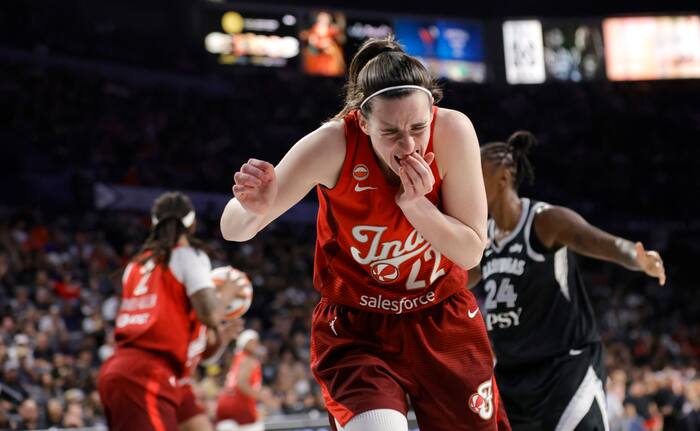
Despite the offensive drought, Indiana’s grit kept them within striking distance. Driven by sheer determination, the Fever mounted a furious comeback attempt in the final frame, twice cutting the deficit down to just two points. But every time Indiana threatened to seize momentum, Las Vegas executed down the stretch. Championship pedigree, veteran poise, and timely shot-making allowed the Aces to stabilize, pull away, and secure the 94-83 victory, sealing their passage to the next round and ending Indiana’s season.
Supporting Context & Metrics: The Anatomy of an Upset
To fully understand how the Fever arrived at this juncture, one must examine the micro-trends of their late-season collapse and the macro-dynamics of the 2026 WNBA landscape.
Indiana entered the final stretch of the regular season controlling their own destiny. A secure positioning seemed within reach, with a legitimate chance to lock up a top-four seed and home-court advantage in the opening round of the playoffs. Instead, the Fever stumbled down the stretch, compiling a shaky 4-4 record in their final eight games. That late-season slide dropped them down to the sixth seed, inevitably setting up a high-stakes, treacherous first-round collision with the third-seeded Aces.
Shooting Splits & Offensive Regression
The statistical breakdown of Game 3 tells the story of a tale of two halves:
- First Quarter: 31 Points | Clark: 11 PTS, 4-7 FG, 3-6 3PT
- Quarters 2–4: Combined max 18 points per quarter | Clark: 7 PTS, 2-11 FG, 0-6 3PT
This offensive cliff-diving highlights a primary developmental hurdle for the Fever: roster depth and offensive diversification. When opponents successfully scheme to neutralize Clark—or when her historically deep shooting touch goes cold—Indiana lacks a consistent secondary closer capable of shouldering the playmaking load against elite defensive units like Las Vegas.
The Las Vegas Dynasty Factor
Conversely, the Aces demonstrated why they remain the gold standard of the modern WNBA. Even amidst a transition year where superstar A’ja Wilson continued her historic dominance—hurtling toward what is expected to be a record-shattering fifth MVP award—Las Vegas maintained its composure when pressured. Their defensive rotations in Games 1 through 3 suffocated Indiana’s perimeter threats, proving that championship experience and defensive discipline remain the ultimate currency in playoff basketball.
Official Statements and Controversies: The Physicality Debate
No discussion of Caitlin Clark or the Indiana Fever in 2026 is complete without addressing the unprecedented level of scrutiny, physical play, and cultural commentary that surrounds them.
The microscope on Clark is unlike anything women’s basketball has ever witnessed. From her arrival in the league, her games have drawn record-shattering television ratings, sold-out arenas, and intense media dissection. Even a powerhouse franchise like Las Vegas operates under a vastly different media spotlight compared to the daily fishbowl that follows Indiana.
This dynamic has fueled intense debate across sports media regarding how Clark is officiated. While supporters argue that she is targeted with excessive physical contact and that opponents are routinely permitted to play her more roughly than other perimeter stars, league executives and analysts often frame the discourse as part of the broader physical maturation of a rapidly growing league.
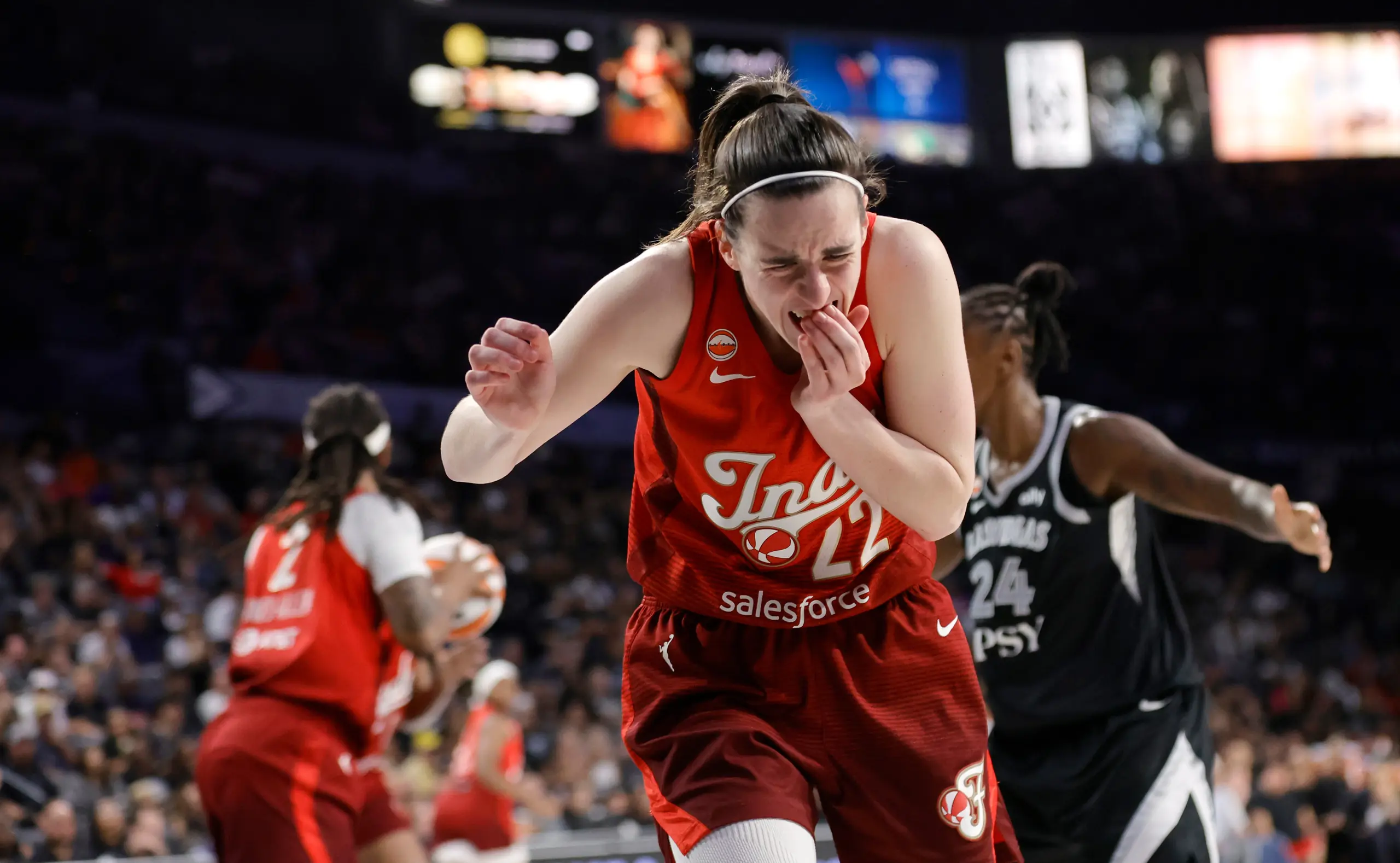
In July, NBA Commissioner Adam Silver candidly referred to Clark as a "political football," acknowledging the complex cultural and commercial forces intersecting around her career. That friction boiled over into vivid relief during the fourth quarter of Thursday night’s elimination game.
On a chaotic driving play, Clark took a forceful blow to the face, resulting in a bloody mouth. Visibly shaken and bleeding, she immediately appealed to the officiating crew for a whistle. To the astonishment of her teammates and fans watching worldwide, no foul was called on the play. Postgame, Clark was spotted repeatedly checking what appeared to be a loose tooth as she addressed reporters—a stark visual symbol of the physical toll the series had taken on her body.
When asked by reporters why the play went unpunished by the referees, Clark offered a characteristically succinct, telling response: "Your guess would be as good as mine."
Despite the bruises, the physical knocks, and the endless external noise, Clark maintained a forward-looking perspective on her team’s trajectory and her own place within the league’s ecosystem.
"I’m just proud of this group," Clark said. "We weathered a lot. There’s always so much outside noise, a microscope on how we perform every single day. A lot of really good moments. A lot of tough moments, too, where we felt we probably gave a lot of opportunities away. It’s what hurts a little bit. We could’ve put ourselves in a better spot going into the postseason."
Future Outlook: Building a Champion in Indiana
As the echoes of the buzzer fade at Michelob ULTRA Arena, the Indiana Fever organization transitions immediately into an essential offseason. The overarching mandate from ownership, the coaching staff, and the players themselves is clear: this team is no longer satisfied with merely making playoff appearances or putting up valiant fights against established dynasties. They are built to contend for championships.
Earlier on Thursday, before taking the floor for Game 3, Clark articulated the internal expectations of the locker room. She stressed that the collective vision for the franchise is ultimate victory, expressing her firm belief that the current core possesses the raw talent required to capture a WNBA title. Following the elimination, she expanded on that sentiment, pointing to the widening parity across the league. In Clark’s view, the gap between the pretenders and contenders is shrinking, meaning any well-constructed roster that punches its ticket to the postseason now carries legitimate championship equity.
To bridge that gap and transform from a playoff-bound emerging squad into a genuine title-holder, the Fever’s front office faces several critical imperatives during the upcoming months:
- Roster Depth & Scoring Diversification: Indiana must acquire complementary pieces who can create their own shot and alleviate the immense defensive burden placed on Clark. Teams can no longer be allowed to completely stifle the Fever offense simply by face-guarding and trapping their primary guard.
- Interior Toughness & Defense: Battling physical frontcourts like Las Vegas requires elite rim protection, rebounding strength, and physical resilience across all five positions.
- Mental Fortitude Under the Microscope: Having endured two consecutive playoff exits amidst a hurricane of media attention, the young core has gained invaluable battle scars. Learning how to insulate themselves from the "outside noise" will be vital as the hype train around the franchise only accelerates into 2027.
For Caitlin Clark and the Indiana Fever, the 2026 journey ends in the sting of defeat in the Nevada desert. Yet, the foundation has been laid, the lessons have been painfully learned, and the rest of the WNBA has been formally put on notice. The road to the championship runs through hard lessons—and if Clark’s relentless drive is any indicator, the Fever intend to pave that road themselves very soon.

0 Comments