
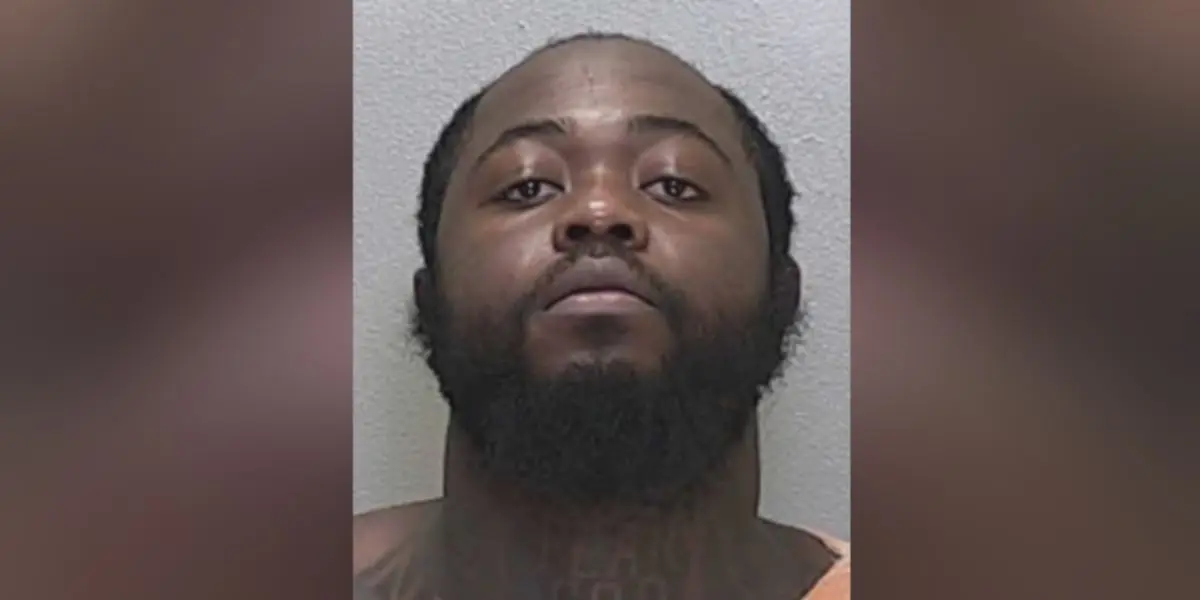

OCALA, Fla. — What began as a routine traffic stop on a Marion County roadway quickly escalated into a complex narcotics investigation, culminating in an extraordinary security breach within a local correctional facility. Law enforcement officials have released startling details regarding the arrest of 25-year-old Alan Cadelus, whose alleged attempt to outwit jail intake procedures has sparked broader questions regarding contraband control, roadside interdiction tactics, and the ongoing proliferation of illicit pharmaceuticals across Central Florida.
According to the Marion County Sheriff’s Office (MCSO), Cadelus was taken into custody following a vehicular search near the municipality of Belleview that reportedly yielded significant quantities of controlled substances, specifically oxycodone and amphetamine. However, the true dimensions of the case did not fully materialize until Cadelus was transported to the county detention facility. During standard intake and security screening—a process designed to strip incoming detainees of unauthorized items—corrections deputies uncovered nearly $7,000 in U.S. currency meticulously concealed near the suspect’s groin area.
The incident highlights the continuous vulnerabilities faced by intake personnel tasked with processing individuals suspected of drug-related offenses. While contraband concealment is an ongoing challenge for correctional institutions nationwide, the scale of the hidden currency—coupled with the nature of the narcotics seized during the initial traffic stop—underscores the intersection of street-level drug trafficking and jail security protocols.
Cadelus has since been released after posting bond, but the legal and administrative fallout from his arrest continues to reverberate. This report provides an in-depth examination of the events surrounding the traffic stop, the technological mechanisms that exposed the concealed funds, the broader public safety implications of prescription and synthetic drug distribution in Marion County, and the systemic procedures governing modern correctional intake facilities.
Detailed Chronology: From Belleview Highway to the Booking Desk
Phase 1: The Initial Traffic Stop
The sequence of events leading to Cadelus’s arrest began on a Monday afternoon near Belleview, a quiet community nestled within Marion County south of Ocala. According to official incident reports filed by the Marion County Sheriff’s Office, patrol deputies executed a traffic stop on a vehicle operated by Cadelus.
While initial details regarding the exact moving violation or probable cause triggering the stop remain part of the ongoing evidentiary record, deputies quickly shifted their focus from a routine administrative check to a criminal investigation. Law enforcement sources indicate that behavioral indicators observed during the interaction prompted deputies to request consent for a vehicular search, or alternatively, to deploy a K-9 unit to conduct an open-air sniff around the perimeter of the automobile.
Phase 2: Discovery of Illicit Substances
The subsequent search of Cadelus’s vehicle yielded tangible evidence that transformed a minor traffic infraction into a felony narcotics case. Investigators reported recovering quantities of oxycodone—a potent prescription opioid frequently targeted by illicit diversion schemes—and amphetamine, a powerful central nervous system stimulant often associated with both prescription abuse and illicit manufacturing.
The presence of these substances in the vehicle established the legal threshold required for custodial arrest. Under Florida law, the possession of controlled substances without a valid prescription constitutes a felony offense, the severity of which scales based on aggregate weight, formulation, and intent-to-distribute indicators. Cadelus was handcuffed at the scene, secured in the rear transport compartment of a marked patrol cruiser, and conveyed directly to the Marion County Jail facility for processing.
Phase 3: The Intake Process and Body Scanner Interception
Upon arrival at the detention facility, arriving arrestees are subjected to a rigorous intake regimen intended to catalog personal property, assess medical and psychological needs, and ensure that no weapons, drugs, or unauthorized currency enter the secure housing population.
It was during this multi-layered intake procedure that Cadelus allegedly attempted to bypass security protocols. While standard pat-down searches and metal detectors are foundational elements of jail security, modern correctional facilities increasingly rely on advanced imaging technology to detect non-metallic contraband, weapons, and currency hidden beneath clothing or within body cavities.
According to MCSO investigators, Cadelus underwent a routine security screening utilizing the facility’s advanced body scanner. The imaging technology immediately flagged an anomaly located near the suspect’s groin region. Corrections deputies conducted a targeted secondary search and successfully recovered a substantial bundle of cash totaling nearly $7,000.
Following the discovery of the hidden funds and the formal logging of his initial charges, Cadelus was processed into the jail system. However, legal mechanisms pertaining to pre-trial release permitted him to secure his temporary freedom shortly thereafter. Records indicate that Cadelus posted the requisite bond and was released pending upcoming court appearances, though he now faces an expanded suite of potential charges related to the introduction of contraband into a detention facility.
Supporting Context & Metrics: The Mechanics of Modern Jail Security and Drug Interdiction
The Technology of Detection: Advanced Body Scanners in Jails
The interception of nearly $7,000 in hidden currency highlights the critical role that millimeter-wave and transmission-based X-ray body scanners play in contemporary correctional administration. For decades, correctional institutions relied primarily on visual inspections, pat-downs, and strip searches—methods that were frequently invasive, prone to human error, and largely ineffective against cleverly concealed items, particularly those hidden in body cavities or secured flush against the body using compression garments.
In recent years, facilities like the Marion County Jail have adopted advanced imaging systems that provide high-resolution skeletal and soft-tissue profiles of individuals passing through intake. These systems utilize low-dose ionizing radiation or safe electromagnetic waves to create a comprehensive map of the body. Any foreign object—whether it is a weapon, a packet of narcotics, a SIM card, or dense bundles of paper currency—appears distinctly against human tissue, allowing correctional officers to pinpoint the exact location of the contraband without resorting immediately to invasive physical searches.
+-------------------------------------------------------------------+
|               CORRECTIONAL INTAKE SCREENING PIPELINE              |
+-------------------------------------------------------------------+
| 1. Arrival & Documentation  --> Intake officer logs personal info |
| 2. Pat-Down & Metal Detectors--> Initial sweep for metallic items |
| 3. Advanced Body Scanner    --> Millimeter-wave/X-ray imaging     |
| 4. Secondary Targeted Search--> Resolves digital anomalies        |
| 5. Property Seizure/Housing --> Contraband secured, inmate booked |
+-------------------------------------------------------------------+
The recovery of cash during intake is a significant security victory for jail administrators. Unregistered currency inside a correctional facility functions as an informal, unregulated shadow economy. Inmates possessing substantial amounts of cash can leverage it to purchase contraband from other inmates or corrupt staff members, finance illicit drug markets within cellblocks, and orchestrate assaults or protection rackets. By neutralizing this financial asset at the door, deputies effectively disrupted a potential internal market before it could take root.
The Regional Landscape of Prescription Drug Abuse in Central Florida
Cadelus’s arrest also casts light on the persistent challenges posed by prescription drug diversion and synthetic stimulants in Marion County and the broader Central Florida region. While national headlines frequently focus on illicit synthetic opioids such as fentanyl, the abuse and distribution of prescription-grade narcotics—including oxycodone, hydrocodone, and various formulations of amphetamine—remain significant drivers of local crime and substance-use disorders.
Florida has historically grappled with the illicit pipeline of pharmaceutical narcotics, dating back to the era of unregulated "pill mills" that prompted sweeping legislative and law enforcement interventions in the early 2010s. Although state monitoring programs like E-FORCSE (Florida’s Prescription Drug Monitoring Program) have drastically curtailed the operation of rogue storefront clinics, traffickers have adapted by utilizing street-level distribution networks, dark-web acquisition channels, and interstate smuggling routes.
Law enforcement analysts note that the presence of both an opioid (oxycodone) and a stimulant (amphetamine) in a single vehicle stop often indicates versatile distribution patterns. Individuals involved in street-level drug trade frequently carry diversified product lines to service varied consumer demographics. Furthermore, the presence of nearly $7,000 in cash strongly suggests that the stop captured a suspect actively engaged in commercial transactions rather than mere personal use, as retail-level drug users rarely travel with such high volumes of liquid capital unless operating as active distributors or couriers.
Official Statements and Institutional Perspective
While the Marion County Sheriff’s Office has released initial incident summaries detailing the sequence of events, institutional representatives continue to emphasize the vigilance required of patrol and corrections personnel alike.
In public safety updates issued following the arrest, MCSO leadership commended the attentiveness of the deputies involved in both the roadside interdiction and the subsequent jail intake screening. Officials stressed that modern law enforcement requires seamless coordination between field operations and detention facilities. A suspect apprehended on the highway brings not only the immediate criminal liability associated with the traffic stop but also latent security risks that must be systematically neutralized upon entering a county facility.
"The discovery of thousands of dollars in hidden currency during the booking process serves as a stark reminder of the lengths to which suspects will go to conceal assets connected to criminal enterprises," noted a law enforcement official familiar with detention operations. "Our correctional staff undergoes rigorous training to identify anomalies during intake, ensuring that contraband—whether it is narcotics, weapons, or illicit funds—does not cross the threshold into our secure housing units."
Legal analysts observing the case point out that Cadelus’s decision to conceal the money on his person during booking may carry distinct legal consequences separate from the initial drug charges. Under Florida statutes, knowingly attempting to introduce contraband into a county detention facility is treated as a severe offense, reflecting the state’s interest in maintaining absolute order and safety within correctional environments. Prosecutors will likely weigh the totality of the circumstances—the recovered narcotics, the vehicular context, and the jailhouse concealment—when formulating formal charging documents for upcoming court proceedings.
Future Outlook: Legal Proceedings and Systemic Implications
As the legal process unfolds, Alan Cadelus’s case will move through the Fifth Judicial Circuit Court of Florida, encompassing Marion, Citrus, Hernando, Lake, and Sumter counties. Several key developments will shape the trajectory of the case in the coming months:
- Formal Arraignment and Discovery: Defense counsel will review the evidentiary foundation established by the Marion County Sheriff’s Office, including dashcam footage from the Belleview traffic stop, body-worn camera recordings from the intake area, and technical readouts from the body scanner that detected the concealed currency.
- Motion Practice Regarding Seizure: The nearly $7,000 recovered from the suspect’s person will likely become the subject of civil asset forfeiture proceedings. Law enforcement agencies frequently initiate forfeiture actions when currency is reasonably connected to the distribution of controlled substances, requiring the claimant to prove the legitimate, non-drug-related origin of the funds.
- Enhancement of Charges: Prosecutors must determine whether the concealment of funds inside the detention facility warrants standalone felony counts of introducing contraband into a jail, which can significantly increase the potential sentencing exposure independent of the underlying drug possession charges.
- Correctional Policy Review: On an institutional level, incidents of this nature continuously inform training modules within the Marion County Jail. As concealment methods evolve, administrative teams routinely evaluate emerging screening technologies and physical search techniques to maintain parity with inventive smuggling tactics.
Ultimately, the arrest of Alan Cadelus serves as a micro-cosmic illustration of the daily challenges confronting local law enforcement agencies. It bridges the gap between highway interdiction and institutional security, demonstrating that the fight against drug distribution requires unrelenting vigilance across every phase of the criminal justice continuum—from the initial flashing lights on a dark Marion County highway to the humming diagnostic screens of a county jail booking desk.

0 Comments