

Executive Overview
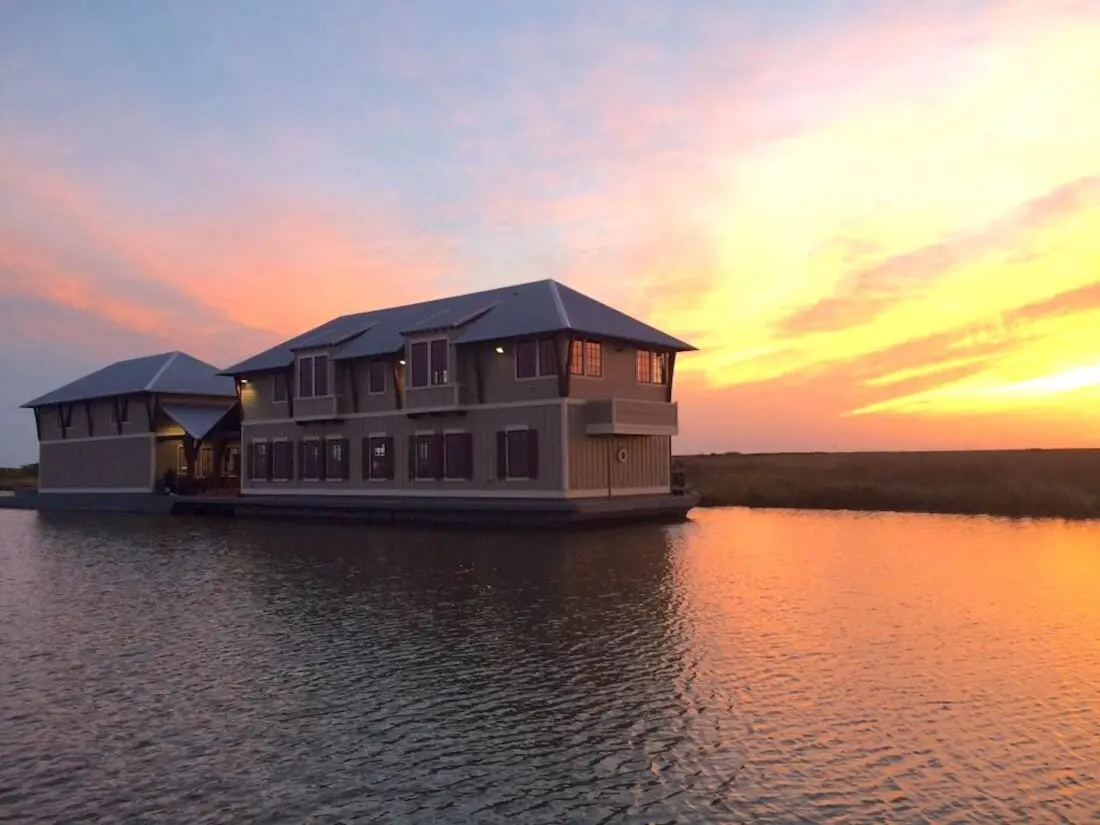
The American South possesses a storied, enduring romance with the sporting life, boasting countless historic hunting lodges, timber-framed duck camps, and sprawling rural estates nestled among the pines and river bottoms. Yet, an extraordinary listing in the heart of southern Louisiana challenges the very definition of real estate. Dubbed “Fowl Play,” this architectural marvel is not tethered to a foundation of earth and timber; instead, it floats.
Spanning an impressive 155 feet in length and offering 4,600 square feet of meticulously crafted living space, Fowl Play is a waterbound, self-sustaining luxury compound built specifically for navigating the rich aquatic and avian ecosystems of the Mississippi Flyway. Designed over a decade ago by Birmingham, Alabama-based architect Tom Adams and his partner Adam Gerndt for owner Tony Nelson, the floating camp is currently listed on the market for $5.5 million through Jon Kohler & Associates.
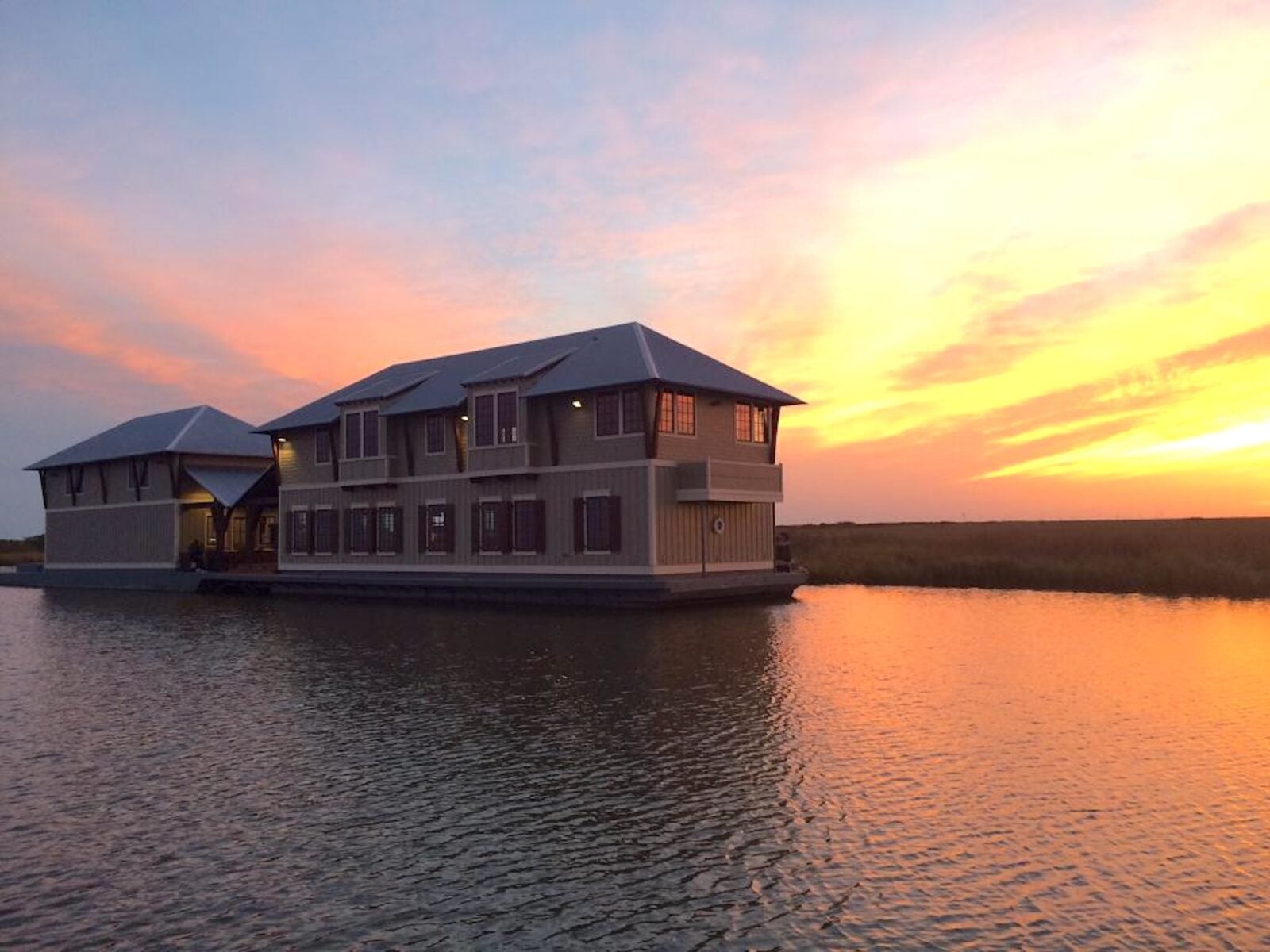
Capable of comfortably sleeping up to twenty-two guests, Fowl Play bridges the gap between rugged backcountry expedition and five-star hospitality. Featuring dual spud barge foundations, high-end interior finishes, an onboard professional crew, and the seasonal mobility to migrate alongside game populations, this property represents a rare pinnacle in sporting architecture. For the discerning outdoorsman or conservation-minded investor, Fowl Play offers a turnkey legacy asset where world-class duck hunting and premier saltwater fishing converge.
Detailed Chronology: From Concept to Coastal Waters
The realization of Fowl Play was no minor undertaking. It required a radical reimagining of how luxury hospitality could operate within volatile, remote marsh environments where traditional construction is impossible.
Phase I: Conceptualization and Naval Architecture (Early 2010s)
The project began with a distinct vision: owner Tony Nelson desired a mobile sanctuary that could bypass the limitations of a fixed-location camp. Traditional lodges restricted hunters to a single geographic area, leaving them vulnerable to shifting migration patterns, changing water levels, and seasonal weather events. Nelson enlisted the expertise of architect Tom Adams and designer Adam Gerndt to engineer a waterborne alternative.
The team selected two independent industrial-grade spud barges to serve as the structural foundation. This twin-barge design provided the necessary stability, buoyancy, and square footage to support a multi-structure luxury encampment capable of withstanding coastal Louisiana environments while offering the amenities of a boutique hotel.
Phase II: Construction and Craftsmanship
Built to marine-grade specifications while finished with the warmth of a traditional southern lodge, Fowl Play was divided into two primary floating structures: a main camp and a crew camp.
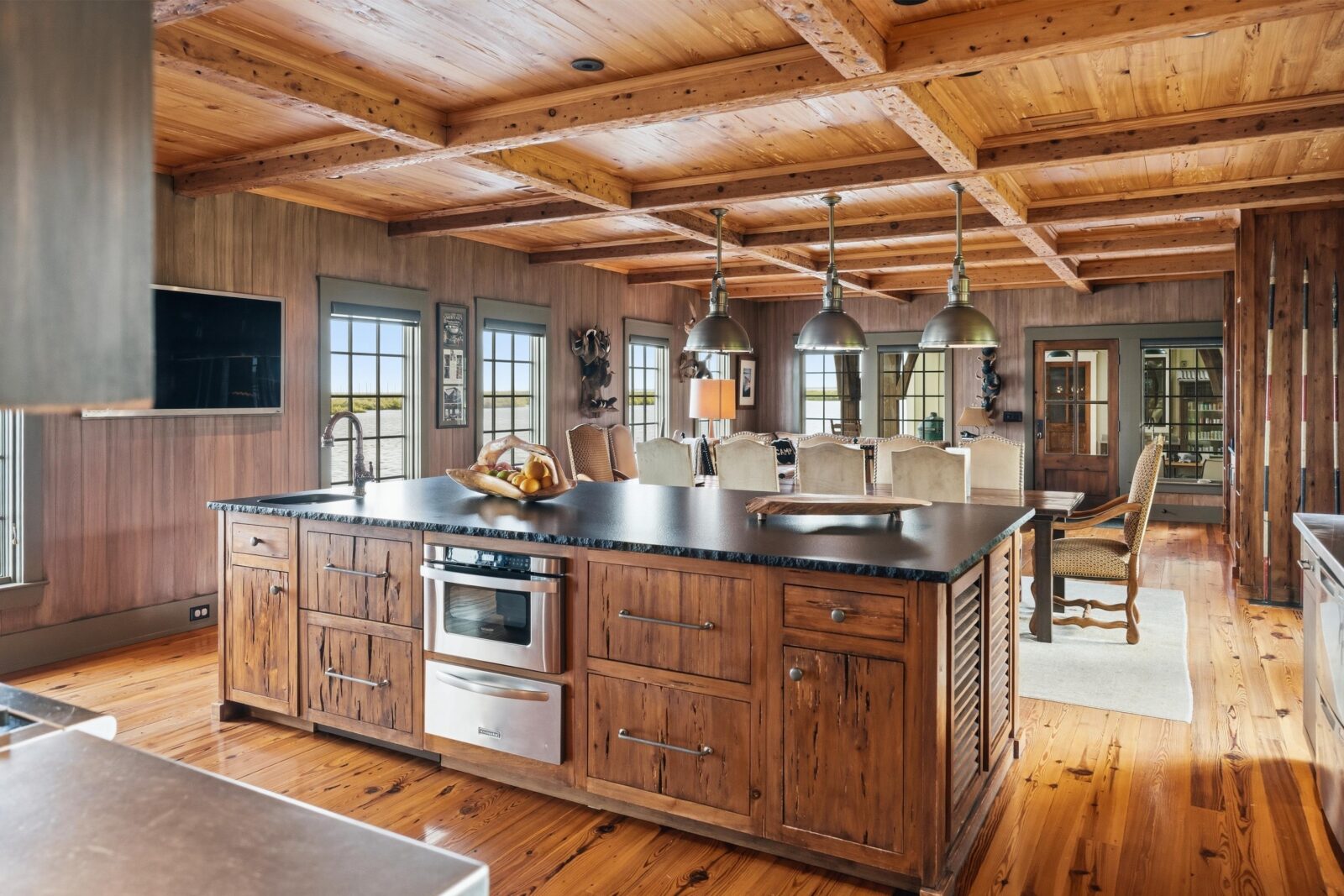
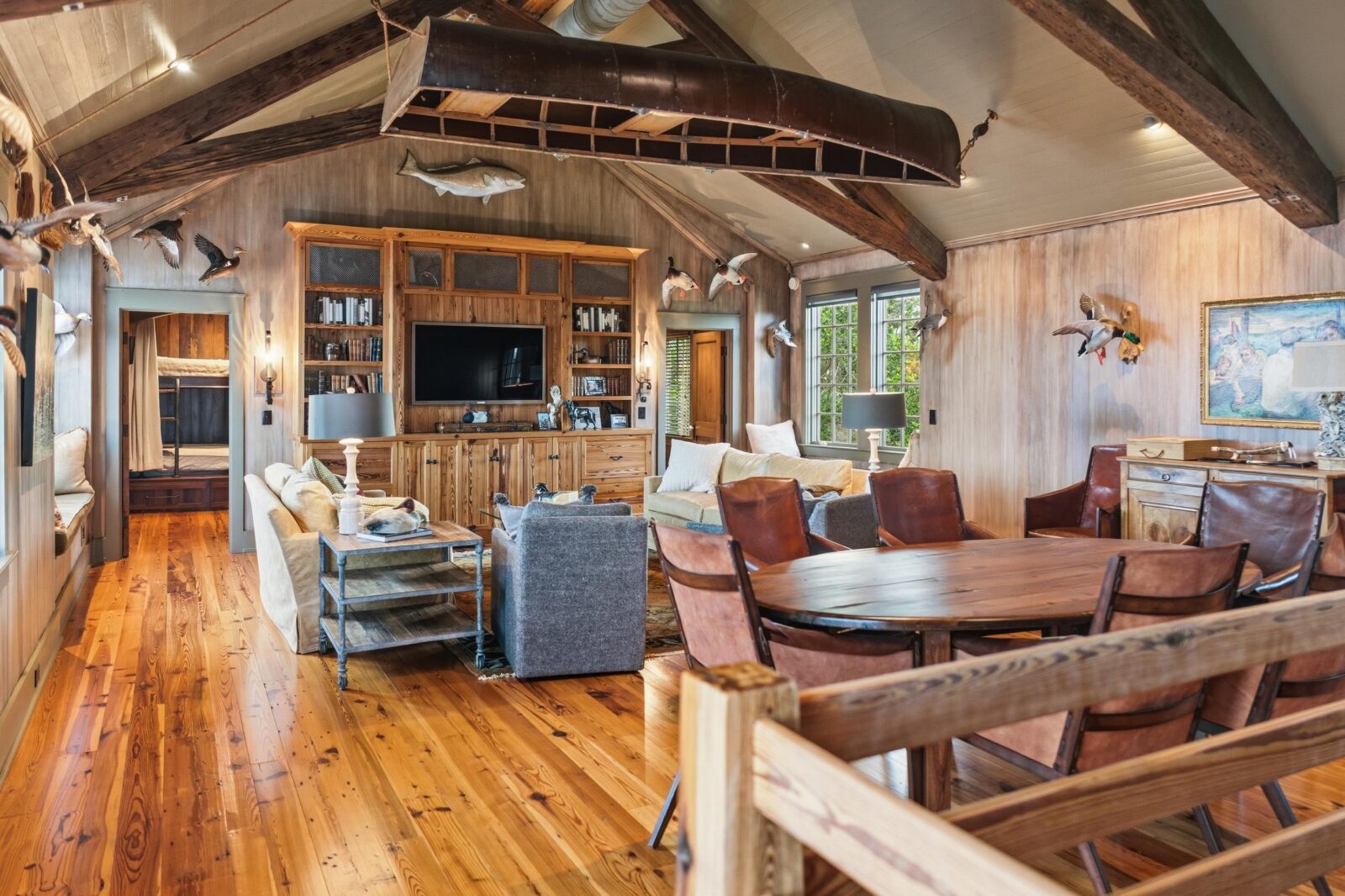
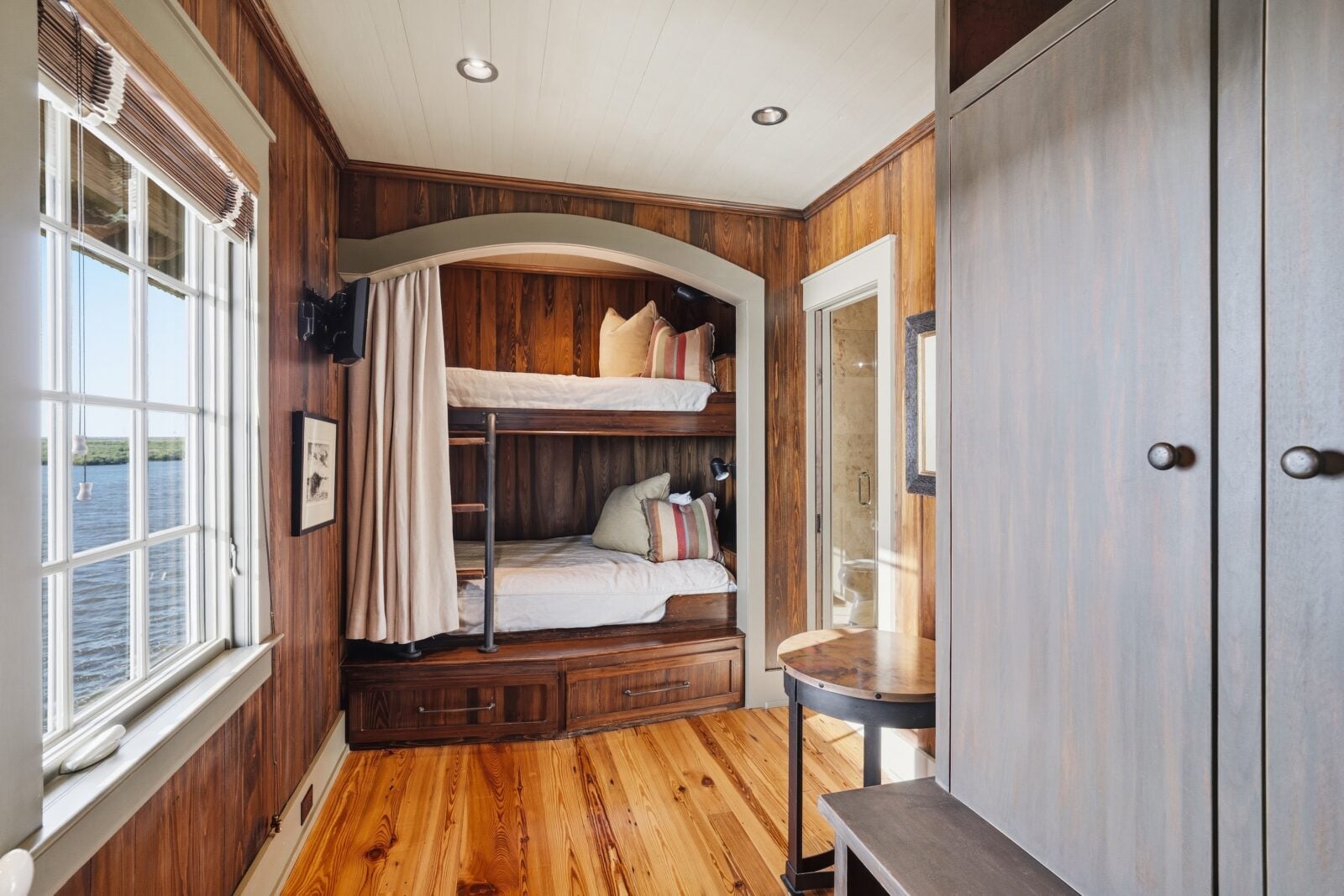
- The Main Camp: Designed to accommodate up to fourteen guests in the main quarters, this structure features soaring vaulted ceilings, open-plan living spaces, heart pine flooring, and pecky cypress accents. It includes expansive staterooms, state-of-the-art culinary spaces, and a massive eight-bed bunk room complete with custom-built privacy nooks.
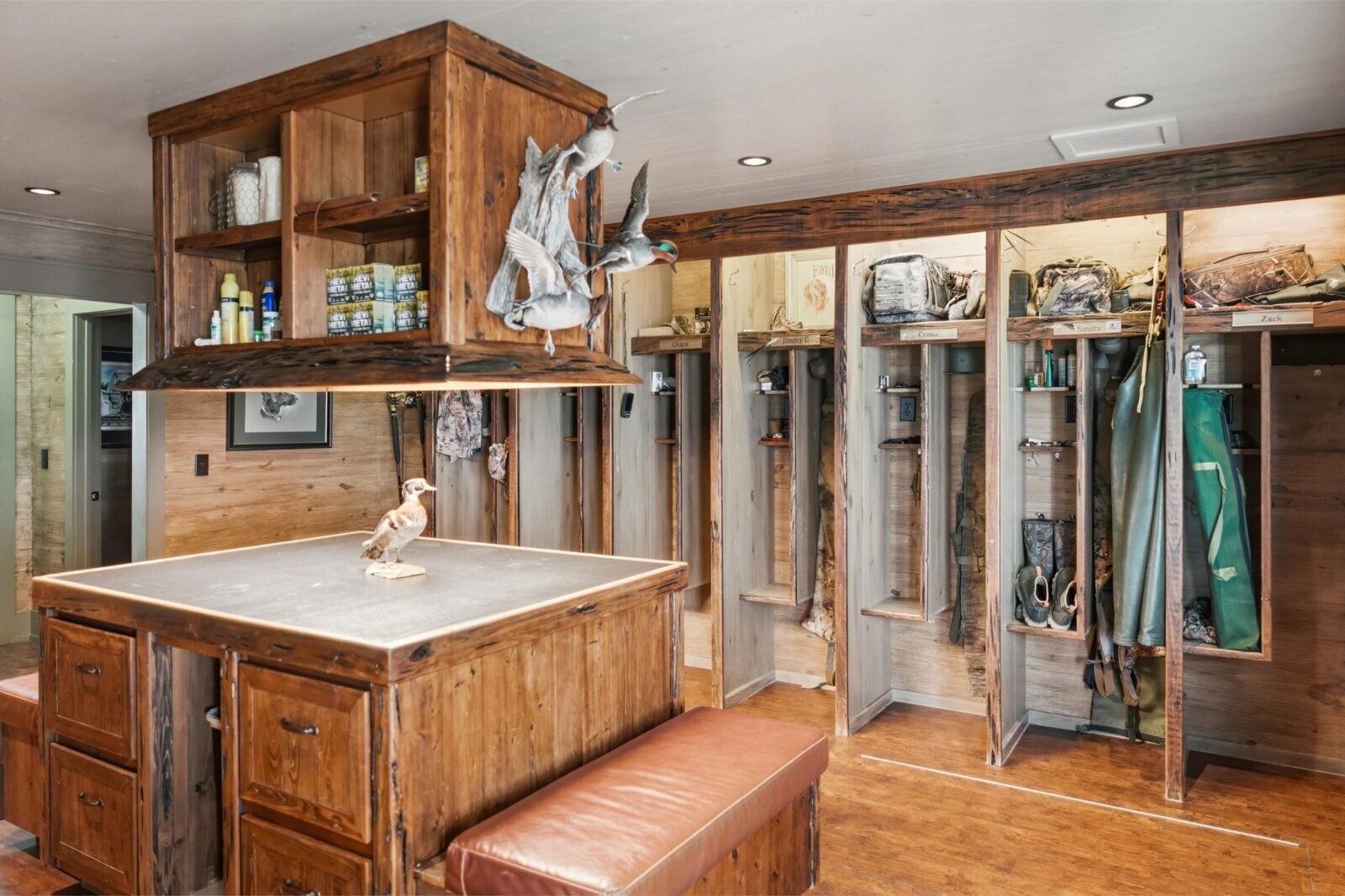
- The Crew Camp: Dedicated to the logistics of high-end sporting expeditions, the crew camp houses a fully outfitted mud room with personalized guest lockers, a tackle room, a game-prep facility, and critical utility infrastructure. The layout also includes a dedicated skip to house a deep-sea fishing vessel.
Phase III: The Seasonal Migration Routine
Once completed, Fowl Play established a seasonal rhythm that dictates its operational calendar:
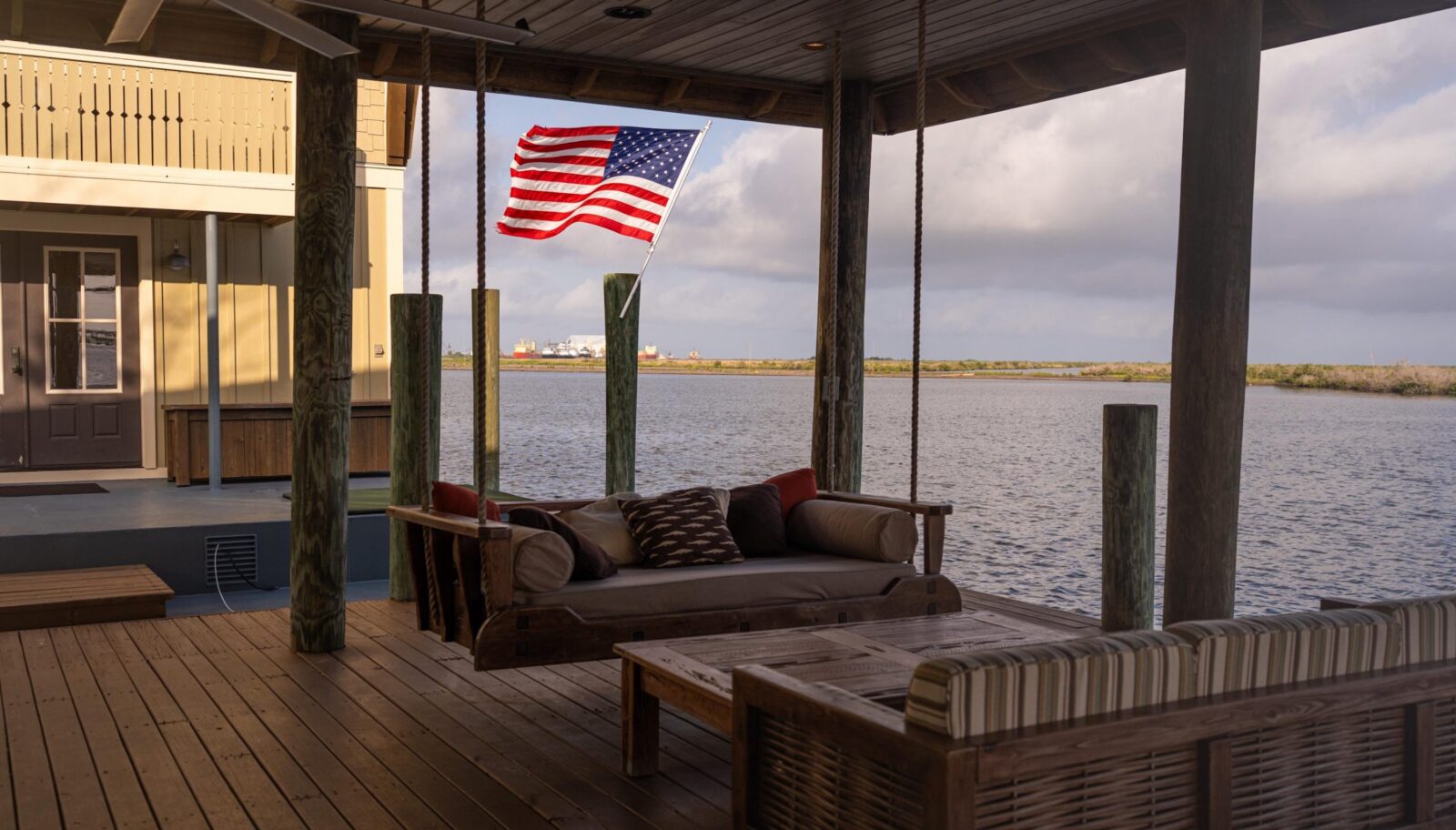
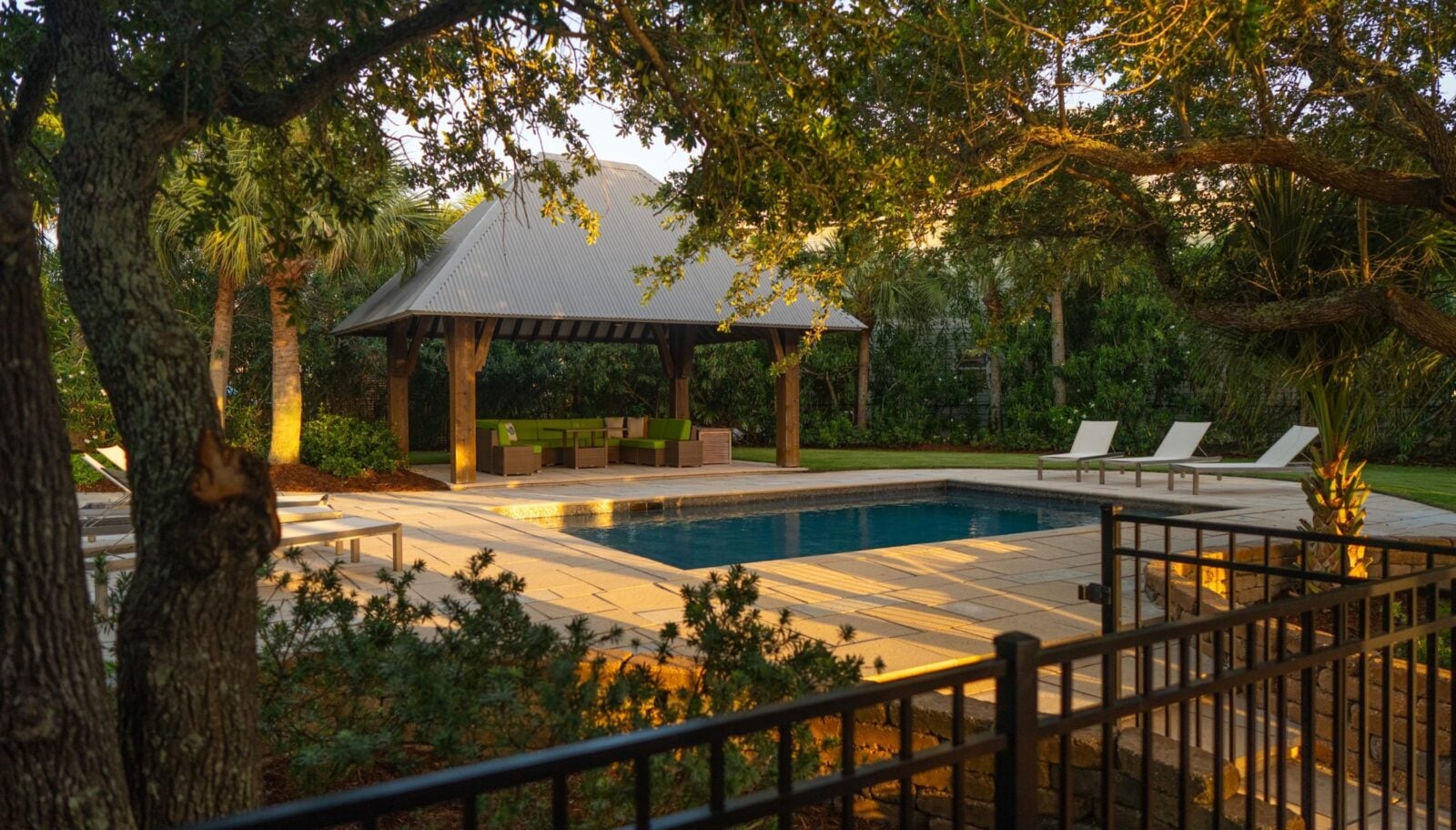
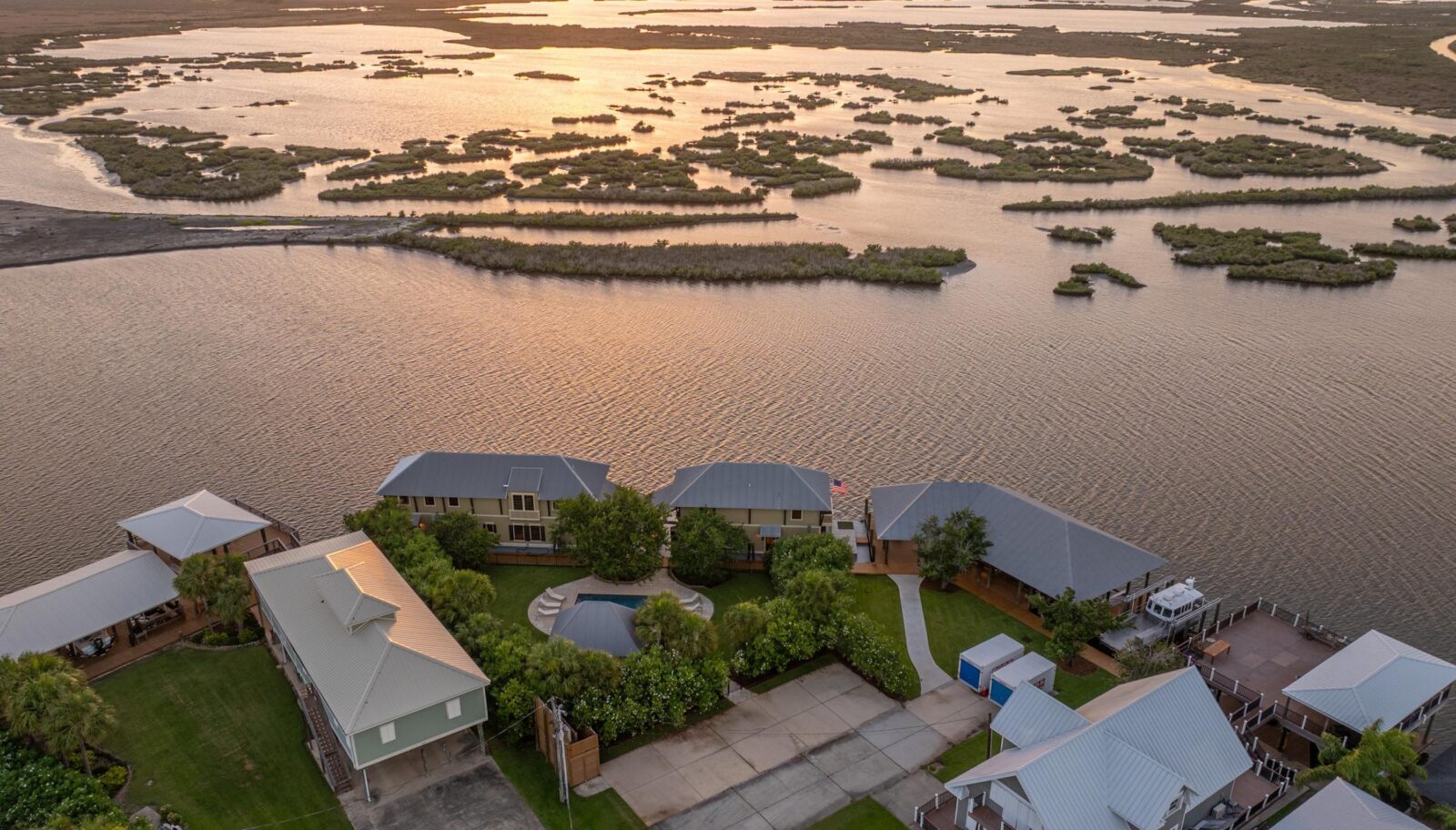
- Spring and Summer (Port Fourchon Home Base): During the off-season, the lodge is docked at a private, gated waterfront lot in Port Fourchon, Louisiana. Here, it rests under the shade of ancient live oaks next to a private saltwater pool. This location serves as the launchpad for inshore fishing (speckled trout and redfish) and offshore excursions into the Gulf of Mexico for yellowfin tuna and marlin.
- Fall and Winter (The Marsh Lease): As autumn arrives and millions of migratory birds flood down the Mississippi Flyway, a commercial tugboat hitches to Fowl Play. The entire compound is towed deep into the interior of a 6,000-acre exclusive hunting lease in the Louisiana marsh. The mother ship anchors near the heart of the action, allowing hunters to step directly from luxury quarters into mud boats bound for blinds targeting mallards, wigeon, pintails, and black ducks.
Supporting Context & Metrics
To truly comprehend the value and operational scale of Fowl Play, one must examine the raw engineering metrics and the ecosystem it inhabits.
Architectural & Engineering Specifications
- Listing Price: $5.5 million
- Total Length: 155 feet
- Living Space: Approximately 4,600 square feet
- Foundation: Two independent, heavy-duty steel spud barges
- Sleeping Capacity: Up to 22 guests total (14 in the main camp; additional capacity across crew and stateroom spaces)
- Water Storage: 30,000 gallons of onboard fresh water storage capacity
- Power Generation: Dual industrial-grade onboard diesel generators ensuring complete off-grid autonomy
Interior Finishes & Amenities
Despite its marine engineering, the interior feels indistinguishable from a high-end estate in Aspen or Charleston:
- Kitchen: Outfitted with professional-grade Wolf appliances, custom cabinetry, and open-plan layouts designed to cater to large groups.
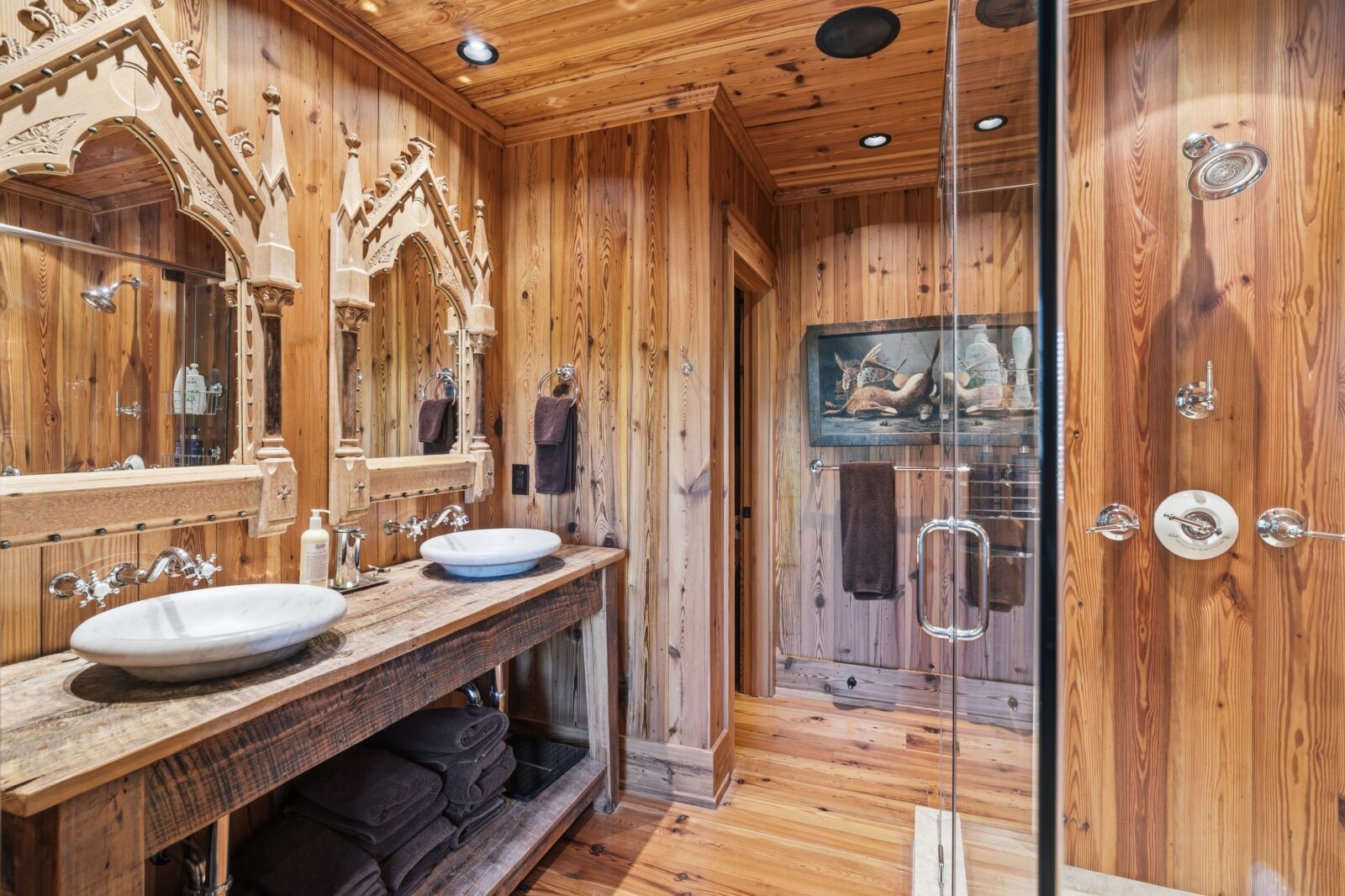
- Bathrooms: Hand-carved double vanities paired with premium marble sinks.
- Recreation: Dedicated indoor staterooms with vaulted ceilings and entertainment systems, complemented by poker tables, expansive outdoor viewing porches, and an open-air outdoor kitchen.
- Mud Room: Custom-built lockers designed specifically to store waders, waterproof outerwear, and sporting gear for every guest.
Ecological Context: The Mississippi Flyway
Fowl Play operates within one of the most ecologically significant bird migration corridors on Earth: the Mississippi Flyway. Stretching from Canada through the American Midwest and terminating in the wetlands of the Gulf Coast, this flyway funnels waterfowl by the millions into the Louisiana delta. The accompanying 6,000-acre hunting lease—which is available for transfer to the new buyer—offers some of the most concentrated waterfowl habitat in North America, ensuring unparalleled sporting access.
Official Statements & Industry Perspective
The rarity of the listing has generated significant buzz within high-end real estate and sporting brokerage circles. Tim James, Jr., a broker with Jon Kohler & Associates handling the exclusive listing, emphasized the unprecedented nature of the property.
"I’m used to seeing the best of the best when it comes to recreation," says Tim James, Jr. "Most places have great hunting or great fishing, but this has both. It’s one of the coolest deals I’ve ever seen."
James also highlighted the fully turnkey operational model that comes with the $5.5 million price tag, removing the administrative and logistical burdens typically associated with managing remote properties.
"When someone comes to buy this, there’s truly nothing they need to do," James explains. "There’s a full-time manager already in place who cares for the boat, plus chefs, hunting guides, helpers. Everything is lined up."
This turnkey staffing infrastructure ensures that a new owner can step aboard mid-season without skipping a beat, transitioning seamlessly from leisure lounging by the Port Fourchon saltwater pool to navigating the freezing marsh waters at dawn.
Future Outlook
As luxury real estate trends increasingly favor experiential properties over traditional static square footage, listings like Fowl Play point toward an innovative future for high-end recreational assets. Traditional land-based hunting camps are inherently bound by geography, changing land use laws, and localized environmental shifts—such as coastal erosion and rising sea levels in southern Louisiana.
By designing a floating, mobile compound, the creators of Fowl Play effectively future-proofed the sporting lodge concept. If environmental conditions or hunting leases shift, the entire estate can simply be unmoored, towed, and re-anchored in a new productive wetland ecosystem.
For the prospective buyer, Fowl Play offers a rare intersection of mobility, self-sufficiency, and uncompromised luxury. Whether utilized as a corporate retreat, a multi-family generational camp, or a private commercial charter venture, this floating palace redefines what it means to live, hunt, and fish on the move in the American South.

0 Comments