
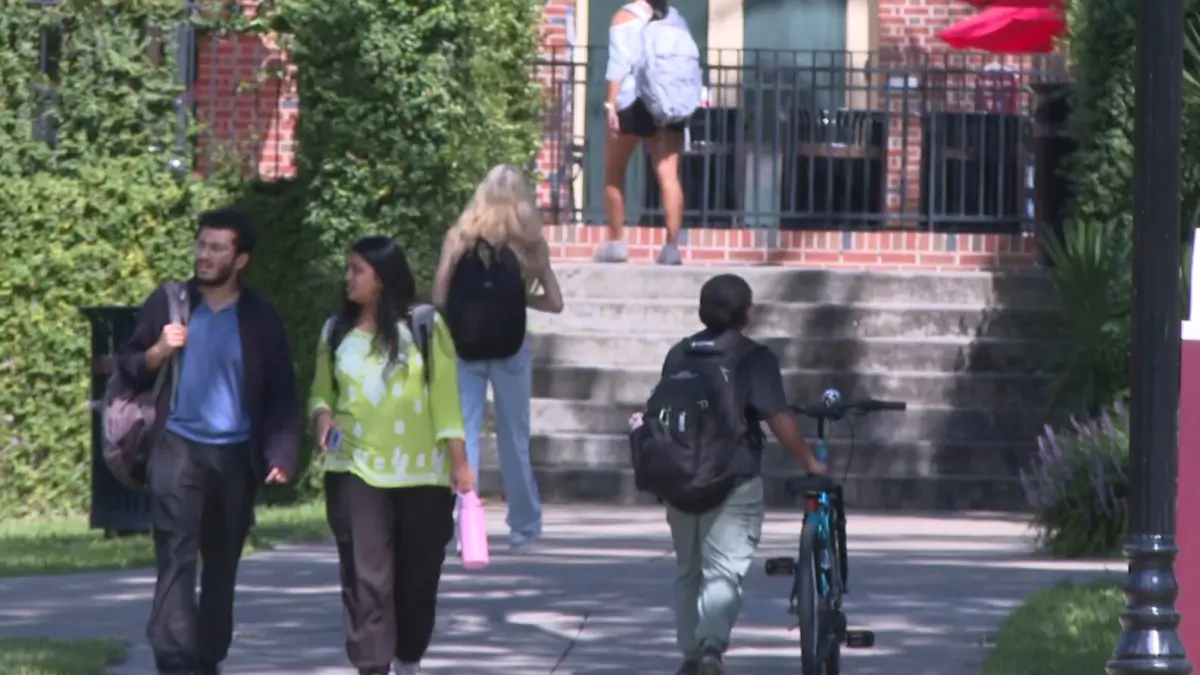

TALLAHASSEE, Fla. — The historic brick pathways and moss-draped live oaks of Florida State University (FSU) buzzed with renewed energy on Monday as more than 45,000 students returned to campus for the official first day of the fall semester. The return of the student body marks the commencement of another academic year at one of the nation’s premier public research institutions, bringing a vibrant rush of academic ambition, social integration, and infrastructural activity to the capital city of Florida.
According to preliminary enrollment data released by the university administration, this year’s student population is anchored by a robust cohort of more than 6,000 first-year students. This incoming freshman class represents some of the highest academic achievements and competitive application metrics in the university’s history, continuing a multi-year trend of surging interest in FSU’s undergraduate and graduate programs.
From freshmen navigating their initial steps into independence to seasoned seniors entering the final stretch of their undergraduate careers, the campus community converged on Monday to kick off a semester defined by high expectations, community building, and the traditional adjustments required to transition from summer reprieve to rigorous academic schedules.
Executive Overview
The commencement of the fall semester at Florida State University is far more than a routine academic milestone; it represents a massive logistical, economic, and cultural event for the city of Tallahassee. With a total enrollment hovering around 45,000 students, the university effectively swells the local population by nearly a third, driving activity across housing markets, local commerce, public transit, and municipal services.
Monday’s opening day arrived on the heels of weeks of intensive preparation by university administrators, campus safety officials, student housing staff, and local law enforcement. Weeks of staggered move-in dates, fraternity and sorority recruitment cycles, and academic orientation sessions paved the way for a smooth, albeit high-octane, transition to the classroom.
University leadership noted that the 2026 fall term brings unique opportunities and challenges. While FSU continues to boast high retention rates and top-tier national rankings, the sheer volume of students necessitates a finely tuned operational strategy to ensure that housing, dining, academic advising, and campus infrastructure can support the massive community. As the fall semester unfolds, the administration’s focus shifts from recruitment and arrival to academic retention, student wellness, and fostering an environment conducive to groundbreaking research and holistic student development.
Detailed Chronology: The Road to the First Day of Classes
The path to Monday morning’s opening bell was marked by a carefully orchestrated series of events designed to transition thousands of young adults into university life. Understanding the scope of FSU’s fall semester launch requires examining the timeline of events leading up to the first lecture of the term.
The Pre-Semester Rush: Move-In and Logistics
Weeks prior to the first day of class, the FSU campus transformed into a logistical hub. Thousands of students—ranging from out-of-state freshmen experiencing Florida for the first time to returning upperclassmen moving into off-campus apartments—descended upon Tallahassee.
University housing staff, alongside student volunteers, managed the complex choreography of move-in day. Vehicles lined campus residence halls as parents and students unloaded mountains of luggage, mini-fridges, and bedding. For many families, this period marked an emotional milestone filled with bittersweet goodbyes and the realization of years of educational saving and planning.
The Social Integration: Recruitment and Orientation
Simultaneously, the campus social scene kicked into overdrive. Fraternities and sororities launched their rigorous fall recruitment schedules, drawing thousands of participants through weeks of meet-and-greets, informational sessions, and preference rounds.
For students like freshman Sadie Benoit, who participated heavily in the recruitment process, the period was described as a whirlwind of sensory input and rapid social development. Navigating the Greek life system while simultaneously attempting to locate academic buildings, purchase textbooks, and adapt to living away from home for the first time presented a steep learning curve. However, university officials emphasize that these early integration programs are vital for building a sense of belonging and community among incoming scholars.
Monday Morning: The Opening Bell
By 8:00 a.m. on Monday, the pedestrian pathways crisscrossing Landis Green and academic plazas were packed with students rushing to make their first classes. Bicycles, electric scooters, and walking groups filled the corridors as the Tallahassee heat began to set in.
Despite the physical demands of navigating a sprawling campus under early-fall Florida temperatures, the prevailing mood was one of kinetic optimism. Lecture halls, laboratories, and seminar rooms quickly filled to capacity, signaling the official transition from the social turbulence of move-in week to the disciplined rhythm of the academic calendar.
Supporting Context & Metrics: Enrollment, Demographics, and Campus Infrastructure
To fully comprehend the scale of Florida State University’s fall semester, one must analyze the quantitative metrics that define the institution’s current standing.
Enrollment Scale and Selectivity
FSU’s total enrollment of approximately 45,000 students places it among the largest and most comprehensive universities in the state of Florida and the broader southeastern United States. Within this total, the freshman class of over 6,000 students represents a highly curated selection of applicants. Over the past decade, FSU has seen its admissions selectivity tighten significantly, with average high school GPAs and standardized test scores for incoming freshmen reaching all-time highs.
The university’s appeal spans all 67 Florida counties, all 50 states, and numerous international countries, creating a diverse intellectual ecosystem on campus. This demographic breadth enriches classroom discussions and campus life, exposing students to a wide array of cultural, socioeconomic, and geographic perspectives.
Infrastructural Adaptation
Accommodating 45,000 individuals requires continuous infrastructural investment. Over the summer months, FSU’s facilities management teams worked around the clock to upgrade technological infrastructure in lecture halls, renovate residence halls, and expand dining facility capacities.
Furthermore, the university has continued to invest heavily in its research capabilities, updating laboratories and securing grant-funded equipment to support faculty and student researchers. These investments are critical for maintaining FSU’s status as a preeminent state research university, a designation that brings both prestige and vital state funding.
Official Statements and Student Perspectives
The true pulse of the university on its opening day is best captured through the lived experiences and voices of the students themselves, who articulate the emotional spectrum of returning to higher education.
For sophomore Emmie Grabill, the return to campus was defined by the joy of reconnection. Having navigated the anxieties of her freshman year, Grabill entered the fall semester with a solidified social network and a clearer academic vision.
"I’m so excited to be back," Grabill shared on Monday morning. "I’m so excited to see all my friends and meet new friends, just like Sadie."
Her sentiment highlights the vital social continuity that sustains college students through demanding academic periods. For upperclassmen, friendships forged in previous semesters serve as a support system against the pressures of advanced coursework and career planning.
Conversely, freshman Sadie Benoit experienced Monday through the lens of profound transformation. Reflecting on her first few days on campus, Benoit detailed the intensity of transitioning from a structured home environment to total autonomy.
"I met so many people through recruitment, and then now I’ve met so many people at the house, and everybody’s so nice," Benoit said, acknowledging that the combination of move-in, sorority recruitment, and a full class schedule had made the start of her college career an absolute whirlwind.
Upperclassmen provided a contrasting, more seasoned perspective. Senior Elliot Muskat, reflecting on his final year at FSU, offered a philosophical view of campus life, balancing environmental realities with deep appreciation for his surroundings.
"I’m feeling good. I mean, I’m happy to be back on campus. It’s hot, as always… I mean, it’s worth it, though, because we get to be on such a beautiful campus, and we got the shade and everything, so I really can’t complain. I’m just happy to be here," Muskat remarked.
Meanwhile, junior Mariah Shuford spoke to the psychological evolution that often occurs between a rocky sophomore transition and upper-division confidence.
"It feels really good. I feel more confident this year than last year," Shuford noted. "It was a little rocky, but I’m really excited this year." Her comments underscore the developmental arc of the university experience, where initial academic and personal hurdles ultimately yield resilience and self-assurance.
Future Outlook: The Road Ahead for FSU in the 2026–2027 Academic Year
As the dust settles on the first week of classes, Florida State University looks ahead to an ambitious academic year. The immediate priority for the administration and faculty is academic engagement, retention tracking, and ensuring that support services—ranging from mental health counseling to academic tutoring—are fully accessible to all 45,000 students.
Beyond day-to-day operations, the university is poised to advance several key strategic initiatives throughout the 2026–2027 term. These include expanding undergraduate research opportunities, enhancing career placement partnerships with major national corporations, and continuing infrastructure projects aimed at sustainable campus development.
For the students, the weeks immediately following the first day of class will be defined by the settling of routines. Syllabus week will quickly give way to midterms, club meetings, athletic events—including the fervent support of FSU’s athletic programs—and the long-term pursuit of degrees that will shape their professional futures.
As Tallahassee’s seasonal heat begins its slow descent toward milder autumn weather, Florida State University stands firmly positioned at the intersection of tradition and innovation. With a thriving student body, dedicated faculty, and a dynamic campus environment, the fall semester is officially underway, promising a year of profound academic and personal growth for thousands of aspiring scholars.

0 Comments