

Executive Overview
In the heart of Washington, D.C., against the somber backdrop of national mourning following the death of Senator Lindsey Graham, Ukrainian President Volodymyr Zelenskyy stepped into the U.S. Capitol on Tuesday, July 28, 2026, for a high-stakes, closed-door legislative showdown. The visit marked a critical juncture in the protracted war between Ukraine and Russia—a conflict that has now eclipsed the duration of World War I.
Attended by roughly half of the United States Senate and key members of the House of Representatives, the briefing was characterized by an uncharacteristic atmosphere of intense focus and palpable urgency. Lawmakers, putting aside their mobile devices, listened intently as the Ukrainian leader outlined the grim realities on the front lines, detailed ongoing incursions into Russian territory, and articulated an urgent need for advanced military hardware, infrastructure support, and economic sanctions.
At the center of this diplomatic push was the Lindsey O. Graham Sanctioning Russia and Iran Act of 2026, a monumental bipartisan legislative package engineered by the late senator before his passing. The bill represents the most ambitious legislative endeavor to support Kyiv since Donald Trump returned to the White House. Just hours after Zelenskyy’s arrival, the Senate advanced the sweeping sanctions measure in a rare display of legislative solidarity, watching from the chamber gallery as lawmakers flashed thumbs-up signs during the roll call. Days later, the legislation sailed through the chamber on an overwhelming 86-11 vote.
However, despite this decisive upper-chamber victory, the path forward for the legislation is fraught with institutional hurdles, political divisions, and profound policy debates. House Speaker Mike Johnson and his Republican majority face mounting pressure from both isolationist factions and progressive Democrats wary of expanding executive tariff authority. As Ukraine navigates a complex political landscape in Washington, the fate of the Graham sanctions bill hangs in the balance, testing the resilience of international alliances and the durability of U.S. foreign policy in an era of shifting geopolitical priorities.
Detailed Chronology: From Mourning to the Senate Floor
The trajectory of President Zelenskyy’s July 2026 visit to Washington was inextricably linked to the passing of one of Ukraine’s most steadfast legislative champions, Senator Lindsey Graham.
The Prelude: A Year of Backroom Diplomacy
The sanctions package that eventually bore Graham’s name was the culmination of a grueling, year-long diplomatic campaign. Senator Graham had spent months negotiating with skeptical factions, ultimately securing President Donald Trump’s tacit approval for the aggressive package. Graham revealed this breakthrough to his Senate colleagues just weeks prior during the NATO summit in Turkey. Tragically, shortly after flying on to Kyiv to brief Ukrainian leadership and returning to Washington, Graham passed away, likely the victim of a torn aorta.
Reflecting on the breakthrough, Senator Richard Blumenthal (D-Conn.), Graham’s frequent legislative partner, noted that Graham viewed securing Trump’s blessing as a monumental achievement—slangily describing it as a "BFD."
Tuesday, July 28, 2026: The Capitol Hill Briefing
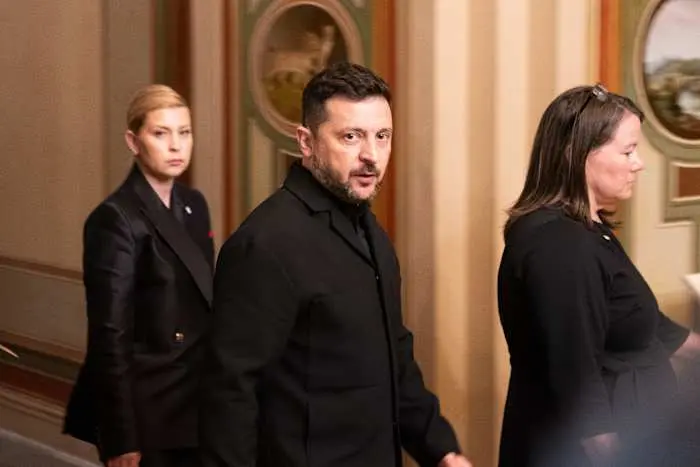
Hours after attending funeral services at the Washington National Cathedral, President Zelenskyy arrived at the U.S. Capitol. He was greeted by a bipartisan delegation that included Senators Katie Britt (R-Ala.), Richard Blumenthal (D-Conn.), James Risch (R-Idaho), and Roger Wicker (D-Miss.).
Moving into a secure, closed-door meeting room, Zelenskyy addressed an audience that comprised nearly half of the Senate. Lawmakers who typically drift in and out of briefings remained anchored to their seats. The Ukrainian president walked the room through the tactical realities of the war:
- The Battlefield Status: Explaining how Ukrainian forces continue to repel Russian offensives while taking the fight directly to targets inside Moscow.
- Critical Defenses: Emphasizing the desperate need for U.S.-supplied Patriot interceptor missiles and associated licensing agreements.
- Communications Infrastructure: Requesting expanded and uninterrupted access to Elon Musk’s Starlink satellite internet network.
- Economic Warfare: Urging immediate passage of the sanctions package to dismantle Vladimir Putin’s oil and gas revenue pipeline.
"He said, ‘We need this legislation,’" recounted Senator Jeanne Shaheen (D-N.H.), the top Democrat on the Senate Foreign Relations Committee. "’Both the troops and the Ukrainian people need this for morale.’"
The Senate Vote and Passage
Following the briefing, Zelenskyy took the unprecedented step of observing proceedings directly from the Senate gallery. As the clerk called the roll, senators openly signaled their support, waving and offering thumbs-up gestures to the Ukrainian president. The procedural hurdle was cleared that very night. Days later, the Senate officially passed the Lindsey O. Graham Sanctioning Russia Act by an emphatic 86-11 margin, sending the legislation over to the House of Representatives.
Supporting Context & Metrics: The Mechanics of the Sanctions and Aid
To fully understand the gravity of the July 2026 Senate vote, one must examine the economic mechanisms of the bill and the macro-level political environment surrounding U.S. aid to Ukraine since 2022.
Economic Warfare: Targeting the Russian Energy Machine
At its core, the Graham legislation is designed to starve the Kremlin’s war chest by crippling its primary economic lifeline: fossil fuel exports.
- Targeting Third-Party Buyers: The bill exerts intense economic and diplomatic pressure on major buyers of Russian energy, most notably China and India, to curtail or halt their imports.
- Tariff Enforcement: The legislation grants the executive branch sweeping authority to impose tariffs of up to 100% on goods entering the United States from countries that continue to purchase Russian oil and gas.
The Aid Timeline: From 2022 to the Trump White House
The journey of U.S. support for Ukraine has experienced stark oscillations over the course of the war:
- Spring 2022: Zelenskyy’s first virtual address to U.S. lawmakers called for air defense support and fighter jets days after the full-scale invasion.
- December 2022: A dramatic, Churchillian Christmas-time address to a joint session of Congress netted billions in humanitarian and military aid, cementing broad bipartisan backing.
- 2023–2024: Aid packages began to stall as congressional Republicans increasingly aligned with Donald Trump, who campaigned on a promise to end the war swiftly. Although a supplemental aid package cleared Congress in 2024, subsequent legislative action ground to a near-total halt.
- 2025 Onward: Following Trump’s return to the presidency, tensions peaked during a high-profile Oval Office meeting where Trump openly berated Zelenskyy, characterizing the Ukrainian leader’s deep-seated animosity toward Putin as a major impediment to peace negotiations.
Official Statements and Divergent Perspectives
While the 86-11 Senate vote demonstrated overwhelming upper-chamber support, the coalition backing the bill is fragile, and severe ideological fault lines threaten its progress in the House.
Proponents of Immediate Action
Supporters of the legislation argue that symbolism and tangible deterrence are vital for both Ukrainian survival and Western credibility.
"You could feel palpably in the room a sense that—Zelenskyy’s confidence of their ability to hold and to persevere. There was a sense in the room that, look, we can be successful."
— Rep. Steny Hoyer (D-Md.)
Hoyer, who previously partnered with Representative Gregory Meeks to pass a separate Ukraine security measure over House Speaker Mike Johnson’s objections, implored his colleagues not to squander the legislative momentum.
Daniel Balson, representing the pro-democracy advocacy group Razom for Ukraine, underscored the psychological impact of the bill on the Ukrainian populace:
"It’s important not to underestimate symbolically what this would mean. It would show Ukrainians that, hiccups and all, there is still an international alliance that stands behind Ukraine’s fight."
The Democratic Resistance: Tariff Concerns and Executive Overreach
Paradoxically, opposition to the Graham Sanctions Act does not stem solely from isolationist Republicans; it also finds a strong foothold among liberal Democrats who are otherwise staunch supporters of Ukraine’s defense. Their objection lies in the bill’s delegation of trade power.
More than 30 senators supported a failed amendment aimed at reining in the tariff authorities granted to the president within the text of the bill. House Democratic leaders share these anxieties.
"This is not so much a sanctions bill as it is a massive backdoor authority for President Trump to impose more tariffs, including on our European allies, that hurt American families."
— Rep. Gregory Meeks (D-N.Y.), Ranking Member of the House Foreign Affairs Committee
Joined by Representative Richard Neal (D-Mass.), the top Democrat on the House Ways and Means Committee, progressive lawmakers warn that handing the executive branch unchecked tariff powers sets a dangerous precedent that could destabilize global trade relationships well beyond the scope of the war in Ukraine.
Republican Perspectives and the Trump Factor
Within the Republican caucus, viewpoints remain heavily influenced by the executive branch. Representative Don Bacon (R-Neb.), a former Air Force brigadier general, noted that congressional support for Ukraine remains directly tied to the signals coming from the Oval Office.
"This has largely hinged on President Trump," Bacon observed, suggesting that many more conservative lawmakers would publicly rally behind Kyiv if they felt assured of the president’s explicit blessing.
Senator Thom Tillis (R-N.C.) encapsulated Zelenskyy’s unique political ordeal over the past four years:
"He’s had a kind of a baptism by fire since he’s been president in the middle of war, trying to manage confusing messages coming out of Washington."
Future Outlook: Navigating the House and the Road Ahead
As the legislative text moves from the Senate to the House of Representatives, its future remains profoundly uncertain.
- The House Leadership Obstacle: House Speaker Mike Johnson helms a razor-thin Republican majority that has historically demonstrated deep reluctance toward entangling the United States in protracted foreign commitments. Bypassing leadership via discharge petitions or forcing floor votes will require extraordinary bipartisan coordination.
- Balancing Trade Policy and National Security: The core legislative battle in the House will center on whether Democrats and moderate Republicans can amend the bill to impose statutory checks on presidential tariff authorities without gutting the financial penalties targeting Moscow’s energy sector.
- The Endurance of the Transatlantic Alliance: Beyond the mechanics of the legislation, Zelenskyy’s visit served as a potent reminder of the human cost of the conflict. Whether the U.S. Congress can translate a moment of profound bipartisan alignment into lasting economic warfare against the Kremlin will determine not only the trajectory of the war in Ukraine, but also the future architecture of American foreign policy and executive trade powers.
For now, as Ukrainian troops hold the line against intensifying Russian assaults, the legislative battleground shifts to Capitol Hill—where lawmakers must decide whether to cement the legacy of the late Senator Graham or let the most ambitious sanctions package of the post-2022 era stall in the labyrinth of House politics.

0 Comments