

Executive Overview
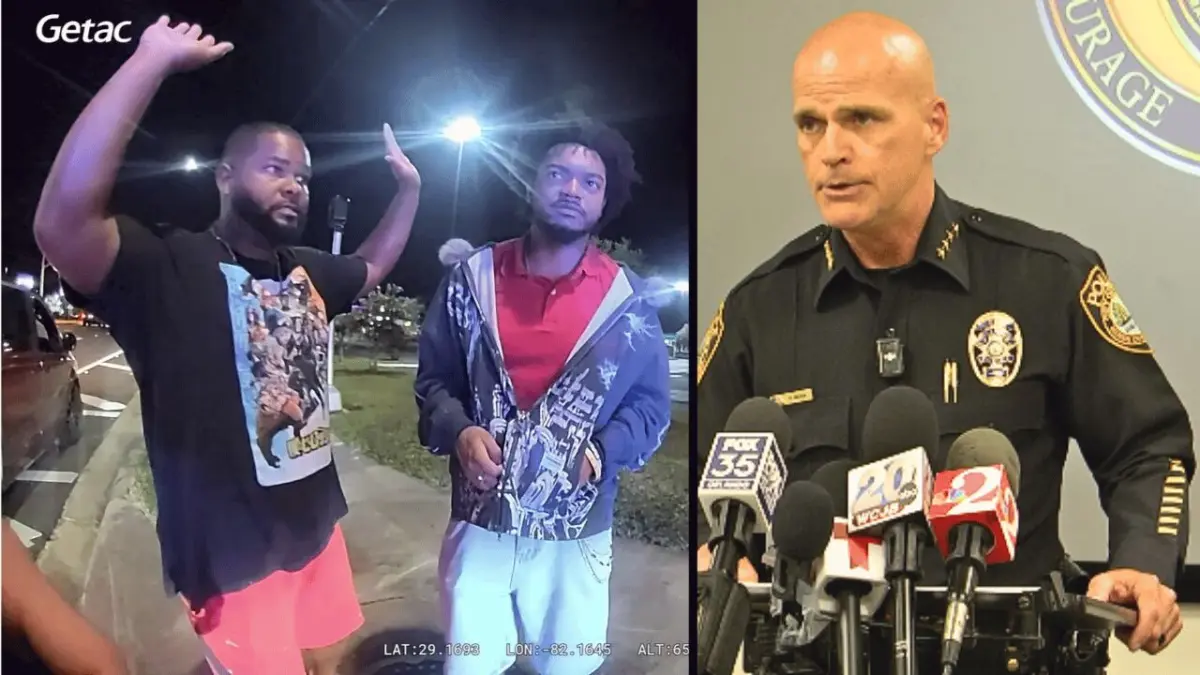
OCALA, Fla. — In the wake of a catastrophic Tuesday morning collision that claimed the lives of a 51-year-old mother and her 31-year-old son, the Ocala Police Department (OPD) is facing intense public scrutiny and profound institutional fallout. During an emergency press conference convened on Tuesday night, Ocala Police Chief Michael Balken announced that a formal internal affairs investigation is underway concerning a gross dereliction of duty by a frontline patrol officer.
Just minutes before the fatal impact at the intersection of Southeast Maricamp Road and 36th Avenue, the same officer had direct contact with the occupants of the minivan involved in the crash. According to body-worn camera footage and departmental disclosures, the officer encountered two brothers arguing in the middle of a roadway while operating a motor vehicle. Despite clear, observable indicators of impairment—including admissions of alcohol consumption and erratic behavior—the responding officer failed to initiate a standard Driving Under the Influence (DUI) investigation. Instead, the driver was permitted to return behind the wheel and drive away.
Moments later, the minivan careened into an SUV carrying the mother and son, obliterating the vehicle and killing both occupants instantly.
The incident has laid bare glaring vulnerabilities in frontline policing protocols, decision-making, and officer training. The involved officer, who was in his initial 30-day probationary period following deployment to solo patrol, now faces potential termination. While no criminal charges are currently pending against the officer, Chief Balken has signaled a zero-tolerance approach to systemic failures that directly result in the loss of innocent civilian lives. As the Ocala Police Department scrambles to restore public trust, legal experts, traffic safety advocates, and grieving family members are demanding total transparency, structural accountability, and a comprehensive overhaul of how suspected impaired drivers are handled within city limits.
Detailed Chronology of Events
To fully comprehend the magnitude of the tragedy that unfolded on Tuesday morning, investigators have constructed a precise timeline of events, tracing the path from the initial police interaction to the final, fatal impact.
The Initial Roadway Encounter
At approximately [Early Morning Hours], an Ocala police officer—a probationary rookie within his first 30 days of active service—responded to a disturbance in a roadway. Upon arrival, the officer discovered a minivan stopped mid-street, with two adult brothers engaged in a heated verbal altercation.
According to body-camera footage released by the department, the interaction quickly revealed signs of intoxication that should have immediately triggered a formal field sobriety test. The dialogue captured on the recording underscores a profound failure of basic police observation and protocol:
- Officer: "It was my birthday today, and he drank a little bit more than he was supposed to drink, and that’s all it was."
- Civilian Response: "You fine with him taking you home? Yeah, he’s fine. You’re not going to argue. We’re chilling. No crime."
Despite these explicit admissions that the driver had consumed alcohol in excess, the officer accepted the occupants’ assertions at face value. He neglected to administer standardized field sobriety exercises, failed to request a breathalyzer test, and neglected to conduct even a cursory evaluation of the driver’s motor skills, cognitive function, or spatial awareness.
Instead of securing the vehicle, detaining the impaired driver, or arranging alternative transportation, the officer permitted the brothers to re-enter the minivan and continue their journey.
The Fatal Intersection Collision
Merely minutes after the police encounter concluded, the minivan approached the high-traffic intersection of Southeast Maricamp Road and 36th Avenue. Operating the vehicle under the influence, the driver failed to navigate the roadway safely, resulting in a high-speed collision with an oncoming SUV.
The physical impact of the crash was catastrophic. The SUV, carrying a 51-year-old mother and her 31-year-old son, took the brunt of the collision. The kinetic energy transferred during the impact crushed the cabin of the SUV, inflicting fatal trauma on both occupants. Emergency medical services and additional police units rushed to the scene, but life-saving measures proved futile. Both mother and son were pronounced dead at the scene.
Post-Crash Fallout
Following the collision, emergency personnel extricated the occupants of the minivan. The driver of the minivan, whose impairment had gone uninvestigated just minutes prior, sustained critical, life-threatening injuries and was rushed to a regional trauma center, where he remains hospitalized under police guard. His brother, the passenger who had been arguing with him on the roadway, sustained only minor injuries.
As accident reconstruction teams fanned out across Southeast Maricamp Road to map the debris field and calculate vehicular speeds, supervisors realized the devastating intersection between the morning’s earlier traffic stop and the fatal wreck. The body-camera footage was quickly secured, setting off an immediate administrative crisis within the upper echelons of the Ocala Police Department.
Supporting Context & Metrics
The Ocala tragedy is not an isolated incident within the broader landscape of American law enforcement, but it highlights a lethal convergence of poor discretion, inadequate probationary oversight, and the persistent national crisis of impaired driving.
The National Impact of Impaired Driving
According to data compiled by the National Highway Traffic Safety Administration (NHTSA), alcohol-impaired driving remains one of the leading causes of preventable fatalities on United States roadways. On average, a person is killed in a drunk-driving crash every 39 minutes, accounting for nearly one-third of all traffic-related deaths nationwide.
When law enforcement officers fail to intercept impaired drivers during proactive stops, the consequences are frequently devastating. Traffic safety experts emphasize that standardized field sobriety tests (SFSTs)—including the horizontal gaze nystagmus, the walk-and-turn, and the one-leg stand—are specifically designed to establish probable cause and remove dangerous operators from public thoroughfares before catastrophe strikes. The Ocala officer’s decision to bypass these protocols represents a fundamental breakdown in the primary mission of modern policing: public safety and crime prevention.
Probationary Officers and Field Training Deficits
The identity of the involved officer has been withheld pending the conclusion of the internal affairs investigation, but Chief Balken confirmed a critical detail: the officer was within his first 30 days on the job.
This revelation has cast a harsh spotlight on the Ocala Police Department’s Field Training Officer (FTO) program and probationary evaluation metrics. While rookie officers naturally undergo a steep learning curve, critical safety protocols—such as identifying signs of DUI and managing traffic stops involving intoxicated individuals—are core competencies taught extensively during police academy training.
Questions are now being raised regarding:
- Direct Supervision: Was the rookie officer operating independently prematurely, or were his training supervisors negligent in evaluating his readiness for solo patrol?
- Departmental Culture: Is there an institutional tolerance for casual dismissals of low-level disturbances that masks underlying public safety hazards?
- Refresher Training: Does the OPD conduct regular evaluations of veteran and probationary officers alike regarding DUI detection standards?
Official Statements and Leadership Response
Facing a community gripped by grief and outrage, Ocala Police Chief Michael Balken stepped before the media on Tuesday evening to address the department’s failures directly. Eschewing the defensive postures often adopted by law enforcement agencies during high-profile scandals, Balken’s tone was marked by profound contrition and raw accountability.
Chief Michael Balken’s Address
"I really just can’t express how deeply disappointed and saddened that I am of this situation, and I really want our community to know that we’re taking every necessary step to investigate thoroughly and address any mistakes that contributed to this terrible loss," Chief Balken stated during the emergency briefing.
"We owe it to the families involved and to this community to address these failures head on and to ensure these mistakes never, ever happen again."
Balken confirmed that he had personally met with the grieving family members of the victims, offering condolences and working in coordination with victim advocacy groups to provide immediate trauma support services.
Administrative and Disciplinary Outlook
Addressing the fate of the probationary officer, Chief Balken was unequivocal. While jurisdictional and statutory limitations mean that criminal charges against the officer are unlikely—given that his failure was one of omission rather than direct criminal malfeasance—the administrative consequences will be severe.
- Termination Proceedings: The internal affairs investigation is moving on an expedited track. Chief Balken indicated that the officer’s employment with the Ocala Police Department is expected to be terminated upon the formal conclusion of the probe.
- Policy Review: The department is undertaking a comprehensive review of all standard operating procedures related to traffic stops, roadside impairment evaluations, and the deployment of probationary personnel.
- Transparency Commitment: OPD leadership has pledged to release further documentation, including full unedited body-cam footage and completed internal investigation reports, as legally permitted under Florida public records laws.
Future Outlook & Systemic Reforms
As the community of Ocala mourns the senseless loss of a mother and her son, the shockwaves of this tragedy will likely reverberate through municipal governance, legal circles, and police administration for months to come.
Legal and Civil Implications
Legal analysts suggest that the surviving family members retain substantial grounds for civil litigation against the City of Ocala and the Ocala Police Department. While sovereign immunity laws frequently complicate lawsuits against government entities, exceptions exist for cases involving gross negligence or operational failures that directly endanger public safety. The clear evidentiary trail provided by the officer’s own body-camera footage—demonstrating an overt acknowledgment of alcohol consumption followed by a refusal to investigate—will likely serve as a central pillar in any subsequent civil proceedings.
Institutional Transformation
For Chief Balken and the Ocala Police Department, the road to redemption requires more than apologies; it demands structural reform. To rebuild public confidence, the agency must demonstrate that accountability is not merely reactive, but proactive. Key areas slated for immediate reform include:
- Enhanced FTO Oversight: Lengthening the supervised phase of rookie deployment and implementing mandatory remedial training modules for any officer exhibiting hesitation during roadside sobriety assessments.
- Mandatory DUI Screening Protocols: Instituting a strict departmental policy requiring supervisory sign-off or mandatory field sobriety testing whenever an officer encounters motorists displaying verified signs of alcohol or substance consumption.
- Community Trust Initiatives: Establishing open forums and advisory panels to maintain transparent communication channels between OPD leadership and Ocala residents, ensuring that community grievances are heard and addressed swiftly.
Ultimately, the lives of the 51-year-old mother and her 31-year-old son cannot be recovered. The Ocala Police Department is left to reckon with the sobering reality that a tragedy completely preventable through basic, diligent police work was instead enabled by a fatal lapse in professional judgment. The impending internal affairs findings and subsequent disciplinary actions will serve as an essential litmus test for an agency striving to prove that accountability still forms the bedrock of public service.

0 Comments