

Executive Overview
BRADFORD COUNTY, Fla. — The months-long, agonizing search for Emily Dennis, a Bradford County resident who had vanished under baffling circumstances nearly two weeks into the summer, came to a tragic and definitive end on Tuesday morning. Law enforcement officials confirmed that human remains, believed to belong to the missing woman, were discovered densely wooded alongside County Road 18.
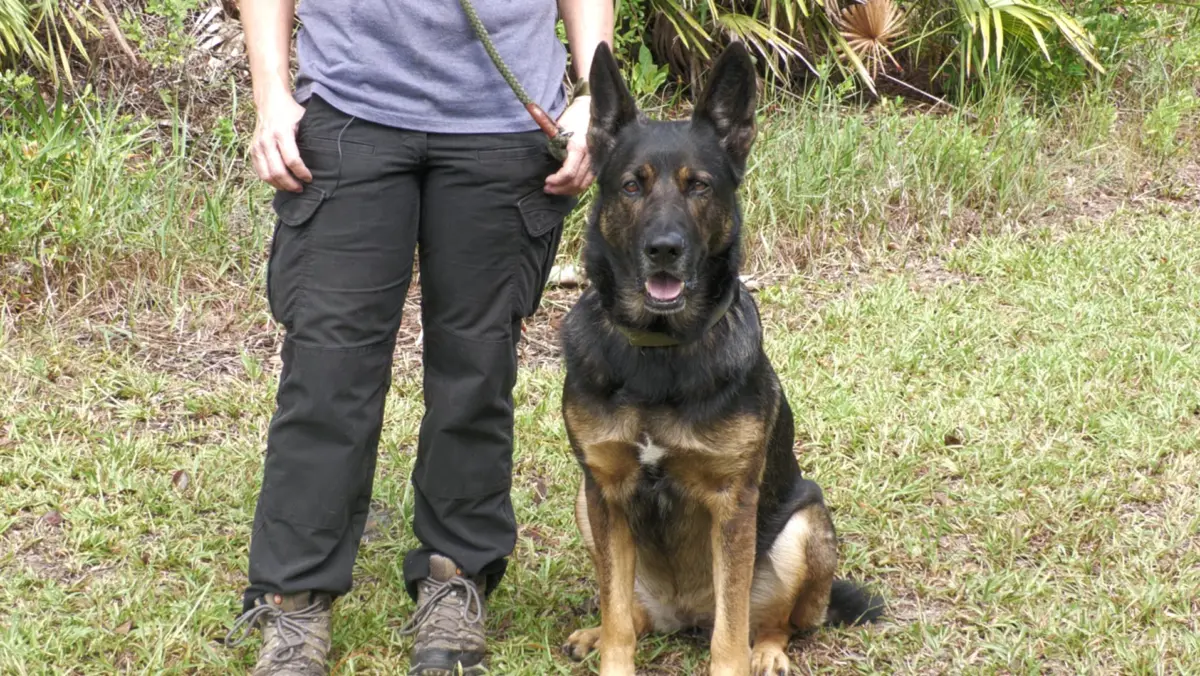
The breakthrough in the stagnant investigation was achieved not through traditional detective footwork or eyewitness tips, but via the specialized expertise of a K-9 human remains detection unit. Salty, a five-and-a-half-year-old canine deployed by the North Florida Search Team, successfully pinpointed the location of the remains, offering a mixture of professional triumph and profound grief to the search-and-rescue community.
While the Bradford County Sheriff’s Office (BCSO) stated that preliminary investigations indicate no foul play was involved, the definitive identification and determination of the cause of death remain pending following an exhaustive examination by the District Medical Examiner’s Office. For a community that spent weeks distributing flyers, organizing grassroots search parties, and praying for a safe return, Tuesday’s discovery marks the sobering transition from hope to the arduous process of healing and closure.
Detailed Chronology
The Disappearance: July 10
The timeline of the tragic sequence of events began on July 10, when Emily Dennis was last seen by family members at her residence in rural Bradford County. In the immediate aftermath of her disappearance, loved ones initiated informal search efforts before officially notifying local authorities. Initial canvassing of the neighborhood and immediate surroundings yielded few clues, launching a protracted investigation by the Bradford County Sheriff’s Office that spanned multiple weeks.
As July bled into August, the initial urgency transformed into a painful waiting game for the Dennis family. The lack of digital footprints, financial transactions, or credible sightings created a vacuum of information that perplexed investigators. With standard investigative leads exhausting themselves, the scope of the operation shifted from a rescue mission to a recovery operation, necessitating specialized resources capable of scouring vast expanses of North Florida’s rugged terrain.
The Breakthrough: Tuesday Morning
By late August, the operation entered a critical new phase when BCSO leadership requested specialized assistance from regional volunteer search outfits, specifically targeting the North Florida Search Team and their cadre of human-remains detection (HRD) dogs.
On Tuesday morning, tactical deployment teams assigned three distinct K-9 units to systematically sweep targeted geographical zones adjacent to County Road 18. Among them was Salty, a seasoned canine handler team led by Victoria Miller. Moving through thick underbrush and densely wooded acreage, Salty altered her behavior—a subtle shift that instantly alerted her handler to the presence of human decomposition odor.
Following the dog’s lead deep into the woodland, Miller and supporting deputies arrived at the final resting spot of the remains. Subsequent recovery operations by crime scene technicians secured the site, and preliminary assessments by investigators strongly aligned the physical context with the missing person profile of Emily Dennis.
Supporting Context & Metrics
The discovery underscores the critical, yet often under-recognized, role that specialized search-and-rescue (SAR) assets play in modern law enforcement operations.
The Anatomy of Canine Human Remains Detection
Human-remains detection dogs like Salty represent the absolute pinnacle of canine olfactory training. Unlike tracking dogs—which follow the specific scent trail of a living person—HRD dogs are trained to detect the volatile organic compounds (VOCs) released during the decomposition of human tissue. These canines are conditioned to identify these chemical signatures across multiple stages of decomposition, whether the remains are subterranean, submerged in water, or concealed beneath heavy vegetation.
According to search-and-rescue experts, an HRD dog’s olfactory capabilities are magnified by millions compared to humans, allowing them to detect microscopic scent particles carried on thermal updrafts through thick forest canopies. In environments like rural Bradford County—characterized by dense pine flatwoods, palmetto thickets, and swampy acreage—visual searches are inherently limited. A human searcher can walk within feet of a subject and remain entirely oblivious, whereas a properly trained K-9 can sweep vast perimeters in a fraction of the time.
The Volunteer Backbone of Search Operations
The operation that led to the discovery of the remains relies almost exclusively on a decentralized network of volunteers. Organizations like the North Florida Search Team operate largely outside the scope of salaried municipal budgets, depending on donations, out-of-pocket investments by handlers, and uncompensated hours of rigorous training.
- Specialized Scarcity: Fully certified HRD dogs and their handlers are relatively rare within the state of Florida, creating high demand for their deployment across multiple jurisdictional lines.
- Rigorous Standards: To maintain operational credibility, canine teams must undergo continuous multi-year training regimens, testing against stringent national standards to ensure reliability under high-stress, high-distraction environments.
- Emotional Resilience: Handlers routinely subject themselves to high-risk, emotionally taxing environments without financial compensation, driven primarily by a civic obligation to bring missing persons home to their grieving families.
Official Statements and Human Perspectives
The human element of Tuesday’s discovery was articulated poignantly by those on the front lines of the recovery effort. Speaking to local media following the successful deployment, Victoria Miller reflected on the profound dichotomy of her work with Salty.
"She’s a working dog, so her job is human remains detection," Miller explained, describing the precise moment the dog caught the scent. "She is trained to locate human remains of multiple stages. Once she gets into odor, she follows her nose. I follow her. I recognize her change of behavior. And I noticed once we got into the woods that she appeared to be in odor. And I was following her and she led us right to her."
For Miller, who has spent four years partnering with Salty in similar harrowing operations, the emotional resonance of the work never dulls. It remains an internal balancing act between professional satisfaction and deep-seated empathy for the families affected.
"It just feels really good to be able to help this community help find missing people, bring closure," Miller said. "It’s a surreal mix between pride and sadness, because I’m very proud that my dog did a good job, but at the end of the day, it’s a sadness for a family."
Emphasizing the cooperative nature of the mission, Miller reiterated the volunteer ethos that defines organizations like the North Florida Search Team.
"Me and Salty volunteer our time, that’s as well as the North Florida Search Team. We are all volunteers. Human remains detection dogs, there’s not a lot of them out there, and we train to hold to the highest standards."
While law enforcement officials have maintained a measured public posture—noting that the Bradford County Sheriff’s Office is awaiting conclusive scientific confirmation from the medical examiner—the sentiment echoed throughout the county is one of somber finality. Detectives reiterated that the preliminary findings do not suggest criminal involvement, though every protocol for an unattended death investigation is being strictly observed.
Future Outlook
As the sun sets on the immediate recovery phase of this operation, several administrative and medical steps remain before the chapter on Emily Dennis’s disappearance can be officially closed.
Medical Examiner’s Investigation
The ultimate determination of identity and cause of death now rests in the hands of the District Medical Examiner’s Office. Because environmental exposure and elapsed time can complicate visual identifications, forensic pathologists will likely utilize dental records, DNA profiling, or anthropological comparisons to officially confirm that the remains recovered near County Road 18 belong to Emily Dennis. Furthermore, toxicological screens and internal examinations will be conducted to conclusively rule out or confirm any underlying medical events or external factors contributing to her death.
Community Impact and Support Services
For the Bradford County community and the immediate family of Emily Dennis, the transition from searching to mourning brings a new set of challenges. Local advocacy groups and victim support networks are expected to coordinate resources to assist the family through the upcoming memorial arrangements.
The successful deployment of Salty and the North Florida Search Team has also prompted renewed local conversations regarding the funding and resource allocation for volunteer search-and-rescue infrastructure within rural North Florida counties. Law enforcement analysts note that expanding partnerships with specialized canine units remains one of the most cost-effective and efficient strategies for addressing missing person cases across geographically challenging terrains.
Ultimately, while the outcome of Tuesday’s search was not the joyous reunion family and friends had prayed for since July 10, the intervention of dedicated handlers and their canine partners has ensured that Emily Dennis will be brought home, offering a fragile sense of peace to a grieving community.

0 Comments