
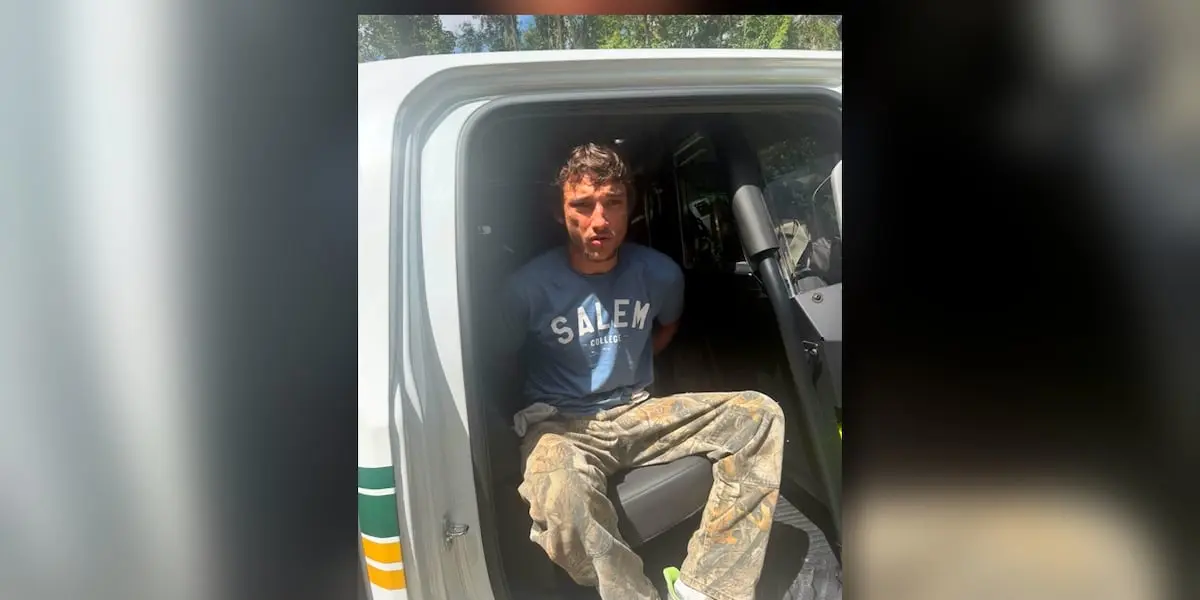

TRENTON, Fla. — Law enforcement authorities in North-Central Florida have significantly expanded the criminal case against a fugitive whose capture last month brought a tense conclusion to a multi-county manhunt. Terence Bartges Jr., arrested following a coordinated regional sweep across Gilchrist and Dixie counties, is now facing a substantial array of new felony counts, according to the Gilchrist County Sheriff’s Office.
The developments mark a critical juncture in an ongoing investigation that has taxed local resources, heightened community anxiety, and drawn the focus of multiple judicial circuits. Investigators state that forensic evidence, witness testimony, and recovered property have formally linked Bartges to at least four distinct criminal episodes spanning multiple jurisdictions. The additional charges—encompassing commercial and residential burglary, high-volume drug trafficking, and grand theft of motor vehicles—point to an alleged crime spree that persisted throughout the suspect’s time on the run.
As local, state, and federal coordination continues behind the scenes, law enforcement officials indicate that the investigation remains fluid. Additional indictments and charges are anticipated as forensic analysts process evidence recovered at the time of Bartges’s apprehension and during subsequent execution of search warrants.
Executive Overview
The escalation of legal jeopardy for Terence Bartges Jr. stems from a high-stakes operational period that culminated in Dixie County last month. For over a month, law enforcement agencies across the Suwannee River Valley corridor navigated a cat-and-mouse game with a suspect deemed by local commanders to be actively evading capture through rural evasion tactics, local networks, and rapid transit.
The operational arc of the case highlights the complex realities of policing largely rural, geographically expansive jurisdictions in North Florida. Gilchrist and Dixie counties, characterized by dense timberlands, rural residential parcels, and vast stretches of secondary two-lane highways, present unique terrain for fugitives seeking to elude detection. Bartges reportedly leveraged these environmental factors, shifting between properties and utilizing stolen conveyances to maintain mobility.
According to release logs and investigative briefings provided by the Gilchrist County Sheriff’s Office (GCSO), the primary catalyst for the renewed legal actions involves a consolidation of outstanding warrants and freshly uncovered offenses. Initially sought on felony narcotics distribution charges, Bartges now faces a comprehensive docket that transforms a localized drug apprehension into a multi-count prosecution encompassing property crimes, vehicular theft, and trafficking-level controlled substance offenses.
Legal analysts following the case note that the breadth of the charges positions the prosecution to seek significant sentencing enhancements if convictions are secured. The involvement of multiple agencies—including the Gilchrist County Sheriff’s Office, the Dixie County Sheriff’s Office, and supporting tactical units—underscores the seriousness with which regional law enforcement viewed the perceived threat posed by the fugitive prior to his confinement in the county detention system.
Detailed Chronology of Events
To understand the current legal landscape surrounding Terence Bartges Jr., investigators have reconstructed a detailed timeline tracking his movements, the escalation of law enforcement operations, and the critical operational window that led to his eventual capture.
Phase One: The Genesis of the Manhunt
The events leading to the monthlong manhunt began to take shape during routine investigative work and intelligence-gathering operations conducted by the Gilchrist County Sheriff’s Office narcotics division. Over several weeks, investigators developed information pointing to Bartges as a central figure in local illicit drug distribution networks operating within the Tri-County area (Gilchrist, Dixie, and Levy counties).
As surveillance intensified, warrants for narcotics distribution were drafted and approved by the local judicial circuit. However, prior to the systematic execution of these warrants, investigators encountered Bartges in the field, triggering an immediate foot pursuit. GCSO deputies reported that Bartges successfully eluded capture by fleeing into heavily wooded terrain, initiating a protracted manhunt that would stretch across county lines and severely test inter-agency communication and tactical tracking resources.
Phase Two: The Monthlong Evasion
For approximately thirty days, the manhunt transformed into an elusive regional puzzle. Operating across both Gilchrist and Dixie counties, Bartges managed to stay one step ahead of tracking teams, K-9 units, and aerial surveillance assets.
Law enforcement sources indicate that during this monthlong period of evasion, Bartges did not remain dormant. Investigators allege that to sustain his flight, the suspect engaged in a secondary wave of opportunistic criminality. These actions included:
- The unlawful entry of residential and outbuilding structures to secure food, supplies, and temporary shelter.
- The targeted theft of motor vehicles to facilitate rapid transit between rural hideouts in Gilchrist and Dixie counties.
- The continued acquisition and distribution of controlled substances to finance his ongoing efforts to avoid law enforcement detection.
The convergence of these distinct criminal acts prompted multiple victims to come forward, filing reports with local sheriff’s offices regarding stolen trucks, compromised properties, and missing valuables. Investigators quickly cross-referenced these fresh complaints with the active fugitive profile of Terence Bartges Jr., laying the groundwork for the consolidated charges now facing the suspect.
Phase Three: The Arrest in Dixie County
The monthlong operation reached its climax in Dixie County. Acting on a coordinated tip developed through a mix of digital footprint analysis and community tips, tactical deputies and patrol units converged on a rural location in Dixie County.
The arrest occurred precisely one day after a near-miss encounter in Gilchrist County, where deputies had once again caught sight of the suspect only to watch him slip away into dense cover. Warned by prior operational frustrations, the multi-agency task force established a tight perimeter around the Dixie County property.
Faced with overwhelming tactical positioning and confined movement routes, Bartges surrendered without major incident. He was taken into custody by Dixie County deputies, who subsequently transferred him to holding facilities to face initial local charges before coordinating the transfer of warrants and evidence back to Gilchrist County authorities.
Phase Four: Post-Arrest Investigations and New Charges
Following his physical confinement, the focus of the investigation shifted from tactical apprehension to forensic exploitation and case building. Detectives from the Gilchrist County Sheriff’s Office executed multiple search warrants on vehicles recovered during the investigation and property associated with the suspect’s movements.
The fruits of these searches provided the missing evidentiary links connecting Bartges to four separate, previously unsolved or uncharged criminal files. On the strength of this newly compiled case file, prosecutors and investigators formally filed the expanded charges—burglary, drug trafficking, and vehicle theft—cementing the state’s intent to pursue a robust, multi-faceted prosecution.
Supporting Context & Metrics
The apprehension of Terence Bartges Jr. and the subsequent expansion of his criminal charges occur against a broader backdrop of rural law enforcement challenges in North-Central Florida. Examining the logistical, geographic, and socio-economic factors inherent to Gilchrist and Dixie counties provides essential context for understanding why the manhunt required a month to resolve and why the resulting charges span multiple distinct criminal categories.
Geographic and Demographic Realities
Gilchrist County, encompassing roughly 350 square miles with a population hovering around 18,000 residents, and neighboring Dixie County, spanning over 700 square miles with a population near 17,000, represent classic examples of rural American jurisdictions. Both counties feature:
- Low Population Densities: Vast tracts of private timberland, state-managed conservation areas, and agricultural acreage create thousands of acres of unpopulated cover.
- Limited Municipal Infrastructure: With few incorporated municipalities and expansive unincorporated territory, local sheriff’s offices bear the primary responsibility for law enforcement across massive geographic sectors.
- Response Time Variables: Deputy-to-citizen ratios necessitate wide geographic patrol sectors, meaning that a single pursuit or perimeter establishment can temporarily deplete available shift strength across an entire county.
Law enforcement administrators frequently note that fugitives familiar with the local terrain can exploit these conditions. Abandoned hunting camps, rural outbuildings, and secondary logging roads provide numerous pathways for evasion that are difficult to monitor without dedicated aviation assets or specialized tracking units.
The Intersection of Narcotics and Property Crime
Criminologists studying rural crime trends frequently point to the cyclical relationship between narcotics distribution and property crimes such as burglary and grand theft auto. The charges leveled against Bartges—combining high-volume drug trafficking with vehicle theft and burglary—illustrate this dynamic in a real-world setting.
According to investigative summaries:
- Drug Trafficking: The initial impetus for the warrant stems from quantities of controlled substances exceeding legal thresholds for simple possession, indicating distribution-level enterprise. In rural areas, narcotics distribution networks often rely on decentralized caches and local residential safe houses.
- Property Crimes of Necessity and Mobility: As a suspect remains on the run, the immediate need for sustenance, shelter, and transportation drives opportunistic property crimes. The theft of motor vehicles allows fugitives to break out of established geographical containment perimeters, forcing law enforcement to widen their operational mesh across county lines.
Statistical Overview of Regional Task Force Operations
While comprehensive regional crime statistics for the current fiscal quarter remain subject to final state reporting adjustments, local sheriff’s offices have reported a steady uptick in cross-jurisdictional task force requests. The ability of Gilchrist and Dixie county agencies to share intelligence databases, coordinate radio frequencies, and pool tactical personnel has become an essential countermeasure against mobile criminal elements operating within the Suwannee River basin.
Official Statements
Law enforcement leadership has maintained a measured yet resolute posture regarding the arrest and subsequent charging of Terence Bartges Jr. The successful conclusion of the monthlong manhunt and the formalization of the expanded case file reflect intensive inter-agency cooperation.
In an official joint briefing, representatives of the Gilchrist County Sheriff’s Office emphasized the tenacity of the investigative personnel involved:
"The successful apprehension of Terence Bartges Junior, followed closely by the thorough investigative work that connected him to multiple distinct criminal cases, is a testament to the dedication of our deputies and our regional partners. Fugitives who believe they can exploit our rural landscape to evade justice will find that our resolve does not wane with time. We extend our gratitude to the Dixie County Sheriff’s Office for their instrumental support during the apprehension phase, and our investigators will continue to build a comprehensive case to ensure accountability across all counts."
Further commentary from supervisory investigators highlighted the community impact of the operation:
"When a suspect spends a month actively running from the law in a rural environment, the collateral impact on local property owners—through burglaries and stolen vehicles—is significant. By consolidating these four separate cases into a unified prosecution, we are addressing the full scope of the harm caused during this evasion period. Our work does not stop here; as forensic analysis continues, we remain prepared to bring forward any additional charges warranted by the evidence."
Defense representatives or legal counsel for Terence Bartges Jr. have not yet issued a formal public statement regarding the expanded list of charges, as initial arraignment and formal bond hearings are pending within the local judicial circuit. Under Florida law, the defendant is presumed innocent until proven guilty in a court of law.
Future Outlook
As the legal proceedings surrounding Terence Bartges Jr. advance from the investigative phase into the judicial arena, several key milestones and procedural developments will shape the trajectory of the case.
Upcoming Judicial Proceedings
- Arraignment and Formal Charges: Bartges is scheduled to appear before a circuit court judge for formal arraignment on the consolidated docket, which now encompasses charges of drug trafficking, commercial and residential burglary, grand theft of motor vehicles, and resisting law enforcement.
- Bond and Pretrial Release Hearings: Given the nature of the charges—specifically the combination of active felony warrants, flight from law enforcement, and trafficking-level narcotics counts—prosecutors are expected to argue for high bond conditions or pretrial detention without bond, citing the demonstrated risk of flight and danger to the community.
- Discovery and Evidence Review: Defense counsel will review the state’s evidentiary disclosures, which include forensic reports from recovered vehicles, physical evidence gathered during search warrant executions, and digital communications intercepted during the investigation.
Potential for Additional Indictments
Investigators have maintained an open posture regarding the scope of the final charging document. Law enforcement sources reiterate that "more charges are expected" as analysts continue to process physical and digital evidence seized during the multi-county operation. Unresolved property crime reports from the thirty-day window of the manhunt are actively being cross-referenced against recovered items and suspect timelines.
Broader Impacts on Regional Policing
The monthlong manhunt and its multi-charge resolution serve as a case study for law enforcement agencies navigating rural crime trends in North-Central Florida. The operation has already prompted internal reviews of inter-agency communication protocols, joint tactical response frameworks, and rural surveillance methodologies within the Gilchrist-Dixie-Levy judicial circuit.
As the judicial process unfolds, the community and local authorities will look to the courts to deliver a definitive resolution to a case that tested regional resources and underscored the persistent challenges of rural law enforcement.

0 Comments