

Executive Overview
MOBILE, Ala. — In a shocking case that has sent ripples through the medical community and quiet residential enclaves of the Gulf Coast, a prominent Mobile-area neurosurgeon has been arrested and charged with multiple counts of possession and production of child sexual abuse material (CSAM).
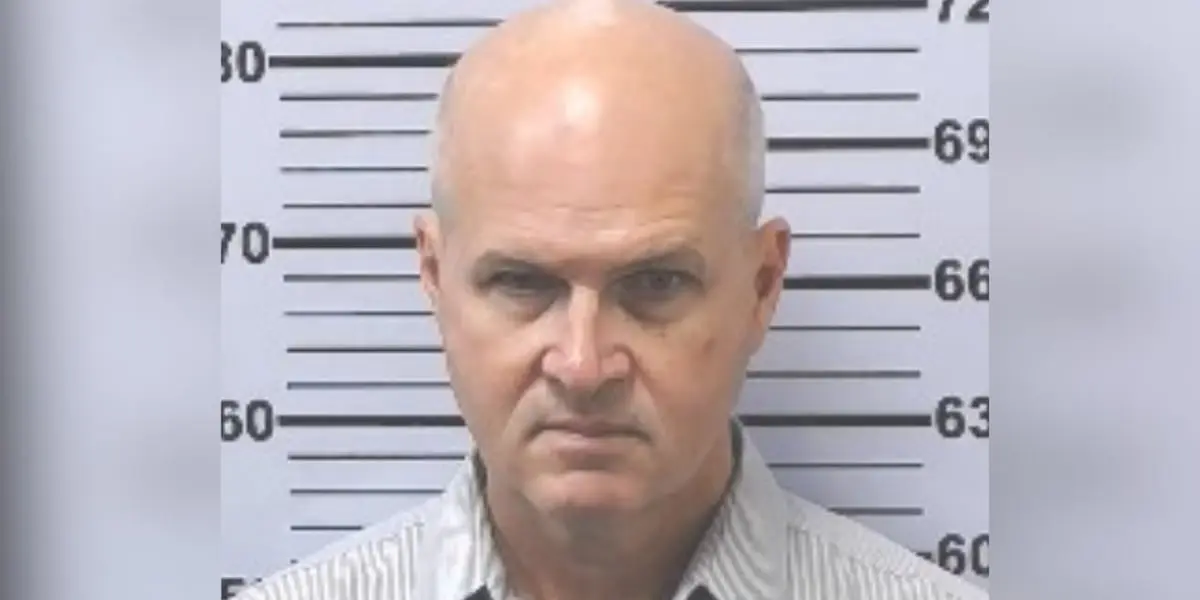
Shawn Broxton Clark, 59, a licensed medical doctor operating out of an office located near Airport Boulevard, was taken into custody following an intensive multi-agency cyber investigation. According to the Mobile County Sheriff’s Office, Clark is currently facing a 10-count indictment: five felony counts of possession of child pornography and five felony counts of production of child pornography. The production charges alone carry severe statutory penalties ranging from 10 years to life in federal and state correctional facilities.
Clark was ordered held without bond pending a critical detention and preliminary hearing. Investigators have revealed that the scope of the alleged crimes extends beyond passive consumption, stating that physical evidence recovered from both Clark’s residential property and his medical practice indicates active involvement in the creation of illicit media targeting minors.
The arrest underscores the pervasive and indiscriminate nature of online child exploitation. Law enforcement officials have emphasized that individuals engaging in such crimes occupy diverse professional and socioeconomic strata, frequently maintaining respectable public facades while committing severe offenses behind closed doors. As the Mobile County Sheriff’s Office works in tandem with federal cyber-crime task forces, investigators are racing against the clock to analyze seized digital hardware, identify potential victims, and unravel the full network associated with the case.
Detailed Chronology of the Investigation
The catastrophic downfall of Shawn Broxton Clark did not happen overnight; rather, it represents the culmination of a sophisticated, months-long digital forensics operation spearheaded by local law enforcement and national child protection agencies.
March 2026: The Initial Cyber Tip
The trajectory of the investigation shifted in March 2026, when the Mobile County Sheriff’s Office received a high-priority referral from the National Center for Missing and Exploited Children (NCMEC). NCMEC serves as the central clearinghouse for reports of online child sexual exploitation, frequently routing automated cyber-tips generated by electronic service providers, internet platforms, and global financial institutions.
According to Capt. Mark Bailey of the Mobile County Sheriff’s Office, the initial alert pointed directly toward suspicious internet activity linked to specific Internet Protocol (IP) addresses. Subsequent digital tracking revealed that these digital footprints traced back to two distinct locations associated with Clark: his primary residence in the affluent Montrose community and his professional medical practice, Clark Neurosurgery, situated off Airport Boulevard in Mobile.
Surveillance and Warrant Execution
Armed with the cyber-referral from NCMEC, investigators initiated a covert digital surveillance phase to corroborate the source of the traffic. Electronic monitoring established a consistent pattern of data transmission linked to peer-to-peer sharing networks and encrypted sites notorious for hosting and distributing illicit content involving minors.
With sufficient probable cause established, local authorities secured search warrants for both the Montrose residence and the Airport Boulevard medical office. During the coordinated raids, Mobile County Sheriff’s deputies, assisted by specialized digital forensic examiners, seized a vast array of electronic hardware. The seized items included desktop computers, laptops, external hard drives, smartphones, and various cloud-storage access points.
Forensic Analysis and Escalation of Charges
Initial on-scene triage of the digital media yielded immediate results. Forensic experts uncovered multiple files containing graphic images and video streams of minors, with preliminary estimates placing the age of the victims around 13 years old.
Furthermore, investigators noted that the evidence transcended mere possession. The physical and digital footprints retrieved from the hard drives indicated active participation. According to statements released by the sheriff’s office, Clark allegedly engaged in viewing, downloading, possessing, and producing the illicit material. These findings forced an escalation in the legal charges, culminating in the dual classification of possession and production counts.
Following his apprehension, Clark was booked into the Mobile County Metro Jail without the option of bail. State medical records and jail intake documentation confirm his incarceration while legal teams prepare for the upcoming judicial proceedings.
Supporting Context & Metrics: The Mechanics of Modern Cyber Investigations
The arrest of Shawn Broxton Clark highlights the staggering volume of digital crime handled daily by law enforcement agencies, as well as the specialized technological infrastructure required to intercept offenders.
The Role of NCMEC and Electronic Service Providers
The National Center for Missing and Exploited Children acts as the critical bridge between private technology companies and law enforcement. Under federal reporting mandates, Electronic Service Providers (ESPs)—ranging from major cloud storage giants and social media networks to niche email and file-hosting platforms—are legally required to report suspected instances of child sexual abuse material to NCMEC’s CyberTipline.
In recent years, the volume of these tips has skyrocketed exponentially, driven by advanced automated scanning algorithms, artificial intelligence, and hash-matching technologies deployed by tech companies to detect known CSAM. Once NCMEC analyzes, verifies, and geographic-tags a tip, it is immediately funneled down to the appropriate local, state, or federal law enforcement jurisdiction for physical intervention.
Socioeconomic Blind Spots and Professional Facades
A central theme emerging from law enforcement briefings surrounding the Clark case is the dismantling of public misconceptions regarding the profile of child exploitation offenders. Speaking to the media, Capt. Mark Bailey addressed the community’s shock by articulating a harsh reality of modern criminal profiling:
"It cuts across all socioeconomic parts of the fabric of our society. It has nothing to do with money, status, stature — anything of that nature. Obviously, there are suspects of all walks of life."
Research in forensic psychology and criminology consistently supports this assertion. Offenders frequently occupy positions of high trust—such as physicians, educators, clergy, and corporate executives—utilizing their professional standing and financial resources to mask deviant behavior. In Clark’s case, his background as a specialized neurosurgeon with a medical degree from the University of Miami’s Miller School of Medicine provided a veneer of respectability that made the allegations particularly jarring to neighbors and patients alike.
Digital Footprints and Physical Evidence
Unlike traditional crimes where physical contact leaves tangible forensic traces like DNA or fingerprints, digital crimes require a complex union of cyber-forensics and physical property seizures. Law enforcement agencies increasingly rely on specialized Computer Forensics Units capable of bypassing encrypted operating systems, recovering deleted data, and mapping network traffic logs.
In this instance, investigators emphasized that the acquisition of physical hardware—specifically hard drives and local storage media—was vital. Digital forensics not only proves the act of downloading or streaming illicit files but can also trace metadata back to localized recording devices, thereby substantiating the severe production charges that elevate the case from a standard possession offense to a high-tier felony carrying a potential life sentence.
Official Statements and Community Impact
The swift progression of the case has generated substantial commentary from law enforcement officials, legal analysts, and members of the local community who found themselves living adjacent to an alleged offender.
Law Enforcement Perspectives
The Mobile County Sheriff’s Office has maintained a posture of rigorous transparency combined with grave determination. Captain Mark Bailey’s public briefings have underscored the agency’s commitment to victim identification and the absolute enforcement of the law, regardless of the suspect’s professional status.
Law enforcement agencies have also noted that Clark is currently cooperating with the ongoing investigation. While cooperation can sometimes alter the trajectory of pre-trial negotiations or aid investigators in mapping out broader networks of distribution, prosecutors have remained firm on the severity of the charges filed.
Community Reaction in Montrose and Mobile
In the quiet, tight-knit residential community of Montrose, where Clark maintained a home, the news was met with profound disbelief. Neighbors interviewed by regional media outlets expressed a deep sense of cognitive dissonance upon learning of the arrest.
Lee Martin, a local resident living in proximity to Clark’s property, encapsulated the sentiments of the neighborhood:
"Shocked. Nice people. Would never expect that."
This sentiment is a common psychological reaction in communities touched by high-profile white-collar or professional arrests. The duality of an individual maintaining a polished, community-accepted public persona while allegedly harboring severe criminal proclivities often leaves local residents struggling to reconcile their personal interactions with the severity of the judicial charges.
Professional Fallout: Clark Neurosurgery
In the wake of the arrest, professional repercussions have been immediate. Clark Neurosurgery, the medical practice operating off Airport Boulevard that specialized in the diagnosis and treatment of age-related neurological conditions, has faced immediate operational disruption. State medical boards are monitoring the criminal proceedings closely, and emergency suspensions or revocations of medical licenses are anticipated as the legal process unfolds.
Patients who relied on the practice for chronic neurological care are currently left navigating alternative healthcare pathways as the clinic’s future remains entirely uncertain.
Future Outlook & Legal Proceedings
As the case moves forward, several critical phases will dictate the legal fate of Shawn Broxton Clark and the broader scope of the investigation.
The Upcoming Judicial Hearing
The immediate legal milestone is the scheduled pre-trial detention hearing. Because Clark was remanded to the Mobile County Metro Jail without bail, his defense attorneys are expected to argue for bond conditions or house arrest, while the prosecution will likely push for continued detention, citing the severity of the felony production charges, the potential risk of flight, and the threat to public safety.
Federal vs. State Jurisdictional Considerations
While the initial charges and arrests have been executed at the local level by the Mobile County Sheriff’s Office, legal experts note that cases involving digital child exploitation and interstate or international cyber networks frequently attract federal scrutiny. Federal agencies, including Homeland Security Investigations (HSI) or the Federal Bureau of Investigation (FBI), often review local cases to determine whether federal indictments under broader statutes are warranted, which could result in federal prosecution and mandatory minimum sentencing guidelines.
The Search for Victims and Network Expansion
Perhaps the most critical—and harrowing—aspect of the ongoing investigation is the active effort by law enforcement to identify the victims whose images were allegedly produced and possessed by the suspect. Investigators are currently cross-referencing seized digital files with national and international missing and exploited children databases, utilizing advanced facial recognition, clothing identification, and background environment matching.
Furthermore, forensic examiners are probing the communication channels, chat logs, and encrypted forums associated with the seized IP addresses to determine whether Clark operated in isolation or was part of a broader, organized online syndicate dedicated to the creation and distribution of child sexual abuse material.
As the legal wheels turn in Mobile, Alabama, the case serves as a grim reminder of the vigilance required by modern law enforcement to combat digital exploitation, demonstrating that no profession, status, or community is immune to the dark realities of cyber-enabled crime.

0 Comments