

Executive Overview
In a sweeping food safety action that impacts households across a large portion of the United States, federal regulators have announced a critical recall of popular frozen berry products sold at major national retailers, including Walmart and Trader Joe’s. Initiated by Frutas y Hortalizas del Sur S.A.—operating under the American trade umbrella of Comfrut—the recall spans multiple states, territories, and districts due to a confirmed contamination of Escherichia coli (E. coli). The pathogen has already been tied to a multi-state outbreak resulting in a dozen-and-a-half infections and multiple hospitalizations.
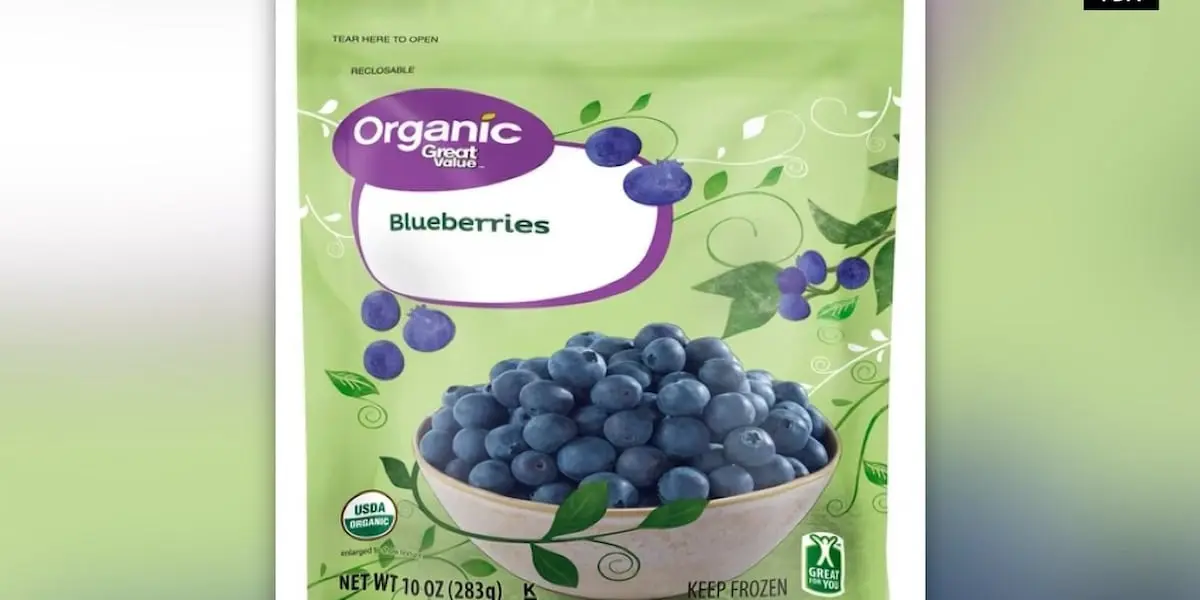
The affected merchandise includes several lines of frozen organic fruits, specifically organic blueberries, organic triple berry blends, and organic mixed berry blends. Because these products are commonly stored in residential freezers for extended periods—often used in morning smoothies, baking, or breakfast bowls—public health officials fear that many consumers remain entirely unaware that a dangerous biological hazard is sitting in their kitchens.
The U.S. Food and Drug Administration (FDA), working in tandem with the Centers for Disease Control and Prevention (CDC) and state-level health departments, has urged consumers to immediately check their freezers. Individuals who discover any of the matching lot numbers, UPC codes, and best-by dates are instructed to either discard the items safely or return them to the point of purchase for a full refund. This comprehensive report details the scope of the recall, the specific product identifiers, the epidemiological background of the outbreak, and the broader implications for the global supply chain of imported frozen produce.
Detailed Chronology of the Outbreak and Recall
The timeline of this public health crisis highlights the complex, often protracted nature of tracking foodborne illnesses back to their agricultural origins.
The Spring and Summer Waves (May – August 2026)
Between May and August 2026, public health monitoring systems began detecting an abnormal cluster of gastrointestinal illnesses across multiple U.S. jurisdictions. Clinicians treating the patients noted symptoms consistent with severe bacterial food poisoning. As stool samples were sent to state and federal reference laboratories, whole genome sequencing (WGS) revealed a chilling commonality: the victims were infected with a specific, highly aggressive strain of Shiga toxin-producing E. coli known as E. coli O145:H28.
Epidemiologists from the CDC immediately launched standardized traceback interviews. Patients and their families were asked to detail everything they had consumed in the days leading up to their symptom onset. A recurring dietary vector quickly emerged: multiple patients reported eating store-bought frozen organic blueberries and berry medleys.
The Traceback Investigation
By mid-summer, federal investigators traced the contaminated supply chain backward from retail shelves to distribution centers, and ultimately to international agricultural processors. The trail led directly to Frutas y Hortalizas del Sur S.A., a major agricultural producer and exporter based in San Carlos, Chile.
As regulatory scrutiny intensified, the company—alongside domestic distributors—began executing voluntary recalls. However, as testing data expanded and additional lots were flagged for potential cross-contamination or direct exposure during harvesting, processing, or packaging, the scope of the withdrawal broadened significantly. The expanded recall captured additional batches of Walmart’s Great Value brand and Trader Joe’s branded merchandise, cementing this as one of the most significant frozen fruit safety events in recent years.
Supporting Context, Product Metrics, and Affected Regions
To ensure maximum safety and compliance, consumers must verify the exact specifications of the recalled items. A minor discrepancy in lot codes can mean the difference between a safe product and a hazardous one. Below is the detailed inventory of the recalled items, categorized by brand, product type, UPC codes, lot numbers, expiration dates, and geographic distribution.
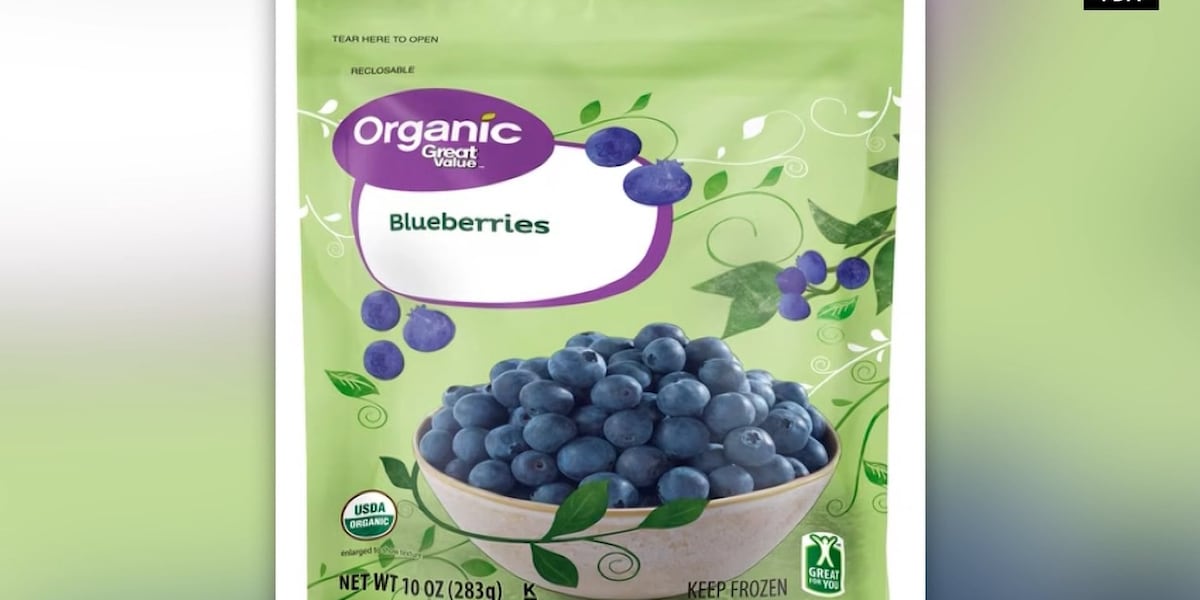
1. Walmart: Great Value Frozen Organic Blueberries
- Product Description: 10-ounce bags of Great Value Frozen Organic Blueberries.
- UPC Code: 7874211213
- Lot Codes & Best-By Dates:
- Lot Code: 6 019 01 — Best if used by Jan. 19, 2028
- Lot Code: 6 040 01 — Best if used by Feb. 9, 2028
- Lot Code: 6 163 01 — Best if used by June 12, 2028
- Distribution Footprint (30 States & Puerto Rico):
Alabama, Arkansas, Connecticut, Florida, Georgia, Illinois, Indiana, Iowa, Kansas, Kentucky, Louisiana, Michigan, Minnesota, Mississippi, Missouri, Nebraska, New Jersey, New York, North Carolina, North Dakota, Ohio, Oklahoma, Pennsylvania, South Carolina, South Dakota, Tennessee, Texas, Virginia, West Virginia, Wisconsin, and the territory of Puerto Rico.
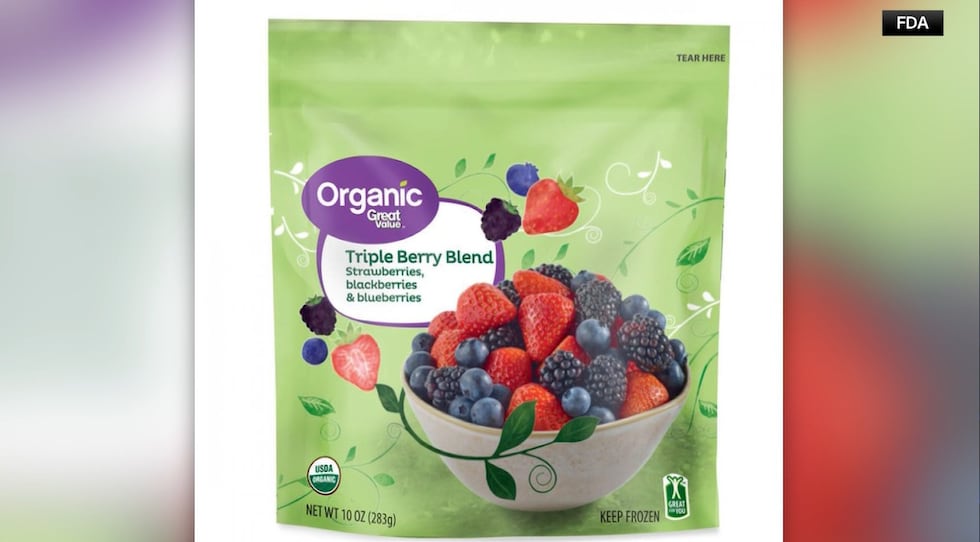
2. Walmart: Great Value Frozen Organic Triple Berry Blend
- Product Description: 10-ounce bags containing a blend of organic strawberries, blackberries, and blueberries.
- UPC Code: 7874211226
- Lot Codes & Best-By Dates:
- Lot Code: 6 031 01 — Best if used by Jan. 31, 2028
- Lot Code: 6 041 01 — Best if used by Feb. 10, 2028
- Distribution Footprint: Distributed across the same expansive 30-state and Puerto Rico network as the Great Value blueberries.
3. Trader Joe’s: Frozen Organic Mixed Berry Blend
- Product Description: 12-ounce packages containing a blend of organic strawberries, blackberries, blueberries, and raspberries.
- UPC Code: 00977654
- Lot Code: 6 051 01
- Best Before Date: Feb. 20, 2028
- Distribution Footprint (26 States & D.C.):
Alabama, Arkansas, Colorado, Delaware, Florida, Georgia, Illinois, Indiana, Iowa, Kansas, Kentucky, Louisiana, Maryland, Michigan, Minnesota, Missouri, Nebraska, North Carolina, Ohio, Oklahoma, Pennsylvania, South Carolina, Tennessee, Texas, Virginia, Wisconsin, and the District of Columbia.
Clinical Impact: Understanding E. coli O145:H28
The specific strain involved in this outbreak, E. coli O145:H28, is not a standard household bacterium. Like other Shiga toxin-producing E. coli (STEC) strains—such as the more commonly known E. coli O157:H7—this pathogen possesses virulence factors that can cause devastating systemic health issues.
Symptoms and Presentation
When a human ingests food contaminated with STEC, the incubation period typically ranges from three to four days, though symptoms can appear anywhere from one to ten days post-exposure. The clinical picture generally includes:
- Sudden, severe abdominal cramps and tenderness.
- Watery or bloody diarrhea.
- Nausea and occasional vomiting.
- Low-grade fever (though not present in all cases).
While many healthy adults recover fully within five to seven days without specific medical intervention, certain populations face exponentially higher risks of severe, life-threatening complications.
High-Risk Groups and Hemolytic Uremic Syndrome (HUS)
Young children, elderly individuals, and immunocompromised patients are exceptionally vulnerable to a catastrophic complication known as hemolytic uremic syndrome (HUS). HUS is a type of kidney failure that destroys red blood cells and damages the microscopic blood vessels filtering waste within the kidneys.
Medical experts emphasize that HUS is a medical emergency requiring immediate hospitalization. Symptoms that indicate the onset of HUS include:
- Decreased frequency of urination or complete cessation of urine output.
- Severe fatigue, lethargy, or extreme paleness.
- Unexplained bruising or bleeding from the nose and mouth.
The epidemiological data released by federal health authorities indicates that out of the 17 confirmed infections tied to this outbreak, six individuals were forced to seek inpatient hospital care—underscoring the potency and virulence of the bacterial strain contaminating the imported fruit.
Official Statements and Corporate Accountability
As the public health apparatus mobilized to contain the biological threat, regulatory bodies and corporate entities issued formal guidance and established communication channels for concerned consumers.
Federal Guidance
The U.S. Food and Drug Administration has reiterated that frozen fruits present unique food safety challenges. Because freezing preserves bacteria rather than killing them, any pathogens introduced during agricultural production, irrigation with contaminated water, or unhygienic handling during manual harvesting remain viable for months or even years in sub-zero environments.
The FDA’s Coordinated Outbreak Response and Evaluation (CORE) network continues to collaborate with Chilean agricultural authorities to inspect facilities, review sanitation protocols, and determine the exact point of contamination within the supply chain of Frutas y Hortalizas del Sur S.A.
Manufacturer and Retailer Response
Comfrut, the parent exporter, has established direct lines of communication for consumers seeking clarification or refunds. Individuals with questions regarding the recall can reach out via email at [email protected] or contact their customer service hotline at 336-899-5612, operating Monday through Friday from 8:00 a.m. to 6:00 p.m. Eastern Time.
Major retail partners, including Walmart and Trader Joe’s, have confirmed that the affected batches have been pulled from store shelves nationwide. Point-of-sale alerts are being displayed in participating locations, and automated inventory systems have placed hard sales blocks on the matching UPC codes to prevent any accidental purchases.
Future Outlook: Preventing Future Agricultural Contamination
The recurring nature of foodborne illness outbreaks linked to imported frozen berries—ranging from previous hepatitis A scares to multi-state Cyclospora and E. coli incidents—has reignited intense policy debates regarding the safety standards governing international produce imports.
Regulatory Reform and Supply Chain Transparency
Food safety advocates are calling for stricter enforcement of the FDA’s Food Safety Modernization Act (FSMA), specifically concerning the microbiological testing of irrigation water and the hygiene training of agricultural workers in foreign jurisdictions that supply the U.S. market. Because berries are delicate fruits that cannot be easily washed with harsh chemical sterilizers without ruining their texture and marketability, prevention at the farm level remains the single most effective line of defense.
Consumer Recommendations Moving Forward
As the investigation winds down and regulatory agencies evaluate the efficacy of the recall, food safety experts offer several pragmatic recommendations for consumers who frequently purchase frozen produce:
- Regularly Inspect Freezers: Periodically audit frozen goods against active FDA recall lists, as packaging often remains tucked away in freezers long after news cycles have faded.
- Practice Safe Food Handling: Always wash hands thoroughly after handling raw or frozen agricultural products, and clean any blenders, cutting boards, or countertops that came into contact with the berries.
- Cooking as a Kill Step: While blending frozen berries into cold smoothies does not eliminate bacteria, cooking them thoroughly (such as in jams, baked goods, or heated compotes) effectively reduces pathogen loads, though discarding contaminated items remains the only absolute guarantee of safety.
Consumers holding products matching the specified lot numbers and best-by dates are firmly advised to dispose of them immediately or return them to Walmart or Trader Joe’s for a full refund. Public health officials will continue to monitor emergency room admissions and laboratory reports to ensure that the outbreak has been successfully suppressed.

0 Comments