
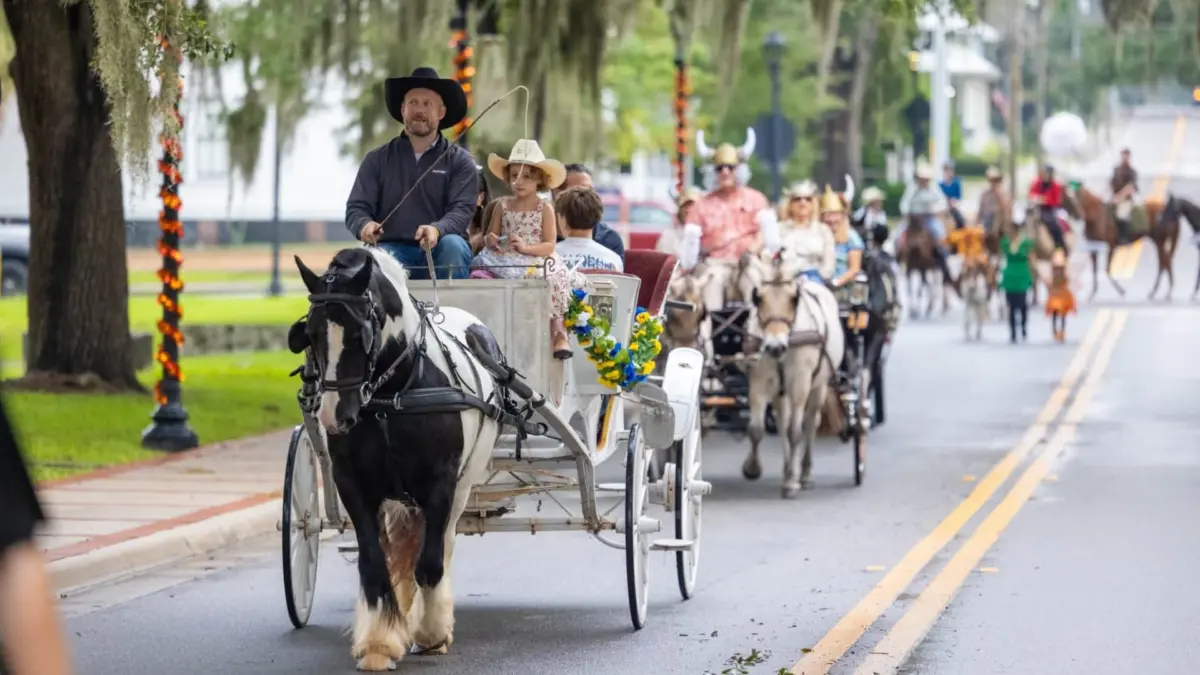

OCALA, Fla. — Under a brilliant autumn sky, downtown Ocala came alive on Saturday morning as thousands of spectators lined the historic square for the annual “All-Breed Horse Capital Parade.” Hosted by the Ocala Metro Chamber and Economic Partnership (CEP), the vibrant community showcase once again underscored Marion County’s undisputed status as the Horse Capital of the World, uniting equestrian enthusiasts, local businesses, and families in a celebration of the region’s defining industry.
Executive Overview
The “All-Breed Horse Capital Parade” is more than a local procession; it is a living manifestation of Marion County’s cultural and economic identity. Held on Saturday morning, the event brought together an eclectic array of equine breeds, showcasing everything from high-stepping carriage horses and thunderous draft animals to agile performance ponies and rare exotic breeds.
Organized meticulously by the Ocala Metro Chamber and Economic Partnership, the parade serves as a public-facing cornerstone for the region’s massive agricultural and equine footprint. While Ocala is globally recognized for producing elite Thoroughbred racehorses—including multiple Triple Crown winners and racing legends—this parade deliberately casts a wider net. It honors the diversity of the equine world, highlighting the breadth of disciplines that thrive within Central Florida, including dressage, western riding, carriage driving, and recreational trail riding.
As the hoofbeats echoed against the historic brick storefronts of downtown Ocala, the event offered a vivid reminder of the symbiotic relationship between the community and its equine residents. Beyond the pageantry, the parade acted as a vital economic touchpoint, drawing tourists, boosting local commerce, and reinforcing Ocala’s brand on the national stage.
Detailed Chronology: A Morning of Hoofbeats and Heritage
Early Morning Preparations (6:00 AM – 8:30 AM)
Long before the official start of the parade, the staging areas surrounding downtown Ocala were a hive of calculated activity. Equestrian handlers, trainers, and stable hands arrived before dawn to groom, braid, and tack up hundreds of horses. Transport trailers from elite farms across Marion County lined designated staging zones, creating an impromptu paddock area that buzzed with nervous excitement and the rich, earthy scent of leather, hay, and polished brass.
Judges, marshals, and local volunteers held final briefings, ensuring that safety protocols—paramount when handling large animals in close proximity to dense crowds—were strictly established. Police barricades went up along the primary route, sealing off the historic downtown core to vehicular traffic and transforming the asphalt into a grand equestrian thoroughfare.
The Opening Procession (9:00 AM – 9:30 AM)
Promptly at 9:00 AM, the unmistakable sound of a mounted color guard marked the official kickoff of the parade. Leading the procession were local dignitaries and CEP officials riding atop impeccably groomed mounts, setting a stately tone for the morning.
Following the color guard came the flagship contingent: the heavy draft breeds. Towering Percherons, Clydesdales, and Shires stepped out in unison, their massive frames and feathered hooves captivating the early-arriving crowds. The rhythmic, heavy thud of their hooves resonated through the downtown core, drawing immediate cheers from onlookers who had secured prime viewing spots along the sidewalks hours in advance.
The Mid-Parade Showcase: Diversity in Motion (9:30 AM – 10:30 AM)
As the parade progressed, the procession transformed into a kaleidoscope of equine colors, sizes, and disciplines. Spectators were treated to a meticulously curated lineup that emphasized the "all-breed" philosophy of the event:
- The Sport Horse Contingent: Sleek Warmbloods and Thoroughbreds outfitted in brilliant English tack demonstrated the grace and athleticism associated with Olympic-level show jumping and dressage.
- The Western Heritage: Quarter horses, Paints, and Appaloosas strutted past adorned in ornate silver saddles and fringed chaps, accompanied by riders practicing traditional western horsemanship and working-ranch maneuvers.
- The Rare and Exotic: Bringing gasps of delight from the younger spectators, miniature horses, brightly marked Pintos, and rare Iberian breeds—such as Andalusians and Lusitanos with their dramatic manes and fluid, high-stepping gaits—showcased the international flavor of Ocala’s stables.
- Working and Community Groups: Mounted sheriff’s posses, historical reenactors in period costume, and local 4-H club youth riding ponies rounded out the procession, emphasizing the deep community roots of horse ownership in Central Florida.
Grand Finale and Post-Parade Festivities (10:30 AM – 12:00 PM)
The parade culminated in a grand finale featuring a coordinated drive-by of historic carriages and modern riding clubs, drawing a prolonged standing ovation from the thousands gathered around the downtown square.
As the final participants cleared the route, downtown Ocala did not quiet down. Instead, the energy transitioned seamlessly into street fairs, local vendor displays, and educational exhibits. Families crowded around mobile petting zoos, agricultural booths, and informational tents sponsored by local equine veterinary clinics and feed suppliers, turning a morning parade into a day-long celebration of horse culture.
Supporting Context & Metrics: The Engine of Ocala’s Equine Economy
To fully appreciate the significance of the All-Breed Horse Capital Parade, one must examine the staggering economic and cultural metrics that underpin Ocala and Marion County’s equine industry.
The Epicenter of the Equine World
Marion County is home to more than 600 thoroughbred farms and thousands of operations supporting other breeds, earning it the verified moniker "Horse Capital of the World." According to economic impact studies conducted by the Florida Department of Agriculture and Consumer Services and the Ocala Metro CEP:
- Economic Impact: The equine industry contributes over $3 billion annually to the local economy, supporting tens of thousands of jobs directly and indirectly.
- Land Use: More than 70,000 acres of Marion County are dedicated strictly to pasture and equine facilities, characterized by the distinct, nutrient-rich limestone soils that promote superior bone development in growing horses.
- Global Export: Horses bred, born, and trained in Ocala regularly fetch millions of dollars at international sales and compete at the highest levels of global sport, including the Olympic Games, World Equestrian Games, and elite racing circuits from Dubai to Kentucky.
Beyond Thoroughbreds: The All-Breed Advantage
While elite racing captures global headlines, the all-breed nature of Saturday’s parade reflects the true diversification of Ocala’s equine market. In recent decades, Marion County has aggressively expanded its infrastructure to accommodate every equestrian discipline. The establishment of the World Equestrian Center (WEC) in Ocala—the largest equestrian complex in the United States—has cemented the region as a year-round destination for dressage, hunter/jumper, western performance, and driving competitions.
This economic diversification shields the local market from single-sector downturns. When the breeding market fluctuates, boarding, training, equine veterinary medicine, feed production, and recreational tourism sustain a robust local workforce. Events like the CEP-sponsored parade serve as a vital bridge, keeping the public engaged with an industry that spans agriculture, tourism, and high-end sport.
Official Statements and Perspectives
Local leaders and organizers emphasized that the parade is designed to celebrate not just the animals, but the people whose daily dedication fuels the local economy.
"The All-Breed Horse Capital Parade is our community’s love letter to the equine industry," said a representative from the Ocala Metro Chamber and Economic Partnership during the morning’s opening remarks. "When people think of Ocala, they think of excellence, dedication, and heritage. This parade showcases the sheer variety of what makes Marion County special—from the backyard pony enthusiast to the international breeder, everyone shares a common passion."
Local business owners along the downtown square reported record foot traffic, praising the CEP for driving tourism into the heart of the city.
"Events like this are transformative for downtown merchants," noted a local cafe owner who watched the procession from her shopfront. "It brings thousands of people who might not otherwise visit the historic square on a Saturday morning. They come for the horses, but they stay for the coffee, lunch, and shopping. It highlights the perfect marriage between our agricultural roots and our urban revitalization."
Equestrian participants echoed the sentiment of community pride. Sarah Jenkins, a local breeder who led her stable’s contingent of Lusitano horses down the parade route, noted the importance of public engagement.
"People see horses on TV winning races or jumping massive fences, but they rarely get to see them up close, calm, and interacting with children," Jenkins said. "Being able to walk these magnificent animals through downtown Ocala reminds us why we do what we do. The support from the crowd today was overwhelming."
Future Outlook: Sustaining the Momentum
As the dust settles on downtown Ocala and the last of the horse trailers roll back toward the rolling pastures of Marion County, civic and industry leaders are already looking toward the horizon.
The success of the 2026 All-Breed Horse Capital Parade highlights a broader trend: the increasing public appetite for immersive agricultural and equestrian tourism. Moving forward, the Ocala Metro Chamber and Economic Partnership plans to expand its collaborative marketing initiatives, linking downtown retail hubs more tightly with rural equine attractions and major competition venues like the World Equestrian Center.
Furthermore, workforce development remains a top priority. As the equine industry continues to modernize—incorporating advanced veterinary technologies, sustainable pasture management, and cutting-edge training methodologies—events like the parade play an instrumental role in inspiring the next generation of veterinarians, trainers, farm managers, and agricultural entrepreneurs.
Ultimately, Saturday’s parade was more than a morning of pageantry; it was a reaffirmation of a promise. Ocala remains tethered to its equine soul, proving that as the community grows and modernizes, its heart will always beat to the rhythm of hoofbeats on limestone clay.

0 Comments