
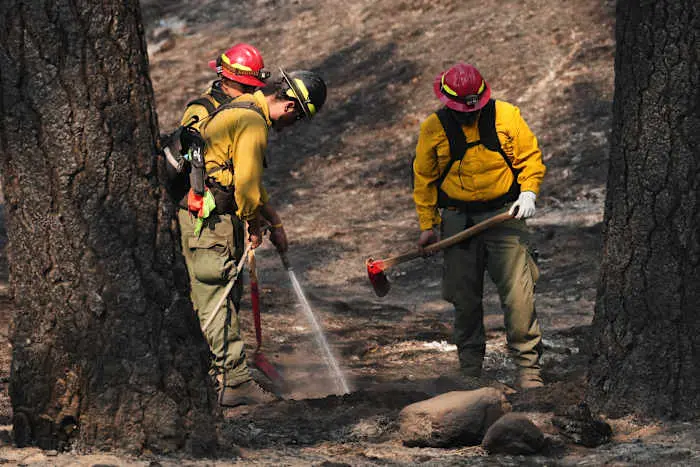

SEATTLE — Fire and medical safety officials have issued sweeping warnings regarding the widespread distribution of an unapproved dietary supplement administered to Western wildland firefighters. Frontline crews, routinely exposed to intensely toxic chemical cocktails while combating some of the nation’s most catastrophic blazes, have been targeted with intravenous (IV) and nebulized treatments of glutathione.
Despite anecdotal claims of relief from weary first responders, health experts, pulmonary specialists, and labor representatives caution that the supplement lacks clinical validation of safety or efficacy. Compounding the issue, recent laboratory tests have linked the substance to severe bacterial contamination outbreaks, prompting urgent product recalls and heightened anxiety across the firefighting community.
Executive Overview
The controversy centers on glutathione, an antioxidant naturally synthesized within the human liver, which is being marketed to first responders as a quick-fix remedy for acute smoke inhalation and systemic inflammation. Promoted heavily during major emergency deployments—including the destructive January 2025 Los Angeles County fires and the recent late-summer 2026 urban-wildland interface blazes in Spokane, Washington—the substance has been dispensed on-site by alternative medicine practitioners.
However, major labor organizations, such as the International Association of Firefighters (IAFF), have stepped forward with stringent safety advisories. Their concerns are manifold:
- Lack of FDA Approval: Glutathione treatments administered via nebulizers or IVs are not approved by the U.S. Food and Drug Administration (FDA) for treating or preventing diseases linked to environmental exposures.
- Severe Contamination Risks: In August 2026, compounding pharmacies issued high-profile recalls after discovering dangerous bacterial contamination during routine laboratory testing, with reports linking the tainted batches to fevers, chills, and severe headaches among users.
- Absence of Empirical Evidence: Pulmonary specialists and environmental health scientists emphasize that while the biological mechanism of antioxidants sounds plausible, there is zero peer-reviewed clinical research confirming that inhaling or injecting glutathione mitigates the long-term or short-term damage of toxic wildfire smoke.
- Adverse Health Reactions: Medical professionals warn that nebulized glutathione can trigger acute bronchoconstriction, narrowing the airways of individuals with underlying conditions such as asthma or chronic obstructive pulmonary disease (COPD).
As climate change drives longer, more destructive fire seasons, the pressure on wildland firefighters to find immediate relief from toxic exposures has never been higher. Yet, safety advocates argue that unvetted alternative treatments pose an unacceptable gamble with the health of those already placing their lives on the line.
Detailed Chronology: From Wine Country to Spokane
The pipeline connecting alternative wellness networks to frontline wildland firefighters has evolved steadily over nearly a decade, crossing multiple jurisdictions and major natural disasters.
The 2017 Northern California Wine Country Fires
The operational intersection of wildland firefighting and alternative naturopathic interventions trace their roots back to the catastrophic 2017 California wine country blazes. Thousands of homes were reduced to ash during that historic event, filling the air with unprecedented levels of particulate matter and toxic chemical vapors from melted infrastructure. In the wake of the disaster, informal wellness networks began offering alternative therapies to help exhausted crews manage the immediate aftermath of heavy smoke exposure.
The January 2025 Los Angeles County Blazes
The relationship deepened during the destructive Pacific Palisades and Eaton fires that tore through Los Angeles County in January 2025. During these deployments, a group of licensed naturopathic doctors operating under the banner of The Integrative Health Action Network established on-site presences to distribute glutathione. The intervention gained traction among certain crews who reported feeling immediate physical relief from the debilitating symptoms of smoke-induced "brain fog," severe coughing, and nausea. Pushback from firefighters subsequently forced the California Board of Pharmacy to walk back regulatory tightening that would have restricted access to the compound.
The August 2026 Spokane Wildfires
The issue reached a boiling point in August 2026, when fires swept through the northern portions of Spokane, Washington, destroying hundreds of structures and blanketing the region in toxic haze. Medical unit leaders dispatched from California to assist with morning briefings actively encouraged firefighters to visit an on-site tent operated by the Integrative Health Action Network, where glutathione was readily offered via IV and nebulizer.
The prominent promotion of an unvetted substance within official operational areas alarmed local physicians and union members. The resulting complaints spurred the IAFF to launch an immediate, formal investigation, culminating in a nationwide safety advisory distributed to its 360,000 members.
Supporting Context & Metrics: The Biological Toll of Modern Wildfires
To understand why firefighters are so desperate for relief—and why medical experts are so alarmed by unvetted interventions—one must examine the changing chemical reality of modern wildfires.
The Modern Toxic Cocktail
Wildfires of the 21st century are fundamentally different from historical blazes. As urban sprawl encroaches further into wilderness areas, modern fires frequently burn through residential zones, commercial buildings, and industrial parks. This means firefighters are no longer just inhaling burning Ponderosa pine or chaparral; they are breathing a toxic soup of vaporized synthetic materials.
When modern homes burn, they incinerate:
- Polyvinyl chloride (PVC) pipes and vinyl siding
- Electronic circuit boards containing heavy metals (lead, cadmium, mercury)
- Lithium-ion batteries and household appliances
- Synthetic textiles, fiberglass, and chemical flame retardants
Extreme Working Conditions and Physical Impact
Physical realities on the fireline make the consistent use of heavy personal protective equipment (PPE)—such as self-contained breathing apparatuses (SCBAs) with oxygen tanks—impractical for wildland firefighters who must hike miles into rugged terrain over grueling 14-to-16-hour shifts.
Consequently, crews absorb astronomical amounts of particulate matter directly through their respiratory systems and skin. Pasadena Fire Captain Matt Caffey, a paramedic with 28 years of field experience who fought the 2025 Eaton fire, describes the physical toll vividly:
"You can’t remember things. You’re just so behind the eight ball. You can’t catch up. You’re not recovering. The smoke exposure brings on persistent coughing, vomiting, and cognitive dysfunction that lingers long after the shift ends."
The Science of Smoke Inhalation and Oxidative Stress
Inhaling wildfire smoke creates severe oxidative stress within the human body. Unstable molecules, commonly known as free radicals, overwhelm the body’s natural antioxidant defenses, leading to cellular damage, systemic inflammation, and long-term risks such as cardiovascular disease, reduced lung function, and aggressive forms of cancer.
According to Dr. Cora Sack, a pulmonary specialist with expertise in environmental and occupational lung disease at the University of Washington School of Medicine, the theoretical basis for using antioxidants like glutathione makes intuitive sense.
"There is an interesting biological plausibility to the idea that boosting antioxidants could combat oxidative stress," Dr. Sack notes. "However, biological plausibility is a far cry from clinical proof. Without rigorous, peer-reviewed clinical trials, we simply do not know if introducing exogenous glutathione helps, harms, or does nothing at all."
Furthermore, Dr. Sack warns of compounding pharmacy vulnerabilities. When sterile compounding facilities experience quality control failures, products contaminated with bacteria can cause catastrophic medical events—ranging from dangerous drops in blood pressure and high fevers to life-threatening anaphylactic shock and death upon injection or inhalation.
Official Statements and Institutional Responses
The growing rift between alternative wellness providers, grateful frontline crews, and institutional medical safety watchdogs has forced various stakeholders to clarify their positions.
The International Association of Firefighters (IAFF)
In its late-August 2026 safety advisory, the IAFF—representing hundreds of thousands of professional firefighters across North America—took a definitive stance against the unmonitored distribution of the supplement.
"Because glutathione is not an FDA-approved drug, consumers should be cautious about product safety and claims that glutathione can treat or prevent diseases," stated Sean DeCrane, IAFF assistant to the general president for health and safety.
DeCrane emphasized that the union received direct reports from members indicating they felt worse or suffered adverse physical symptoms after receiving treatments in the field. He asserted that any medical treatment marketed to first responders must undergo strict evaluation and scientific testing to eliminate unintended health consequences.
The Integrative Health Action Network
In response to the nationwide safety advisory, Jen Riegle, a naturopathic doctor and co-founder of the Integrative Health Action Network, defended the organization’s mission while acknowledging the necessity for legitimate scientific validation.
"We recognize the urgent need for peer-reviewed research regarding whether glutathione can successfully reduce the chemical burden in firefighters," Riegle stated, adding that the organization is actively seeking institutional partnerships to conduct proper clinical evaluations.
Academic and Environmental Health Experts
Independent researchers studying the intersection of climate change, wildfire smoke, and occupational health have urged caution. Luke Montrose, a professor at Colorado State University whose research focuses on the health risks associated with wildfire smoke exposure, acknowledged glutathione’s known anti-inflammatory properties in a laboratory setting. However, Montrose maintained a cautious scientific stance:
"It has biochemical properties that make it interesting, but because it hasn’t been subjected to rigorous human clinical trials for this specific application, I remain deeply hesitant."
Future Outlook: Bridging the Gap Between Urgency and Evidence
As global temperatures rise and prolonged drought conditions continue to fuel devastating fire seasons across the Western United States, the health and safety of wildland firefighters will remain a critical public policy issue. The controversy over glutathione highlights a systemic vulnerability within emergency management: the desperate scramble by frontline workers to find relief in the absence of institutional, medically approved countermeasures.
Moving forward, medical experts, labor unions, and alternative health providers face a clear imperative:
- Accelerated Clinical Research: Public health agencies and academic medical centers must prioritize funding for clinical trials evaluating safe, evidence-based interventions for acute and chronic smoke inhalation among wildland firefighters.
- Strict Regulatory Oversight: State pharmacy boards and emergency medical command structures must enforce rigorous quality control and vetting processes before allowing any unapproved therapeutic substances to be administered within operational staging areas or morning briefing zones.
- Enhanced Standardized PPE: Federal and state fire management agencies must direct greater resources toward engineering controls and advanced respiratory protection gear tailored to the unique physical demands of wildland firefighting, reducing toxic exposure at the source rather than relying on reactive pharmacological band-aids.
Until rigorous scientific data confirms both the safety and efficacy of treatments like glutathione, institutional watchdogs will continue to urge extreme caution—balancing deep empathy for the immense physical suffering of firefighters with an unwavering commitment to evidence-based medicine.

0 Comments