Long before the state’s rolling hills and modern highways captured the American imagination, subterranean forces were already hard at work shaping a geologic legacy unique to the American South. Approximately 100 million years ago, volcanic activity thrust untold thousands of diamonds to the surface of what is now Arkansas, establishing the region as a rare geological anomaly. Today, that legacy has come full circle in a landmark exhibition at the Crystal Bridges Museum of American Art in Bentonville, Arkansas.
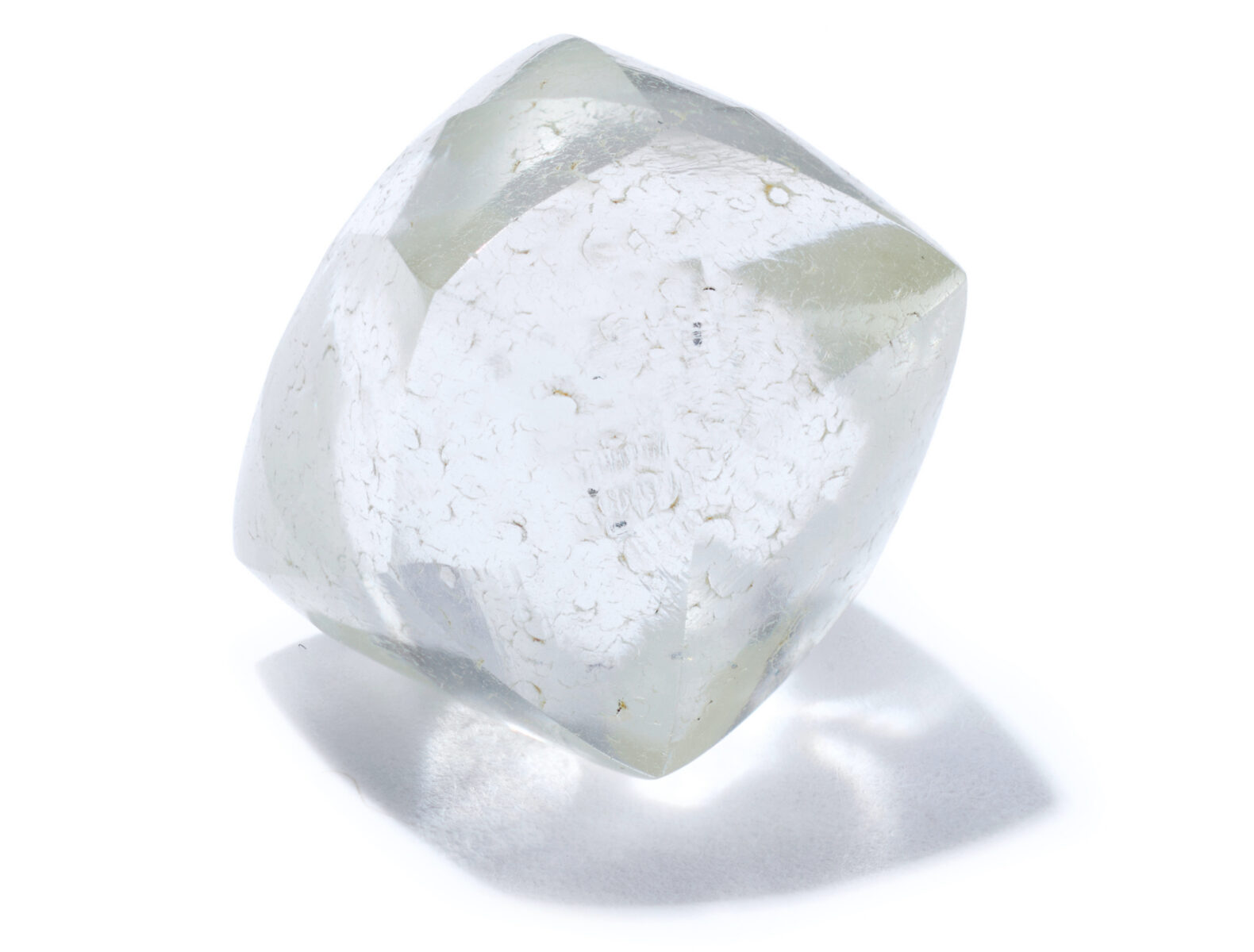
Titled Nature Adorned: The Artistry of Tiffany & Co. and the American Imagination, the exhibition runs through March 29, 2027, serving as an ambitious exploration of the intersection between fine art, high jewelry, and the natural world. Among the crown jewels of the installation is a homecoming more than a century in the making: the legendary 27.21-carat Arkansas Diamond. Unearthed by an eleven-year-old girl in Searcy in 1926 and subsequently acquired by Tiffany & Co., the historic stone has spent nearly a century residing securely within the corporate archives in New York City.
Now on display alongside two other notable Arkansas-discovered diamonds, the stone anchors an exhibition that pairs masterworks from the Tiffany Archives with American paintings, sculptures, and raw mineral specimens from Crystal Bridges’ permanent collection. Curated by Jen Padgett, Nature Adorned challenges viewers to reconsider the boundaries between decorative arts and fine art, revealing how generations of creators have drawn enduring inspiration from the biological and geological wonders of the natural world.
Detailed Chronology: From Volcanic Upheaval to Cultural Triumph
To understand the weight—both literal and figurative—of the objects on display in Bentonville, one must trace a timeline spanning millions of years of earth history and more than a century of American social and industrial development.
Prehistoric Genesis (c. 100 Million Years Ago)
Deep beneath the surface of southwestern Arkansas, volcanic activity associated with the Cretaceous period forced Kimberlitic magma upward through the Earth’s crust. As this magma cooled and eroded over millennia, it deposited diamonds into the surrounding peridotite matrix, creating the only active diamond-bearing site in North America that remains accessible to amateur prospectors.
The Spark of Discovery (1906)
For centuries, the land held its secrets hidden in plain sight. That changed in 1906 when an unsuspecting farmer in Pike County uncovered the first diamond on his property, setting off a localized diamond rush and fundamentally changing the historical identity of the "Natural State."
The Discovery of the 27.21-Carat Giant (1926)
Twenty years after the initial discovery, the state’s diamond lore reached new heights. An eleven-year-old girl, prospecting in Searcy, Arkansas, stumbled upon an extraordinary stone. Weighing a staggering 27.21 carats, it immediately was recognized as one of the largest and most pristine rough diamonds ever unearthed within the borders of the United States. Recognizing its historic significance, the luxury house Tiffany & Co. acquired the stone, transporting it to New York City where it became a cornerstone of the illustrious Tiffany Archives.
The Contemporary Homecoming (October 2026)
One hundred years after its historic discovery in Searcy, the 27.21-carat Arkansas Diamond returned to its home state. Opened in October 2026 at the Crystal Bridges Museum of American Art, Nature Adorned reunites the legendary gemstone with its geographic origins. Supported by the exhibition’s extensive curation, the diamond stands alongside other major historical works, marking a rare instance of a corporate archival treasure returning to inspire the community from which it was born.
Supporting Context & Metrics: The Art and Geology of Nature Adorned
The curatorial premise of Nature Adorned rests on a sophisticated dialogue between manufactured luxury and organic inspiration. The exhibition does not merely display precious stones; it systematically maps out how human creativity interprets the natural structures of plants, animals, and earth formations.
The Intersection of Painting and Lapidary Arts
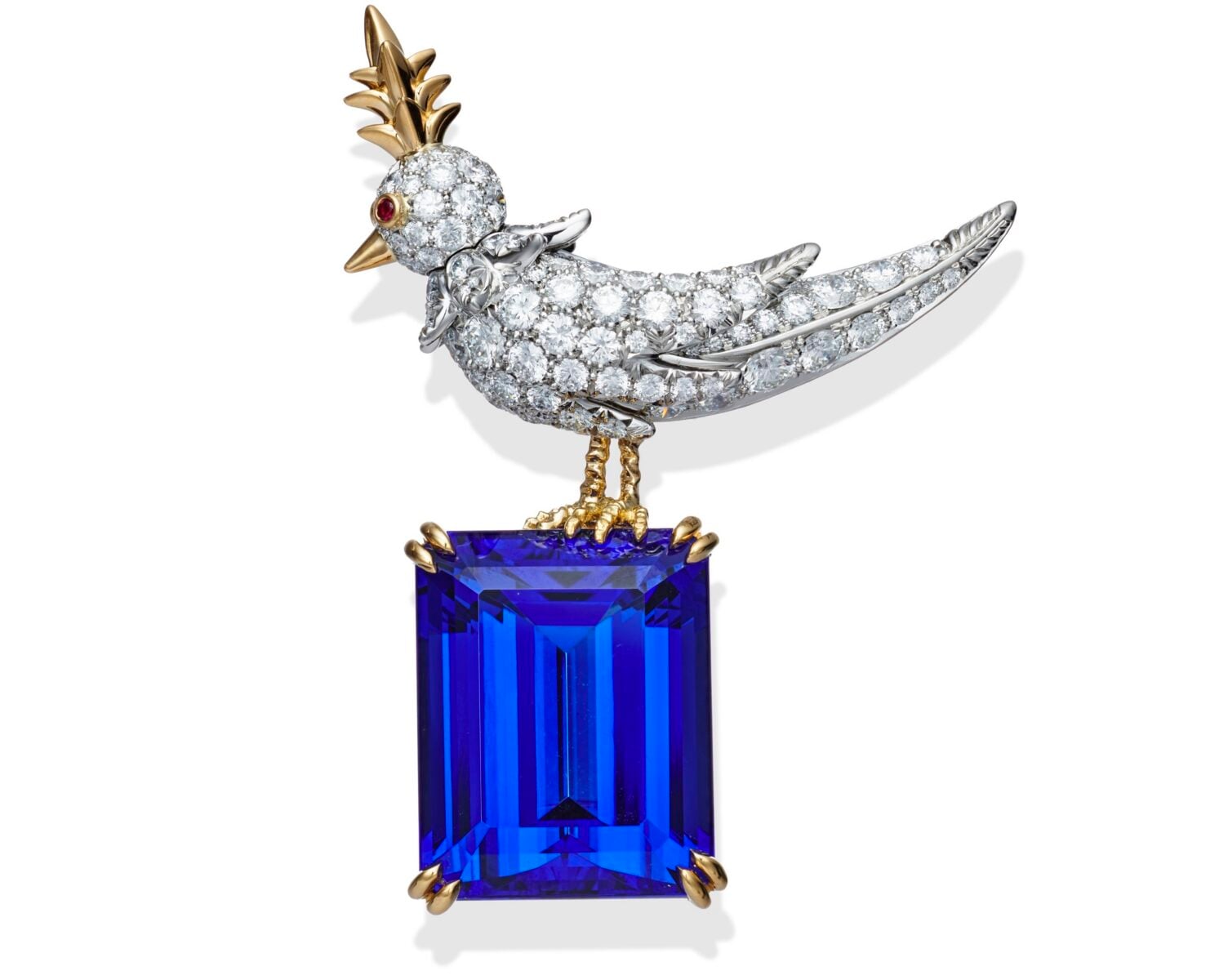
One of the most striking visual pairings in the exhibition places French designer Jean Schlumberger’s iconic Bird on a Rock brooch—created for Tiffany & Co.—in direct conversation with Hope Gangloff’s contemporary figurative painting, Queen Jane Approximately. Both works engage deeply with organic forms and dynamic contours, highlighting how a jeweler and a painter independently solve the problems of balance, rhythm, and life-like movement.
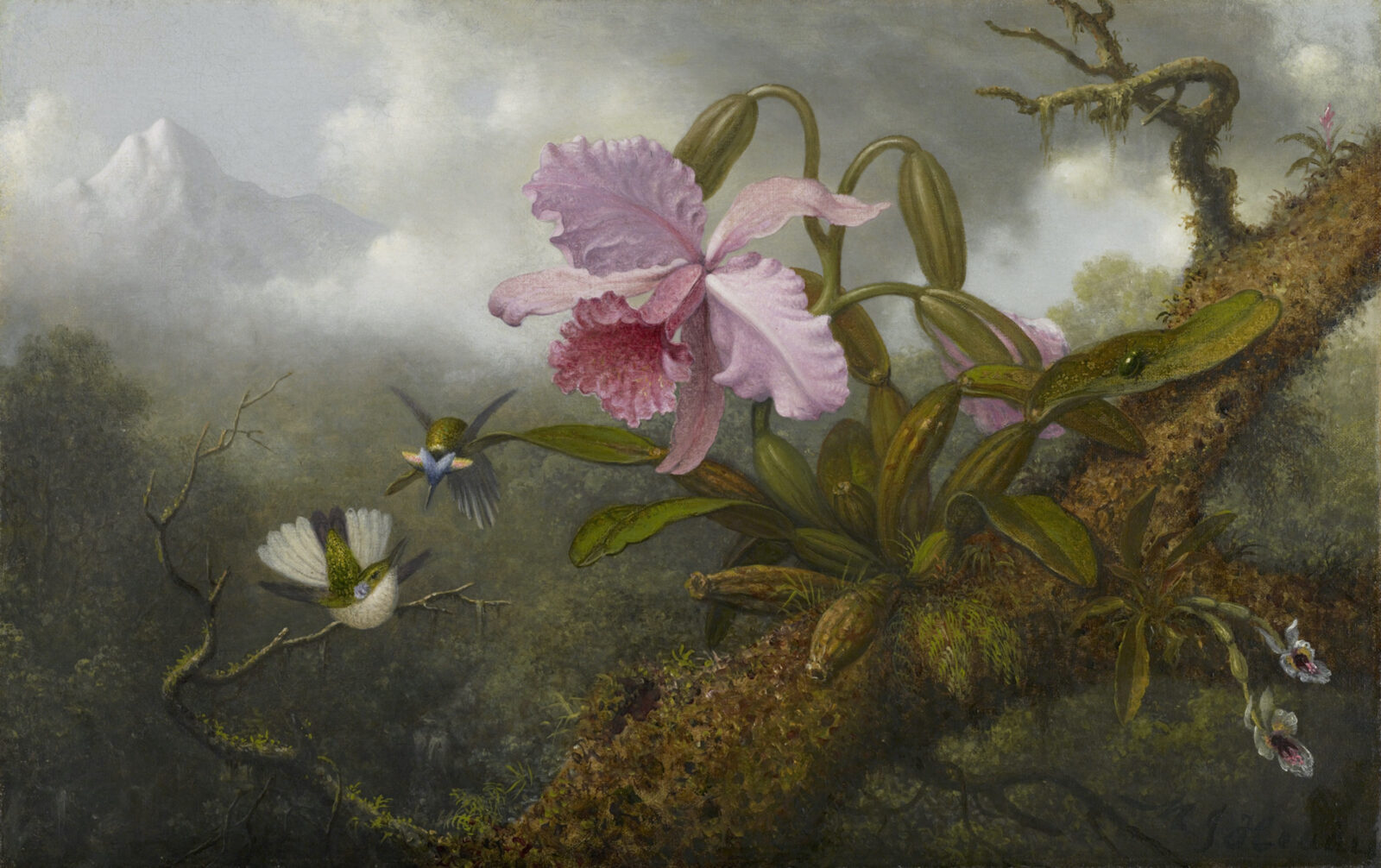
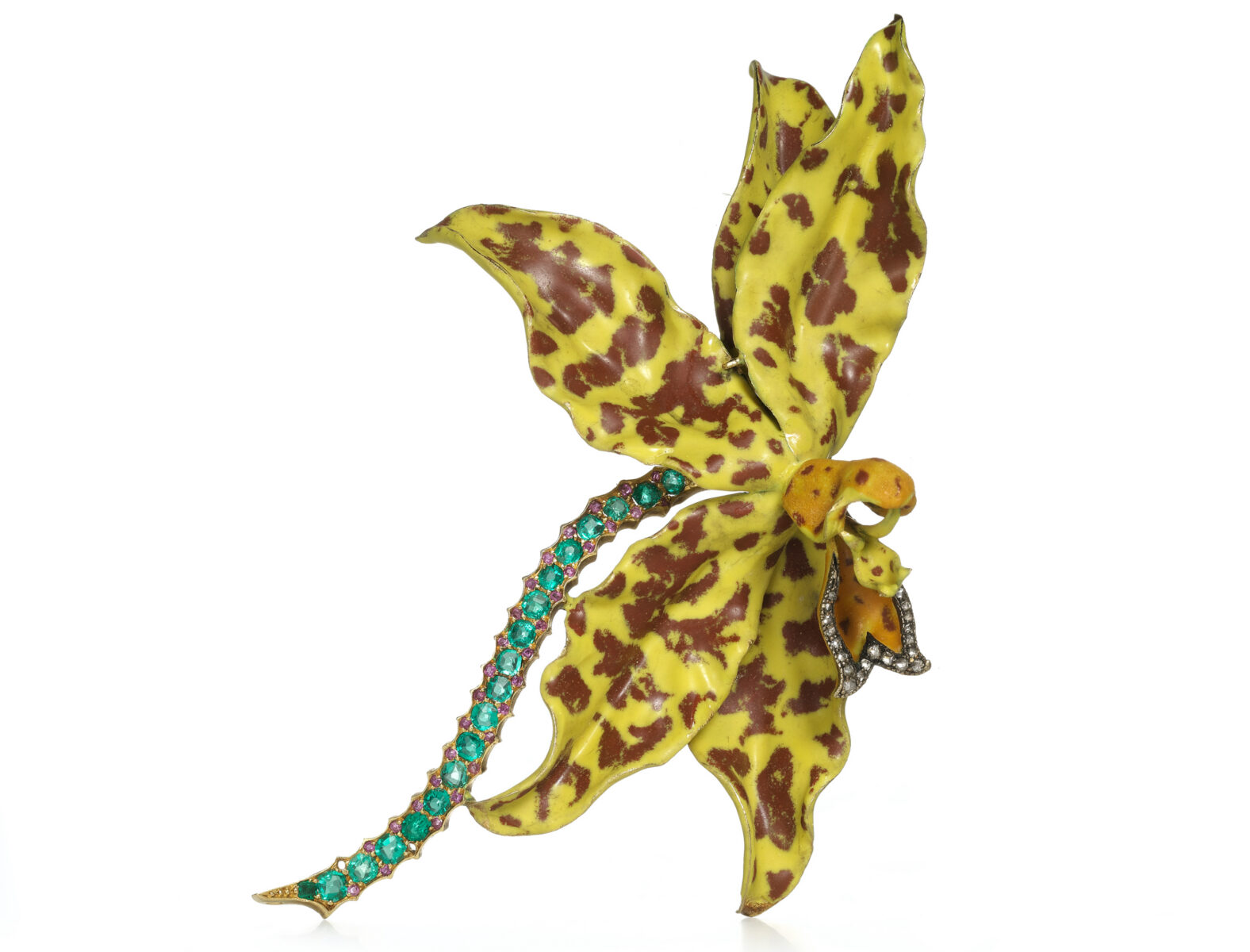
Similarly, the exhibition explores botanical obsession through the lens of the late 19th and early 20th centuries. George Paulding Farnham’s magnificent tiger orchid brooch for Tiffany & Co., meticulously crafted from sterling silver, diamonds, emeralds, pink sapphires, and enamel, is displayed alongside Martin Johnson Heade’s luminist masterpiece, Cattleya Orchid, Two Hummingbirds and a Beetle. Created around the same historical moment, these works demonstrate a shared Victorian and Gilded Age fascination with exotic flora and fauna, translating the ephemeral beauty of the natural world into permanent markers of wealth and artistic expression.
Innovation in Glass and Light
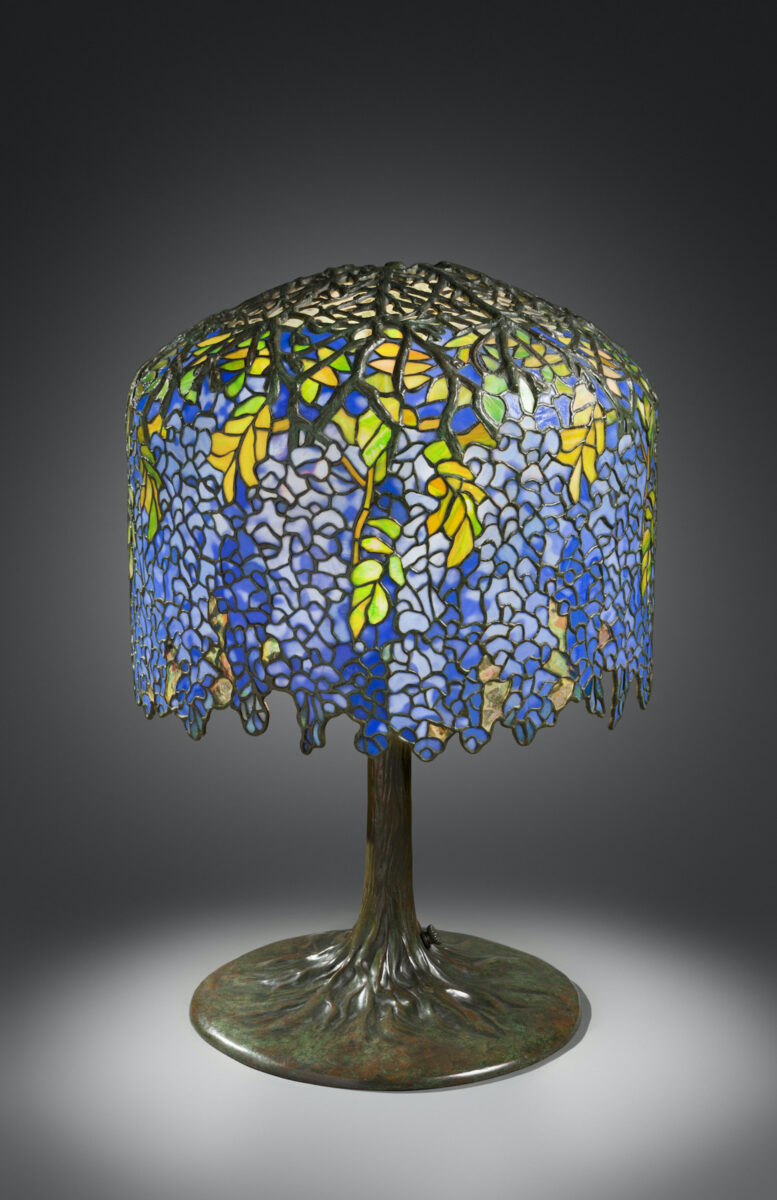
The decorative arts narrative extends into the realm of illumination through the work of Clara Driscoll and the "Tiffany Girls"—the brilliant, frequently overlooked women who led the glass-cutting department at Tiffany Studios. Driscoll’s iconic Wisteria Table Lamp (circa 1905–1906), a masterpiece of the Art Nouveau movement that mimics the cascading, organic growth of wisteria vines, is paired with George Inness’s 1867 atmospheric landscape, Sunset on a River. This pairing encourages visitors to contemplate how light operates across vastly different mediums: refracted through leaded Favrile glass versus captured across a canvas via oil paint.
Raw Minerals and Abstract Geometry
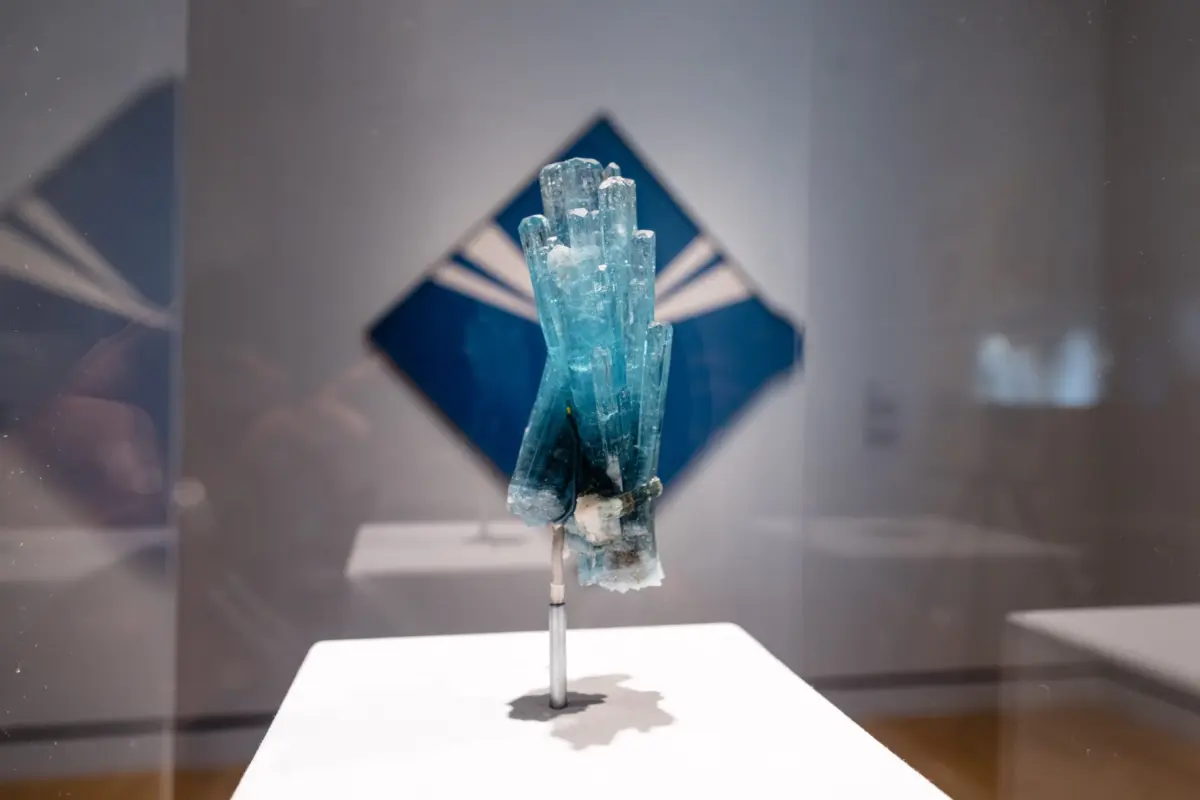
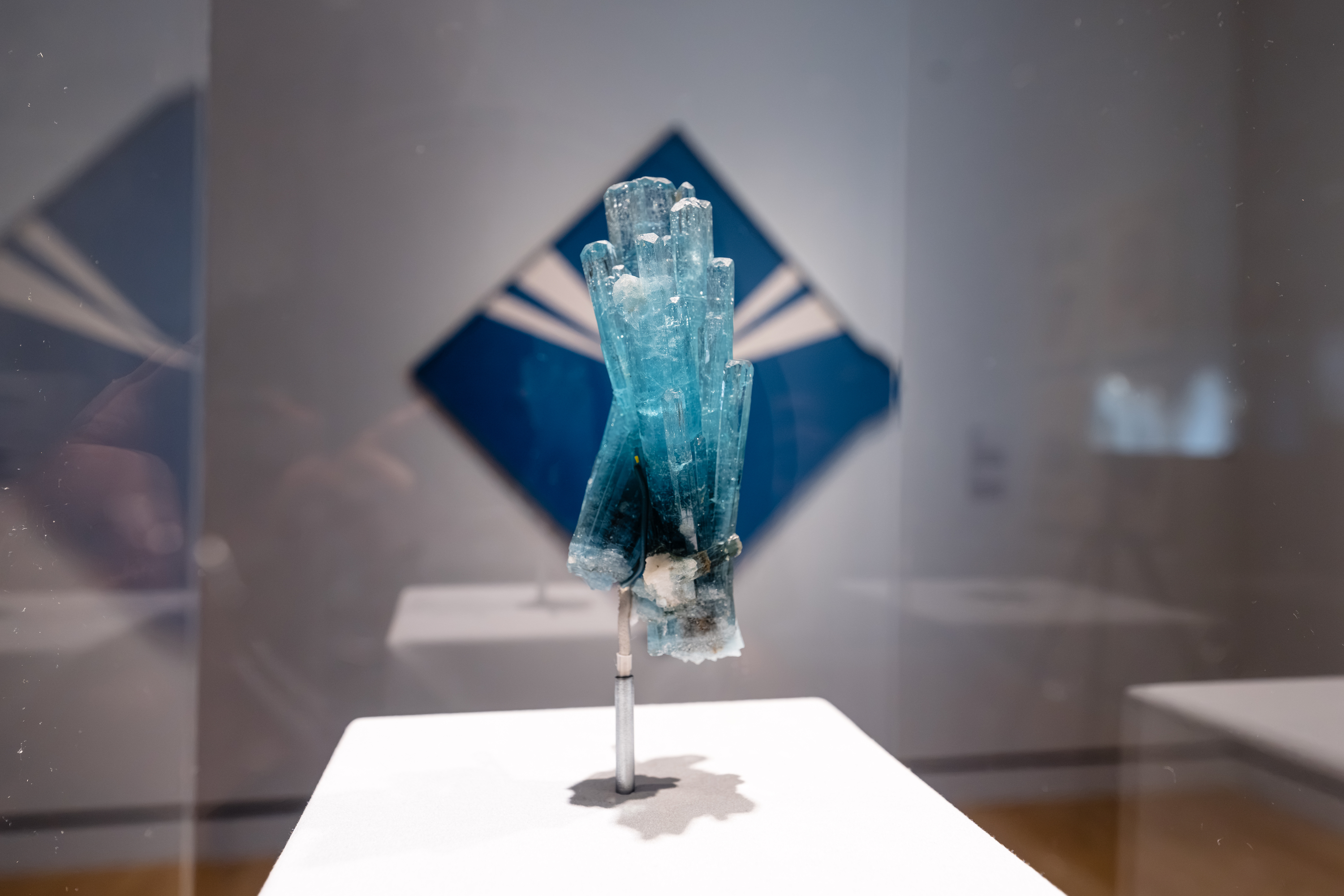
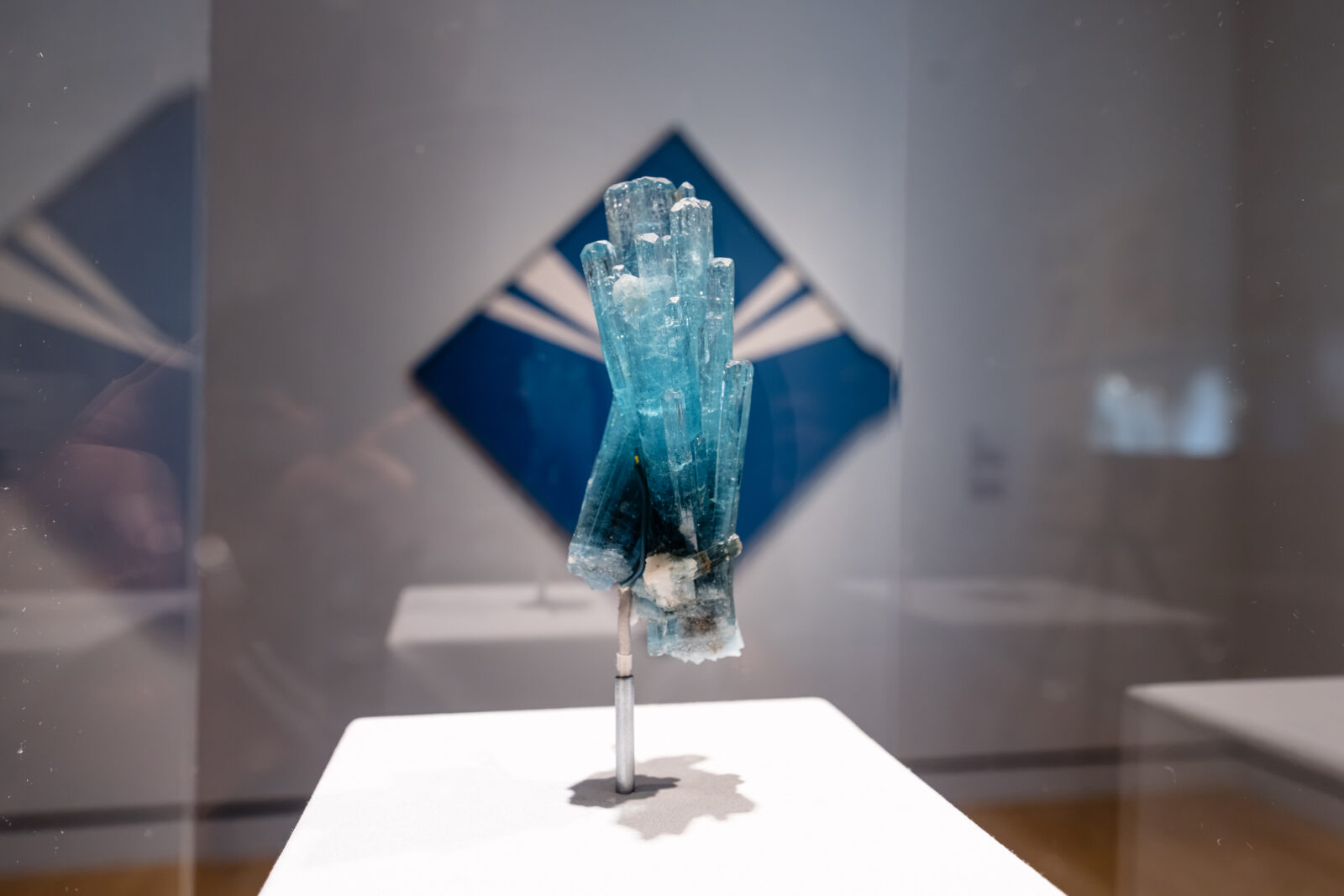
To ground the manufactured brilliance of the Tiffany pieces in raw geology, Crystal Bridges has integrated specimens from its permanent collection. Visitors can observe natural beryl crystals—which derive their mesmerizing blue and green hues from trace amounts of iron—alongside nearly four-inch-tall quartz crystals.
These mineral sculptures are juxtaposed with Carmen Herrera’s 1965 abstract geometric painting, Cerulean. Herrera’s work manipulates spatial cuts to transform a familiar square canvas into a diamond shape, creating a conceptual bridge between raw crystalline geometry and human abstraction.
Arkansas as a Geological Exception
The exhibition also serves to remind visitors of Arkansas’s unique standing in global mineralogy. Crater of Diamonds State Park in Murfreesboro, Arkansas, remains the only place in the United States where everyday visitors can hunt for diamonds and legally keep whatever gems they manage to unearth. By centering the exhibition around the 27.21-carat Arkansas Diamond and two other notable state-found gems, the museum actively honors this public tradition of prospecting and discovery.
Official Statements and Curatorial Vision
The cultural weight of Nature Adorned has been heavily emphasized by the museum’s leadership and curatorial team, who view the exhibition as an unprecedented opportunity to celebrate regional identity through a global artistic lens.
Jen Padgett, the exhibition’s curator, notes the profound effect of uniting disparate collections:
"The pairings across the Tiffany Archives and Crystal Bridges help us to see both collections in a new light. Comparing how artists draw inspiration from nature—whether depicting an orchid in a painting or transforming its form into a brooch—allows us to appreciate their ingenuity and imagination."
Padgett further underscores the significance of the gemstones’ geographic return:
"Having the diamonds here allows us to highlight Arkansas’s natural resources and bring attention to the state’s unique place in the story of American gems."
By bridging the gap between the corporate vault of a legendary New York jewelry house and the forested Ozark setting of an internationally acclaimed American art museum, Nature Adorned successfully reframes regional history. It argues that the beauty found in the soil of Pike and White counties is fundamentally continuous with the highest achievements of American fine art and design.
Future Outlook and Visitor Information
As Nature Adorned: The Artistry of Tiffany & Co. and the American Imagination continues its run at the Crystal Bridges Museum of American Art through March 29, 2027, it is expected to draw substantial foot traffic from mineralogists, art historians, and casual tourists alike.
The exhibition sets a new benchmark for regional institutions seeking to leverage major institutional partnerships—such as the one forged with the Tiffany Archives—to tell localized stories on an international scale. For Arkansas, the temporary return of the 27.21-carat Arkansas Diamond is more than a successful museum coup; it is a public celebration of the state’s deep-rooted connection to the earth.
Visitors planning to experience the exhibition before its conclusion in late March 2027 can view the complete assemblage of Tiffany masterworks, historical paintings, and rare minerals directly at Crystal Bridges in Bentonville, Arkansas. As the museum doors remain open to the public, the dialogue between raw earth and refined luxury continues to inspire new generations to look at the natural world with wonder.




0 Comments